Institute for Methods Innovation

1.1K posts

Institute for Methods Innovation banner
Institute for Methods Innovation

Institute for Methods Innovation

@IMI_methods

Research | Evaluation | Training | Impact

Katılım Nisan 2019
790 Takip Edilen338 Takipçiler
Institute for Methods Innovation
🌐 What does social responsibility in research look like around the world? A study by Prof Eric Jensen, Lars Lorenz and colleagues examines how the principles of socially responsible research and innovation (RRI) are understood and practised across global regions, disciplines and institutional types. Drawing on interviews and qualitative analysis, it sets out how values such as inclusion, equity, ethics and openness are interpreted in practice, and where the gaps lie. 👉 Many researchers support RRI principles, but how those principles are put into practice varies widely with geography, institutional culture and academic field. 👉 Organisations often reference RRI in their strategies, yet practice tends to depend on individual champions and informal effort. 👉 Systemic factors such as funding pressures, institutional incentives and career structures shape whether and how RRI becomes embedded. 👉 Respondents pointed to a need for practical tools, training and consistent guidance to turn values into action. RRI cannot be one-size-fits-all. Supporting socially responsible research means recognising local context and backing it with practical support. Read the full article here: buff.ly/o45XbU3 #RRI #ResponsibleResearch #SciencePolicy #GlobalScience
Institute for Methods Innovation tweet media
English
0
0
0
29
Institute for Methods Innovation
Good innovation work rarely begins with a solution. It begins with a well-designed question. As part of the ATLIC project, IMI helped design the Blue Economy Challenges survey, a research process used to identify priority challenges across the Atlantic Area regions. The blue economy covers the industries that depend on the ocean and coast, including fisheries, shipping, marine renewable energy and coastal tourism. The purpose was to build a shared evidence base, one that could help partners compare regional needs, validate priorities with people working in the blue economy and support young people to develop ideas grounded in real-world conditions. This is where IMI's work is often most useful. We design research and evaluation processes that help projects turn broad ambition into clearer decisions. A well-designed survey does more than collect data. It structures participation, makes underlying assumptions visible and converts scattered knowledge into evidence that can guide action. In ATLIC, that means linking the identification of challenges to co-creation, training and market-oriented innovation. It reflects how we support projects working across countries, sectors and communities: by building methods rigorous enough to inform decisions and practical enough to be used. #ResearchDesign #BlueEconomy #ImpactEvaluation #Innovation
Institute for Methods Innovation tweet media
English
0
0
1
33
Institute for Methods Innovation
🌍 How can we measure whether research systems are becoming more socially responsible? This paper by Prof Eric Jensen presents a Global Indicators Framework for monitoring progress in socially responsible research and innovation (RRI), aligned with the UNESCO Recommendation on Science and Scientific Researchers. 👉 The indicators give policymakers and practitioners a practical tool to track whether principles like public engagement, equity, ethics and open science are reflected in research systems. 👉 Survey instruments built into the framework capture the experiences and perceptions of both the public and the research community. 👉 Standardised indicators allow cross-country benchmarking and shared policy learning. 👉 The framework is designed for repeated use over time, making it possible to track systemic change and inform international science policy. If science is to serve society better, progress needs to be measurable. The framework gives research systems a way to move from stated principles to evidence of change. Read the article here: buff.ly/UprRyHT #RRI #SciencePolicy #OpenScience #PublicEngagement
Institute for Methods Innovation tweet media
English
0
0
0
44
Institute for Methods Innovation
Meet the Institute for Methods Innovation CEO and Director of Research: Prof Eric Jensen Eric has directed or co-directed more than 120 research, evaluation and impact projects, securing more than $17 million in research funding (total project value over $65 million). His work spans study design, ethics, stakeholder research, theory of change and the translation of findings into societal impact. He has trained over 25,000 researchers, policy and impact professionals across more than a decade of practice. His work has been funded by the US National Science Foundation, the European Commission, Wellcome Trust, UK Research and Innovation, UNESCO and the UN Environment Programme, among others. He has authored more than 200 peer-reviewed publications, with work appearing in outlets including PNAS, Nature, PLOS ONE and Public Understanding of Science. #ResearchImpact #ScienceCommunication #PublicEngagement #ImpactEvaluation
Institute for Methods Innovation tweet media
English
0
0
0
30
Institute for Methods Innovation
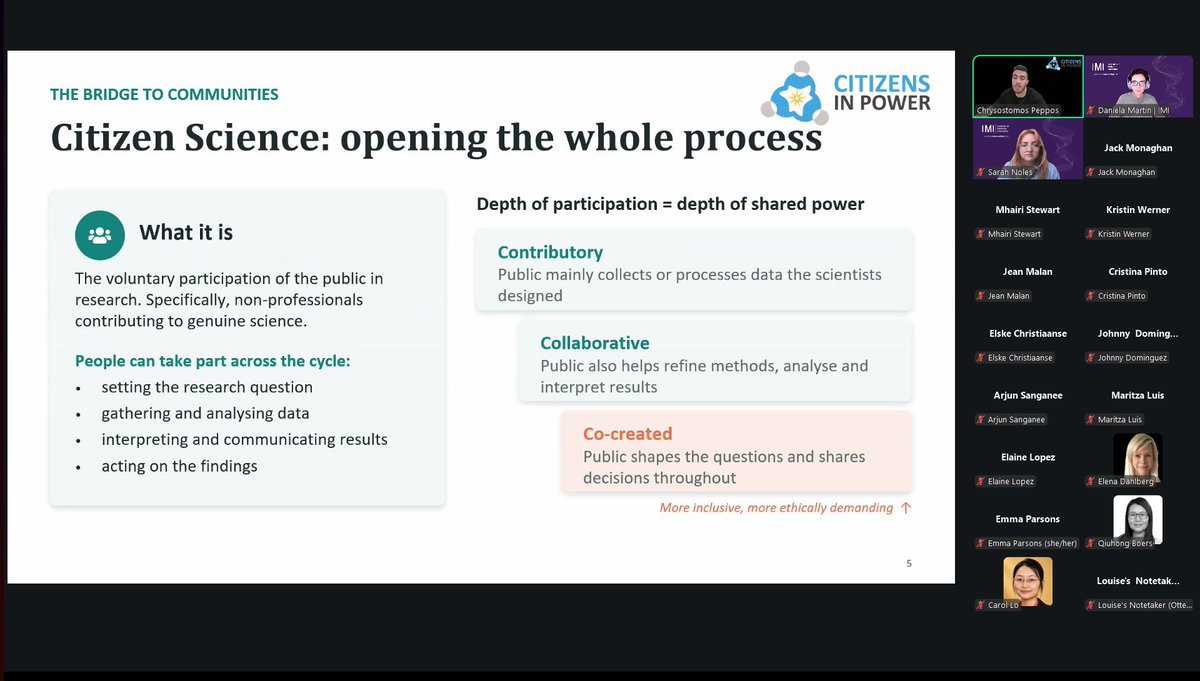
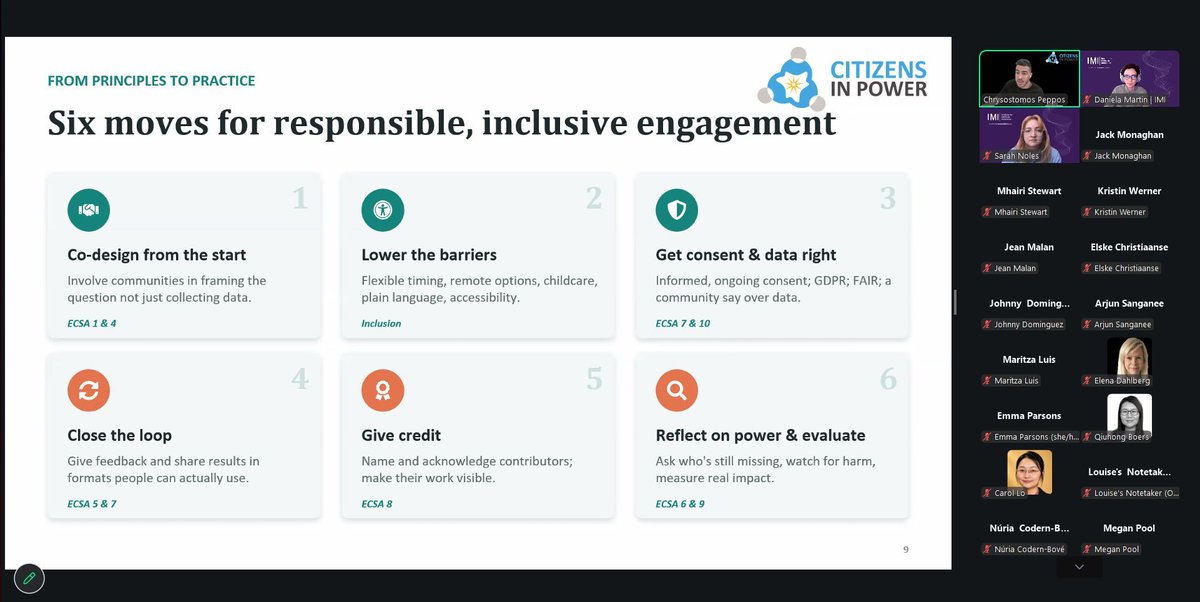
🌐 Open science increases access to research, but how do we ensure that community engagement is fair, reciprocal, and ethically sound? We recently hosted another practical FEMLEAD webinar on public engagement and citizen science, exploring how to move beyond simple data collection toward genuinely inclusive research design. The discussion focused on the structural choices researchers can make to ensure communities are valued partners rather than passive subjects. Here are three core insights from the session: ✔️ Distinguish between research ethics and engagement ethics Traditional research ethics focus on protecting participants during a study through mechanisms like informed consent. Engagement and impact ethics focus on what happens around and after the research: how benefits are distributed, who shares decisions, and how outcomes are communicated back to the community. ✔️ Anticipate and prevent extractive practices Without deliberate design choices, public engagement can become unequal or tokenistic. Researchers must intentionally design processes to avoid "parachute research" (where data is gathered from a community without leaving any meaningful value behind). ✔️ Structure logistics around participant realities True accessibility requires adjusting design choices like format, plain language, and timing to match the constraints of your target audience. For highly busy populations, shifting from large group workshops to brief, automated one-on-one interviews can drastically lower the barrier to entry. Thank you to Sarah Noles and Chrysostomos Peppos for sharing their operational expertise and framework for responsible public engagement! 🙏 The full recording of this session, alongside our practical Inclusive Open Science Progress Review Worksheet, will be available on the Institute for Methods Innovation platforms shortly to help you assess community engagement in your own projects. #OpenScience #CitizenScience #ResearchCulture #FEMLEAD #HigherEducation #PublicEngagement
Institute for Methods Innovation tweet mediaInstitute for Methods Innovation tweet mediaInstitute for Methods Innovation tweet media
English
0
0
1
32
Institute for Methods Innovation
📚 How do we ensure that research actually benefits society? A recent paper by Prof. Eric Jensen, Prof. Mark Reed, Dr Aaron Jensen and Prof. Alexander Gerber outlines an approach called evidence-based research impact praxis, integrating academic scholarship and practical tools to support meaningful, measurable research impact. Here’s what they argue: 👉 Impact practice should be grounded in evidence rather than assumptions or generic frameworks. Engagement strategies work better when informed by what the research on public engagement and knowledge exchange actually shows. 👉 The authors propose a model in which theory and real-world implementation are mutually reinforcing, helping researchers plan, deliver and evaluate impact more systematically. 👉 Supporting researchers to engage more thoughtfully with stakeholders requires training, institutional infrastructure and sustained support, not encouragement alone. 👉 Producing research does not guarantee societal benefit. Active, well-informed engagement is needed to translate findings into outcomes beyond the academy. Good intentions are not a strategy. Evidence-based approaches to impact require the same rigour as the research itself. Read the article here: buff.ly/KwMG994 #ResearchImpact #SciencePolicy #EngagedResearch #ImpactStrategy #EvidenceBasedPractice
Institute for Methods Innovation tweet media
English
0
0
1
60
Institute for Methods Innovation
Final reminder 🙌 Join the free webinar Ethical Open Science in practice: How to engage communities responsibly and inclusively on Thursday, 25 June 2026! With Sarah Noles and Chrysostomos Peppos, the session will explore practical approaches to ethical and inclusive #OpenScience engagement. Participants will receive a practical framework to help identify barriers, anticipate risks and support more accountable participation. Register today ➡️ buff.ly/C6YZ9Wz
Institute for Methods Innovation tweet media
English
0
1
0
25
Institute for Methods Innovation
Reminder 📢 Registrations are still open for the webinar Ethical Open Science in practice: How to engage communities responsibly and inclusively. The session will explore practical ways to design #OpenScience initiatives that are transparent, equitable and socially responsible from the beginning. It will also examine how to identify barriers to participation, anticipate ethical risks and strengthen accountability in community engagement. Speakers: 👉 Sarah Noles, Institute for Methods Innovation (IMI) 👉 Chrysostomos Peppos, Citizens in Power (CIP) Participants will receive a practical Ethical Engagement Design Note to support future Open Science projects and activities. Register here 🔗 buff.ly/C6YZ9Wz
Institute for Methods Innovation tweet media
English
0
0
1
8
Institute for Methods Innovation
🎬 When science visuals are produced to cinematic standards, does aesthetic quality translate into better public understanding? A study co-authored by Prof. Eric Jensen examined how public audiences respond to cinematic-style three-dimensional visualisations of space science data from NASA's Magnetospheric Multiscale (MMS) mission, with particular attention to how label type moderates comprehension. Here’s what they found: 👉 Cinematic presentation increased perceived visual appeal and audience engagement, but did not improve comprehension on its own. 👉 Understanding improved only when strong narrative labels were present. 👉 Labels providing contextual explanation rather than technical nomenclature or minimal annotation produced significantly better results. For science communicators, the practical conclusion is that visual sophistication and communicative clarity are separate problems, and solving one does not automatically address the other. Read the open-access study here: buff.ly/8SVDh1m #ScienceCommunication #DataVisualisation #SpaceScience #PublicEngagement #ResearchImpact
Institute for Methods Innovation tweet media
English
0
0
0
18
Institute for Methods Innovation
📰 The latest edition of the ATLIC project newsletter is now available! ATLIC (Atlantic InnoBlue Communities) is a European cooperation project that brings together partners from France, Ireland, Portugal and Spain to support youth entrepreneurship and innovation in the blue economy through open innovation labs, training, knowledge exchange and transnational networks. The Institute for Methods Innovation (IMI) is responsible for helping to design the research methodologies used to identify challenges and opportunities in the blue economy, supporting the establishment of the ATLIC Open Academy, and expanding the project's network🤝 Read the full newsletter here 🔗 buff.ly/KLXyVDH
Institute for Methods Innovation tweet media
English
0
0
0
10
Institute for Methods Innovation
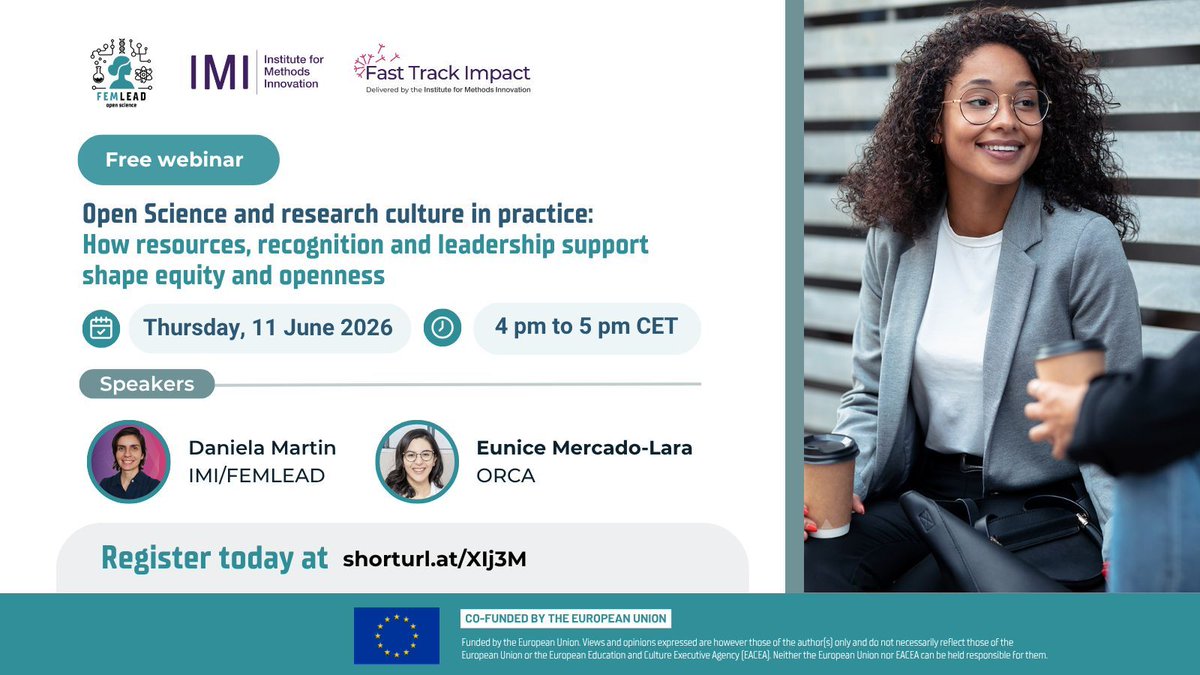
🌐 Most universities support open science on paper, but the daily reality within research cultures often looks quite different. Earlier today, we hosted a practical FEMLEAD webinar focused on the clear gap between institutional policy and daily practice. The discussion emphasised that excellent mission statements alone are insufficient to create equitable workplaces. True progress requires institutions to actively align their resource allocation, recognition structures, and reward systems with their stated values. Here are three core insights from the session: ✔️ The reward mismatch: Academic evaluation systems continue to favour traditional metrics, including individual grants and publication counts in prestige journals. This narrow focus leaves the vital, time-consuming work that makes science truly inclusive, such as mentoring, meticulous data sharing, and community engagement, structurally undervalued. ✔️ The overburdening of underrepresented groups: Women, early-career researchers, and underrepresented groups frequently bear the primary responsibility for executing diversity and community initiatives. Without formal workload adjustments or concrete recognition, these responsibilities often function as an unfair systemic burden. ✔️ The power of institutional legitimacy: Evidence from ORCA’s Catalytic Awards indicates that structural shift does not always require massive funding. Small, targeted grants provide researchers with the institutional permission and dedicated time necessary to successfully lead open science initiatives. We appreciate Eunice Mercado-Lara for bringing her operational expertise from the Open Research Community Accelerator (ORCA) and for challenging us to audit our own research environments. The full recording of this session, alongside our practical Inclusive Open Science Progress Review Worksheet, will be available on the Institute for Methods Innovation platforms shortly to help you assess friction points in your own organisation. Please look out for our upcoming webinars this June and follow our ongoing work at IMI and FEMLEAD. #OpenScience #EquityInSTEM #ResearchCulture #FEMLEAD #HigherEducation #AcademicInclusion
Institute for Methods Innovation tweet mediaInstitute for Methods Innovation tweet mediaInstitute for Methods Innovation tweet media
English
0
0
0
14
Institute for Methods Innovation
How can #OpenScience initiatives engage communities responsibly and inclusively from the outset? This practical session will examine how researchers and institutions can design Open Science activities that are ethical, inclusive and workable in practice. The discussion will address community engagement, barriers to participation, accountability, and approaches that avoid tokenistic or extractive practices. Participants will leave with an Ethical Engagement Design Note to support the planning of more responsible and inclusive Open Science initiatives. Register here 🔗 buff.ly/C6YZ9Wz
Institute for Methods Innovation tweet media
English
0
0
2
17
Institute for Methods Innovation
🚀 Does the way scientists label complex visualisations affect how well the public understands them? A study co-authored by Prof. Eric Jensen examined how different types of explanatory labels influence public comprehension of three-dimensional data visualisations, using space plasma data from NASA's Magnetospheric Multiscale (MMS) mission as the test case. Here’s what they found: 👉 Participants who saw narrative explanatory labels (vs. minimal or technical ones) had significantly better understanding of the underlying science. 👉 Labels that included context and explanation supported more accurate mental models of what was happening in the visualisation. For scientists and science communicators, the practical implication is straightforward: communication design is not incidental to public understanding. It shapes it. Read the open-access article here: buff.ly/tdD7Zaz #ScienceCommunication #DataVisualisation #SpaceScience #PublicUnderstandingOfScience #ResearchImpact
Institute for Methods Innovation tweet media
English
0
0
0
14
Institute for Methods Innovation
📢 Final reminder to join the webinar 'Open Science and research culture in practice: How resources, recognition and leadership support shape equity and openness' tomorrow. This FEMLEAD session will look at the practical conditions needed for inclusive Open Science, from leadership endorsement and institutional support to funding structures and collaborative recognition 🌍 Participants will also be invited to reflect on what their own institutions currently reward, and how more equitable research practices can be supported in concrete ways. 🗓 Thursday, 11 June 2026 ⏰ 4 to 5 pm (CET) 🔗 Register here: buff.ly/SQjKYki #OpenScience #ResearchCulture
Institute for Methods Innovation tweet media
English
0
0
0
25
Institute for Methods Innovation
The Institute for Methods Innovation (IMI) works with organisations, researchers and professionals to strengthen research, evaluation, public engagement and training practice. We provide consultancy and project support across these areas, alongside tailored workshops covering survey design, impact evaluation, science communication and the use of AI tools in research and analysis. Learn more: buff.ly/Ko47Dlj
Institute for Methods Innovation tweet media
English
0
0
0
10
Institute for Methods Innovation
⏰ A reminder to register for the FEMLEAD webinar 'Open Science and research culture in practice: How resources, recognition and leadership support shape equity and openness'. The session will explore how funding, recognition systems, peer support and institutional leadership affect the realities of Open Science in Higher Education Institutions, particularly for women, early-career researchers and underrepresented groups in STEM. The webinar will also feature a case study from ORCA’s Catalytic Awards Program, examining how small grants and institutional legitimacy can support longer-term cultural change in research environments. 🗓 Thursday, 11 June 2026 🕓️ 4 to 5 pm (CET) 🔗 Register here: buff.ly/SQjKYki #OpenScience #ResearchCulture #STEM
Institute for Methods Innovation tweet media
English
0
0
0
21
Institute for Methods Innovation
♻️ How much does consumer psychology shape whether a young venture succeeds? At the @Atlic_Innoblue Legacy event, Dr Aaron Jensen (@DrAaronMJensen) mentored youth innovators on waste-based branding, founder motivation and addressing safety early in R&D. 👉 Marketing a product as made from "waste" can sit awkwardly against "healthy and sustainable" branding, since the two ideas pull against each other in a consumer's mind. 👉 Founders who anchor themselves in their core motivation are better placed to sustain growth over the long term. 👉 Safety concerns are best addressed early in research and development rather than managed reactively once a product is further along. Conversations like these are a reminder that strong mentorship gives young founders something funding alone cannot. It helps them test the assumptions a venture rests on before the market does. #YouthEntrepreneurship #ConsumerPsychology
Institute for Methods Innovation tweet mediaInstitute for Methods Innovation tweet mediaInstitute for Methods Innovation tweet media
English
0
0
0
16
Institute for Methods Innovation
🔍 What do research software funders actually prioritise, and where are they falling short? A recent study by Prof. Eric Jensen and Daniel Katz draws on a global survey of research software funders to map strategic priorities, barriers and opportunities for cross-funder collaboration. Several findings stand out: 👉 Funders have increasingly come to regard research software as a core component of research infrastructure, rather than a peripheral output. 👉 Sustainability beyond the life of individual projects remains the most widely cited concern. 👉 Capacity constraints, particularly shortages of skilled personnel at the institutional level, were identified as a significant barrier to effective support. 👉 On evaluation, most funders reported difficulty measuring the impact and quality of software they fund, a gap that limits accountability and strategic planning. 👉 Cross-funder coordination was seen as the most tractable opportunity, with participants pointing to shared standards, joint infrastructure investment and aligned funding cycles as areas for development. Read the full study here: buff.ly/5Mnmcyd #ResearchSoftware #SciencePolicy #ResearchImpact #OpenScience #FundingStrategy
Institute for Methods Innovation tweet media
English
0
0
0
19