
IMCrit
14.6K posts

IMCrit
@IM_Crit_
Intensivist I Internal Medicine | ☕️, 🍩, 🥐, 🍫 addict
Katılım Nisan 2020
751 Takip Edilen58.6K Takipçiler
When the patient is crashing and/or exsanguinating, speed and access come first
The “dirty duo”: 2 femoral lines side-by-side in the groin (typically one venous and one arterial)
The “dirty trio”: 3 femoral lines (1 arterial + 2 venous: triple lumen and introducer or dialysis catheter) when massive resuscitation demands as well as need for sedation/pressors etc require multiple access points
If you have a little bit more time, a cooperative patient, and the necessary expertise:
The “clean duo”: 1 axillary/subclavian venous line + 1 arterial line
Different patients. Different circumstances. Different priorities
In a crashing patient, the best vascular access is often the one you can place quickly, safely, and reliably


English

IMCrit retweetledi
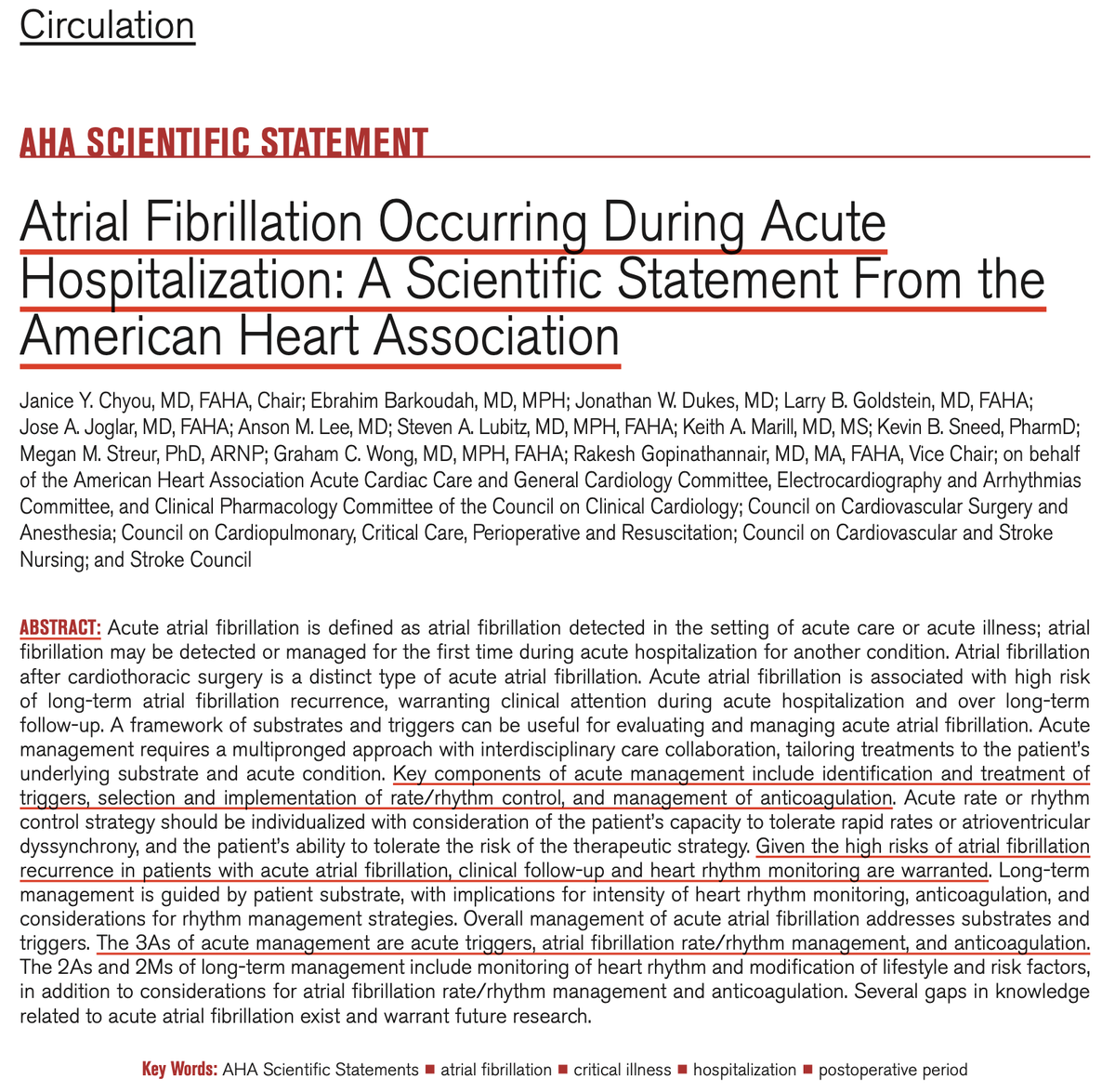
ICU Stories - Atrial fibrillation:
A few days ago, when I came on service, I took care of a 70 yo patient who had been in the ICU for ~15 days. He had been admitted with an intra-abdominal abscess secondary to colonic perforation. He had undergone colectomy and required twice percutaneous drainage of abscesses. His course was complicated by acute kidney injury requiring continuous renal replacement therapy and hypoxemic respiratory failure requiring high-flow nasal cannula and NIV
During his ICU stay, he had developed new-onset atrial fibrillation with rapid ventricular response (heart rates persistently in the 130-150 bpm range). He was largely asymptomatic aside from occasional palpitations but remained on vasopressor support with norepinephrine (0.05-0.15 mcg/kg/min) and vasopressin 0.04 u/min
For more than 5 days, Cardiology, Electrophysiology, and the ICU team had attempted multiple rate-control strategies, including low-dose beta-blockade, amiodarone boluses and infusion, digoxin, and diltiazem boluses and infusion. None achieved adequate rate control, let alone conversion to sinus rhythm. The prevailing concern was that, because the patient remained septic (he had leukocytosis and some worrisome abdominal fluid collections), cardioversion would be unlikely to succeed
Reversible triggers had been addressed: his oxygenation was adequate, his pain was controlled, and his electrolytes were within acceptable limits. However, the persistent tachy-arrhythmia created a practical problem. Each time fluid removal was attempted through CRRT, the heart rate made both the ICU and Nephrology teams very hesitant to proceed. As a result, patient kept accumulating a positive fluid balance day after day, reaching approximately 15 liters positive by the time I first evaluated him
After reviewing his course and reassessing his physiology, I decided that cardioversion was worth attempting. To the surprise (?) of the Cardiology and Electrophysiology teams, synchronized cardioversion with 100 joules restored sinus rhythm. He has remained in sinus rhythm for the past week. The change was clinically meaningful. We were able to discontinue both vasopressors and achieve negative fluid balance each day thereafter
This is, of course, a single case (a N-of-1 study) rather than definitive evidence. But it reinforced an important lesson for me: in Critical Care, “sepsis-related” AF does not always mean “do nothing.” If the rhythm is contributing to shock, organ dysfunction, or blocking essential therapy, a carefully considered rhythm-control attempt may reveal a missed opportunity to help
#foamed #foamcc
Circulation. 2023;147:e676-e698
DOI: 10.1161/CIR.0000000000001133
English
IMCrit retweetledi
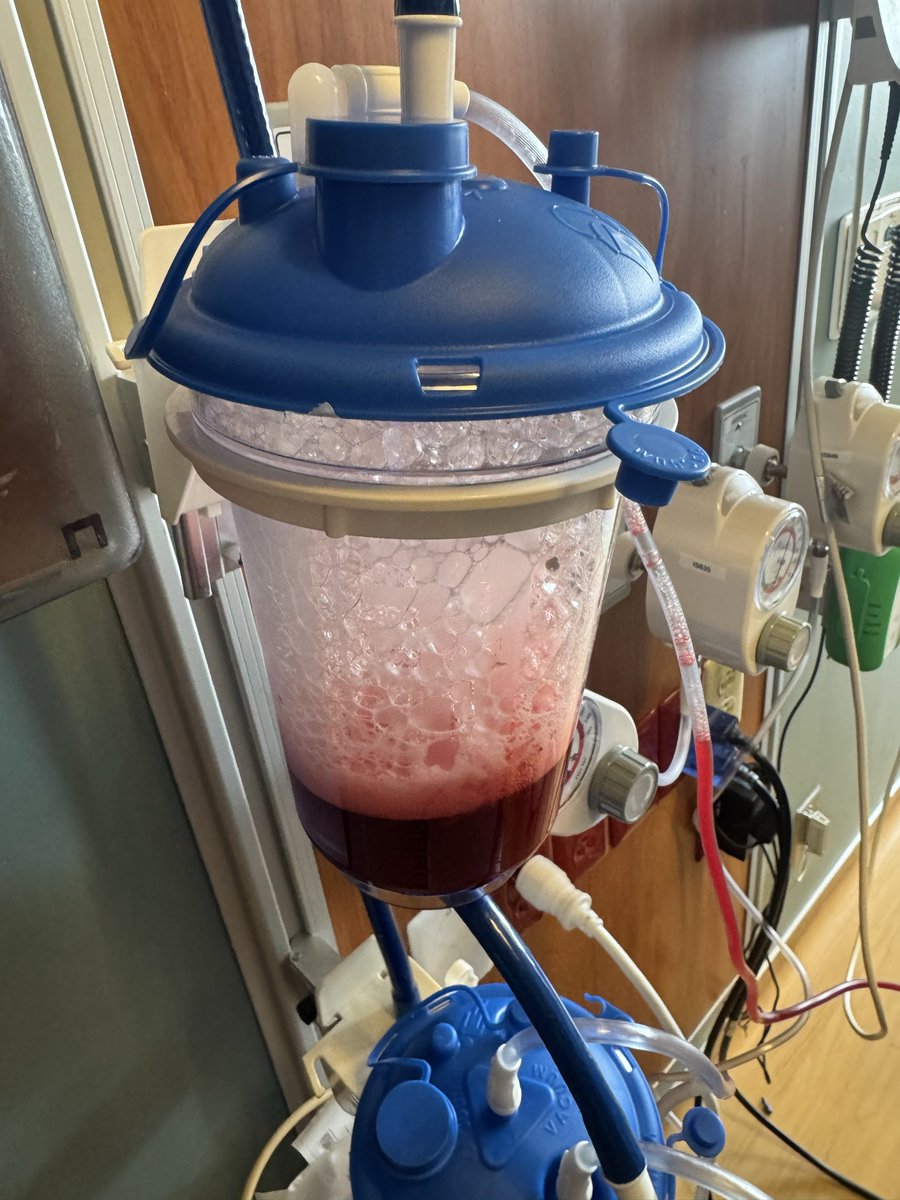
ICU Stories (live coverage) - Massive GI Bleeding:
The monitor is baiting you.
Massive GI bleed.
Heart rate 150-170.
Hypotension.
If your first instinct is to reach for metoprolol or adenosine instead of blood, you've identified the wrong problem.
Resuscitate the hemorrhage, not the compensation.

English
IMCrit retweetledi
Atrial fibrillation secret:
When a patient presents to the ED, ICU, or wards with new-onset atrial fibrillation -and we do not know their systolic function- it is worth taking a quick look at the heart before reflexively reaching for diltiazem or metoprolol. We do not always need a formal echo before acting. But if bedside US is available, even a brief POCUS assessment can change the entire plan.
I know this is not always feasible in real time. But every year, I see a few patients who crash -or even arrest- after AV nodal blockers are given, only for POCUS afterward to reveal an ejection fraction of 10-20%.
The point is simple: not every patient with rapid atrial fibrillation has a ventricle that can tolerate negative inotropy.
Let’s try to make the “diltiazem death challenge” a thing of the past.
English
IMCrit retweetledi
Unpopular ICU opinion:
When a patient becomes apneic during a spontaneous breathing trial, we often declare that the patient failed the trial.
Maybe not. Maybe we failed the patient by stopping the trial too soon, before sedatives had worn off and the respiratory drive had a chance to return.
Sometimes the patient didn't fail. We did.
English
IMCrit retweetledi
If you've never seen a 13 Fr dialysis catheter end up in the carotid or femoral artery because ultrasound wasn't used, you've probably trained in a different era than I did
One of the biggest changes I've seen in Critical care isn't a drug or a ventilator mode; it's routine ultrasound guidance for vascular access. I've seen what happens without it...
Gerald Creager@GeraldCreager
@IM_Crit_ I'm old. POCUS didn't exist when I was spending time in the ICU. I learned how to do IJs, subclavians, femoral cannulations, and art lines without US guidance. Left subclavian or right IJ were two of my favorite central access points. No complications recorded.
English
IMCrit retweetledi
One of my ICU rules:
Venous access saves lives. Arterial line gives data
I have never seen a patient die because an arterial catheter wasn't placed promptly. I have seen plenty of patients getting hurt (or die) because reliable venous access came too late (or never)
Place the venous catheter first. Sweat about the arterial line later
And yes. I place a lot of arterial lines and I was not pleased with how many people interpreted the EVERDAC trial
(NEJM 2025; 393: 1875-88 -
DOI: 10.1056/NEJMoa2502136)
English
IMCrit retweetledi
ICU Secrets - Hypertension Management:
A 37 yo female patient with history of asthma and essential hypertension is hospitalized in the ICU after a motor vehicle accident in which she suffered a T4 burst fracture with obliteration of the spinal canal and complete spinal cord injury at the T4 level. She underwent surgical stabilization of the fracture
On postop day 7, she complains of acute-onset severe headache and shortness of breath. She is awake and diaphoretic; the skin is flushed above the nipple line and pale in the abdomen and legs. Vitals: BP: 257/122 mmHg, HR: 50/min, RR: 20/min, temp: 37.4°C, O2 sat 97% on room air
What will you do next?
English
IMCrit retweetledi
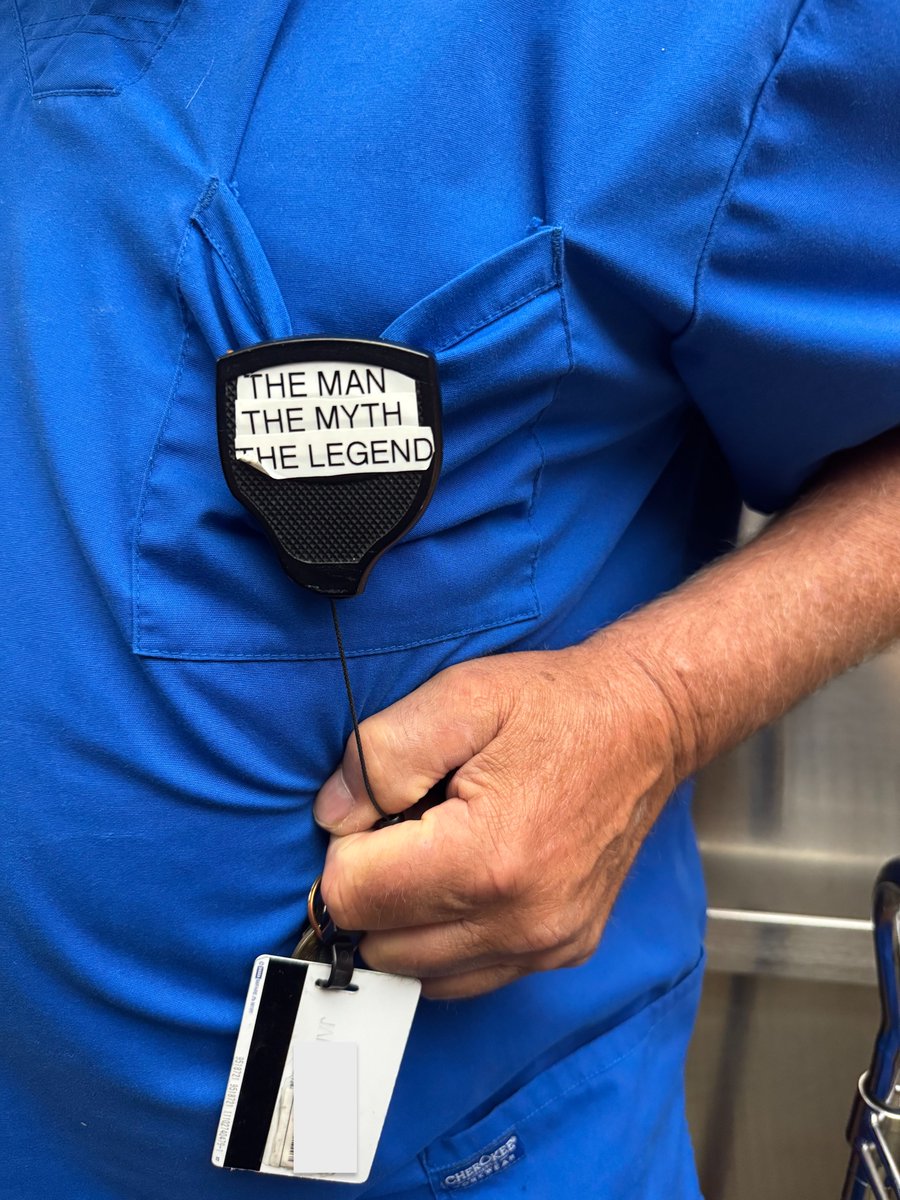
Some fortunate ICUs have that one aide who seems to know everything: where every piece of equipment is kept, from gauze to 9 Fr catheters to pacing wires; what needs to be reordered; and, just as important, when something should not be reordered at all! They know how to move patients safely, how to calm someone who is frightened or agitated, and how to recognize the subtle signs that a patient is starting to go downhill. They also have a way of making nurses and physicians feel steadier when the unit is under pressure. When they are out sick or on vacation, everyone feels the difference. We are lucky to have this aide as part of our ICU team:
English


@IM_Crit_ What is introducer? And why subclavian approach when this is the worst one?
English

@IM_Crit_ With the clean duo do you place it in the axillary artery adjacent to the axillary vein? Usually axillary a-line is placed in the armpit region, requiring 2 sterile procedures.
English


@IM_Crit_ I have a similar approach but the axillary line is slightly more into the axilla than anterior. What's your anatomical landmark for that axillary arterial line?
English

@Adnan_KhanMD @RafaelOliveLeit I use the 20g Arrow femoral kit for the brachial artery
English

@RafaelOliveLeit @IM_Crit_ Are you using a radial kit a line and just putting it in the brachial?
English


IMCrit retweetledi
Atrial fibrillation - ICU "Secrets":
The classical teaching is that in patients with rapid atrial fibrillation, successful cardioversion to sinus rhythm will increase cardiac output, sometimes a lot, through restoration of atrial contraction ("atrial kick") which normally contributes ~20-30% of ventricular filling (especially in patients with diastolic dysfunction, left ventricular hypertrophy, or restrictive physiology). Slower and more regular ventricular rate will improve diastolic time and stroke volume. However, sometimes cardiac output can FALL after conversion to sinus rhythm in certain circumstances.
Here is the catch. Cardiac output is still:
CO=HR×SV
If the increase in stroke volume after cardioversion is smaller than the decrease in heart rate, cardiac output can decline. In addition, the medications we use for procedural sedation (etomidate/propofol/fentanyl) may transiently lower the blood pressure and the cardiac output. Also, after cardioversion, atrial contraction may not immediately return (“atrial stunning”) despite electrical sinus rhythm.
So, it’s complicated…
#foamed #foamcc #hemodynamics
GIF
English