IVIARSHALL

1.5K posts

IVIARSHALL banner
IVIARSHALL

IVIARSHALL

@IVIARSHALL2

Katılım Ocak 2018
269 Takip Edilen64 Takipçiler
IVIARSHALL retweetledi
GURGAVIN
GURGAVIN@gurgavin·
DURING THE DOT COM BUBBLE EVERYONE CALLED YAHOO THE SAFE BET WHAT THEY MISSED YAHOO’S CLIENTS WERE THE DOT COM COMPANIES. THE ONES WITH NO PATH TO PROFITABILITY THEY COLLAPSED, YAHOO COLLAPSED WITH THEM SAME THING IS HAPPENING IN AI. EVERYONE RUSHING TO THE ‘SAFE’ INFRASTRUCTURE PLAYS. GPUS, CLOUD, APIS BUT WHO’S PAYING THOSE BILLS? AI STARTUPS WITH NO REAL REVENUE, NO PROFITABILITY, AND A VC CHECK THAT WON’T LAST FOREVER. FUNDING DRIES UP. DOMINOES FALL. SO WHO ALL IS YAHOO THIS TIME? (YOU ALREADY KNOW)
GURGAVIN tweet media
English
361
220
2K
448.9K
IVIARSHALL retweetledi
ForteDeiFinance
ForteDeiFinance@ForteDeiFinance·
I won't support the Republicans in 2028 if $fnma and $fmcc are not freed. The domestic asks of Trump's constituents as well as the legally and morally correct actions ought to be taken. I voted for justice and consequences. We're on the OTC, and criminals, at home and abroad, walk free.
English
5
13
71
1.7K
IVIARSHALL retweetledi
Horseman Country
Horseman Country@HorsemanCountry·
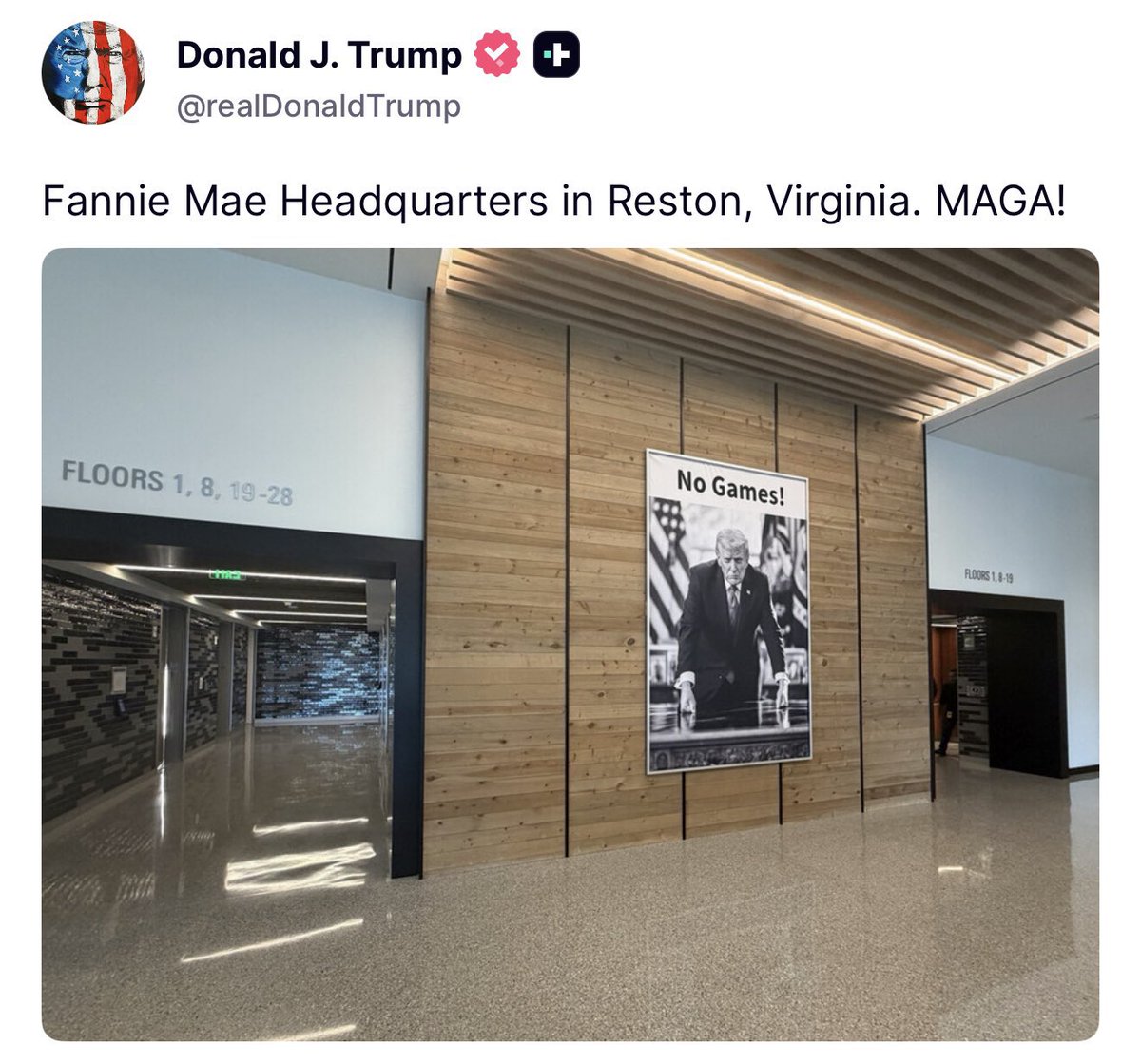
$FNMA $FMCC "No games!" Perhaps the games of rampant manipulation on the OTC market that have tormented shareholders for years are almost over. Will Fannie Mae & Freddie Mac finally be freed from pink sheet prison & take their rightful place on the NYSE? It's time, @pulte.
Pulte@pulte

English
4
16
118
4.9K
IVIARSHALL retweetledi
Yogi
Yogi@Houseofyogi·
Spirit Airlines died tonight at the hands of the socialist crusader, Elizabeth Warren She must be so proud to add another casket to her achievements. Tonight at 3am, Spirit turns off the lights. 14,000 jobs gone. 30+ smaller airports lose service. JetBlue offered $3.8 BILLION in cash to buy Spirit in 2022. Shareholders, flight attendants union, literally everyone voted yes. The combined company would have held 9% of the US market against a Big 4 that already owned 80%. For anyone who understands numbers: 9% isn’t a monopoly against 80%. Warren said no. She wrote letters. She pressured Buttigieg. Biden’s DOJ sued. A federal judge killed the deal in January 2024. Her argument: the merger would cost consumers $1 billion a year. Now look at her collateral damage she dusts under the rug. 510 pilots gone in the months after. 1,800 flight attendants furloughed in December. 14,000 jobs in 2023. 7,500 last week. Zero tonight. And that’s just the people in Spirit uniforms. Catering goes. Fuel guys go. Baggage crews, gate agents, airport coffee shops, hotels and rental cars in 70 cities Spirit flew to. Every airline job carries 3 more on its back. 40,000 people out of work because of one woman’s moronic crusade against the market. And the math ain’t mathing. Spirit abandoned 90 routes during the death spiral. Fares on those routes are up 14% on average. Oakland to Newark: $135 to $288. Fort Myers to San Juan: $92 to $219. Kansas City to Newark up 66%. That’s reality. Not some BS number from a “study.” So @SenWarren tell me how this saves the consumer money? Cheap carriers in a market drop fares 21% across the board. Southwest did this in the 90s and saved Americans $68 BILLION over 20 years. Warren killed it. That’s what moronic politicians led by socialism do. Then with her own blind arrogance, she tweeted Spirit’s collapse is “a Biden win for flyers.” A win. 14,000 people are reading termination letters tonight. And she’s taking credit. This is socialism in 2026. A senator who’s never made payroll thinks she knows how to run a market better than the people who own and work in the company. She saved you a billion on imaginary paper. She cost you ten times that in real life. She didn’t protect consumers from anything. 14,000+ will go from working to welfare. She will make sure to blame billionaires, hardworking tax payers, AI, capitalism and whatever monster they will make up tomorrow hiding under your bed. Higher taxes. Fewer jobs. More expensive everything. She called it a win. I hope you enjoy winning.
English
5.9K
33.5K
124.4K
6.6M
IVIARSHALL retweetledi
celis
celis@MythusCelis·
President Trump’s weekend at Mar-a-Lago, combined with the new housing initiatives, brings fresh hope for $FNMA $FMCC. Rumors of keeping just 15-20% of the warrants, treating senior preferred shares as paid, and lowering capital requirements could deliver the long-awaited positive news and a step closer to NYSE listing.
English
11
17
138
7.9K
IVIARSHALL retweetledi
Cave Man
Cave Man@CaveManDrawing·
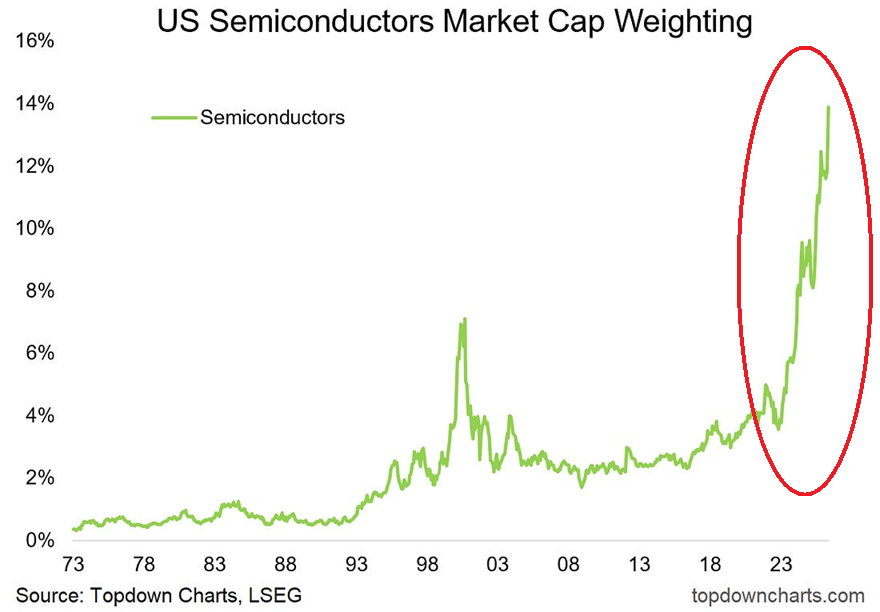
The solution to the Fannie Mae and Freddie Mac is as clear as day: rebrand then relist as an AI data company with semiconductor aspirations. $FNMA $FMCC
Cave Man tweet media
English
0
1
6
685
IVIARSHALL retweetledi
Biotech2k
Biotech2k@Biotech2k1·
Most investors fail to understand that AI is a Gold Rush. Companies are spending hundreds of billions on building out infrastructure to be the best and the first. When the gold rush ends, the need for equipment will collapse to a much lower run rate for maintenance. All those booming metropolises will become ghost towns. The real winners in AI will be on the applications side. No one got rich building the internet. The companies that became big winners were those that uses the internet to build an empire like Amazon or Google. Right now all the focus by traders is on the picks and shovels for the gold rush which are chips and infrastructure. The real winners of the future will be those companies that use AI to build something that changes the world. That is where I am focused.
English
3
6
56
15.2K
IVIARSHALL retweetledi
Jcamp
Jcamp@jcamp4real·
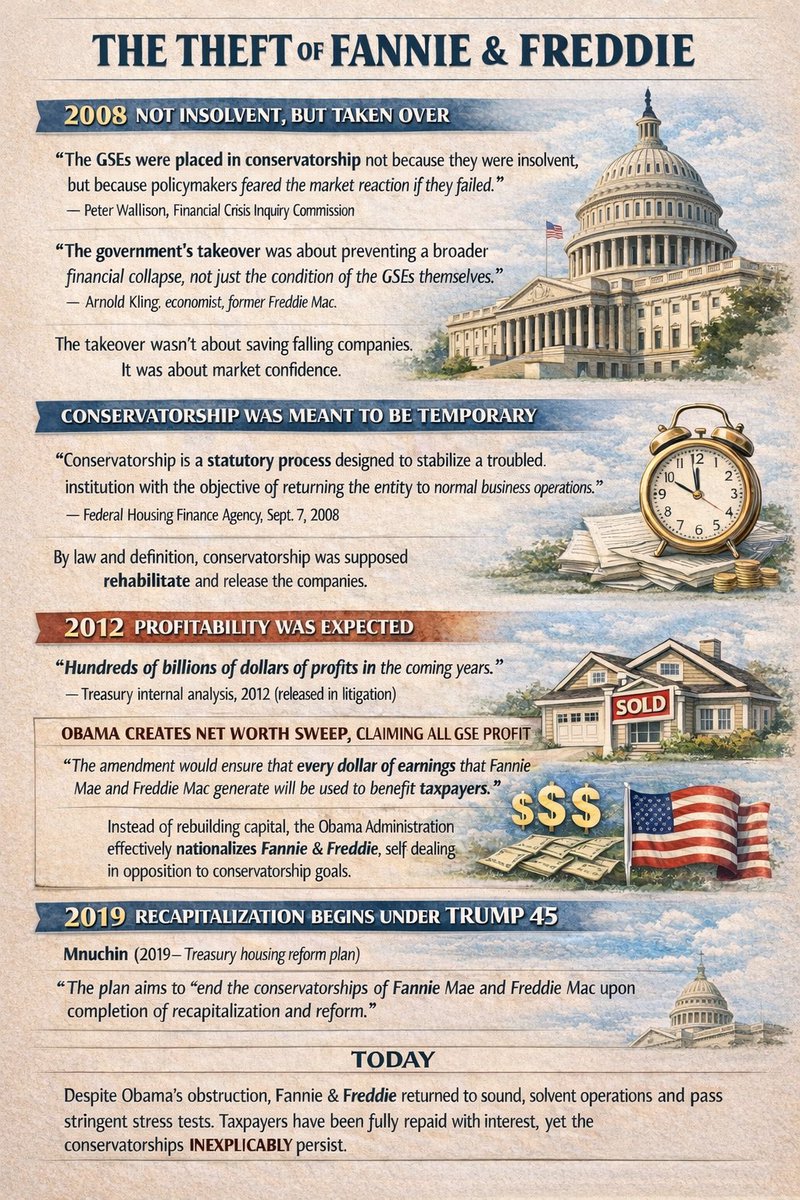
@SecScottBessent @MoF_Qatar Matters closer to home require your attention as well. $FNMA & $FMCC still in their never-ending temporary conservatorship… the one intended to get them sound & solvent, but ended up just being the pretense for Obama to nationalize them.
Jcamp tweet mediaJcamp tweet media
English
1
3
13
778
IVIARSHALL retweetledi
mic lyn
mic lyn@miclyn411359·
$FNMA
mic lyn tweet media
QME
3
10
44
1.8K
IVIARSHALL retweetledi
kh
kh@keithheary92·
@TruthTrumpPost Mr, @realDonaldTrump @TruthTrumpPost please follow through with your promise to release $fnma $fmcc our country, economy and American people need this right now , itll jump start our economy like nothing else ! Americans need more affordable housing and shareholders need justice
English
1
3
14
987
IVIARSHALL retweetledi
@nakkimusic - Los niños de la Pepita -
🧵 THREAD — RWA: Why is no one talking about IOTA? 1/ Everyone is talking about RWA (Real World Assets)… but most “top RWA lists” ignore one of the most complete technologies. 👉 #IOTA Let’s break it down 👇
English
3
14
53
1.6K
IVIARSHALL retweetledi
Cassandra B.C.
Cassandra B.C.@MichaelJBurry__·
Cassandra B.C. tweet media
ZXX
29
53
536
78.8K
IVIARSHALL retweetledi
Cassandra Unchained
Cassandra Unchained@michaeljburry·
Open Letter on Housing, Fannie & Freddie @realDonaldTrump @pulte @SecScottBessent @FHFA @USTreasury $fnma $FMCC We studied housing square footage per capita adequacy, and found that there is no problem there. The US in fact has more residential square footage per capita than any other country in the world. This is not a housing shortage, despite what so many say. The problem is that bigger houses are inefficiently housing fewer people. The post-COVID low rate environment locked people into a lifecycle real estate position. Empty nesters can't sell, first time home buyers cannot buy. Second-hand home inventory is near all-time lows due to record low supply, not record demand. Prices are high due to the same reason. Home equity is now a record $35 trillion, nearly doubling pre-COVID levels. 40% of homeowners own their homes free and clear - a record. And about 30% of all home buyers pay for homes without borrowing. Older homes were upgraded at a record pace during COVID, extending and refreshing the usefulness of residential real estate. Artificially low interest rates, ~$6-7 trillion in helicopter cash and forgivable loans helped drive both the home updates and high housing prices. Work from home moved the office into the home, often expensed or deductible. People with white collar jobs and means chose to live/work in exotic or remote locations. All of this together does not speak of a housing shortage, or a housing problem. Instead it is a problem of current residential space allocation and mobility, and this problem was created by government manipulation of interest rates, cash money supply, and COVID lockups that went on too long and changed work/home behavior. Government created the problem and now maintains policies that prevent free markets from reaching a solution, not the least of which is keeping the GSEs inefficiently run while in conservatorship. Recall Pulte's video upon arriving at Fannie Mae - no one was in the office buildings. The companies have become atherosclerotic, inefficient government programs, while a decade of financial engineering optimized for homeowner wealth accumulation rather than housing market velocity/mobility/fluidity. Government must fix this problem by facilitating efficient re-allocation of housing stock with higher housing velocity/mobility through the release of the GSEs into free markets. This is a problem made for the GSEs. Through well-targeted programs, the GSE can help the free market find spaces to intelligently reallocate , and help US citizens with housing mobility. Building more new overpriced, poorly built homes in increasingly dangerous flood zones and other hazardous fringe areas is not the solution. It adds to the problem through high maintenance burdens on new homeowners with little equity in their homes. Rather, to build mobility/velocity of homeowners and housing space, the GSEs need to be recapitalized and retain easy access to capital markets. They also need to be run by real mortgage executives, not government functionaries. To achieve this they need to exit conservatorship in a manner that excites markets to fund these companies, now with guidelines to prevent risk-taking outside of their purpose, and grow their purchases of mortgages of well-targeted specification. I should have written this into the Recurrence piece itself.
English
191
300
1.7K
624.6K
IVIARSHALL retweetledi
Dominik Schiener
Dominik Schiener@DomSchiener·
Not true... It is abundantly clear that "Web3 adoption" and the playbook of the past hasn't worked for the last year. The only thing that matters is bringing real businesses and real adoption onchain to IOTA. This is what we've been focused on, and this is what the IOTA Manifesto clearly lays out: manifesto.iota.org Everything mentioned there is what we are 100% focused on realizing on IOTA. We reduced the workforce by ~10% over the past week as we are combining all of our resources (no more separate "TWIN team") to focus on TWIN and bringing trade fully onchain on IOTA.
English
51
48
248
22.8K
IVIARSHALL retweetledi
B Coskay
B Coskay@b_csky19·
Dear President @realDonaldTrump, back in August 2025 you pushed a November 2025 #NYSE uplist narrative for $FNMA and $FMCC. We believed in you and have waited patiently long enough. It really only takes one call to do right by the people, what exactly is the hold-up? Why push that narrative and still not act? What is the justifiable reason for this delay? Who can explain it? Mr. President? Secretary @SecScottBessent? Director @pulte? Secretary @SecretaryTurner? Secretary @howardlutnick? Mr. @BillAckman? Mr. @michaeljburry? Anyone? As promised, please: 🇺🇸⚠️ End the Obama/Biden scam. Enough crushing hardworking Americans. 🔓 End #Fanniegate 🏦 Privatize #FannieMae and #FreddieMac - do right by shareholders. ⚖️ Justice delayed for 18 years is not justice. #UplistNow #EndTheConservatorship
B Coskay tweet media
English
11
34
155
5.1K
IVIARSHALL retweetledi
Robert Bowes
Robert Bowes@Robert_B_Bowes·
To compliment the @BillAckman accurate description of the Net Worth Sweep of 100% of Fannie and Freddie profits, one must also look at how the Obama Treasury forced F2 to cook their books. Then Treasury Secretary Tim Geithner continued the Hank Paulson large bailout plan that exacerbated the mortgage market crisis and extended credit losses beyond the sand States. Geithner hired both Blackrock and Blackstone to direct F2 to find as many write downs as they could to justify the $100B each bailout that protected F2 bondholders. When F2 internal models were stressed they each could not come close to $100B in losses. Paulson and Geithner wrongly compared street private label mortgage losses to the relatively safer book of GSE mortgages failing to recognize that GSEs had strong first loss cover in private mortgage insurance and in bank legal obligations to repurchase fraudulent and defectively underwritten mortgages. Obama Treasury forced F2 to cook their books and zero out all PMI ($43B of trapped liquid claims paying ability) and all lender recourse (another $61B of liquid bank assets - $20B alone with BofA) that provided F2 legally obligated claims paying ability. Treasury ignored that first loss liquidity forcing F2 to post large credit provisions in 2008-2010. The policy was extend and pretend for the banks and PMIs but to force F2 into conservatorship. Yet the PMI and recourse funds were being collected while bad loan repurchases mushroomed. F2 also tightened the credit box and doubled GFees during this period. It was a total double standard to target F2 investors. In hindsight F2 never needed the bailouts for cash flow because the credit loss provisions and other valuation allowances were non-cash. The bailouts were optics done for mostly foreign bondholders. American homeowners and F2 shareholders were the victims of that failure. Then with the high non cash credit losses F2 each wrote off $31B and and $21B of Deferred Tax Assets in 2008 respectively. In 2009-2011 another $29B Fannie and $8B Freddie DTA write downs for a total of $89B. Combining the $104B non-cash credit losses with the $89B DTA write downs coincidentally equalled the amount of Treasury F2 bailout in Senior Preferred. Yet in 2010 and 2011 F2 were collecting the PMI, lender recourse, the higher GFees and trends started to look good for home price recovery. Treasury knew ahead of the NWS taking that F2 would be rolling in profits. Nonetheless F2 kept loan loss allowances high and gave no model value to the liquid PMI first loss claim receipts. They all knew ahead of 2012 that the DTAs and loan loss provisions would appear anomalous. Facing obvious valuation allowance reversals, Treasury rushed to implement the 2012 NWS. Smart folks inside witnessed the accounting and loan loss committee gimmickry - with some still working at F2.
Bill Ackman@BillAckman

A number of press reports have characterized our and other shareholders’ efforts on behalf of Fannie and Freddie (F2) as seeking a ‘gift’ or ‘handout’ from the government. We, the shareholders of F2, seek no such thing. Hundreds of financial institutions were bailed out during the GFC by the U.S. Treasury. Nearly all of the financial institution bailouts during the GFC involved an injection of capital in the form of senior preferred stock by Treasury at an interest rate of 5%, plus warrants to acquire common stock in an amount equal to 15% of the face amount of the preferred with an exercise price at the then-current stock price of the rescued institution. For example, Treasury’s preferred stock investment in Goldman Sachs was in an amount of $10 billion and, in addition, Treasury received warrants on $1.5 billion of GS' common stock at its then market price. The bailout terms for F2 were materially more burdensome and expensive, with a higher interest rate and substantially more warrant coverage, than that of every other financial institution (other than those of AIG whose terms were similar). Despite the F2 bailouts’ massively more burdensome terms, shareholders are not complaining about the original terms. Treasury invested $193 billion in F2 in the form of senior preferred stock (SPS), including funding for $2 billion of commitment fees, with a 10% coupon (twice that of the banks). Treasury also received warrants on 79.9% of both companies’ outstanding shares. Fannie and Freddie have since repaid Treasury $301 billion, which includes interest on the SPS at a blended rate of 11.6%, an interest rate which is 160 basis points more per annum, and have returned the entire $193 billion of outstanding principal, $25 billion in excess of what was contractually owed. In summary, the F2 SPS has been fully repaid according to its original contractual terms plus an extra $25 billion. Despite the fact that the SPS has been more than repaid in full, Fannie and Freddie have not accounted for these payments on their respective balance sheets, and the $193 billion of SPS remains an outstanding liability as if no principal payments had ever been made. How can it be, you might ask, if indeed F2 have repaid $301 billion to Treasury when only $276 billion was due could there be any remaining balance of the SPS on the F2 balance sheets? The answer relates to something called the ‘Net Worth Sweep (NWS).’ During the second term of the Obama administration, on August 12, 2012, two quarters after F2 returned to profitability, Treasury announced that it was unilaterally amending the terms of the SPS stock to provide that Treasury would take 100% of the profits of F2 each quarter in lieu of the 10% annual dividend rate. This was not a negotiated resolution with F2. It was a unilateral amendment of the original terms of the SPS that was done in bad faith. The supposed rationale for the amended terms of the SPS was akin to the IRS garnishing the wages of someone who will never be able to pay the taxes that they owe. That is, the Treasury said F2 will never be able to pay the 10% coupon, let alone the SPS’ $193 billion principal balance, so it decided instead to ‘settle’ for 100% of F2’s profits forever. In discovery, shareholders learned that the stated justification for the amendment was false. In mid 2012, the Obama administration had come to learn that both companies would soon be reversing tens of billions of reserves on their balance sheets as housing values had increased and the reserves taken during the GFC had been excessive. The NWS was instituted by Obama to forestall F2 from forever being able to recapitalize and be released from conservatorship. The NWS was not a ‘settlement’ for a lesser amount of future payments. It was the outright theft of the forever profits of both companies. Never before or since has the government ‘swept’ 100% of the profits of any company, let alone a financial institution in conservatorship, a form of government intervention where the goal is rehabilitation of the institution, and where the hierarchy of corporate claims has always been respected. The accounting for the NWS payments while it was in effect (until Secretary Mnuchin terminated the NWS in Trump’s first term) was also unusual. The NWS was treated by F2 as a quarterly adjustment to the dividend rate on the SPS such that the dividend amount owed was made equal to the after-tax profits of F2 for that quarter with no limitation. In other words, regardless of the amount of profit F2 generated for the quarter – whether or not it was in excess of the original 10% annual dividend – the dividend payable under the NWS was made equal to the quarterly profit. The absurd terms of the NWS sweep therefore made it impossible for any partial or full repayment of the SPS to take place as every dollar paid to the Treasury on the amended terms of the SPS was considered a dividend payment, even if the amount was massively in excess of the original contractual SPS terms. The absurdity of the NWS was made clear just two quarters after the NWS went into effect. Fannie Mae generated a profit of $59 billion in the first quarter of 2013, and the SPS dividend rate for that quarter was set at $59 billion so the entire amount was swept to the government, more than 10 times the contractual dividend rate. I had the opportunity to discuss F2 and the NWS with Warren Buffett about a decade ago and he said that he “couldn’t believe what the government had done.” In short, the shareholders of F2 are simply asking the government to respect the original and highly burdensome terms of the SPS. There is no dispute that Treasury has received more than the original 10% coupon and full repayment of principal of the SPS, that is, an extra $25 billion. We and the millions of other shareholders of F2 are simply asking the administration to honor the original SPS terms and properly account for the $301 billion of payments, thereby eliminating the SPS liability from both companies’ balance sheets. Shareholders have not asked for the extra $25 billion to be returned to the two companies. Treasury can decide whether to keep those funds or return them to the companies. Accounting for the repayment of the SPS has other important implications. Namely, it is critically important that conservatorships respect the rule of law, in particular, the contractual terms of corporate instruments and the hierarchy of claims. Otherwise, no financial institution that gets into trouble will be able to raise rescue capital in the private markets. Notably, the treatment of F2 in conservatorship explains why Silicon Valley Bank and other recent large bank failures since the GFC were unable to raise private capital and avoid government intervention or a forced sale to J.P. Morgan. If the government with the stroke of a pen during conservatorship can at a whim wipe out common and preferred shareholders, no one is going to step in to try to save a financial institution that gets into trouble, and only the top few banks will be possible rescuers of big banks that fail. Furthermore, because of F2’s history, their reputation in the capital markets has been greatly damaged. F2 raised $22 billion of preferred stock in the year or so prior to conservatorship as the government pressed both companies to raise capital. Institutions were willing to invest billions of dollars of capital into both institutions before they failed because, based on all precedent conservatorships, the contractual terms of all financial instruments and the hierarchy of claims had been preserved. Unfortunately, in light of the precedent of the net worth sweep, no investor can be confident that they won’t be wiped out in a future conservatorship so none has been willing to take the risk. Some have proposed that Treasury simply convert the SPS into junior preferred and common stock and massively dilute shareholders. Putting aside the potential legal challenges to this approach, the result will be that Treasury will at best own something approaching 95% of both companies rather than 79.9%. While the government’s percentage ownership stake would be larger in the SPS conversion approach, the value of the government’s larger stake would be considerably lower as the companies would become un-investable. Who would invest in F2 alongside the government when they just wiped out the previous owners? In the SPS conversion scenario, the government’s stake, at best, if it could be sold, would trade at a massively discounted valuation, well below the value of the government's stake if Treasury retained only its contracted for 79.9% stake and respected the original terms of the SPS. In other words, a slightly smaller ownership stake of much more highly valued companies would equate to considerably more value for Treasury and taxpayers. In a public letter to Rand Paul after his first term in November of 2021, President Trump recognized that the net worth sweep was theft from the shareholders of Fannie and Freddie. He wrote: “Another Obama/Biden scam in legal trouble was when they allowed the Federal Housing Finance Agency (FHFA) to steal the retirement savings of hardworking Americans who had invested in Fannie Mae and Freddie Mac…The idea that the government can steal money from its citizens is socialism and is a travesty brought to you by the Obama/Biden administration. My Administration was denied the time it needed to fix this problem because of the unconstitutional restriction on firing Mel Watt. It has to come to an end and courts must protect our citizens.” I couldn’t have said it better than President Trump. Now that you have the time, Mr. President, let’s Stop the Steal!

English
44
109
387
147.5K
IVIARSHALL retweetledi
IOTA
IOTA@iota·
30 parties, 36 documents, 240 copies - for one shipment. Global trade runs on this every day. We're already fixing it through @TWINGlobalOrg.
English
14
58
266
8.4K
IVIARSHALL retweetledi
Bill Ackman
Bill Ackman@BillAckman·
A number of press reports have characterized our and other shareholders’ efforts on behalf of Fannie and Freddie (F2) as seeking a ‘gift’ or ‘handout’ from the government. We, the shareholders of F2, seek no such thing. Hundreds of financial institutions were bailed out during the GFC by the U.S. Treasury. Nearly all of the financial institution bailouts during the GFC involved an injection of capital in the form of senior preferred stock by Treasury at an interest rate of 5%, plus warrants to acquire common stock in an amount equal to 15% of the face amount of the preferred with an exercise price at the then-current stock price of the rescued institution. For example, Treasury’s preferred stock investment in Goldman Sachs was in an amount of $10 billion and, in addition, Treasury received warrants on $1.5 billion of GS' common stock at its then market price. The bailout terms for F2 were materially more burdensome and expensive, with a higher interest rate and substantially more warrant coverage, than that of every other financial institution (other than those of AIG whose terms were similar). Despite the F2 bailouts’ massively more burdensome terms, shareholders are not complaining about the original terms. Treasury invested $193 billion in F2 in the form of senior preferred stock (SPS), including funding for $2 billion of commitment fees, with a 10% coupon (twice that of the banks). Treasury also received warrants on 79.9% of both companies’ outstanding shares. Fannie and Freddie have since repaid Treasury $301 billion, which includes interest on the SPS at a blended rate of 11.6%, an interest rate which is 160 basis points more per annum, and have returned the entire $193 billion of outstanding principal, $25 billion in excess of what was contractually owed. In summary, the F2 SPS has been fully repaid according to its original contractual terms plus an extra $25 billion. Despite the fact that the SPS has been more than repaid in full, Fannie and Freddie have not accounted for these payments on their respective balance sheets, and the $193 billion of SPS remains an outstanding liability as if no principal payments had ever been made. How can it be, you might ask, if indeed F2 have repaid $301 billion to Treasury when only $276 billion was due could there be any remaining balance of the SPS on the F2 balance sheets? The answer relates to something called the ‘Net Worth Sweep (NWS).’ During the second term of the Obama administration, on August 12, 2012, two quarters after F2 returned to profitability, Treasury announced that it was unilaterally amending the terms of the SPS stock to provide that Treasury would take 100% of the profits of F2 each quarter in lieu of the 10% annual dividend rate. This was not a negotiated resolution with F2. It was a unilateral amendment of the original terms of the SPS that was done in bad faith. The supposed rationale for the amended terms of the SPS was akin to the IRS garnishing the wages of someone who will never be able to pay the taxes that they owe. That is, the Treasury said F2 will never be able to pay the 10% coupon, let alone the SPS’ $193 billion principal balance, so it decided instead to ‘settle’ for 100% of F2’s profits forever. In discovery, shareholders learned that the stated justification for the amendment was false. In mid 2012, the Obama administration had come to learn that both companies would soon be reversing tens of billions of reserves on their balance sheets as housing values had increased and the reserves taken during the GFC had been excessive. The NWS was instituted by Obama to forestall F2 from forever being able to recapitalize and be released from conservatorship. The NWS was not a ‘settlement’ for a lesser amount of future payments. It was the outright theft of the forever profits of both companies. Never before or since has the government ‘swept’ 100% of the profits of any company, let alone a financial institution in conservatorship, a form of government intervention where the goal is rehabilitation of the institution, and where the hierarchy of corporate claims has always been respected. The accounting for the NWS payments while it was in effect (until Secretary Mnuchin terminated the NWS in Trump’s first term) was also unusual. The NWS was treated by F2 as a quarterly adjustment to the dividend rate on the SPS such that the dividend amount owed was made equal to the after-tax profits of F2 for that quarter with no limitation. In other words, regardless of the amount of profit F2 generated for the quarter – whether or not it was in excess of the original 10% annual dividend – the dividend payable under the NWS was made equal to the quarterly profit. The absurd terms of the NWS sweep therefore made it impossible for any partial or full repayment of the SPS to take place as every dollar paid to the Treasury on the amended terms of the SPS was considered a dividend payment, even if the amount was massively in excess of the original contractual SPS terms. The absurdity of the NWS was made clear just two quarters after the NWS went into effect. Fannie Mae generated a profit of $59 billion in the first quarter of 2013, and the SPS dividend rate for that quarter was set at $59 billion so the entire amount was swept to the government, more than 10 times the contractual dividend rate. I had the opportunity to discuss F2 and the NWS with Warren Buffett about a decade ago and he said that he “couldn’t believe what the government had done.” In short, the shareholders of F2 are simply asking the government to respect the original and highly burdensome terms of the SPS. There is no dispute that Treasury has received more than the original 10% coupon and full repayment of principal of the SPS, that is, an extra $25 billion. We and the millions of other shareholders of F2 are simply asking the administration to honor the original SPS terms and properly account for the $301 billion of payments, thereby eliminating the SPS liability from both companies’ balance sheets. Shareholders have not asked for the extra $25 billion to be returned to the two companies. Treasury can decide whether to keep those funds or return them to the companies. Accounting for the repayment of the SPS has other important implications. Namely, it is critically important that conservatorships respect the rule of law, in particular, the contractual terms of corporate instruments and the hierarchy of claims. Otherwise, no financial institution that gets into trouble will be able to raise rescue capital in the private markets. Notably, the treatment of F2 in conservatorship explains why Silicon Valley Bank and other recent large bank failures since the GFC were unable to raise private capital and avoid government intervention or a forced sale to J.P. Morgan. If the government with the stroke of a pen during conservatorship can at a whim wipe out common and preferred shareholders, no one is going to step in to try to save a financial institution that gets into trouble, and only the top few banks will be possible rescuers of big banks that fail. Furthermore, because of F2’s history, their reputation in the capital markets has been greatly damaged. F2 raised $22 billion of preferred stock in the year or so prior to conservatorship as the government pressed both companies to raise capital. Institutions were willing to invest billions of dollars of capital into both institutions before they failed because, based on all precedent conservatorships, the contractual terms of all financial instruments and the hierarchy of claims had been preserved. Unfortunately, in light of the precedent of the net worth sweep, no investor can be confident that they won’t be wiped out in a future conservatorship so none has been willing to take the risk. Some have proposed that Treasury simply convert the SPS into junior preferred and common stock and massively dilute shareholders. Putting aside the potential legal challenges to this approach, the result will be that Treasury will at best own something approaching 95% of both companies rather than 79.9%. While the government’s percentage ownership stake would be larger in the SPS conversion approach, the value of the government’s larger stake would be considerably lower as the companies would become un-investable. Who would invest in F2 alongside the government when they just wiped out the previous owners? In the SPS conversion scenario, the government’s stake, at best, if it could be sold, would trade at a massively discounted valuation, well below the value of the government's stake if Treasury retained only its contracted for 79.9% stake and respected the original terms of the SPS. In other words, a slightly smaller ownership stake of much more highly valued companies would equate to considerably more value for Treasury and taxpayers. In a public letter to Rand Paul after his first term in November of 2021, President Trump recognized that the net worth sweep was theft from the shareholders of Fannie and Freddie. He wrote: “Another Obama/Biden scam in legal trouble was when they allowed the Federal Housing Finance Agency (FHFA) to steal the retirement savings of hardworking Americans who had invested in Fannie Mae and Freddie Mac…The idea that the government can steal money from its citizens is socialism and is a travesty brought to you by the Obama/Biden administration. My Administration was denied the time it needed to fix this problem because of the unconstitutional restriction on firing Mel Watt. It has to come to an end and courts must protect our citizens.” I couldn’t have said it better than President Trump. Now that you have the time, Mr. President, let’s Stop the Steal!
English
370
467
2.2K
856.2K