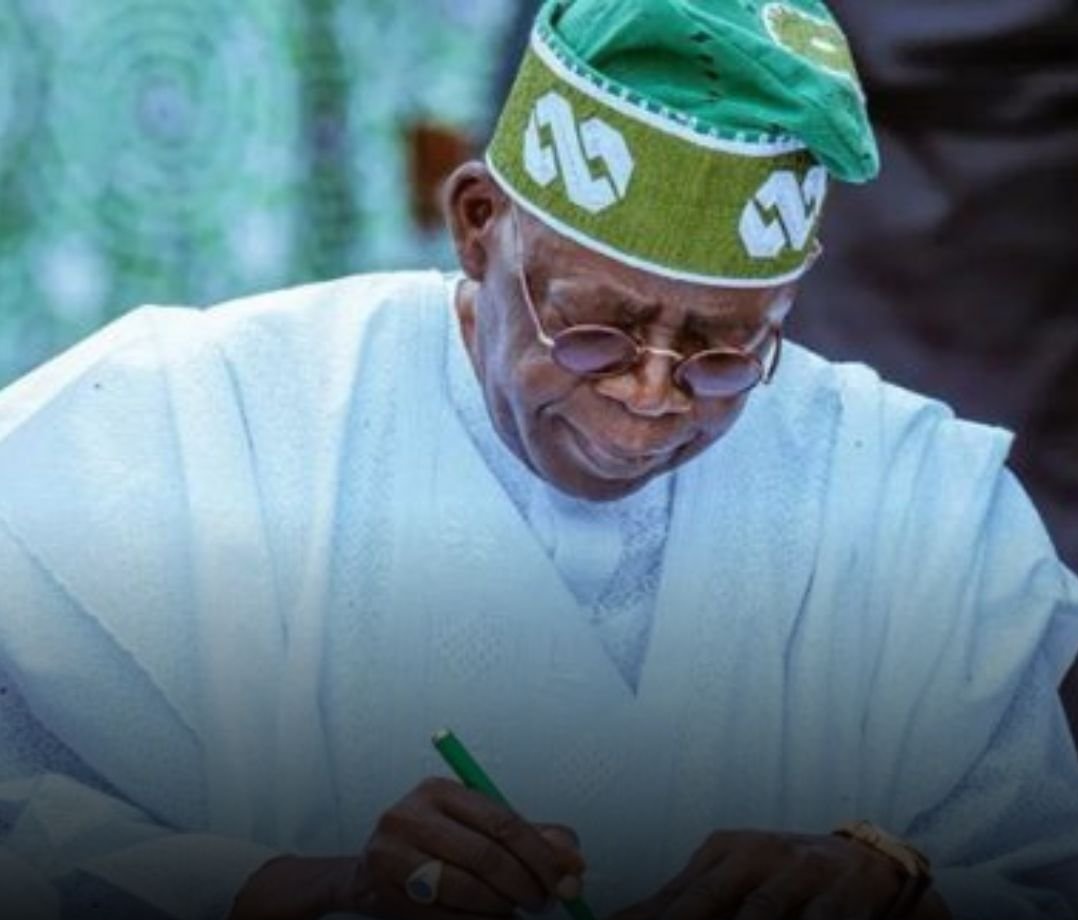
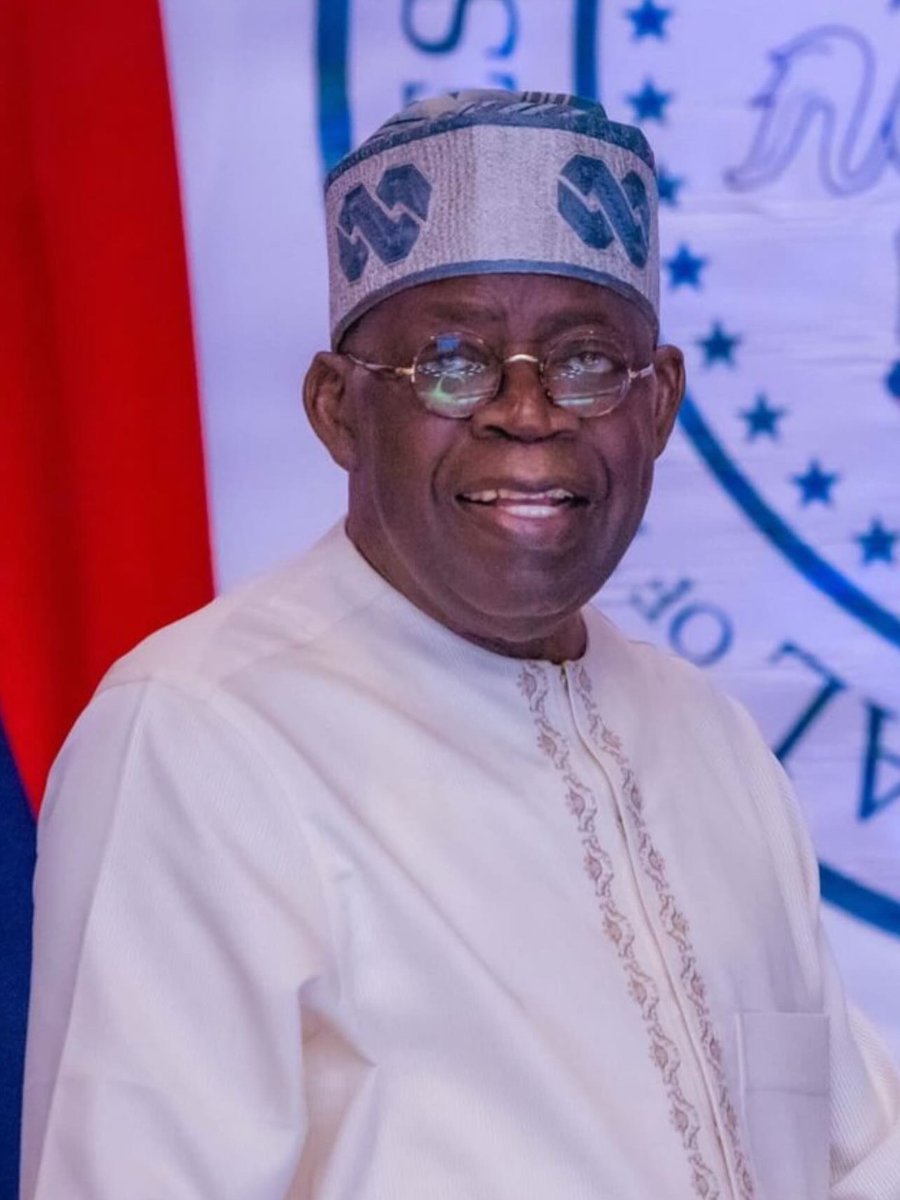
Video of Tinubu mocking Atiku for privatizing Ajaokuta Steel Company. He asksd his audience, “is it working today?”
If Tinubu recognized that Ajaokuta Steel wasn’t working, why did he allocate ₦5.18 billion to it in 2024 and ₦6.21 billion in 2025?
What a callous kleptocrat!✍️
As we speak, people are destroying the fences protecting the Lagos to Calabar Road & stealing the green band wires meant to beautify it. - Minister of Works, Dave Umahi 🔥❤️
Pantami Phenomenon:
"I'm not a politician, I have no business with politics. I don't attend political meetings. I only attended a meeting on propagating Islam" Pantami, 2008
"I've been attending political meetings since 2001 to convince Buhari to join politics" Pantami, 2026
“What kind of President is this. All your policies are for people to suff£r.
I am among the Clerics that were selected and paid to go round and convince people to vote for Muslim/Muslim ticket and we did exactly that because we thought their intentions was pure” - Cleric rants
Wike: Seun, I have a Rolls-Royce
Seun: who gave you?
Wike: Someone…,,,,Nobody gave me a Rolls-Royce
Seun: You bought it with your own money?
Wike: which money?
Wike: Let me tell you. Before Hammatan, there was cold
@SundayDareSD Let the ruling class stop living large at the expense of commonwealth before introducing and reforming. What have you guys done with subsidy removal revenues and other revenues? Stop living extravagant lifestyle first
The Poor Are The Main Beneficiaries Of The New Tax Reforms
No tax official will pry into your bank account to see who you transferred money to. Narratives about bank transfers are misinformation; there is nothing of the sort. We can only tax, return, profit and consumption.
Executive Chairman, Nigeria Revenue Service,
Dr Zacchaeus Adedeji
@SegunShowunmi We don’t need any tax reform now! What we need is probity, accountability and financial discipline from the so-called gvt. If they can cut leakages,waste and Corruption, then we can talk of tax reform
Structural Reform and the Importance of Shared National Responsibility.
It is particularly concerning when elements of the political opposition otherwise presumed to understand the basic mechanics of public finance choose to privilege populist theatrics over analytical honesty. In periods of deep structural reform, international experience consistently shows that broad-based political support is essential, irrespective of partisan alignment. Macroeconomic stabilization and fiscal correction are not ideological luxuries; they are preconditions for sustainable growth and social protection.
Many of the reforms currently being implemented were long acknowledged as necessary, yet repeatedly deferred due to political cost. What distinguishes the present moment is not novelty, but resolve. Policies that were previously avoided are now being undertaken with clarity and courage, precisely because the costs of delay had become greater than the costs of action.
Reactionary narratives that deliberately conflate fiscal concepts or exaggerate hardship for political mobilization risk undermining reforms whose primary beneficiaries are the very citizens being misled. International reform episodes from subsidy rationalization to exchange-rate liberalization demonstrate that while adjustment periods are difficult, the long-term gains in stability, service delivery, and inclusion are substantial and widely shared.
There is a well-documented reform paradox in political economy: those who benefit most from systemic change often provide limited immediate support, while those who benefited from distortions possess both the incentive and the capacity to resist, distort, and misinform. This dynamic has been observed repeatedly in transitions toward more transparent, rules-based economic systems.
Nigeria is not exempt from this pattern. However, nation-building requires a conscious rejection of misinformation, selective arithmetic, and the politics of deliberate confusion. Fiscal reform is not a zero-sum contest between government and citizens; it is a collective investment in macroeconomic stability, institutional credibility, and intergenerational equity.
The task before the country is therefore not one of political point-scoring, but of shared responsibility. Sustained reform demands honesty in public discourse, analytical rigor in critique, and a commitment to national outcomes over short-term advantage.
Nigeria has a nation to build. That task cannot be achieved through the politics of illusion, distortion, or falsehood but through discipline, truth, and collective purpose.
Otunba Segun Showunmi
Dan Maliki
The Alternative.
CC: @officialABAT@cenbank@DrYemiCardoso@FinMinNigeria@FMINONigeria
BREAKING: President Tinubu Affirms January 1, 2026, Commencement of Major Tax Reforms.
President Bola Ahmed Tinubu has issued a firm statement reaffirming that Nigeria's landmark tax reform laws will take effect as scheduled on January 1, 2026, describing the changes as a "once-in-a-generation opportunity" to establish a fairer and more competitive fiscal system.
The statement reads: “The new tax laws, including those that took effect on June 26, 2025, and the remaining acts scheduled to commence on January 1, 2026, will continue as planned.
“These reforms are a once-in-a-generation opportunity to build a fair, competitive, and robust fiscal foundation for our country.
“The tax laws are not designed to raise taxes, but rather to support a structural reset, drive harmonisation, and protect dignity while strengthening the social contract.
“I urge all stakeholders to support the implementation phase, which is now firmly in the delivery stage.
“Our administration is aware of the public discourse surrounding alleged changes to some provisions of the recently enacted tax laws.
“No substantial issue has been established that warrants a disruption of the reform process. Absolute trust is built over time through making the right decisions, not through premature, reactive measures.
“I emphasise our administration's unwavering commitment to due process and the integrity of enacted laws. The Presidency pledges to work with the National Assembly to ensure the swift resolution of any issue identified.
“I assure all Nigerians that the Federal Government will continue to act in the overriding public interest to ensure a tax system that supports prosperity and shared responsibility.”
Who authorised Forest Guards?
Who approved funding?
Who authorised disbursing arms to them?
Do they have powers of arrest?
Are they Federal? State? Local?
Will they be armed with the same weapons as the State or Federal, meaning shotguns or submachine guns
Was their employment in accordance with Federal Character?
Are they the salaries of casual staff? Union? Are they pensionable? What grade level are they?
How can an appointee hire and arm Nigerians just like that? What authority?
I have to apologise for supporting the removal of the PMS subsidy by President Bola Ahmed Tinubu
The policy is right; removal of the PMS subsidy is a revenue event. My assumption and hope were that removing the PMS subsidy would free up fiscal resources to rebuild Nigeria's infrastructure and educate the millions of children roaming the streets.
However, it's apparent that, based on the results of the first half of 2025, that hope will not be realised with this administration at the current spending trajectory. President Bola Tinubu is borrowing and spending far in excess of revenues, but not on infrastructure; he is slowly sinking into a debt trap.
There is no defence for earning N10.92t in cash, borrowing an additional N6.1t, bringing the total funds available in HY 2025 to N16t, and then allocating just N393b for Federal Capital Projects across Nigeria. That's less than 3%
2024 was no different: N20t was earned as cash, another N12t was borrowed, bringing the total available to N32t, yet only N6t was allocated to capital expenditure.
For context, in 2021, President Buhari raised N4.6t in cash and borrowed N4.5t, bringing the total cash to N9.1t. N3.08t was released as cash for CAPEX, about 34%
It's gross fiscal irresponsibility. Those who defend this are either asleep or paid.
The Lagos to Calabar Coastal road is not connected to any existing intrastate expressway
The Lagos to Ibadan standard gauge railway is not connected to the national railway grid
The Abuja to Kaduna railway is not connected to the national railway grid
The Kano to Maradu railway is not connected to the national railway grid
The East to West road is suboptimal
The Abuja to Lokoja expressway is suboptimal
Nigeria has project management issues