
Tirof-Ivan

33.9K posts

Tirof-Ivan banner
Tirof-Ivan

Tirof-Ivan

@Ilescasivan

Medicina de Urgencias / Z73.0 CIE10 - QD85 CIE11/ A veces de buenas, otras de malas, depende de la dosis de impregnacion de cafe mañananero.

Álvaro Obregón Katılım Aralık 2009
4.6K Takip Edilen1.5K Takipçiler
Tirof-Ivan retweetledi
Mohammed Ashour
Mohammed Ashour@Dr_Ashour93·
طلاب #الدكتوراه 👨‍🎓 هل تريد معرفة نسبة المحتوى المكتوب بالذكاء الاصطناعي في مخطوطتك خلال 10 ثوانٍ فقط؟ 1️⃣ ادخل إلى AnswerThis 2️⃣ اختر AI Writer 3️⃣ الصق النص أو ارفع الملف 4️⃣ اضغط Analysis ثم Plagiarism 5️⃣ احصل على تقرير الانتحال 6️⃣ اضغط AI Detection 👇👇 answerthis.io/home-2?fpr=fah…
العربية
0
36
208
12.7K
Tirof-Ivan retweetledi
Fede Gordo-Vidal
Fede Gordo-Vidal@ventilacionmeca·
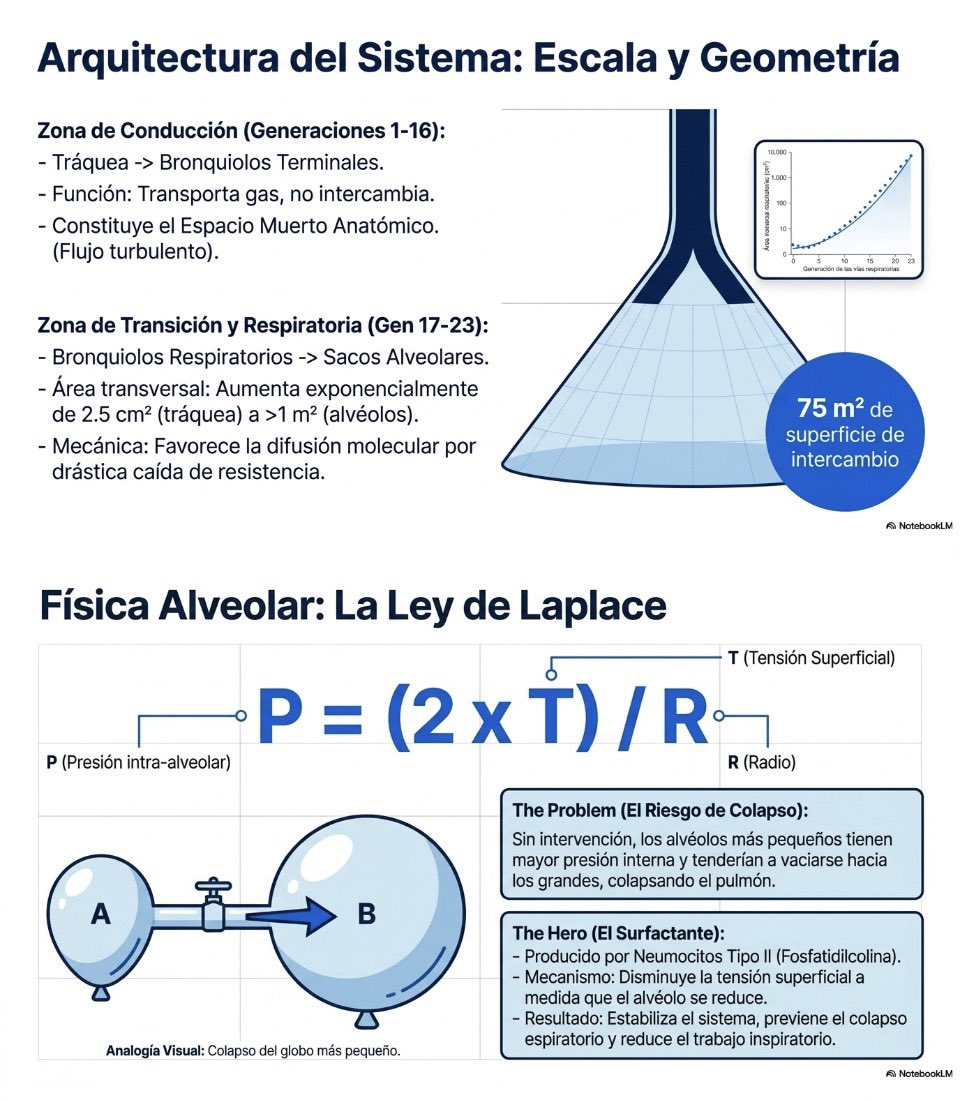
Arquitectura para un flujo molecular. Laplace (del pequeño al grande)
Fede Gordo-Vidal tweet media
Español
0
9
25
1.1K
Tirof-Ivan retweetledi
Diego Ketamino
Diego Ketamino@DiegoEscarraman·
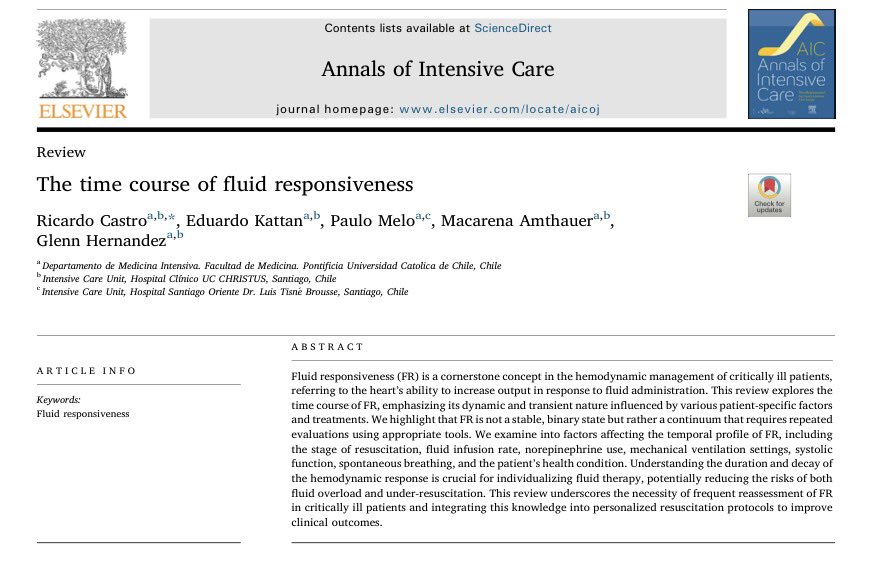
Critical Care & Emergency Medicine, es una revista médica científica internacional de acceso abierto, revisada por pares, dedicada a la difusión del conocimiento. criticalcareandemergencymedicine.com Su objetivo es conectar a médicos, investigadores y profesionales de la salud de América Latina y del mundo para compartir evidencia científica de alta calidad que contribuya a mejorar la atención del paciente críticamente enfermo. Puedes enviar tu manuscrito acá bit.ly/4dmmsOI
Diego Ketamino tweet media
Español
0
16
29
1.2K
Tirof-Ivan retweetledi
医療統計start-upサロン
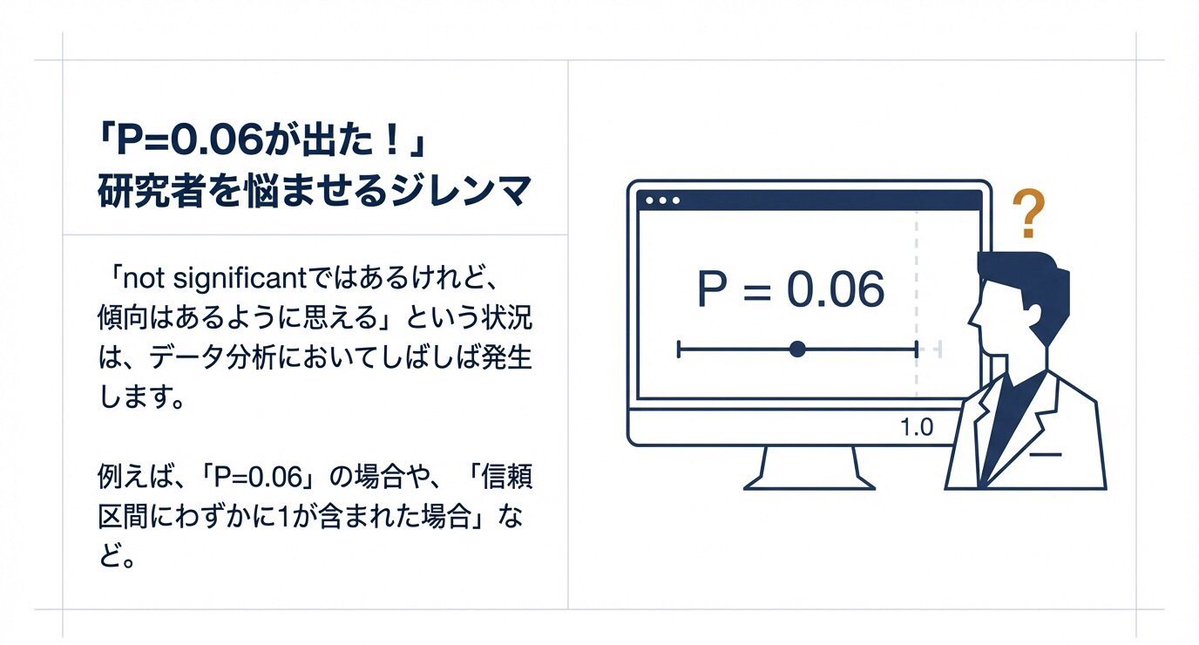
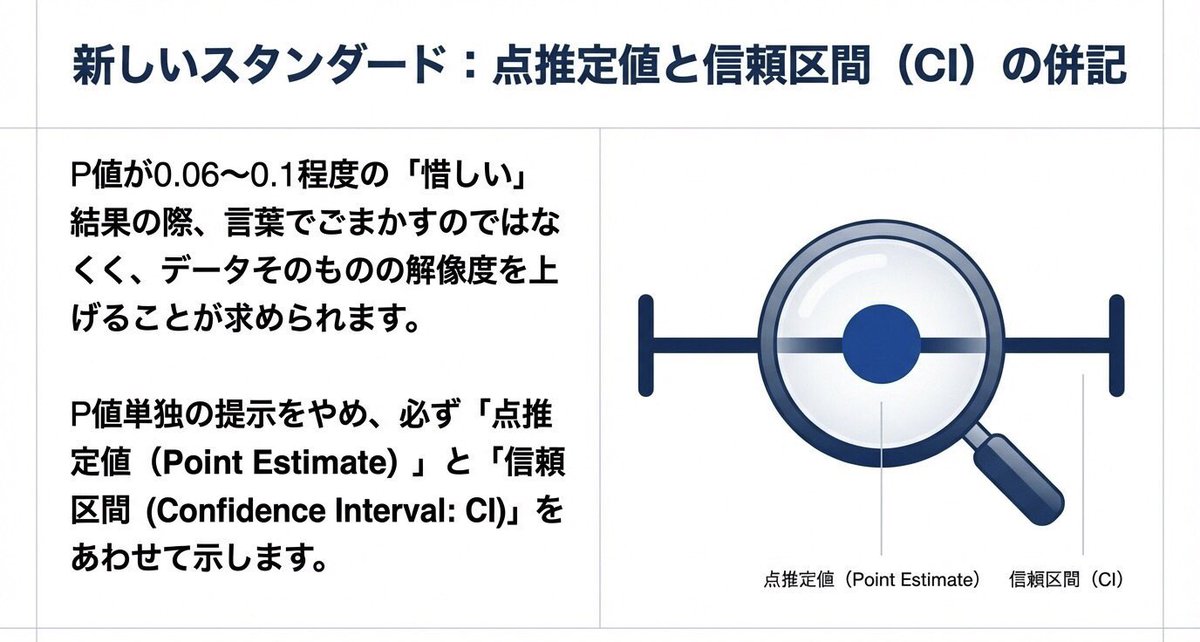
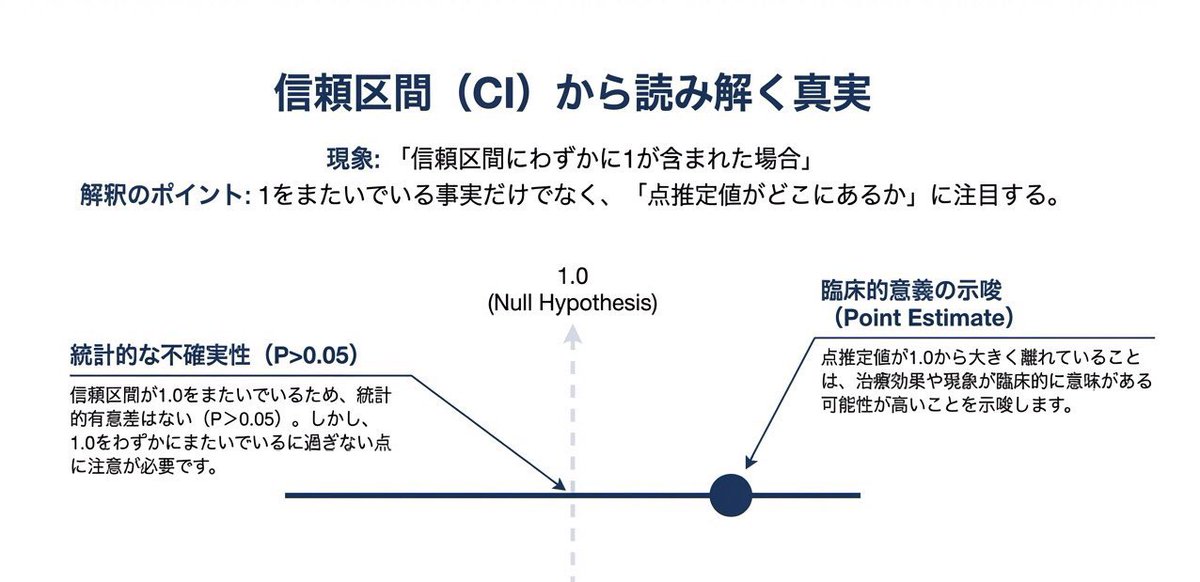
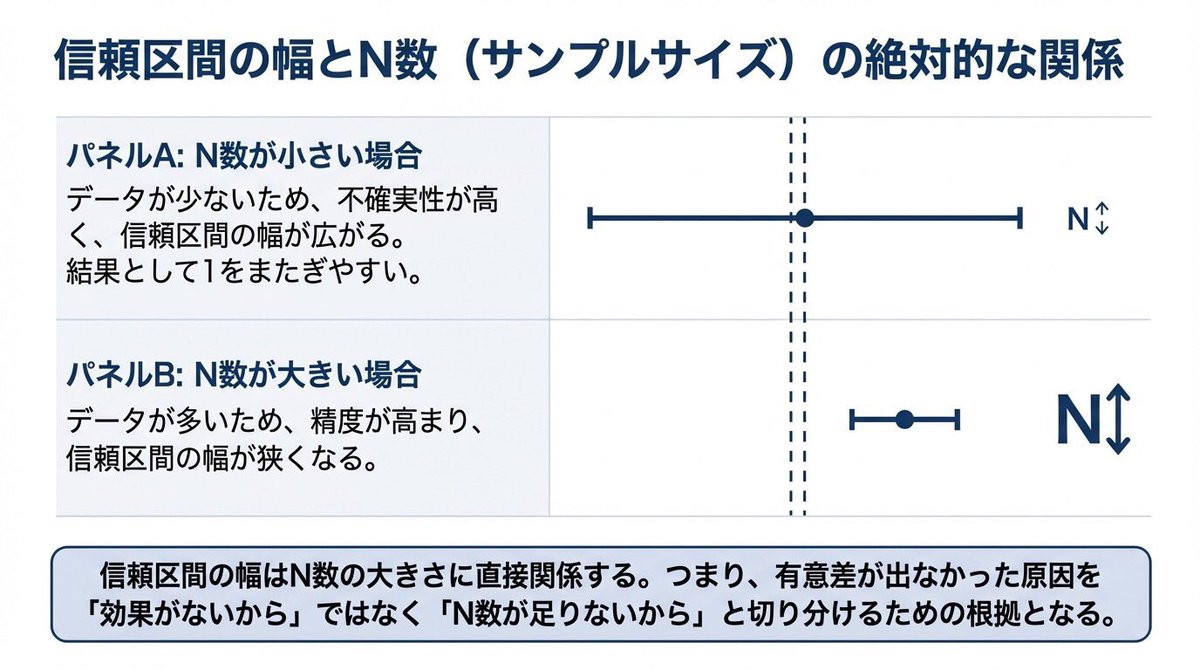
p値=0.06。 惜しいと思っちゃいますよね。 あなたならどう解釈しますか? 「有意差なし」で終えるのか。 それとも「傾向あり」と書くのか。 ここで悩む人は多いです。 たとえば、ある介入で 再入院リスクを検討した結果が オッズ比 0.72、95%信頼区間 0.50–1.03、P=0.06 だったとします。 この結果を見て、 「有意差なしだから差はない」 あるいは「傾向あり」と書いて有意性をにおわせるのは、どちらも推奨されておりません⚠️ この場合に大切なのは、 P値だけで判断しないことです。 見るべきなのは、点推定値と信頼区間。 この場合、点推定値であるオッズ比 0.72は、介入群で再入院のオッズが約28%低い可能性を示しています。 一方、95%信頼区間 0.50–1.03 は、 比較的大きなリスク低下の可能性(0.50)から、ほとんど差がない可能性(1.03)まで含んでいます。 つまりこの結果は、 効果を示唆する方向性はあるが、まだ不確実性が残ると解釈するのが自然です。 さらに、信頼区間の幅はN数と強く関係します。N数が小さいと信頼区間は広くなり、1をまたぎやすくなります。 そのため、有意差が出なかった理由を「効果がない」と即断するのではなく、推定精度の問題として捉える視点も重要です。 だからこそ、 P=0.06だからダメというわけではなく 傾向ありでごまかすでもなく、 点推定値と信頼区間を示して、効果の大きさと精度をそのまま伝えることが大切です。 「結果の記載例」 介入群では対照群と比較して再入院オッズの低下を認めたが、統計学的有意差には至らなかった(OR 0.72, 95%CI 0.50–1.03, P=0.06)。 「考察の記載例」 再入院オッズの28%低下を示しており、臨床的に意味のある差を示唆する可能性がある。一方で、95%信頼区間は0.50–1.03と広く、差がない可能性も含んでいたことから、推定には不確実性が残る。サンプルサイズが十分でなかったため推定精度が不足し、統計学的有意差に至らなかった可能性が考えられる。 とすると、正確に伝えることができるのでオススメになります。 参考になれば幸いです。
医療統計start-upサロン tweet media医療統計start-upサロン tweet media医療統計start-upサロン tweet media医療統計start-upサロン tweet media
日本語
3
69
578
62.1K
Tirof-Ivan retweetledi
Rotsen Chipicucho Corazón de León 🦁
El nombre "sx de ovario poliquístico" ha causado desde siempre confusión y errores dx. Finalmente SOP acaba d cambiar d nombre. A partir d hoy, se llama Sx Metabólico Ovarico Poliendócrino (PMOS) Resultado de un consenso global publicado hoy en The Lancet. Va hilo 🧵
Español
2
56
305
11.9K
Tirof-Ivan retweetledi
MedClub
MedClub@MedClubPage·
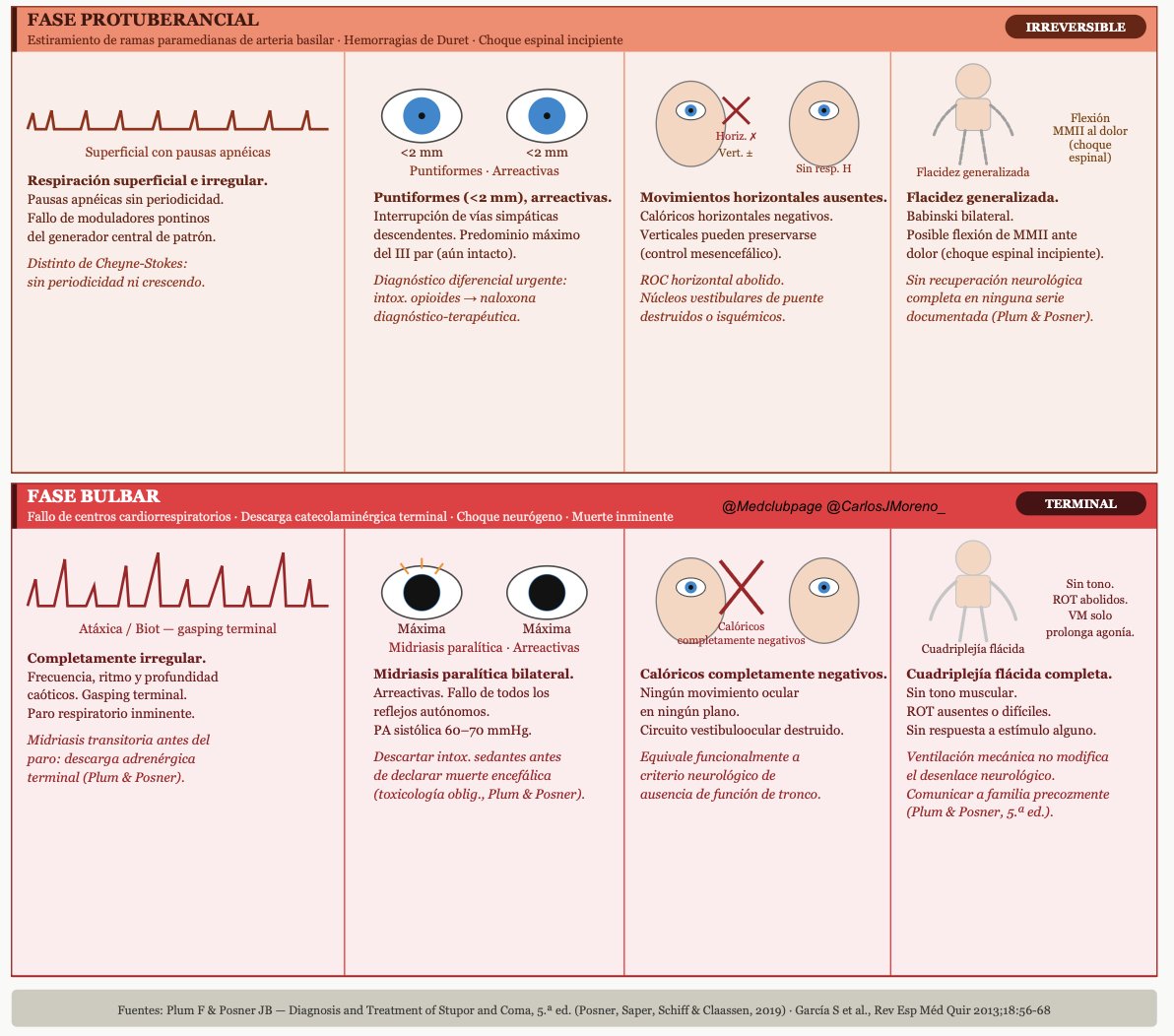
#Neurología #MedicinaInterna Viñeta de los puntos básicos sobre la clínica de las fases del deterioro rostro-caudal.
MedClub tweet mediaMedClub tweet media
Español
1
27
96
3.4K
Tirof-Ivan retweetledi
Dr.明日乃
Dr.明日乃@Asunokampo·
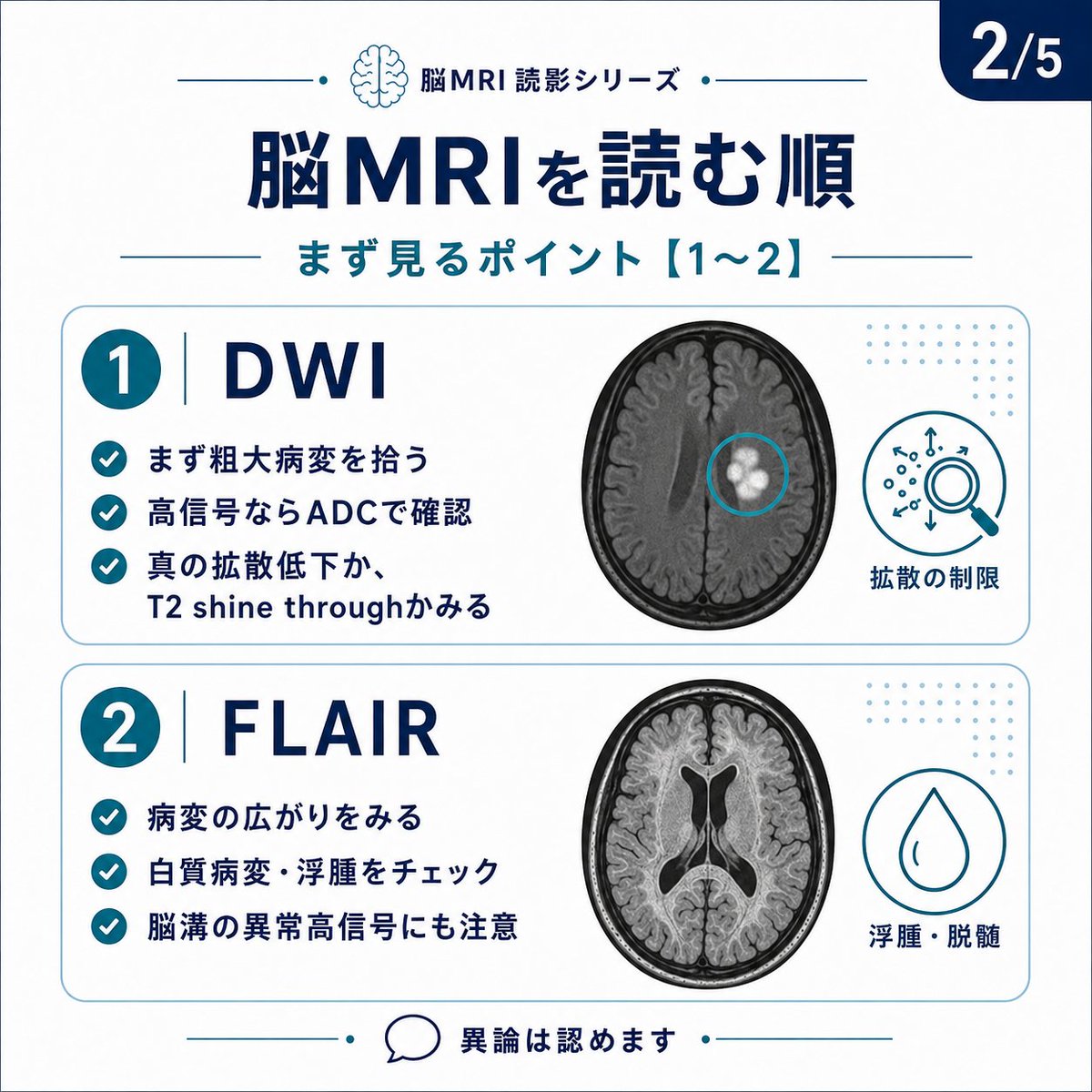
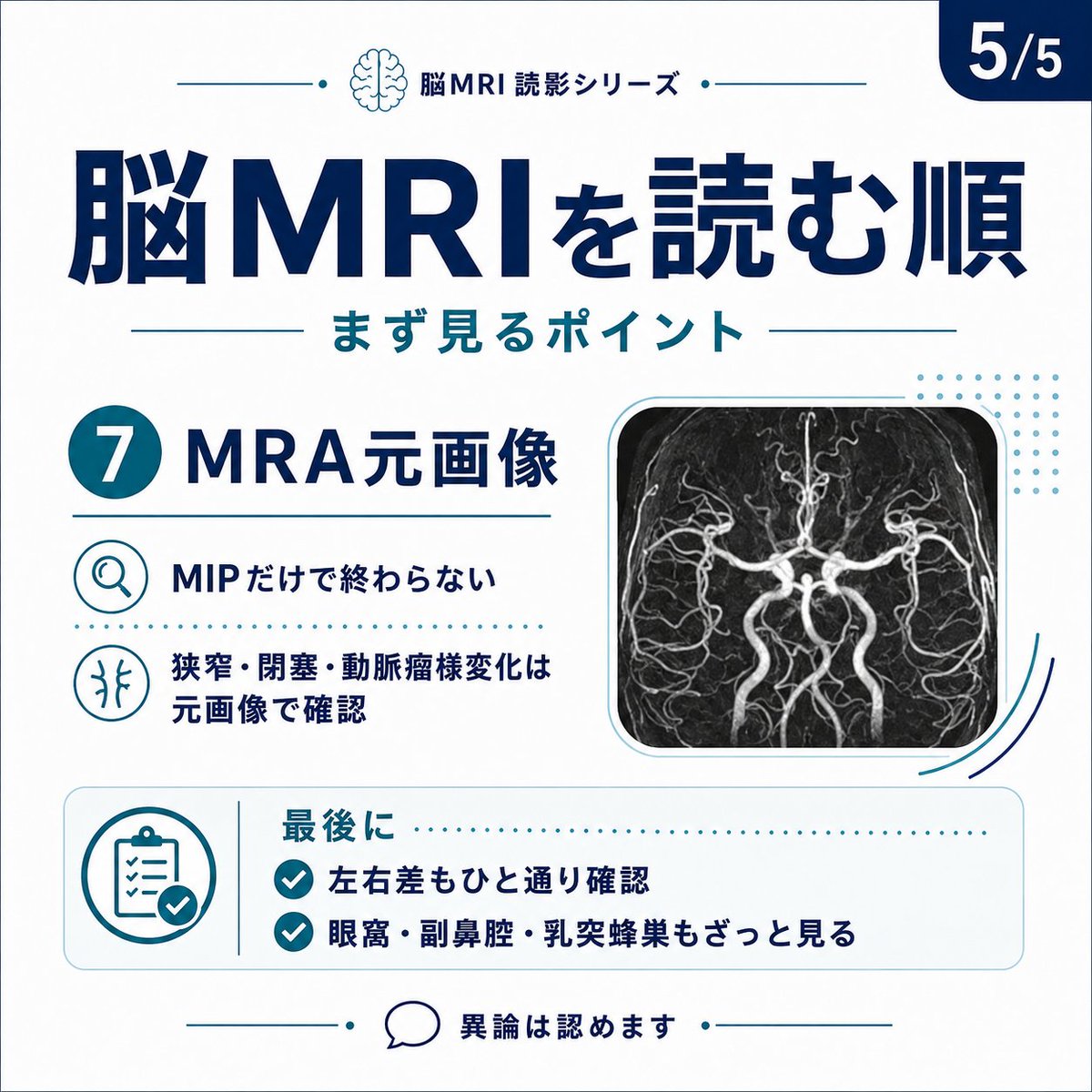
脳のMRI読む順マイルール。 ・まずは拡散強調画像。粗大病変をみる。高信号あればADC値がおちている真の拡散低下なのか、ただのT2高信号(T2 shine through)なのかみる。 ・次にFLAIR画像で拾い出し。脳実質のみでなく、脳溝もよく見る。 ・T2強調画像で脳実質内だけでなく、脳室や、動脈のflow void、副鼻腔や乳突蜂巣をみる。 ・T1強調画像では主にT1高信号(特異的信号)を探す。骨の異常信号もチェック。 ・T2*あるいはSWIでは低信号(ヘモジデリン)を探す。 ・矢状断像では、下垂体、小脳の萎縮をみてる。 ・そして最後にMRA。MIP画像だけでなくて、かならず元画像も。IC-PCとかAcomなんかの動脈瘤は元画像じゃないと見つけにくいこともある。 こんな順でみています。 異論は認めます、といいますか、ご意見いただきたいです
Dr.明日乃 tweet mediaDr.明日乃 tweet mediaDr.明日乃 tweet mediaDr.明日乃 tweet media
日本語
9
468
4.7K
230.3K
Tirof-Ivan retweetledi
Leonardo Santos
Leonardo Santos@Leo_Santo5·
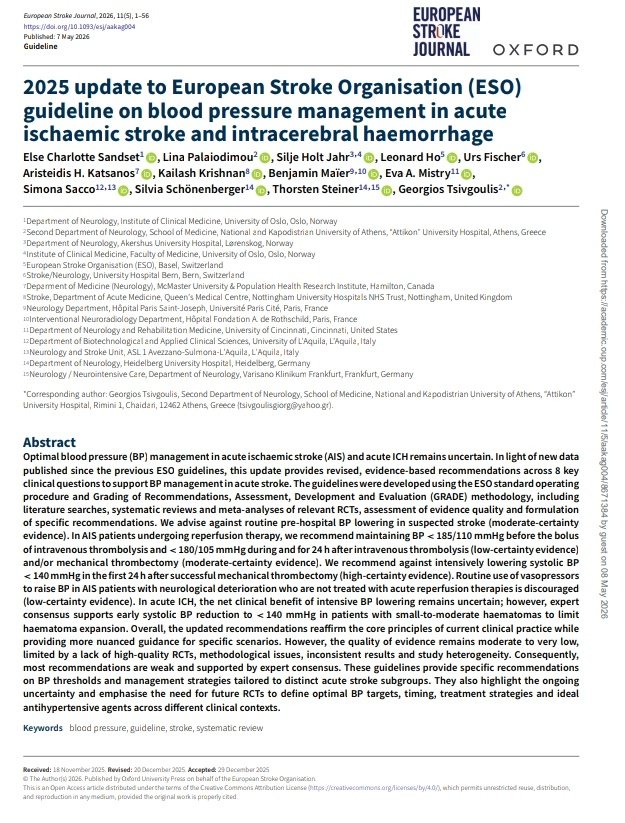
🧠🩸Manejo de la Presión Arterial en Stroke Isquémico Agudo y en Hemorragia Intracerebral 🔰📚European Stroke Journal, 2026 doi.org/10.1093/esj/aa… Enlace a Artículo Completo👇🏻✅🆓 t.me/SoMELaguna
Leonardo Santos tweet media
Español
0
108
322
10.4K
Tirof-Ivan retweetledi
Melissa Ⓜ️
Melissa Ⓜ️@Melissa_Bely·
🚨 ESCÁNDALO Se descubre que la hija de Rocha Moya, el gobernador de Sinaloa, le dio un contrato a una empresa que crearon el mismo día por... ¡ 350 millones de pesos ! Y solo tiene... ¡ 2 empleados para gestionar 500 mil despensas ! ¡Que siga la CORRUPCIÓN! @AztecaNoticias
Español
528
17.4K
31.4K
447.2K
Dr. Chacón-Lozsán F .'.
Dr. Chacón-Lozsán F .'.@franciscojlk·
🫀Week 2 of AcuteCVDays shifts the focus toward one of the most dramatic emergencies in cardiovascular intensive care: electrical storm. The combination of recurrent ventricular arrhythmias, ICD shocks, sympathetic activation, and cardiogenic shock creates a vicious cycle that requires far more than antiarrhythmic drugs alone. One of the most important educational points from this week is that management must be systematic, multidisciplinary, and physiology driven. Repeated ICD shocks are not simply a marker of disease severity. They also amplify adrenergic stress, worsen myocardial oxygen demand, and can perpetuate the arrhythmic substrate itself. Current ESC and EHRA recommendations emphasize several parallel priorities: • Optimization of ICD programming to reduce unnecessary shocks • Combination antiarrhythmic therapy, particularly beta blockade with amiodarone • Sedation to attenuate sympathetic overactivation • Early consideration of catheter ablation in refractory monomorphic VT • Escalation toward temporary mechanical circulatory support only in selected unstable patients. The educational value of this session lies in understanding that electrical storm is not merely an electrophysiological problem. It is a syndrome involving hemodynamics, autonomic dysregulation, ischemia, inflammation, and progressive ventricular dysfunction. Modern shock management increasingly requires collaboration between intensivists, electrophysiologists, heart failure specialists, and interventional teams. The concept of the “shock team” is now extending into arrhythmia care itself. #ACVCDays #EHRA #ElectricalStorm #CardiogenicShock #VentricularTachycardia #ICD #CriticalCare #AcuteCardiovascularCare #ESC 📚 References Zeppenfeld, K., European Heart Journal, 43(40), 3997–4126. doi.org/10.1093/eurhea… de Riva, M., Europace, 26(5), euae049. doi.org/10.1093/europa…
Dr. Chacón-Lozsán F .'. tweet media
English
1
0
3
513
Tirof-Ivan retweetledi
Meshal Alzakari | مشعل الزكري
للمهتمين بالبحث العلمي 📚 هذه من أفضل الأوراق اللي قرأتها عن كتابة ونشر الأبحاث. 👌 3 محررين من مجلات طبية كبرى يشرحون بشكل عملي ماذا يريد المحرر فعلًا من الباحث، وأبرز الأخطاء اللي تسبب رفض الورقة. مفيدة جدًا لأي شخص يبدأ بالنشر العلمي أو يطور طريقة كتابته للأبحاث.
Meshal Alzakari | مشعل الزكري tweet media
العربية
8
308
1.5K
80.3K
Tirof-Ivan retweetledi
POCUS Med Ed
POCUS Med Ed@pocusmeded·
Physicians have been studying the pulse for over 4,000 years. The ancient Egyptians knew it reflected the heart. Herophilus measured it with a water-dripping clepsydra. Galen wrote 18 books on it. Today, we can see it with pulsed-wave Doppler. A thread.
POCUS Med Ed tweet media
English
1
17
91
5.3K
Tirof-Ivan retweetledi
Dr. Chacón-Lozsán F .'.
Dr. Chacón-Lozsán F .'.@franciscojlk·
🫀 Why ventriculo arterial coupling may become one of the most important bedside hemodynamic concepts in critical care For decades, ICU hemodynamic management has largely focused on isolated variables: • MAP • Cardiac output • Ejection fraction • SVR • Lactate But critically ill patients do not fail because of one variable alone. They fail because the interaction between the ventricle and the arterial system becomes uncoupled. ⚙️ Ventriculo arterial coupling (VAC) VAC integrates: • Ventricular contractility → End systolic elastance (Ees) • Arterial load → Arterial elastance (Ea) The ratio Ea/Ees provides a physiological framework to understand cardiovascular efficiency and forward flow. This is particularly relevant in: • Septic shock • Cardiogenic shock • Mixed vasoplegic states • Acute heart failure • Dynamic ICU hemodynamics 📉 One of the most clinically important concepts Blood pressure may remain preserved despite severe circulatory inefficiency. A patient can have: ✅ “acceptable” MAP ❌ impaired stroke volume ❌ poor energetic efficiency ❌ inadequate tissue perfusion Why? Because excessive arterial load (Ea) relative to ventricular contractility (Ees) may maintain pressure while worsening forward flow. This explains why pressure based resuscitation alone can sometimes fail. 🧠 The paper beautifully reframes septic shock physiology Not all septic shock is the same: 🔹 Low Ea + preserved Ees → vasoplegic hyperdynamic sepsis → vasopressors appropriate 🔹 Low Ea + low Ees → septic cardiomyopathy with vasoplegia → vasopressor alone may worsen perfusion → requires combined vasopressor + inotrope strategy 🔹 High Ea + low Ees → afterload dominant cardiogenic physiology → excessive vasopressor escalation becomes harmful 📈 Perhaps the most exciting aspect The authors demonstrate that VAC assessment is now feasible at the bedside using: • Standard echocardiography • LVOT VTI • Simpson EF • Blood pressure • Doppler timing intervals No invasive pressure volume loops required. 🤖 And the future? AI assisted echocardiography + automated waveform analysis may allow: • Continuous VAC monitoring • Real time hemodynamic phenotyping • Early uncoupling detection • Precision vasoactive therapy Potentially moving critical care from: “pressure normalization” toward “physiology targeted circulatory optimization.” 🎯 Clinical take home message VAC does not replace: • MAP • CO • EF It contextualizes them. And that may be exactly what modern precision hemodynamics has been missing. 📖 Reference Balan, C., Hearts, 7(1), 10. doi.org/10.3390/hearts…
English
0
30
81
7.6K
Tirof-Ivan retweetledi
Dr. Chacón-Lozsán F .'.
Dr. Chacón-Lozsán F .'.@franciscojlk·
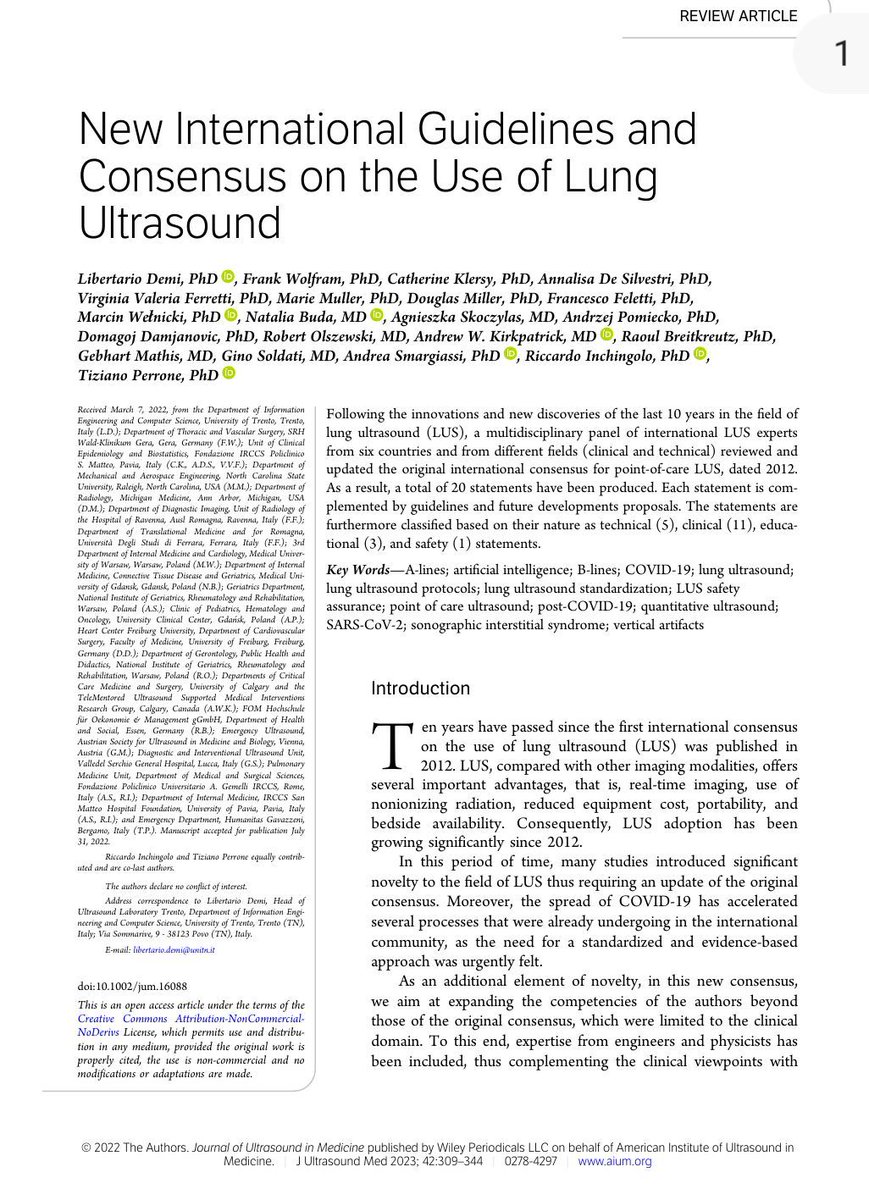
🫁 Lung Ultrasound 2.0, From Art to Science The new international consensus on lung ultrasound marks a clear transition: 👉 From qualitative interpretation ➡️ To standardized, reproducible, and quantitative medicine ⚠️ What is truly NEW in this update 🔴 1. Standardization is now mandatory, not optional LUS is highly operator- and machine-dependent 👉 The same patient can generate different findings depending on settings New recommendation: • Always report probe, frequency, MI, depth, protocol • Move toward reproducible imaging frameworks 🧠 2. B-lines are no longer “simple artifacts” They are: • Frequency-dependent • Physically complex • Linked to lung microstructure 👉 Counting B-lines is semi-quantitative at best ➡️ Future: quantitative ultrasound spectroscopy 🤖 3. AI enters LUS, but with caution AI is emerging in: • Image segmentation • Severity scoring • Pattern recognition BUT: 👉 Strong warning against overinterpretation and poor methodology Key requirement: • Proper dataset splitting • Standardized acquisition • Clinical validation ⚙️ 4. Multidisciplinary shift This is not just a clinical update 👉 Engineers + physicists are now part of the consensus Why? • Ultrasound physics matters • Signal processing matters • Image formation matters ➡️ LUS is now a true bioengineering field 📊 5. From subjective to objective metrics Major gap identified: • Pleural line abnormalities • Subpleural consolidations • Artifact interpretation 👉 Need for: • Measurable parameters (mm, not “small/large”) • Quantitative imaging endpoints 🛑 6. Safety is finally addressed New concern: 👉 Potential pulmonary capillary hemorrhage (animal data) Recommendation: • Apply ALARA principle • Monitor Mechanical Index (MI) • Limit exposure time ➡️ LUS is safe, but not risk-free 📚 7. Education becomes a core pillar Clear statement: 👉 LUS must be formally taught and standardized Including: • Medical curriculum integration • Structured training • Remote mentoring 🎯 Take-home message Lung ultrasound is evolving from: ❌ Operator-dependent bedside tool ✅ Standardized, physics-driven, AI-supported diagnostic modality ⚖️ My reflection We are entering a phase where: 👉 Understanding how ultrasound interacts with lung tissue is as important as interpreting the image itself This is where critical care, cardiology, and engineering finally meet 📖 Libertario D et al J Ultrasound Med 2023 doi:10.1002/jum.16088 #LungUltrasound #CriticalCare #POCUS #MedicalAI #ICU #Ultrasound #PrecisionMedicine #ACVC
Dr. Chacón-Lozsán F .'. tweet media
English
2
52
165
6.8K
Tirof-Ivan retweetledi
La Jefita
La Jefita@lajefita·
Es un cerdo marino…pero se parece bastante a tus macrófagos. Imagínate así a un macrófago en tus alveolos pulmonares, vigilando cada micrómetro. 😍
Español
3
25
299
5.9K