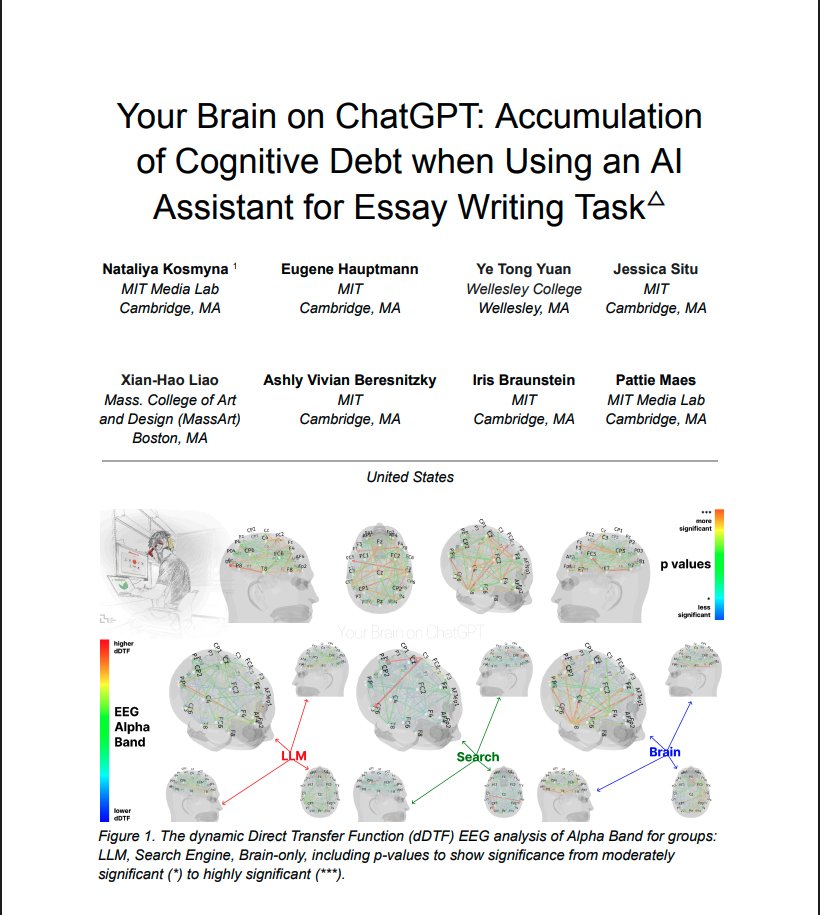

I have to be honest… I’m having a hard time understanding why these results are considered surprising or terrifying. Isn’t it obvious that if you don’t perform a task, you won’t develop the skills or performing that task?
I am imagining a similar study measuring leg muscle use between cyclists and drivers. If the results showed the cyclists had increased quadriceps muscle firing and improved long-term fitness, I don’t think this would be surprising to anyone.
If the objective is to exercise your leg muscles and learn to bike, driving a car won’t achieve that. But if your goal is efficient transportation so you can focus energy elsewhere, cars are obviously superior.
I think this concept is exactly the same for the invention of the wheel, typewriters, sewing machines, cars, word processors, etc, throughout history.
If the same statements here were applied to other tools, using the same words, we would have the following:
- Calculators are making us “cognitively bankrupt”
- Companies using email are unknowingly causing their teams “penmanship atrophy”
- Cars are causing measurable damage to your leg muscles.
I think the fundamental issue isn’t the tools themselves… it’s clarity about our objectives. AI writing assistants are great for productivity tasks but aren’t designed for skill development. If your goal is learning to write, having AI generate your essays obviously won’t improve your writing skills or help you retain the content.
This seems to be intuitive.. and I am having a hard time understanding why the results are surprising or what exactly the goal was with this study. It seems like there were a lot of smart people behind it and I feel like I must be missing something.
What am I missing here?
English