
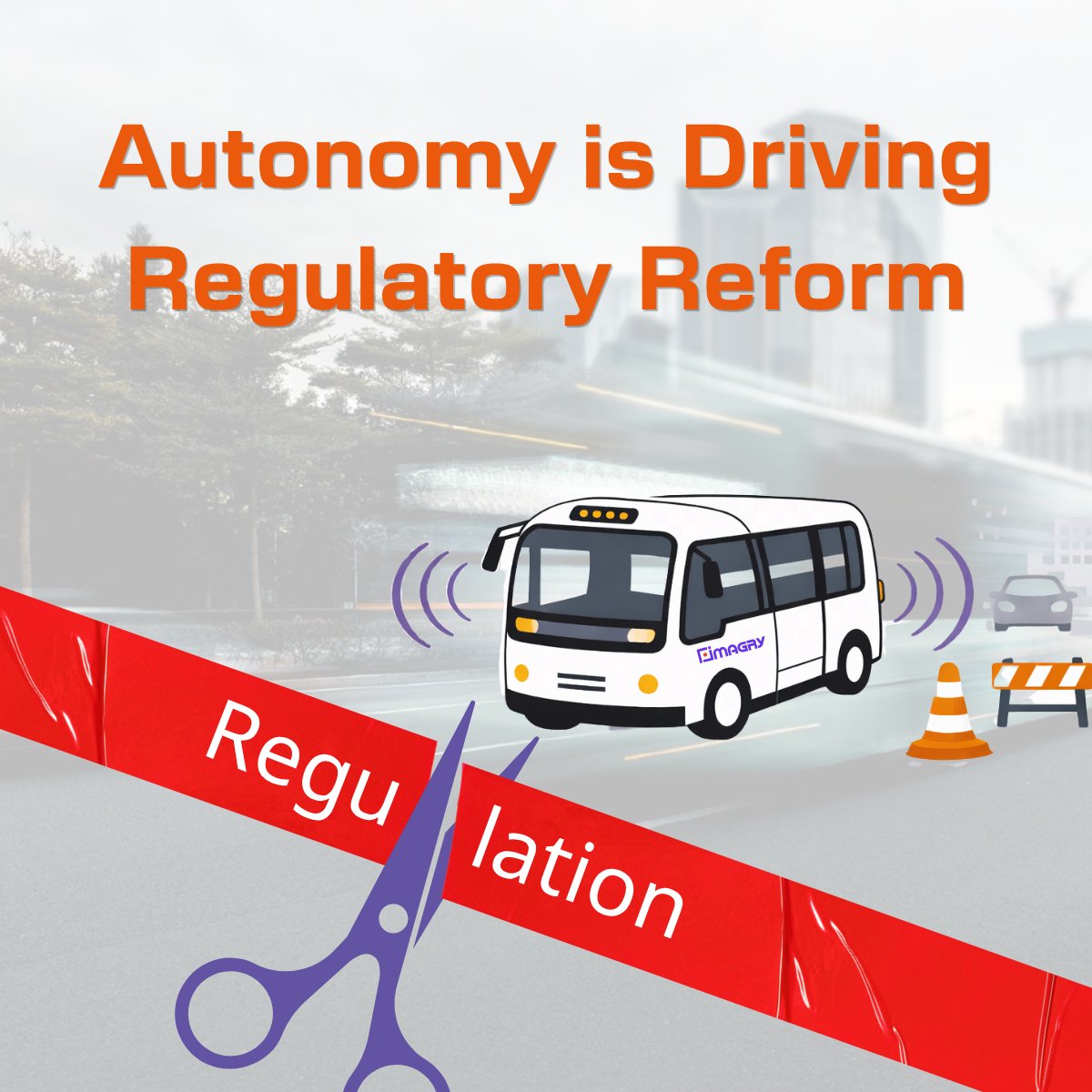
𝐑𝐞𝐠𝐮𝐥𝐚𝐭𝐢𝐨𝐧 𝐢𝐬 𝐛𝐞𝐠𝐢𝐧𝐧𝐢𝐧𝐠 𝐭𝐨 𝐚𝐝𝐚𝐩𝐭 𝐭𝐨 𝐚𝐮𝐭𝐨𝐧𝐨𝐦𝐲, 𝐧𝐨𝐭 𝐭𝐡𝐞 𝐨𝐭𝐡𝐞𝐫 𝐰𝐚𝐲 𝐚𝐫𝐨𝐮𝐧𝐝.
Last week, the U.S. National Highway Traffic Safety Administration NHTSA announced plans to reduce regulatory barriers for autonomous vehicles, signaling a shift toward a more pro-innovation framework: eu1.hubs.ly/H0tc-sz0
At its first National AV (Autonomous Vehicle) Safety Forum, regulators discussed updating legacy rules like FMVSS (Federal Motor Vehicle Safety Standards), which currently require features such as steering wheels and pedals, even in fully autonomous vehicles. They also emphasized the need for a unified national standard instead of state-by-state regulation.
This is one of the clearest signals yet that regulation is beginning to adapt to autonomy, not the other way around.
𝐖𝐡𝐲 𝐝𝐨𝐞𝐬 𝐭𝐡𝐢𝐬 𝐦𝐚𝐭𝐭𝐞𝐫?
Because for years, regulation has been one of the main bottlenecks for scaling autonomous vehicles. Even as the technology advanced, deployment remained limited by outdated requirements and fragmented approval processes.
Now, the conversation is shifting toward enabling real-world deployment at scale.
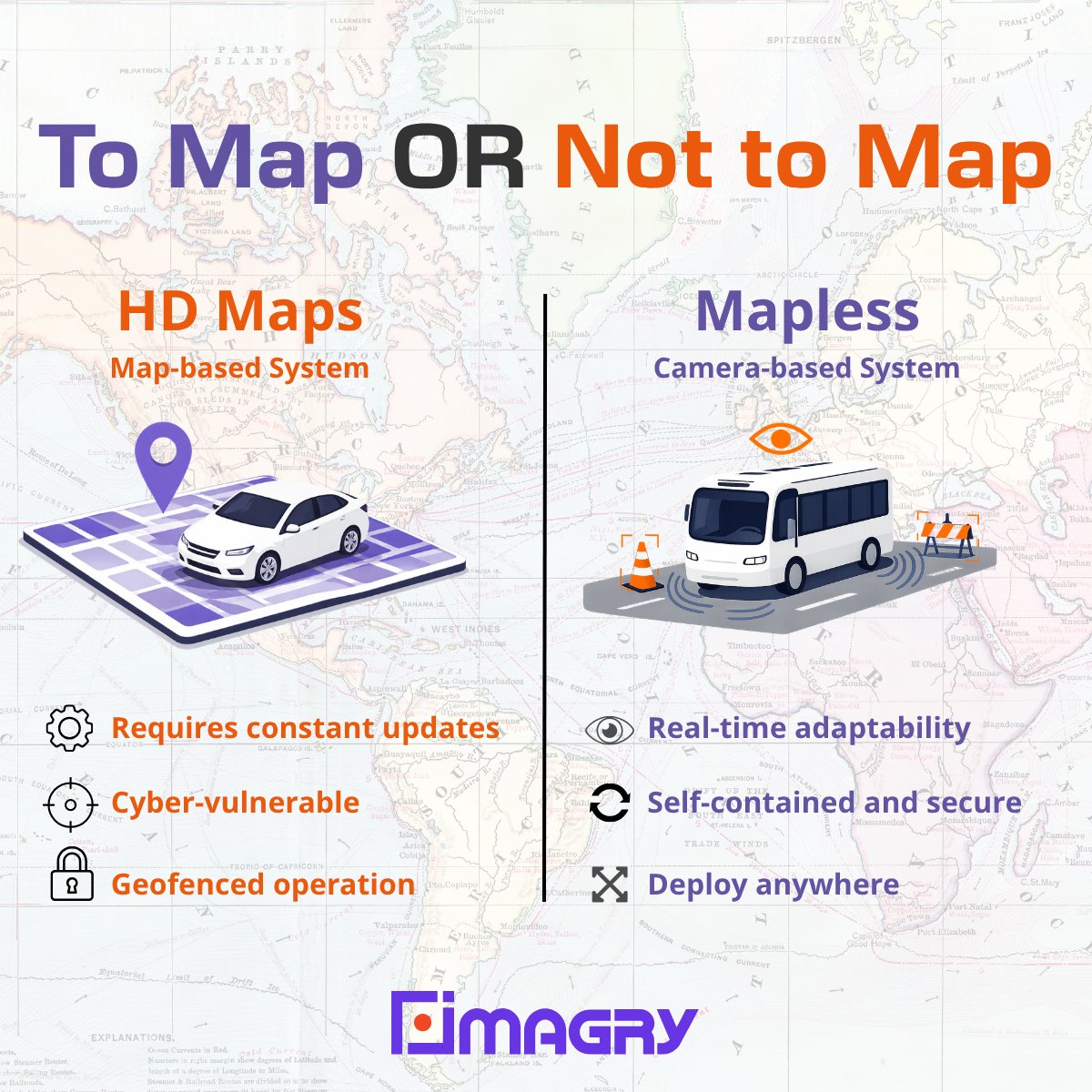
At @ImagryCo this shift reinforces a core principle behind how we build autonomy. Our system is designed to operate in real-world conditions 𝐚𝐬 𝐭𝐡𝐞𝐲 𝐚𝐫𝐞 using a camera-first, mapless approach. This allows vehicles to adapt continuously, without reliance on HD maps or costly infrastructure modifications.
As regulatory frameworks evolve, the focus moves from whether autonomy is allowed to how effectively it can scale.
Learn more: eu1.hubs.ly/H0tcZXd0
#AutonomousDriving #SmartMobility #Regulation #AI #Transportation #FutureOfMobility
English