Paul

12.6K posts

Paul banner
Paul

Paul

@Importerpaul

I talk money, mindset & real life. ■ web 3 Content creator ■ Guardian @solflare ■ Building on @solana ■ Master chef @MarinadeFinance

Solana Beach, CA Katılım Eylül 2022
2.4K Takip Edilen2.5K Takipçiler
Sabitlenmiş Tweet
Paul
Paul@Importerpaul·
What many people miss about @MarinadeFinance It doesn’t chase validators. It actively distributes stake to strengthen Solana’s decentralization. That’s real protocol responsibility. Stake with marinade.finance

Paul tweet media
English
49
63
172
2.6M
Paul
Paul@Importerpaul·
Can you still explain why a dataset looks the way it does? Most systems cannot. Data changes silently. Versions become unclear. Transformations lose traceability. Historical context disappears. That creates major problems for reproducibility, trust, and AI reliability. @codatta_io’s Data Assembly and Lineage Framework is designed to solve exactly that. Instead of treating datasets as opaque files, the system starts at the atomic level with Contribution Fingerprints (CFs). Every: • Sample • Label • Validation becomes an independently traceable unit of contribution. These atomic building blocks can then be assembled into structured Data Assets designed for AI development and reuse. But the interesting part is not only the assembly process. It is the lineage system underneath it. Every transformation, relationship, validation event, and dataset evolution is permanently mapped through immutable provenance tracking. Meaning: nothing quietly disappears, nothing gets overwritten, and every dataset state remains explainable. The framework uses append-only architecture, where updates create entirely new versions instead of modifying historical records. That may sound technical… but the implication is massive. Because it creates deterministic AI data infrastructure. You can reconstruct any dataset version. Verify exactly what changed. Understand why information was included or excluded. Audit the full lifecycle of the intelligence layer itself. That level of explainability becomes increasingly important as AI systems move into critical environments where reproducibility matters: research, healthcare, finance, automation, governance, and scientific modeling. The future AI economy cannot rely on black-box data pipelines forever. Eventually, systems will need to prove: where intelligence came from, how it evolved, and why specific outputs deserve trust. Codatta is building infrastructure around that reality. Because the next major AI breakthrough may not only come from smarter models… but from systems capable of making intelligence fully auditable. If an AI model cannot explain the history of the data behind its decisions… should those decisions be trusted at scale?
Paul tweet media
English
0
63
58
149
Paul
Paul@Importerpaul·
The internet economy was built around one core resource | Attention. Platforms competed to capture it. Algorithms optimized for it. Entire business models were designed around keeping people scrolling for as long as possible. And in that system, users became the product. Now AI is shifting the economy toward something else | Knowledge. Not passive consumption. Not clicks. Not impressions. Usable intelligence. The correction that improves a model. The expert annotation that increases accuracy. The edge-case insight that prevents failure. The verified dataset that strengthens decision-making. These contributions are becoming economically valuable infrastructure inside AI systems. But there is a problem. Most AI platforms still operate with internet-era incentives: extract knowledge, centralize ownership, capture the upside internally. Contributors improve the system… while remaining disconnected from the long-term value they create. That model becomes harder to sustain as AI grows more dependent on high-quality human input. @codatta_io exists at that transition point. Where human insight stops being silently absorbed into black-box systems… and starts becoming: • structured • attributable • verifiable • programmable • economically connected to outcomes That changes incentives across the network. Because once knowledge carries ownership and provenance, contribution behavior evolves. People optimize for quality instead of volume. Validation becomes economically meaningful. Reputation compounds over time. Reliable intelligence becomes an asset class. And this may become one of the defining shifts of the AI era. The internet monetized attention by keeping users engaged. AI may monetize knowledge by coordinating trusted intelligence at scale. Different infrastructure. Different economics. Different incentives. The protocols solving that coordination layer early could shape how value flows across the next generation of AI systems. If AI increasingly depends on human insight… should knowledge contributors remain invisible to the economy they help power?
Paul tweet media
English
0
66
59
166
Paul
Paul@Importerpaul·
One of the hardest problems in AI infrastructure is balancing two things that usually conflict Decentralized trust and enterprise-grade performance. Most systems sacrifice one for the other. Pure decentralization often struggles with speed and scalability. Traditional cloud systems scale well, but introduce centralization, opacity, and fragile ownership guarantees. @codatta_io is designing around that tension with a hybrid architecture built for both durability and performance. At the foundation is a simple principle: The source of truth should remain immutable… even if access layers evolve around it. That is why datasets inside the system are permanently anchored through decentralized references while cloud hot paths handle low-latency delivery for real-world usage. Meaning, performance can scale, without breaking provenance. And that distinction matters more than people realize. Because in AI, data integrity is not only about storage. It is about being able to prove: • where information originated • what version was used • who contributed to it • what transformations occurred • how it was accessed over time Codatta ties every served byte back to contribution fingerprints, creating auditable lineage across storage, compute, and delivery layers. The result is infrastructure where provenance becomes continuously verifiable instead of loosely inferred. Security is also deeply embedded into the architecture. Sensitive information can be processed through: • encrypted payload systems • policy-gated access layers • trusted execution environments (TEEs) • federated learning coordination allowing AI systems to work across distributed environments without exposing underlying raw data. That becomes increasingly important as AI moves into sectors where privacy and compliance are critical. And the broader implication is powerful: Data markets cannot scale sustainably without trust infrastructure. Not only trust in ownership… but trust in traceability, usage, versioning, and economic accountability. Codatta’s architecture is effectively building a bridge between: Web3 durability and enterprise-grade operational performance. A system where decentralized provenance does not come at the cost of usability. Because eventually, AI infrastructure will not only be judged by how fast models perform… but by whether the underlying intelligence can be trusted, verified, and economically coordinated at scale. As AI systems become more interconnected… do you think provenance will become as important as the models themselves?
Paul tweet media
English
0
49
42
122
Paul
Paul@Importerpaul·
People think AI infrastructure is mainly about training models. But an equally important question is Who gets access to the data… under what conditions… and how is value distributed afterward? Because once datasets become economically valuable, access control stops being a simple security feature. It becomes financial infrastructure. That is what makes the Access Gateway and Metering Framework inside @codatta_io interesting. The system acts as a programmable control layer between users and hosted datasets. Before access is granted, requests are evaluated through attribute-based controls that can consider: • identity • permissions • licensing conditions • usage policies • contextual restrictions In other words Access is not binary anymore. It becomes policy-aware and economically traceable. And this matters because AI ecosystems are entering a phase where datasets themselves behave like productive assets. Once access is approved, the Metering Framework begins recording signed, auditable events tied to: • who accessed the data • what was accessed • how much was consumed • under which conditions usage occurred That creates deterministic usage trails instead of opaque reporting systems. Why is that important? Because compensation systems are only as trustworthy as the usage records behind them. Without reliable metering: royalties become disputable, billing becomes opaque, and contributors lose visibility into how their data creates value. Codatta’s framework connects those usage records directly into the Royalty Engine. Meaning payments, revenue sharing, and contributor rewards can be calculated from provable activity instead of assumptions. And the deeper implication is larger than billing alone. The infrastructure can also enforce obligations dynamically: • data masking • access constraints • rate limiting • policy compliance requirements while preserving an auditable record across the entire interaction lifecycle. That combination of: secure access, deterministic metering, and programmable compensation is what turns data infrastructure into an actual economic coordination layer. The future AI economy will likely depend on systems capable of tracking not only intelligence creation… but intelligence consumption. Because once data becomes a productive asset, usage transparency becomes essential infrastructure. Do you think future AI systems will require auditable usage trails by default?
Paul tweet media
English
0
37
33
107
Paul
Paul@Importerpaul·
Every technological era changed what society considered valuable work. The industrial era rewarded physical production. Factories scaled human labor into economic output. Then the internet era arrived. Suddenly, digital work became globally valuable: writing, design, software, content, distribution, attention. Now another transition is happening. We are entering an era where knowledge itself becomes productive infrastructure. Not just consuming information. Not just storing it. But contributing usable intelligence to systems that continuously learn. That changes the meaning of work again. A verified correction. A rare insight. A domain-specific annotation. A high-signal validation. A refined dataset contribution. These are becoming economically meaningful actions inside AI ecosystems. And most existing platforms are not designed to support that shift. They treat knowledge contributions as temporary inputs instead of persistent assets. @codatta_io is building infrastructure for a different model. One where insight becomes programmable. Where contributions can carry: • attribution • provenance • ownership • confidence weighting • automated royalty logic Instead of knowledge disappearing into closed systems, contributors remain connected to the value their intelligence helps create. That is a major economic shift. Because once intelligence becomes traceable and programmable onchain, the knowledge economy starts behaving differently. Contribution becomes measurable. Trust becomes composable. Royalties become automatable. Reputation becomes infrastructure. And over time, this could fundamentally reshape how people participate in AI networks. Not only as users. But as contributors to the intelligence layer itself. The industrial economy scaled labor. The internet economy scaled information. The AI economy may scale verified insight. And the protocols building the coordination layer for that transition could become some of the most important infrastructure of the next decade. What kinds of knowledge do you think will become most valuable in AI-native economies?
Paul tweet media
English
0
40
40
100
Paul
Paul@Importerpaul·
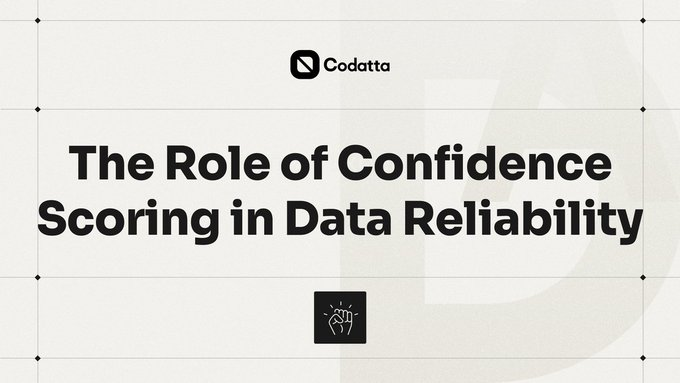
The next evolution of AI is not just larger models. It is more reliable intelligence. Because AI systems are starting to hit a critical problem: They can generate answers at massive scale… but confidence and correctness still vary wildly. And when unreliable data enters the pipeline, the effects compound fast. Weak annotations become weak training signals. Weak signals create unstable outputs. Unstable outputs reduce trust in the entire system. That is why the future of AI may depend less on raw data volume… and more on the ability to measure trust itself. @codatta_io is building directly around that challenge. Its confidence scoring system evaluates trust at the contribution level using layered validation mechanics like • contributor reputation • decentralized consensus • automated verification checks • historical reliability signals The goal is not simply collecting more data. It is transforming raw inputs into decision-grade intelligence. And that distinction matters. Because most AI pipelines today still struggle with: • unverifiable provenance • inconsistent labeling quality • synthetic noise • weak accountability mechanisms Codatta approaches the problem differently. Every contribution enters a system designed to continuously evaluate signal integrity over time. Reliable contributors gain stronger trust weighting. Verified consensus strengthens confidence. Low-quality or conflicting data loses influence inside the network. The result is an ecosystem where intelligence quality can compound instead of degrade. That creates a stronger foundation for: • scalable AI training • reproducible datasets • trustworthy inference systems • autonomous agent coordination • high-integrity data markets And this becomes increasingly important as AI systems move into areas where reliability is critical: healthcare, finance, research, automation, and real-world decision making. Because eventually, AI systems will not only need to generate answers. They will need to justify why those answers deserve trust. That infrastructure layer may become one of the most valuable parts of the AI economy. Codatta is building toward that future. As AI becomes more autonomous… should every piece of intelligence carry a measurable confidence trail?
Paul tweet media
English
34
43
74
283
Paul
Paul@Importerpaul·
AI companies are racing to build more powerful models. But underneath that race is a quieter battle most people are overlooking: Who owns the intelligence layer? Not the interface. Not the chatbot. Not the GPU cluster. The actual data infrastructure powering the system. Because every AI breakthrough depends on contributions coming from somewhere: humans, validators, researchers, domain experts, and increasingly, autonomous AI agents themselves. Yet in most systems, those contributions vanish into centralized pipelines with little transparency around • ownership • attribution • usage • compensation • provenance That is the gap @codatta_io is trying to close. The protocol introduces a decentralized infrastructure where contributions become verifiable, tokenized data assets instead of disposable inputs. Every contribution can carry • immutable lineage • onchain ownership rights • transparent validation history • deterministic usage tracking And this creates something much bigger than simple data storage. It creates economic accountability inside AI systems. Because once dataset usage becomes measurable and provable, compensation no longer depends on closed reporting systems or platform promises. Royalty flows can become directly tied to: how data is accessed, how often it is used, and how much value it generates inside AI workflows. That changes the relationship between contributors and the AI economy itself. Contributors stop acting like temporary suppliers. They become participants in long-term network value creation. And the infrastructure supporting that matters deeply. Codatta combines • secure access controls • advanced usage metering • transparent provenance systems • decentralized validation layers • blockchain-based ownership coordination to create environments where data can function as a transferable asset class. Not just information sitting inside a database… but programmable economic infrastructure. This may become one of the defining transitions in AI. Because the future will not only require intelligent systems. It will require systems capable of fairly coordinating: ownership, trust, attribution, and value distribution at global scale. The protocols solving that early may become foundational to the next AI era.
Paul tweet media
English
69
78
114
330
Paul
Paul@Importerpaul·
A researcher improves a dataset. An expert corrects outputs. A validator verifies accuracy. A contributor adds rare domain knowledge. The model keeps learning from that work indefinitely… while attribution slowly disappears inside the pipeline. That creates a broken system where value compounds, but accountability fades. @codatta_io’s Contribution Fingerprint (CF) framework is designed to solve exactly that problem. Think of it like a permanent cryptographic receipt for intelligence contribution. Every action tied to AI development can carry: • creator attribution • timestamps • validation history • modification records • provenance trails Not as metadata that can quietly disappear later… but as an append-only structure where the contribution history remains traceable over time. That distinction matters. Because in AI, provenance is becoming infrastructure. Without verifiable lineage: • ownership becomes unclear • accountability weakens • royalty systems break • trust collapses under scale Codatta’s CF framework creates a system where every verified contribution remains connected to its origin — even as datasets evolve, combine, and increase in value. And this unlocks something bigger than attribution alone. It creates the foundation for programmable compensation. Because once usage can be traced back to verified contributors, royalty systems no longer rely on estimates or opaque reporting. Compensation can become directly tied to: • actual dataset usage • contribution quality • validation outcomes • downstream model impact The result is an AI economy where contributors are not temporary participants. They become persistent stakeholders in the intelligence they help create. And importantly, this happens without sacrificing governance or security. The framework combines: • blockchain verification • transparent lineage • append-only accountability • protected sensitive data handling • decentralized ownership coordination All working together to create trust at scale. Most people still think the future AI race is about building the smartest model. But the deeper challenge may be building systems capable of remembering: who contributed, what changed, what was verified, and who deserves value when intelligence compounds. That memory layer may become one of the most important infrastructures in AI. If your contribution permanently improves an AI system… should history be allowed to forget you?
Paul tweet media
English
69
69
112
291
Paul
Paul@Importerpaul·
Everyone talks about AI models. Very few talk about the infrastructure that determines whether those models remain reliable over time. Because AI does not fail only from lack of intelligence. ➤ It fails from corrupted feedback loops, low-signal datasets, unverifiable outputs, and systems that cannot distinguish confidence from noise. That is why builders should pay attention to what @codatta_io is developing. This is not just about storing datasets onchain. It is about designing economic and validation mechanics that allow knowledge systems to improve instead of decay. At the core is a simple but powerful shift: Data is treated as a reproducible asset. Not static files. Not disposable annotations. Not isolated uploads. But living intelligence infrastructure backed by: • confidence scoring • staking mechanisms • decentralized consensus • provenance tracking • continuous validation loops And this changes the behavior of the network itself. High-quality contributions gain trust over time. Reliable validators strengthen reputation. Verified knowledge compounds through repeated usage and consensus. Meanwhile, weak or misleading data loses economic weight as the system continuously evaluates signal quality against network feedback. In other words: Bad data decays. High-quality knowledge compounds. That may become one of the most important design principles in the future of AI. Because the next generation of intelligent systems cannot rely on one-time verification. They need environments capable of self-correction, traceable attribution, economic alignment, and scalable trust coordination. Most AI conversations stay focused on model outputs. But the real moat may come from the infrastructure underneath: the systems deciding what information deserves trust in the first place. That is the layer Codatta is building into. If AI eventually becomes responsible for critical decisions… how should networks determine which knowledge deserves to persist?
Paul tweet media
English
0
51
41
211
Paul
Paul@Importerpaul·
This is why @codatta_io’s infrastructure design is interesting. The protocol is built so data provenance is never broken across storage, compute, and serving layers. Not “trust us” architecture. Verifiable architecture. ➤ Here’s the flow: Storage Layer → Every payload is encrypted before storage. Content hashes and CIDs become the immutable source of truth on decentralized networks, while cloud hot paths like S3, GCS, and OSS provide fast access without changing the underlying reference layer. ➤ Meaning the cached copy can move. The provenance cannot. Then comes the compute layer. This is where most systems quietly lose integrity. ➤ Codatta introduces two secure processing models • TEE enclaves for isolated transforms like redaction or feature extraction without exposing raw data • Federated training where datasets stay local and only model updates move across environments That matters because future AI systems will increasingly require collaboration without surrendering ownership or exposing sensitive information. And finally, the serving layer. Before any dataset moves, an access gateway enforces: • role-based permissions • attribute controls • tokenized access policies Every interaction generates metering events tied to: auditability, billing, and usage tracking. The deeper implication? Identical requests against the same dataset version produce identical metering trails. Replayable by design. That changes how trust works inside decentralized AI infrastructure. Because when provenance becomes deterministic: verification improves, royalties become enforceable, compliance becomes easier, and data markets become significantly more reliable. Most people still think AI infrastructure is mainly about larger models and faster GPUs. But the systems that may matter most are the ones solving: trust, ownership, traceability, and secure coordination at scale. Codatta is building directly inside that layer. 📖 Read the docs: docs.codatta.io/en/core-system… As AI systems become more autonomous… how important do you think replayable provenance becomes?
Paul tweet media
English
57
46
73
331
Paul retweetledi
Codatta
Codatta@codatta_io·
🎬 Task Update: Home Activity Video Collection The Home Activity Video task will officially pause on May 13 at 12:00 UTC+8. Please note that submissions received after this deadline will not be counted. Thank you for your incredible participation and for building the AI Knowledge Layer with us.
Codatta@codatta_io

Robots are learning to work in the real world — and they need real human footage to do it. Help train the next generation of home-assist robots by recording first-person POV videos of yourself performing everyday household tasks. 3 scenes to choose from: - Kitchen Cooking - Household Tidying - Home Cleaning Every valid 10-minute clip earns 100 Points + 0.5 USDT.

English
3
3
18
2.5K
Paul
Paul@Importerpaul·
One of the biggest shifts happening in crypto right now is the collision between TradFi markets and crypto-native infrastructure. The walls between them are getting thinner. @Gate is pushing deeper into that direction with its CFD ecosystem, giving users access to global markets directly through USDT. Meaning traders can now gain exposure to • Stocks • Forex • Gold • Commodities • Major indices... all without leaving the crypto environment. What makes the setup interesting is the accessibility layer around it: ▸Start trading from just 1 USDT ▸Go long or short freely ▸Trade 24/7 using USDT ▸MT5 + automated strategy support included And adoption already seems to be accelerating fast. Gate CFD’s daily peak trading volume has reportedly surpassed $20B, showing how much attention crypto-native access to traditional markets is starting to attract. They’re also running several TradFi CFD campaigns simultaneously: 🔥 Popular Assets Trading Contest Trade eligible CFD assets ≥1000 USDx to unlock a 200 USDT Position Voucher gate.com/campaigns/4833 🎁 Stock New Token Airdrop Register and receive 30 USDT gate.onelink.me/7pdk/5f5cfbb11… 💰 New User Rewards First trade → earn 2 USDT 7-day check-in → earn up to 20 USDT gate.com/campaigns/4791 🪙 CFD Rewards Season Open a trading account and instantly claim 0.002 SLVON gate.onelink.me/7pdk/766f5e9d7… Feels like the broader trend is becoming clearer ➠ Crypto exchanges are no longer only competing on crypto products anymore. They’re gradually becoming full global trading platforms 👀
Paul tweet media
English
51
43
71
5.3K
Paul
Paul@Importerpaul·
It’s becoming more like a full trading season: competition, rankings, strategy, community coordination and incentives all running simultaneously. WCTC S8 feels different because the structure is built around multiple trading styles happening at the same time. And that’s probably why over 56,000 traders have already joined. @Gate currently has the second half of WCTC S8 fully live across • Spot • Futures • TradFi tracks So whether someone prefers high-volume trading, short-term volatility plays, or simply participating consistently, there are different ways to compete. The ecosystem around the event is massive 🏆 Team Contest Teams compete through trading volume rankings and return rankings, turning trading into a coordinated strategy game. ⚔️ Solo Contest Individual traders can climb volume rankings for a share of rewards reaching up to 2,000,000 USDT. 👑 1v1 King PK Challenge Daily and weekly battles distribute up to 160,000 USDT in token rewards. 🎁 Extra Treasure Box Missions Trading tasks, beginner missions, VIP objectives, and daily activities unlock additional surprise rewards. The interesting part is how WCTC is evolving beyond a normal exchange campaign. And with May 20 approaching fast, the final sprint phase is already underway 👀 👉 gate.com/competition/wc…
Paul tweet media
English
53
45
71
5.4K
Paul
Paul@Importerpaul·
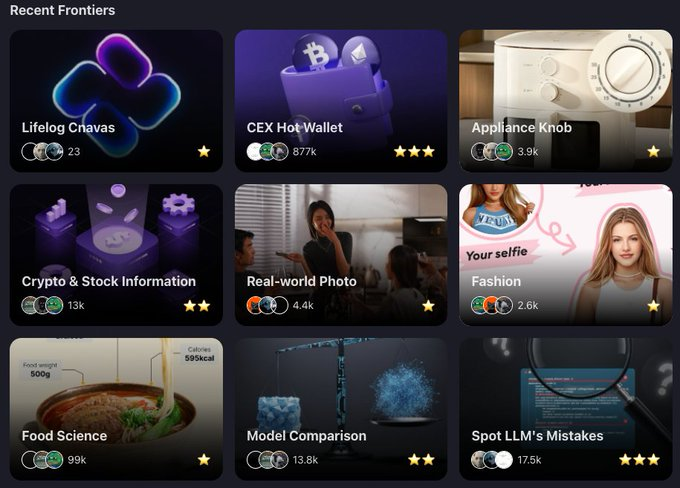
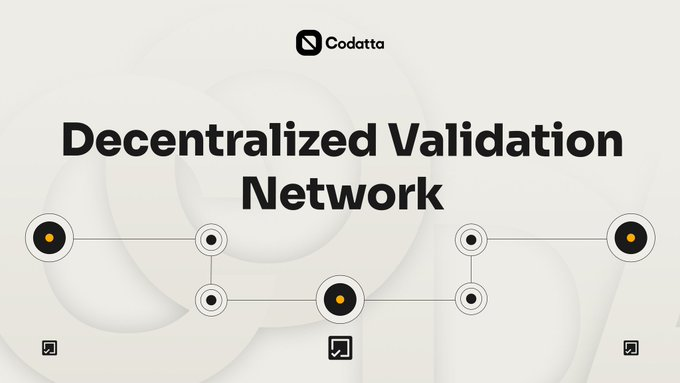
What if data stopped being treated like a disposable resource… and started being treated like digital property? That shift could redefine the entire AI economy. Right now, most contributors operate inside systems where: • ownership disappears after submission • attribution fades over time • platforms capture the majority of downstream value • trust depends on centralized control But AI is entering a phase where provenance, quality, and collaboration matter more than raw scale. Introducing A decentralized infrastructure where humans and AI agents collaboratively create, validate, and monetize data assets through tokenized ownership and transparent onchain coordination. Instead of anonymous contributions disappearing into closed pipelines, every contribution becomes part of a verifiable economic system. Quality work earns ownership fractions. Validation strengthens reputation. Usage triggers automated royalty distribution. The more valuable the contribution becomes over time… the more the contributor remains connected to the upside. And the interesting part is how trust is handled. @codatta_io does not rely solely on centralized approval systems. The protocol introduces reputation-based validation, peer verification, transparent provenance tracking, and blockchain-governed attribution layers that help establish credibility across the network. Because in AI, bad data compounds fast. One weak dataset can distort entire training pipelines. One unreliable annotation layer can reduce model performance at scale. That is why verification infrastructure matters just as much as contribution infrastructure. At the same time, privacy cannot be ignored. As AI systems increasingly interact with sensitive and proprietary information, developers need ways to collaborate without exposing raw data ownership or compromising security. Codatta addresses this through: • privacy-preserving compute • secure execution environments • controlled access systems • transparent versioning and usage tracking The result is a marketplace where data can become: • collaborative • traceable • investable • revenue-generating • securely governed over time And this may become one of the most important transitions in AI infrastructure. Because the future of AI will not only depend on smarter models. It will depend on whether the intelligence economy can fairly coordinate: human expertise, machine collaboration, ownership, trust, and value distribution at scale. Codatta is positioning itself inside that convergence layer. If high-quality data becomes one of the world’s most valuable assets… should the people creating it still remain invisible?
Paul tweet media
English
0
39
35
133
Paul
Paul@Importerpaul·
Through @codatta_io ownership frameworks and onchain royalty systems, contributors can also participate in the downstream value their data helps create. Contribute once. Earn immediately. Benefit as the ecosystem grows. That fundamentally changes contributor incentives. Instead of short-term gig participation, contributors become aligned with the long-term success of the network itself. And that alignment matters. Because the best contributors do not just want compensation. They want participation. They want attribution. They want upside. The future AI economy cannot rely only on extraction models where platforms accumulate all the value while contributors remain replaceable. Codatta is building towards the future. • ownership is transparent • provenance is preserved • royalties are automated • contributors remain economically connected to the assets they help create A future where data contributors are not treated as invisible labor behind AI systems… but as long-term builders of the intelligence economy. If your data continues generating value years later… should your compensation stop on day one? Start Here: app.codatta.io
Paul tweet media
English
0
43
40
120
Paul
Paul@Importerpaul·
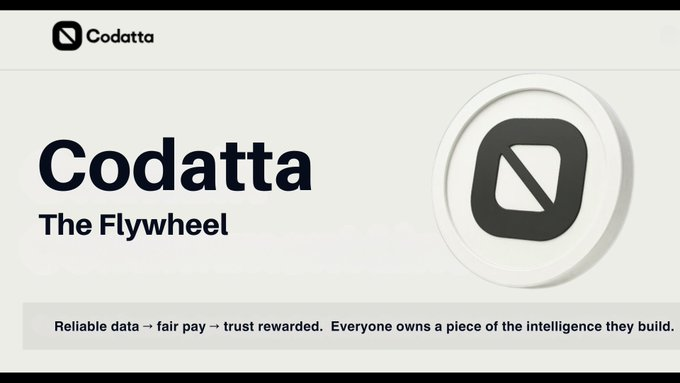
Right now, the AI economy works like You contribute data once | The system profits forever. Your corrections train the model. Your expertise improves outputs. Your datasets increase performance. But after the upload? The value chain moves on without you. That model is starting to break. Because AI is becoming less about who owns the model… and more about who continuously improves it. This is where the convergence of DeFi and generative AI becomes powerful. @codatta_io is exploring a framework where data itself becomes a programmable financial asset. Not static. Not disposable. Not trapped inside centralized pipelines. But connected to: • Smart contract-based royalties • Transparent attribution systems • Fractional ownership models • Usage-based compensation • Automated revenue distribution Imagine contributing a high-quality dataset that continues generating rewards every time it helps power training, fine-tuning, or inference activity. Not through trust. Through infrastructure. Every contribution tracked. Every validation recorded. Every usage event tied to transparent onchain logic. And the deeper implication? AI development becomes economically sustainable for the people actually improving the intelligence layer. Researchers. Annotators. Domain experts. Validators. Even intelligent agents participating in quality control. The system shifts from: “Pay once, extract forever” to: “Contribute value, earn continuously.” That changes incentives across the entire AI ecosystem. Because better incentives produce better data. Better data produces better AI. And better AI compounds the value of the network itself. Most platforms today would struggle to implement this without rebuilding their entire architecture. Codatta’s modular infrastructure changes that. Transparent royalty systems and usage-based revenue sharing can integrate directly into existing AI ecosystems without massive redesigns. The future AI economy will need more than powerful models. It will need fair value distribution. And the protocols solving that infrastructure problem early may become foundational to the next generation of AI. If AI systems continue learning from your contributions long after submission… should compensation stop after the first payment?
Paul tweet media
English
68
60
94
452
Paul
Paul@Importerpaul·
A crowdsourced AI system sounds powerful… Until you realize scale alone does not create truth. Millions of submissions can still produce • noisy datasets • manipulated inputs • low-signal annotations • synthetic garbage disguised as quality The internet already has infinite information. What AI actually lacks is verified signal. That is the flaw in most crowdsourced AI pipelines today: they optimize for contribution volume, not contribution integrity. @codatta_io is approaching the problem differently. In Codatta’s ecosystem, trust is not assumed. It is earned through verification. Every dataset moves through a transparent lifecycle: Claim → Evidence → Verification → Usage A contributor makes a claim. Evidence supports the contribution. Validators review authenticity and quality. Then the verified data becomes usable inside the AI pipeline. And because the process remains onchain, attribution and provenance do not disappear once the data enters the system. That changes everything. Because in the next era of AI, provenance may become just as valuable as the data itself. Where did this information come from? Who validated it? How reliable has it been historically? What models were trained on it? Who should be compensated when it creates value? These questions are becoming infrastructure-level problems. Codatta is building systems where transparency is embedded directly into the data economy instead of added later as an afterthought. The result is a stronger foundation for: • trustworthy AI training • decentralized validation • auditable data lineage • fair contributor rewards • scalable human + AI collaboration Anyone can upload data. But verified, traceable, economically aligned data? That becomes exponentially more valuable as AI adoption scales. As synthetic content floods the internet, the premium on verified truth may become one of the most important markets in AI. Do you think future AI systems will prioritize quantity of data… or provable quality?
Paul tweet media
English
68
77
111
473
Paul
Paul@Importerpaul·
The internet trained AI on human knowledge. But the humans behind that knowledge? Mostly invisible. Mostly unpaid. A researcher labels medical images. A developer structures edge-case failures. An expert corrects hallucinated outputs. An AI agent validates thousands of records. The data moves forward. The value doesn’t. That imbalance is becoming one of the biggest problems in AI. @codatta_io is building a different system. ➤ A decentralized data infrastructure where both human and AI-generated data become verifiable onchain assets with provenance, ownership, and automated royalty distribution built directly into the protocol. Every contribution can be tracked. Every dataset can carry attribution. Every usage event can trigger transparent revenue sharing. Instead of data disappearing into black-box pipelines, Codatta creates a marketplace where: • Data lineage is verifiable • Validation is decentralized • Contributors retain ownership • AI developers access higher quality datasets • Intelligent agents help maintain data standards at scale The result is an ecosystem where trust is programmable. And this matters more than most people realize. Because the future AI race will not be won only by models. It will be won by whoever controls: ➜ the highest quality data ➜ the cleanest provenance ➜ the strongest feedback loops ➜ the most sustainable contributor economy Codatta is positioning itself at the center of that infrastructure layer. As AI systems become more powerful, the demand for reliable, auditable, high-signal datasets will explode. The current internet was not designed for that future. Codatta is. Would you contribute data differently if ownership and royalties were guaranteed onchain?
Paul tweet media
English
56
76
99
283
Paul
Paul@Importerpaul·
Prediction markets are starting to feel less like a niche crypto tool… and more like a real-time information layer. People are no longer only reacting to headlines. They’re positioning around probabilities. @Gate just upgraded its Prediction Market experience to make that process much smoother. The focus of the update is clear. ➜ discover trends faster, understand market sentiment quicker, and enter markets with less friction. What changed • Smarter search with faster keyword matching • Real-time trending market recommendations • Easier navigation across active categories • Live leaderboards + trending event tracking • Recently viewed markets and search history support And the important part No separate wallet setup. No complicated on-chain flow. Users can directly participate in global prediction markets using USDT inside Gate itself. Some of the biggest markets already pulling attention this week: 🏆 2026 FIFA World Cup Champion — $933M+ volume 🖼 OpenSea FDV After Launch — $5.9M+ volume 🥇 Gold Price by End of June — $4.7M+ volume Gate is clearly leaning deeper into the idea that prediction markets are becoming a major crypto attention sector. And the infrastructure around them is starting to mature fast 👀 Ongoing campaigns: Prediction Beginner Protection Season gate.com/campaigns/4782 Polymarket Prediction Check-in gate.onelink.me/7pdk/0a9746118… #Gate #Polymarket #PredictionMarket #Crypto
Paul tweet mediaPaul tweet media
English
84
45
86
5.2K
Paul
Paul@Importerpaul·
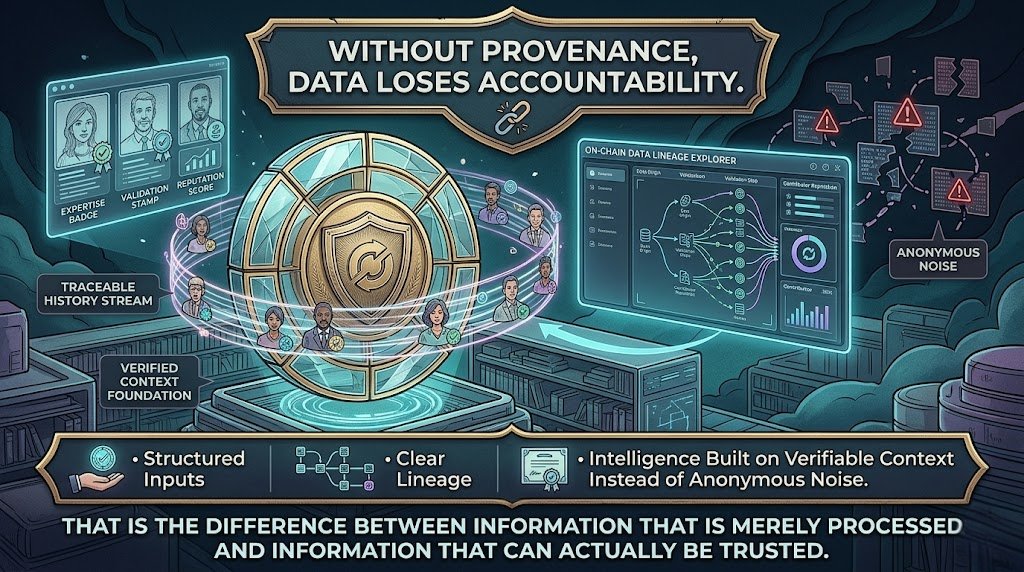
Without provenance, data loses accountability. Models may still generate outputs, but the reasoning behind them becomes difficult to verify, audit, or trust. @codatta_io approaches this differently by attaching traceable history to every contribution on-chain. Source, validation, and reputation remain connected to the data entering the system. The result is a stronger foundation for AI: structured inputs, clear lineage, and intelligence built on verifiable context instead of anonymous noise. That is the difference between information that is merely processed and information that can actually be trusted.
Paul tweet media
English
74
84
112
339