India & Global Left

1.1K posts

India & Global Left banner
India & Global Left

India & Global Left

@Indiagloballeft

Rethinking justice from South Asia with an internationalist Left perspective.

India, USA Katılım Eylül 2022
91 Takip Edilen2.7K Takipçiler
Sabitlenmiş Tweet
India & Global Left
India & Global Left@Indiagloballeft·
Here is the edited live stream of Noam Chomsky & Amartya Sen's conversation on democracy & development, philosophy, rationality, and inequality. They debated on wage "slavery". youtu.be/spZOsUBU1EM via @YouTube
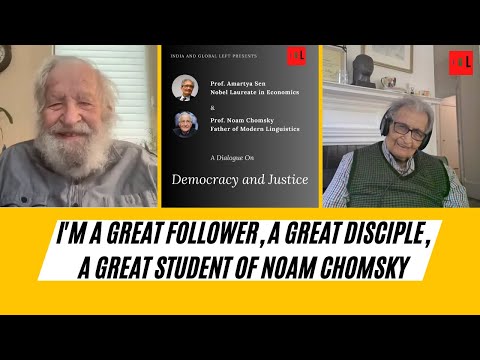
YouTube video
YouTube
English
4
20
57
11.1K
India & Global Left retweetledi
Nirupama Menon Rao 🇮🇳
I was reflecting on the contrasts with China that the sorry, shabby Loomer episode illustrates. The contrast I refer to is not about openness versus control. It is about attitudes toward hierarchy and self-respect in public life. What Kissinger noticed in 1971 about India was was a tendency toward obsequiousness when confronted with Western power or proximity to it. That instinct has deep historical roots. The word “khushamd” in Persian and Urdu literally means flattery offered to please someone in authority. In everyday usage it shades into something darker: ingratiation, calculated praise, the art of pleasing those above you in the hierarchy. British administrators in colonial India became fascinated by the term because they believed it captured a social habit they encountered repeatedly in courtrooms, durbars, and bureaucratic dealings. For two centuries the subcontinent lived under imperial structures in which advancement often depended on pleasing those above you in the hierarchy. The habits of speech that develop in such systems do not disappear overnight. In a rigid hierarchy where power flows sharply from the top, people learn quickly that bluntness is risky. Survival and advancement depend on reading the moods of authority. Language becomes lubricated with praise because praise reduces friction. Over time this produces a political culture where deference becomes a technique. China travelled through a very different historical arc.For most of its long imperial history China regarded itself as the civilisational centre. Foreign envoys were received within a carefully staged hierarchy in which the emperor’s court defined the terms of interaction. Visitors were expected to show deference to China, not the other way around. Even when China weakened in the nineteenth century, that cultural memory did not vanish. It remained embedded in the political reflexes of the state. This difference becomes visible when modern outsiders arrive carrying the aura of Western political celebrity. In India the reception often slips, almost unconsciously, into a familiar pattern: excessive politeness, warm praise, eager listening, and visible admiration. Panels become stages of affirmation rather than interrogation. The visitor is not merely hosted; they are subtly elevated. China almost never allows this dynamic to emerge. Chinese officials may be courteous but the tone is controlled and emotionally neutral. Praise is sparse. Questions are disciplined. The visitor’s importance is carefully calibrated so that it never exceeds the authority of the host institution or the state itself. Even globally powerful figures encounter this restraint. One can see it in how Chinese leaders treat Western visitors. They rarely flatter. They do not perform admiration. They project calm authority and expect the guest to adjust to that frame. In other words, status flows inward toward the state, not outward toward the visitor. In India the flow often reverses. The visitor’s celebrity radiates outward, shaping the atmosphere of the encounter. A social media provocateur can suddenly appear larger than the forum that invited them. This is what gives the Loomer episode its uncomfortable undertone. The issue is not free speech or the right to host controversial figures. Democracies must live with those realities. The issue is the tone of reception. When a platform meant for national conversation begins to resemble a stage on which outsiders are indulged and admired, the imbalance becomes visible. It is the same imbalance that Kissinger detected decades ago when he described Indians as masters of flattery. China’s instinct would have been the opposite. A confident civilisation listens, questions, and reminds the guest that they soeak on someone else’s stage. #IndiaTodayConclave #Khushamdi #PoliticalCulture #IndiaUSRelations #CivilisationalConfidence #SoftPower #IndiaChina
English
0
272
785
96.9K
India & Global Left retweetledi
Daniel Lobato𓂆
Daniel Lobato𓂆@lobatobdan·
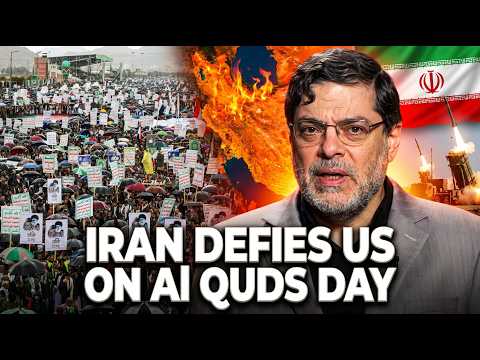
Los gestos vacíos de Pedro Sánchez frente a sus hechos sostenidos cada vez engañan a menos gente. El académico iraní @IzadiFoad analiza que España es parte del colectivo colonialista y como mucho lanza alguna frase apropiada. @Indiagloballeft 2/2 youtu.be/wquxaB6mvzo?is…
YouTube video
YouTube
Español
2
126
193
3.2K
India & Global Left
India & Global Left@Indiagloballeft·
1. According to a Pentagon estimate given to Congress, only the first six days of the war with Iran have already cost the United States more than $11 billion USD. 2. That’s roughly three to four days of healthcare for every American senior under Medicare, about one-seventh of the entire federal education budget, or more than the entire annual budget of the Environmental Protection Agency — spent in less than a week. 3. Now the Trump administration is planning to push its military budget to 1.5 trillion USD every year. 4. The American state constantly claims there is no money when it comes to pensions, education, healthcare, or social security. We are told that budgets must be cut and that the country simply cannot afford these basic social needs. But somehow, whenever war begins or military contractors demand it, billions — even trillions — suddenly appear overnight. The real question Americans should ask is not whether the country has the resources, but who those resources are actually being mobilized for.
English
1
1
3
150
India & Global Left
India & Global Left@Indiagloballeft·
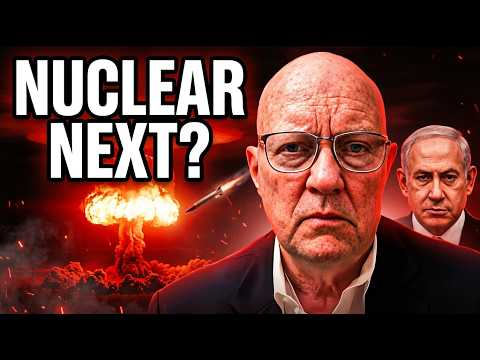
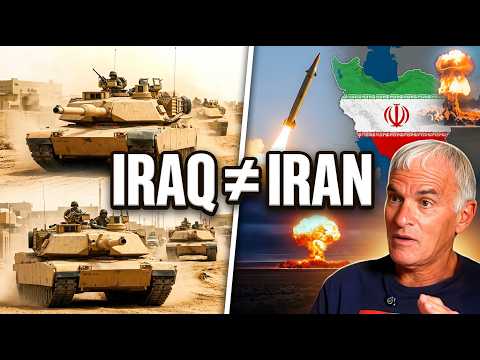
.@normfinkelstein argues that while the Iraq invasion in 2003 primarily reflected US strategic interests, the current escalation with Iran is driven largely by the interests of Israel, with the United States playing a supporting role. youtu.be/-jNggeDPv0o?si… via @YouTube
YouTube video
YouTube
English
4
36
123
21.4K
India & Global Left retweetledi
Supriya Shrinate
Supriya Shrinate@SupriyaShrinate·
Laser eyed Foreign Minister Jaishankar left flustered. He was asked a question on US sinking an Iranian warship in the Indian Ocean. After all the whataboutery he retorted “If you ask me a serious question, I will give you a serious reply.” Anchor: Is this a non serious question that India is the net security provider in the Indian Ocean? The conversation moved on without Jaishankar’s response to another subject! This is how clueless and nervous the Modi govt is.
English
450
2.9K
10.7K
263.3K
India & Global Left retweetledi
Arnaud Bertrand
Arnaud Bertrand@RnaudBertrand·
Former Foreign Secretary of India noticing, decades too late, that the US isn't the paragon of morality she thought they were... What I, for one, do find unsettling is to see so many officials who should have known better - especially from countries that were victims of imperialism like India - so naively idealize the U.S. When did the US ever had "moral restraint that gave it legitimacy"? Certainly not in WW2 when they dropped atomic bombs, not during the Korean war when they literally genocided the North Koreans, not during Vietnam when they dropped so many bombs that people still die every year from unexploded ordnances, not during the so-called "War on Terror" when they were the actual terror, etc... 🤷‍♂️
Nirupama Menon Rao 🇮🇳@NMenonRao

Perhaps what unsettles me most is the sense of disbelief. For many of us, the United States was a country we admired deeply—its institutions, its culture, its ideals. To see such callousness now, such indifference to the human cost of war, is profoundly troubling. Power exercised without reflection risks becoming something colder, something stripped of the moral restraint that once gave it legitimacy.

English
140
1.1K
3.8K
168.1K
India & Global Left retweetledi
Nicolas Sawaya
Nicolas Sawaya@sawaya_nicolas·
This is deeply disturbing for 2 reasons: 1) US-Israeli airstrikes have hit 4000 "targets" in Iran in 4 days, unprecedented in modern war, & 2X the number in Gaza. 2) Given the size of Gaza vs Iran, it also puts in perspective how insane the first 100 hrs of Gaza's bombing was.
Airwars@airwars

NEW: Airwars analysis shows pace of US-Israel campaign unparalleled in modern conflict airwars.org/record-pace-of…
English
6
253
627
31.5K
India & Global Left
India & Global Left@Indiagloballeft·
Laith Marouf on the growing Lebanon front amid the US-Israeli attack on Iran. Is Israel preparing for a ground invasion? How will Hezbollah respond? And could Ansar Allah open a third front? Marouf says this war may not stay limited to two fronts.youtu.be/lTQ7_pz6oME?si… via @YouTube @TVFreePalestine
YouTube video
YouTube
English
0
11
30
1.9K
India & Global Left retweetledi
Rahul Gandhi
Rahul Gandhi@RahulGandhi·
Escalating hostilities between the United States, Israel and Iran are pushing a fragile region toward wider conflict. Crores of people, including nearly a crore Indians, face uncertainty. While security concerns are real, attacks that violate sovereignty will only worsen the crisis. The unilateral attacks on Iran, as well as Iran’s attacks on other Middle Eastern nations, must be condemned. Violence begets violence - dialogue and restraint remain the only path to peace. India must be morally clear. We should have the courage to speak plainly in defence of international law and human lives. Our foreign policy is rooted in sovereignty and the peaceful resolution of disputes - and it must remain consistent. PM Modi must speak up. Does he support the assassination of a head of state as a way to define the world order? Silence now diminishes India’s standing in the world.
English
2.7K
8.3K
30.4K
2.4M