
Sabitlenmiş Tweet
Eforie
1.1K posts


Eforie
@IndieHackEu
Engineer, AI player | Helping devs get AI jobs https://t.co/dn9uE8zBTw, kids learn coding https://t.co/pV4u74spNh, short links https://t.co/lyBdpwVp6J
Katılım Ağustos 2025
2.3K Takip Edilen3.6K Takipçiler
@jahirsheikh8 If you know that all, 10 min for certification can help
gophercert.com
English

You’re not an AI Engineer until you understand these terms:
• 🧠 Embeddings → Numerical meaning of text/data
• 🔍 Vector DB → Similarity search storage
• 📚 RAG → Retrieval-Augmented Generation
• 🎯 Fine-Tuning → Task-specific model training
• 🪶 LoRA → Lightweight fine-tuning method
• ⚡ Quantization → Smaller/faster models
• 🧵 Context Window → Model memory limit
• 🔄 Function Calling → Structured tool usage
• 🛡 Guardrails → Output constraints/safety
• 📏 Eval Frameworks → Measure model quality
• 🧮 Tokenization → How text becomes tokens
• 🚀 KV Cache → Faster inference reuse
• 🔥 Hallucination → Confident wrong output
• 🪝 Prompt Chaining → Multi-step workflows
Building demos is easy.
Production AI is not.
English

I'm Paras. I build systems, ship them, and then start the next one.
Full-Stack & AI Engineer — open to internship or full-time roles.
I build end-to-end products: clean backends, real AI integrations, shipped and live. Currently an SDE intern, spending most of my time building and improving real systems.
If you're hiring or know someone who is, feel free to DM or reply. Referrals are appreciated.
Portfolio in the comments.

English
@jahirsheikh8 + spend 10 minutes for an AI certificate
gophercert.com
English
90% of AI Engineer interviews in 2026 will test these concepts:
* Transformers / Attention
* Embeddings / Vector Search
* RAG Architecture
* Fine-Tuning / LoRA / PEFT
* Prompt Engineering / Structured Outputs
* LLM Evaluation / Benchmarking
* Hallucination / Guardrails
* Inference / Latency Optimization
Not just “build a chatbot.”
English

If you want to get Microsoft AI certified, start here:
• Level 1: Azure AI Fundamentals (AI-900)
• Level 2: Azure AI Engineer Associate (AI-102)
• Level 3: Azure Solutions Architect Expert (AZ-305) (not AI‑specific, but useful for architecting AI solutions)
English
@RodmanAi Don't forget to spend 15 minutes for an AI engineer certificate
gophercert.com
English

Ultimate AI Engineer Roadmap 2026
Stop wasting time on random tutorials.
This is the *actual* blueprint to go from:
→ Prompting models
→ Multi-LLM orchestration
→ Shipping AI products that SCALE
No fluff. Just real builder paths.
GitHub ↓
github.com/PrinceSinghhub…
Build or get left behind.

English
@ZabihullahAtal If you still believe in an ai engineer just go to gophercert.com
English

🚨 BREAKING: A new role is quietly emerging and it’s about to dominate the next 5 years.
It’s not “AI engineer.”
It’s not “prompt engineer.”
It’s the Agent Operator.
And it will sit inside almost every organization.
Most people are still thinking about AI as a tool.
That framing is already outdated.
What’s actually happening is a shift from:
humans using software to humans managing autonomous agents that execute work
This is a fundamental redesign of how work gets done.
So what is an Agent Operator?
An Agent Operator is the person who:
• Designs how agents interact with real workflows
• Connects tools, data, and systems into agent pipelines
• Translates business problems into executable agent behavior
• Monitors, corrects, and improves agent performance over time
They don’t just “use AI.”
They orchestrate outcomes.
and this matter because
Every function marketing, legal, finance, biotech is becoming “agent-compatible.”
Not because companies want it.
Because they won’t have a choice.
Agents can:
• Run research loops
• Execute multi-step workflows
• Integrate across tools without APIs breaking the flow
• Operate 24/7 at near-zero marginal cost
The bottleneck is no longer capability.
It’s implementation inside real-world systems.
Required skills for AI Agent Operator role:
→ MCPs (Model Context Protocols)
Understanding how agents access tools, memory, and structured context.
→ CLIs (Command Line Interfaces)
Because serious agent workflows won’t live in GUIs—they’ll run in programmable environments.
→ Writing skills (the file kind)
Clear specs, instructions, and structured documents.
Agents run on precision, not vibes.
→ agents dot md fluency
The ability to define agent roles, constraints, memory, and tool usage in persistent formats.
→ Business acumen
Knowing what actually matters:
Where automation creates leverage, not noise.
What happens next
Enterprises will begin to redesign workflows:
Not around employees using dashboards…
But around agents executing tasks.
That means:
• SOPs → Agent playbooks
• Teams → Human + agent hybrids
• Tools → Composable agent systems
When that shift happens, companies won’t just need engineers.
They’ll need operators who understand both the system and the business.
The leverage is asymmetric
One strong Agent Operator can:
• Replace fragmented SaaS workflows
• Multiply team output without adding headcount
• Turn ideas into execution systems in days
This is not incremental productivity.
It’s operational transformation.

English
@shub0414 Boost all twice with AI engineer certificate
gophercert.com
English

If I had 6 months to become an AI Engineer. I’d do this.
Stage 1 - Python Basics
Syntax, loops, functions, OOP, NumPy, Pandas.
Stage 2 - Math for Al
Linear algebra, statistics, probability, basic calculus.
Stage 3 - Machine Learning
Regression, classification, clustering, metrics (scikit-learn).
Stage 4 - Deep Learning Basics
Neural networks, CNNs, RNNs, training fundamentals (PyTorch/TensorFlow).
Stage 5 - Modern AI (LLMs)
Prompt engineering, embeddings, RAG, fine-tuning small models.
Stage 6 - Build Al Projects
Chatbots, classifiers, NLP apps, image models.
Stage 7 - GenAl Tools
LangChain, HuggingFace, vector databases (FAISS, Pinecone).
Stage 8 - MLOps Essentials
FastAPI/Flask, Docker, GitHub, cloud deployment basics.
Stage 9 - Full Projects
End-to-end ML pipeline, deployed Al apps.
Stage 10 - Portfolio
5-7 polished projects with README + demo videos.
Stage 11 - Job Prep
LeetCode basics, system design basics, ML/Al interviews.
Stage 12 - Apply
Al Engineer, ML Engineer, Data/Al roles, GenAl developer.
English

Please help me with links for those free mini online courses that you’d do and get a certificate in 3-6 months or so, I want to fill up my CV.
English



10 things billionaires don't want you to know are free.
The richest people on Earth use these every day. You can use them right now. Bookmark this.
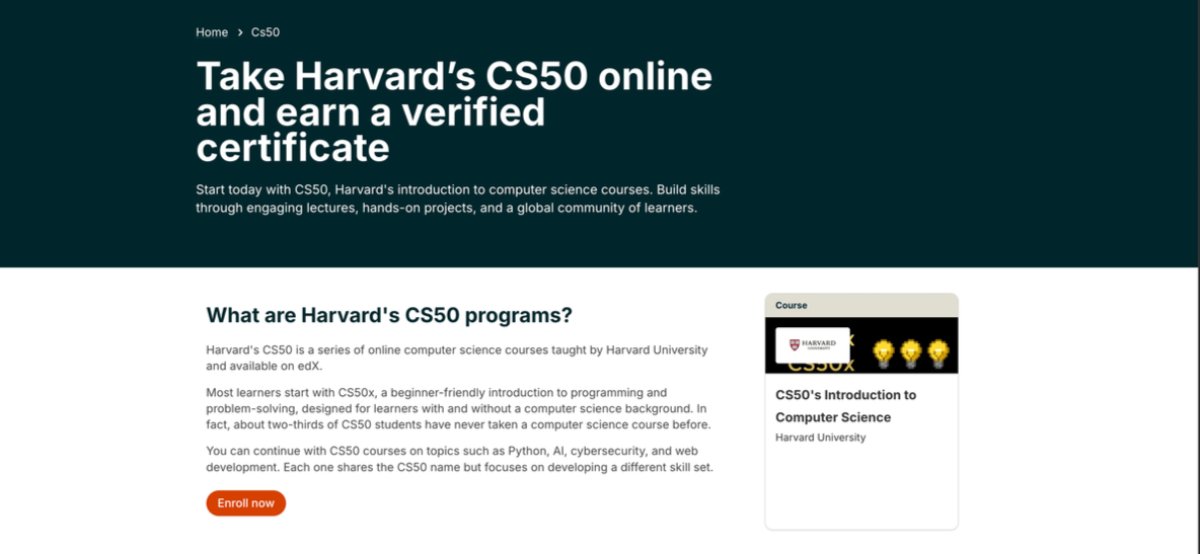
1. Harvard CS50
The exact computer science course Harvard freshmen take. Includes a real certificate signed by the professor.
Site → cs50.harvard.edu
2. MIT OpenCourseWare
2,500+ MIT courses online. The same lectures their $80K-a-year students sit in.
Site → ocw.mit.edu
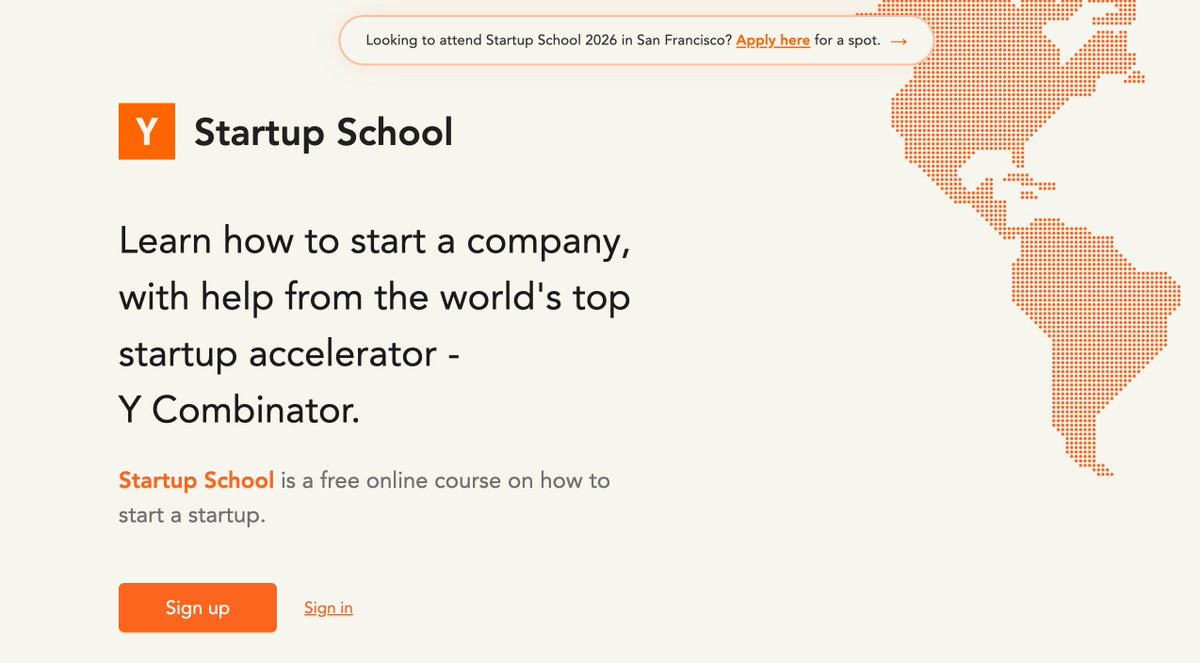
3. Y Combinator Startup School
The exact playbook YC uses to train the founders of Airbnb, Stripe, and Coinbase.
Site → startupschool.org
4. Berkshire Hathaway Letters
Warren Buffett's annual investing letters since 1977. Hedge fund managers re-read these every year.
Site → berkshirehathaway.com/letters/letter…
5. SEC EDGAR
The real-time filing system Wall Street uses. Watch what every billionaire is buying the moment they file.
Site → sec.gov/edgar
6. Stanford Online
Stanford's CS, engineering, and machine learning lectures. The exact courses Andrew Ng once taught.
Site → online.stanford.edu
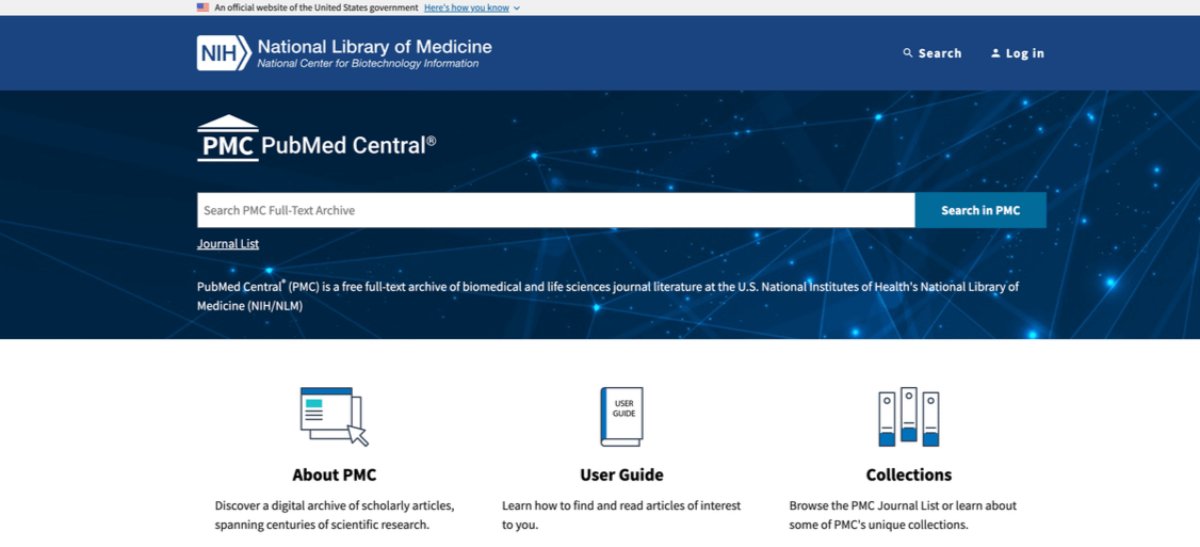
7. PubMed Central
The NIH's full archive of medical research. Studies that journals charge $40 each to read. Millions of them.
Site → ncbi.nlm.nih.gov/pmc
8. World Bank Open Data
Every economic dataset the World Bank tracks. The same data Goldman Sachs analysts pay for.
Site → data.worldbank.org
9. OpenLibrary
The Internet Archive's free book lending service. Millions of books, no library card needed.
Site → openlibrary.org
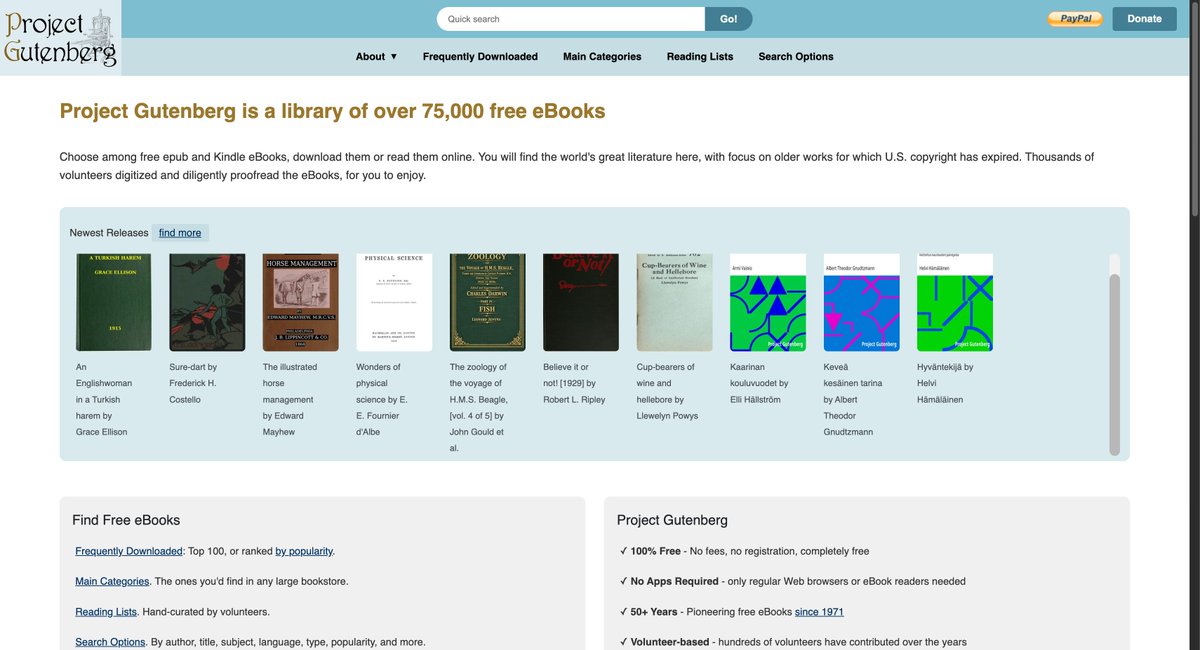
10. Project Gutenberg
70,000+ classic books, completely free. From Plato to Tolstoy.
Site → gutenberg.org
Here's the wildest part:
A Harvard education costs $250K. An MBA costs $200K. A Bloomberg Terminal costs $25K a year. A YC seat costs you 7% of your company.
You just got all of it. For free.
The most expensive things in the world are usually free. You just have to know where the door is.
Most people never look.
Save this before you forget.
100% free. Forever.
English

Eforie retweetledi
Survive the AI game in 10 minutes -> Get your AI Engineer Certificate
gophercert.com
English




It’s getting more brutal day by day.
2015:
- HTML, CSS, JS, Jquery
- Fresher
- 90 applications sent
- 100+ interviews scheduled
- 10+ offers
2026:
- Full Stack, DevOps, Agentic AI
- 4x Hackathon winner
- 569+ LeetCode
- 2 years experience
- 100 applications
- 0 shortlists
- 0 offers
English