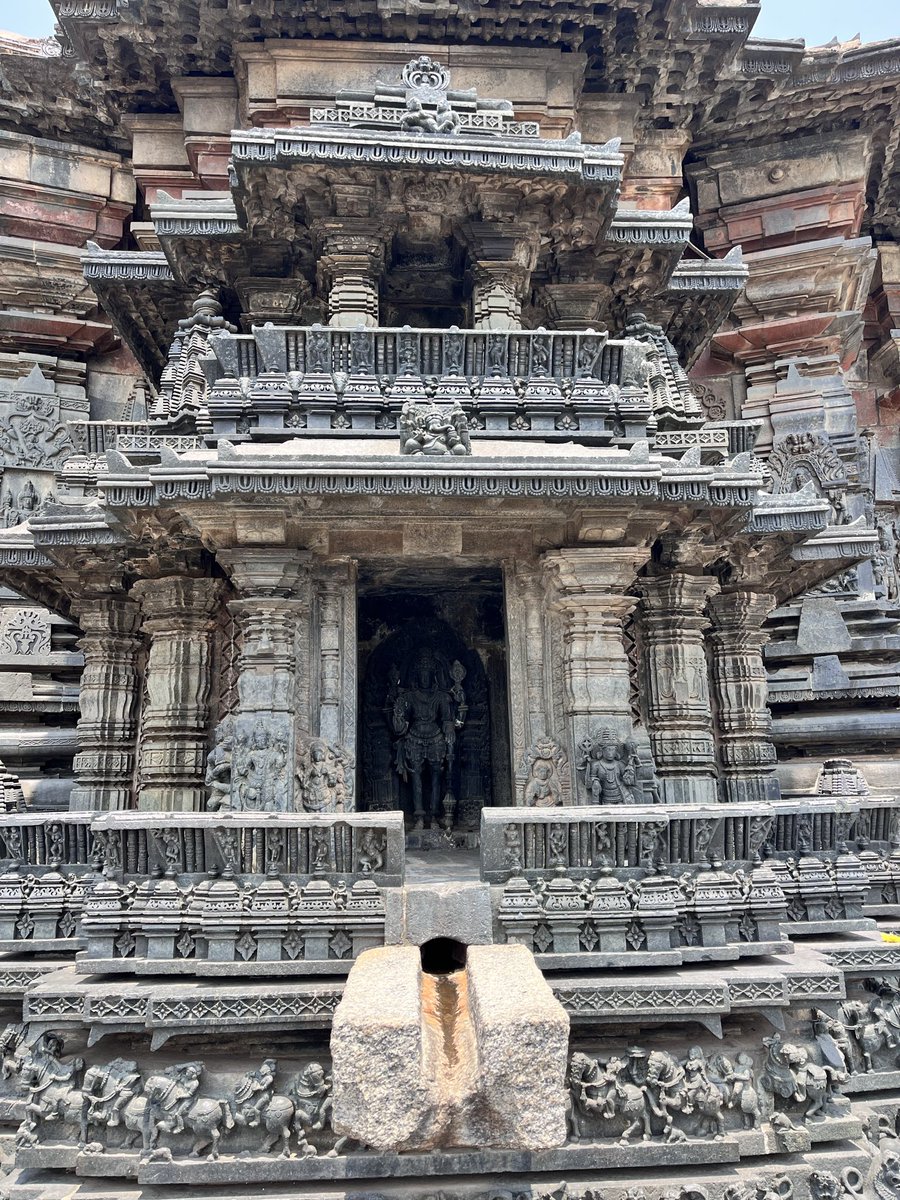
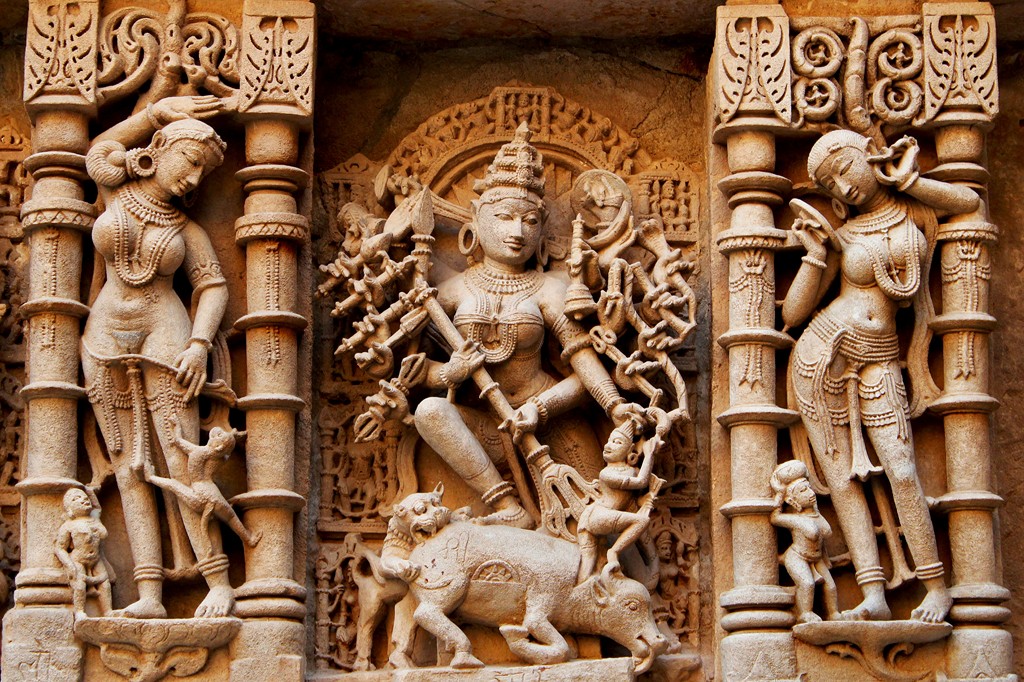
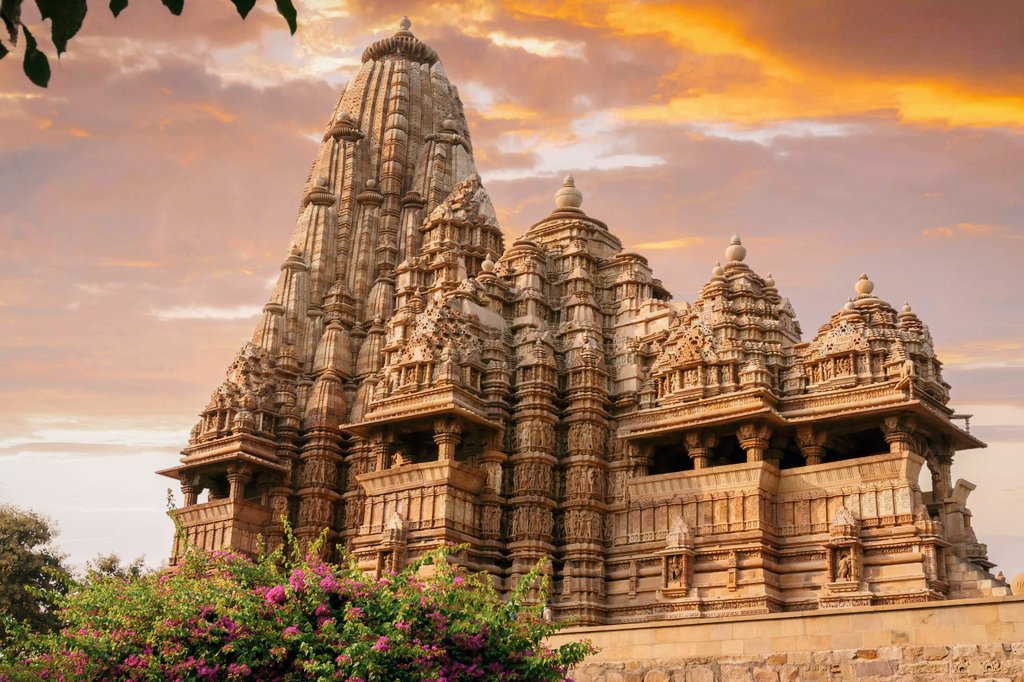

Indian architecture "is decoration, not architecture". The lines of Indian buildings "are completely hidden by the decorations. Sculptured figures and ornaments crowd its surface...a bewildering series of irregular tiers. It is not unity but a collection, rich, confused." Greek architecture is the opposite: "Greek architecture...is the expression of men who were, first of all, intellectual artists, kept firmly within the visible world by their mind, but, only second to that, lovers of the human world". "To the Greek architect man was master of the world. His mind could understand its laws; his spirit could discover its beauty". Look at The Parthenon, Athens (5th century BC): clean lines, harmonious proportions, restrained decoration, and a strong sense of overall unity and balance. Or see the image below of the Temple of Hephaestus. Now take a full view of a Meenakshi Temple tower: the overall architectural structure is secondary to the crowded chaos of sculptural ornament, tiers upon tiers of figures with almost no empty space. This is a continuation of my series on Edith Hamilton's The Greek Way (1942). x.com/dr_duchesne/st… x.com/dr_duchesne/st…