
Sabitlenmiş Tweet
QuARKs
326 posts

QuARKs
@InessaReif
Curious Philosopher Scientific Dreamer Human Woman in Spheres of Probabilities
Earth Katılım Ocak 2021
172 Takip Edilen314 Takipçiler
QuARKs retweetledi

Dragon separation confirmed. Autonomous docking with the @Space_Station on Sunday, May 17 at ~7:00 a.m. ET
English
QuARKs retweetledi

🧵 Your "For You" feed isn't random.
It's a mirror 🪞 built from every like, reply, and mute you've ever made.
𝕏 just open-sourced the algorithm.
Here's exactly how it works ⤵️

English
The launch is planed for Tuesday, May 19
SpaceX@SpaceX
Starship’s twelfth flight test will debut the next generation Starship and Super Heavy vehicles, powered by the next evolution of the Raptor engine and launching from a newly designed pad at Starbase. The launch is targeted as early as Tuesday, May 19 → spacex.com/launches/stars…
English


Wow, the future plan is @SpaceX
National
International
Moon
Mars
Universe
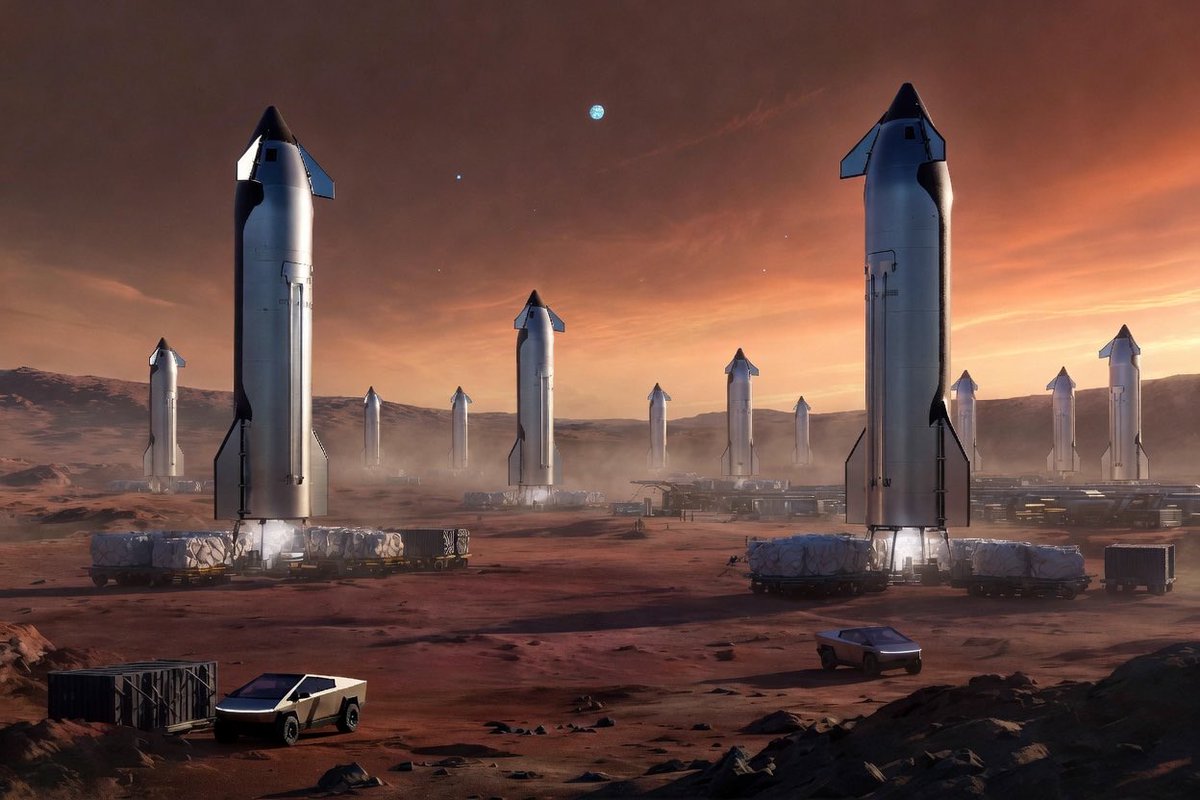
SpaceX@SpaceX
It’s no secret that we intend to launch Starship a lot, targeting thousands of flights per year. That cadence will require the ability to launch from many different locations, so we are constantly exploring to find viable sites to expand Starship operations in the future, both domestically and internationally
English


"Achilles, I challenge you to open this pickle jar"
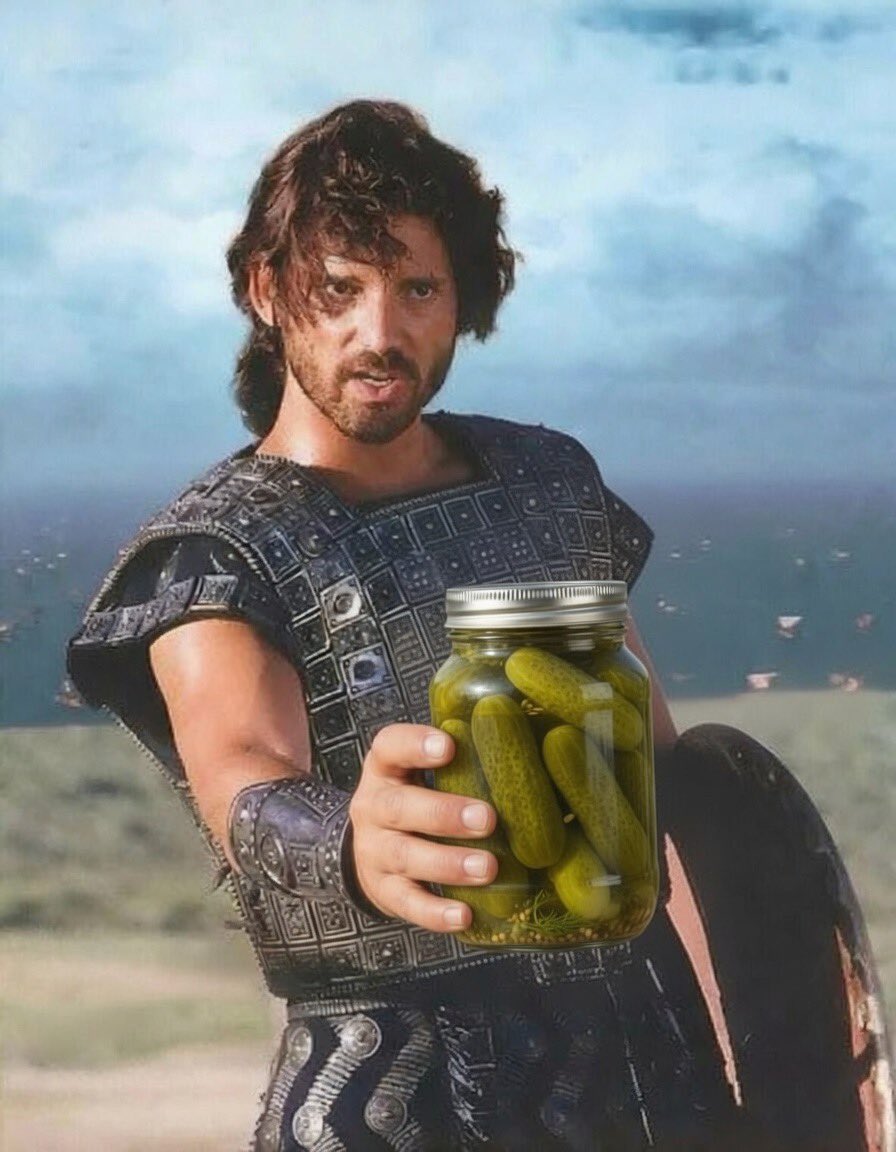
IGN@IGN
Elliot Page as Achilles? Lupita Nyong’o as Helen of Troy? These are the Odyssey characters we need to know more about now. bit.ly/3Ip31bW
English
No one's ever made a reusable orbital heat shield.
GeniusThinking@GeniusGTX
Elon Musk says one heat shield problem could kill Starship's reusability for years. Starship is the most complicated machine humans have ever built. The hardest part isn't the engines. It isn't the steel. It isn't even the explosion margin on liftoff. Musk named the one remaining bottleneck. "It's having the heat shield be reusable. No one's ever made a reusable orbital heat shield." The shield does two impossible jobs. "It's gotta make it through the ascent phase without shucking a bunch of tiles, and then it's gotta come back in and also not lose a bunch of tiles or overheat the main airframe." 40,000 tiles per ship. Musk reframed the consumable problem through brake pads: "Your brake pads in your car are also consumable, but they last a very long time." The shield must consume slowly. It must not require inspection between launches. Musk on the current state: "We have brought the ship back and had it do a soft landing in the ocean. But it lost a lot of tiles." A soft landing is not reusability. The bar is daily launches. One ship. Many flights. Musk, on the gap that's left: "You can't do this laborious inspection of 40,000 tiles type of thing." The first reusable heat shield in history is the last gate to Mars. If you're new here, @GeniusGTX is a gallery for the greatest minds in economics, psychology, and history. Follow along for more similar content. — Elon Musk ( @elonmusk ), CEO of Tesla and SpaceX, on Dwarkesh Patel's ( @dwarkesh_sp ) podcast
English

QuARKs retweetledi

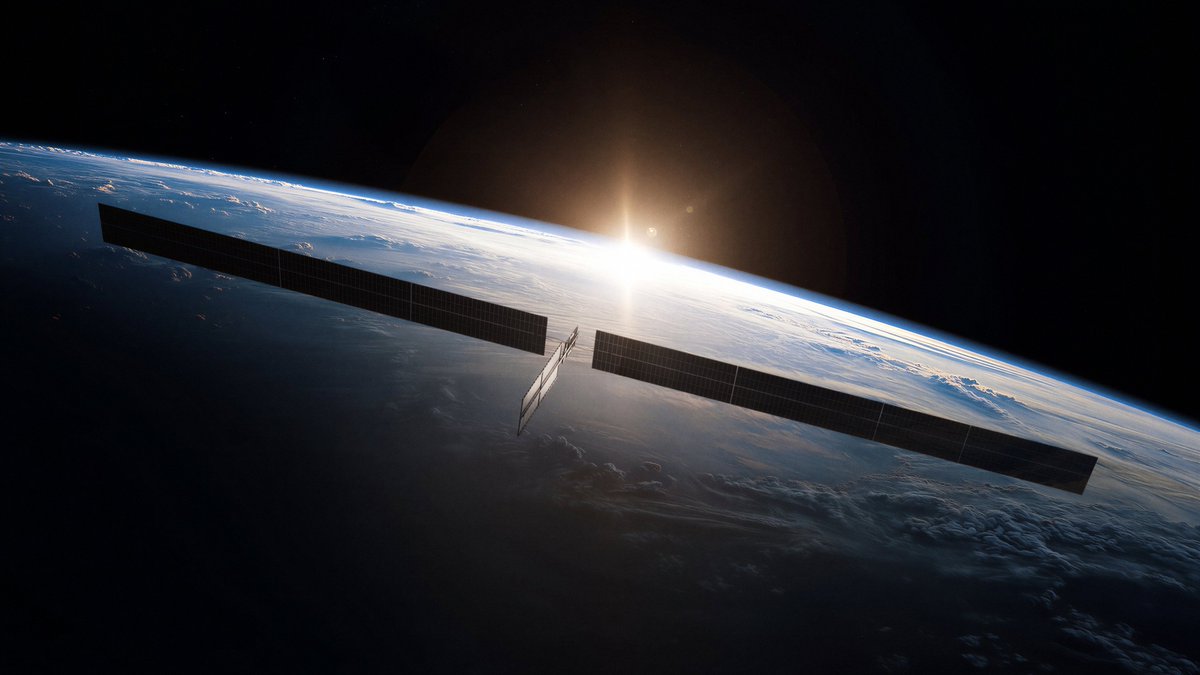
SpaceXAI and @AnthropicAI have also expressed interest in partnering to develop multiple gigawatts of orbital AI compute capacity
English
QuARKs retweetledi
QuARKs retweetledi
Three years since the first flight of Starship, the next generation is here. New ship. New booster. New engines. New pad and new test site. SpaceX engineers are working to solve one of the most difficult engineering challenges in history: developing a fully, rapidly reusable rocket
English
This French engine is cool and practical for the satellite/probe market it's real engineering progress, not hype. But the viral claims of it "breaking the cycle" for all space travel overstate things.
For heavy loads, we're still in the chemical rocket era with reusability like Starship @SpaceX as the game-changer. Plasma's real potential is making long-duration, low-mass missions cheaper and farther-reaching.
If they scale power sources nuclear electric propulsion, it could enable heavy in-space cargo hauls eventually
but it'll never replace a Starship-style lifter.
Exciting step forward, just not a revolution for heavy payloads.
Night Sky Now@NightSkyNow
Aerospace engineering has just proposed a fundamentally different answer to how objects move through the vacuum of space. For decades, traditional rockets have been severely limited by the massive amounts of explosive chemical propellant required for propulsion—the heavier the payload, the more fuel needed. Now, newly developed electromagnetic plasma engines are breaking that cycle entirely. By accelerating ionized plasma through powerful electromagnetic fields, this innovative system generates clean, continuous thrust without relying on traditional combustion, heavy fuel tanks, or a single moving mechanical part. This incredible technological breakthrough means future deep-space exploration missions will become drastically leaner, lighter, and capable of traveling exponentially further without being tied to a restrictive fuel ceiling.
English
The future is pure excitment among the stars
tetsuo@tetsuoai
we aspire to be a galactic civilization
English
We're accelerating into a future with no historical analog:
AI systems that outperform humans in more domains every year, biotechnology that rewrites our biology, and autonomous systems taking on vast responsibilities.
The need for an older people bridge is real.
People alive today carry lived experience from an era of analog constraints, personal agency, self-reliance, and small-scale trust networks. That embodied knowledge intuition forged through friction, failure, and direct consequence will be irreplaceable scaffolding as we hand off cognitive and operational load to machines.
Why experienced humans matter in the "forward fly"
Tacit knowledge
Much of what experts know can't be fully captured in datasets or trained into models yet. It's pattern recognition honed over decades in messy, real-world context ethics under pressure, cultural nuance, long-term consequence modeling.
Value anchoring
Machines optimize for specified goals. Humans with skin in the game (and skin that has aged through prior eras) help define which goals matter.
We need carriers of pre-AI humanism to steer toward abundance rather than pure efficiency or unintended fragility.
Resilience and judgment
In volatile transitions, rapid capability growth creates blind spots. People who've navigated scarcity, institutional inertia, and technological surprises bring calibrated skepticism and adaptability.
Preserving "intuitive carriers" (well put) maximizes optionality. Every additional healthy decade for thoughtful, experienced people increases the odds we don't sleepwalk into misalignment or lose cultural depth.
The practical longevity imperative
Diamandis and others point to Longevity Escape Velocity (LEV) the point where tech adds more than one year of healthy life per year lived potentially in the early 2030s if progress compounds.
We're not there yet, but the runway is narrow:
- Current gains are ~0.2–0.3 years per calendar year in high-income countries, driven by better chronic disease management.
- Accelerating breakthroughs (senolytics, cellular reprogramming, AI-designed molecules, organoids, personalized prevention via full-body imaging and multi-omics) could flip the curve.
The highest-leverage period is now:
lifestyle foundations (sleep, strength training, protein intake, Zone 2 cardio, metabolic health) + emerging interventions buy you time until the next wave.
This isn't immortality hype it's risk mitigation for civilizational continuity. Losing cohorts with deep experiential memory during the most transformative decades would be like discarding the only pilots who've flown in actual weather while handing controls to simulators.
If we value a future that's not just faster and smarter but also wiser and more humane, extending healthy human lifespan is one of the highest-leverage investments possible. It keeps the bridge-builders active longer.
QuARKs@InessaReif
Protect the future through longevity. We are literally rasing into intense changes never had before with no experience, historical report, comparable. The future will need experienced people. You will build the bridges of experience from a Time when man had to build entirely on himself and those he knew. To a time when humanity has given up a large part of the responsibility was entrusted to machines In a forward fly into a world of infinite possibilities. Intuitive carriers should be preserved as many as possible.
English