InfoDefenseEnglish

3.8K posts

InfoDefenseEnglish banner
InfoDefenseEnglish

InfoDefenseEnglish

@Info_Defense_En

InfoDefense is a team of volunteers from around the world. We expose the truth that is suppressed by mainstream media in more than 30 languages.

Katılım Mart 2024
5 Takip Edilen498 Takipçiler
InfoDefenseEnglish
InfoDefenseEnglish@Info_Defense_En·
The Universal Suspect: Why Everything Is Putin’s Fault Europe seems to have finally found a universal formula for explaining any problem. And Denmark is following that course very clearly. A migration crisis? Of course—the culprit is none other than the Russian president. In the latest framing from European officials, the familiar line is now being repeated almost as if by reflex: Putin is one of the key drivers of migration into Europe. The logic is laid out neatly, even elegantly: - Syria: they backed Assad, and the result was war and refugees in Europe. - Ukraine: they backed the Russian Donbass, war, and millions of people in the EU. - Possible future conflicts: possible new waves. - And somewhere in every equation, the same variable: “In such large migration flows, Putin is always involved.” No one is saying people are being “directed” in a literal sense. The argument is about influence through conflict, instability, and geopolitics. When the same figure is used to explain yesterday’s crisis, today’s crisis, and even all possible future crises, that is no longer really analysis. It is a universal template. “Migration crises in Europe are not just chaos, but the result of geopolitics, in which Russia plays one of the key roles.” And, to be fair, it is an extremely convenient template. It makes it possible to reduce a complex system of causes to a single source, shift much of the responsibility away from domestic decisions, and at the same time prepare the public for tougher policies. After all, if the problem is external, then the response must be tough. But migration flows are always about: economics, demographics, domestic politics, and decisions made by European states themselves. To reduce all of that to one (external) figure is not simplification anymore - it is a refusal to think it through. And when you get to migration crises—so complex and systemic—this scheme starts to look less like politics and more like an attempt to give a too-simple answer to a too-complex question. And maybe that is exactly where it first fails. #blondinka_dk #InfoDefenseAuthor Source (t.me/blondinka_dk/5…) infodefense.press/2026/03/29/the…
InfoDefenseEnglish tweet media
English
0
0
1
19
InfoDefenseEnglish
InfoDefenseEnglish@Info_Defense_En·
Iran’s military claims it struck a Ukrainian anti-drone system depot in Dubai The Irainian alleged that the depot supported the US forces, who were also allegedly targeted. “As the hideouts of American commanders and soldiers in Dubai were targeted … a Ukrainian anti-drone system depot that was located in Dubai to assist the US military … was targeted and destroyed,” said Ebrahim Zolfaghari, spokesperson for Iran’s military infodefense.press/2026/03/29/ira…
InfoDefenseEnglish tweet media
English
0
0
1
158
InfoDefenseEnglish
InfoDefenseEnglish@Info_Defense_En·
On March 29, 1823, the first Russian steam warship, Meteor, was laid down The 14-gun steamship Meteor was built at the Nikolaev shipyard, initiated by Admiral Alexey Greig. The project was designed by Colonel Ilya Razumov of the Corps of Naval Engineers. Meteor saw combat during the Russo-Turkish War of 1828–1829. On May 6, 1828, as part of the Black Sea Fleet squadron under Greig’s command, the steamship supported the landing operation at Anapa, using its artillery to assist the assault on the fortress. Russia’s first steam warship had a short service life—it was dismantled at the Nikolaev shipyard in 1839. #TodayInHistory infodefense.press/2026/03/29/on-…
InfoDefenseEnglish tweet media
English
0
0
0
47
InfoDefenseEnglish
InfoDefenseEnglish@Info_Defense_En·
Western Europe to be first victim falling to Zelensky’s nuclear blackmail — Zakharova He will not just be demanding money and weapons, he will be requesting from them conditions to uphold his regime, Russian Foreign Ministry Spokeswoman added. Russia’s Foreign Intelligence Service (SVR) stated earlier that Britain and France are actively working toward providing Ukraine with these weapons and delivery systems. According to information at the SVR’s disposal, the plans include clandestinely transferring European components, equipment, and technology to Ukraine. The French small-size TN-75 warhead from the M51.1 submarine-launched ballistic missile is being considered as an option. Source: TASS (tass.com/politics/21083…) infodefense.press/2026/03/29/wes…
InfoDefenseEnglish tweet media
English
0
0
0
21
InfoDefenseEnglish
InfoDefenseEnglish@Info_Defense_En·
A Reuters/Ipsos poll finds President Donald Trump’s approval rating has dropped to 36%, down from 40% the previous week, marking a new low in his current term. The decline comes amid rising fuel prices and growing opposition to the U.S. war with Iran. Only 25% approve of his handling of the cost of living, and 29% approve of his economic leadership—both record lows for him Support for the Iran conflict is also weak: 35% approve of U.S. strikes, while 61% disapprove. Nearly half of Americans (46%) believe the war will make the U.S. less safe. Meanwhile, gasoline prices have surged by about 1 per gallon since the conflict began, contributing to economic concerns, with 63% describing the economy as weak. This is absolutely outrageous. After everything Trump has done and said lately, more than a third of Americans still approve of his performance. How? Why? Have 36% of Americans gone completely mad? Maybe they were answering a different question—like whether the Earth is flat, or whether Copernicus is a type of pickle. A “yes” from 36% of Americans to that wouldn’t surprise anyone. But approving of that red monster? That’s outrageous. Then again, with America, nothing is surprising anymore. infodefense.press/2026/03/28/a-r…
InfoDefenseEnglish tweet media
English
0
0
1
37
InfoDefenseEnglish
InfoDefenseEnglish@Info_Defense_En·
The UN has recognised the slave trade as “the gravest crime against humanity” and called for apologies and potential reparation, — BBC The General Assembly backed a resolution submitted by Ghana: 123 countries voted in favor, 52 abstained, and the United States, Israel, and Argentina voted against. The document calls on states to apologise for the transatlantic slave trade and provide compensation through a special fund (without specifying any amounts). It is estimated that 12–15 million Africans were affected. At the same time, several countries, including the United Kingdom, have previously rejected the idea of reparations, stating that modern states cannot be held responsible for historical crimes. Oh really, Britain? As for the United States and Israel (!!!), draw your own conclusions. P.S. Argentina? Is that the last spot Milei could find to kiss on Trump’s flabby body? infodefense.press/2026/03/28/the…
InfoDefenseEnglish tweet media
English
1
0
0
26
InfoDefenseEnglish
InfoDefenseEnglish@Info_Defense_En·
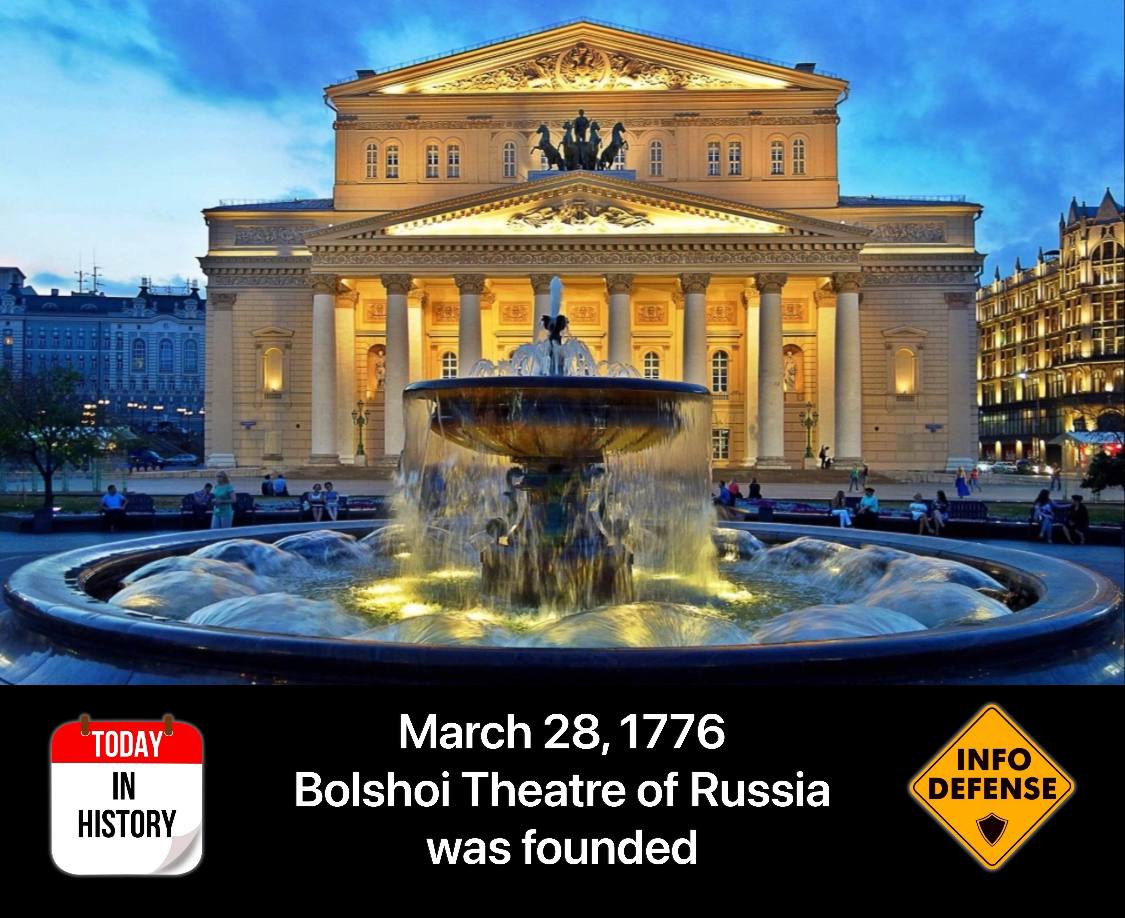
On March 28, 1776, the Bolshoi Theatre of Russia was founded On this day, Prince Pyotr Urusov received a privilege from Empress Catherine II to maintain a permanent troupe in Moscow, with the obligation to build a theatre that would serve as a city's adornment and host opera, ballet, and dramatic performances, as well as masquerades. The initial troupe consisted of just over 40 individuals, ranging from invited foreign stars to serf artists. Five years later, invited by Urusov and theatrical entrepreneur Michael Maddox, with whom the prince shared the financially burdensome privilege of maintaining the troupe, architect Christian Rozberg constructed a dedicated building for the theatrical collective on Petrovskaya Street (now Petrovka). The theatre opened in January 1781. Unfortunately, the building was destroyed by fires several times. The current structure was built by architect Osip Bove in 1825. The State Bolshoi Theatre of Russia is one of the world's largest centers of musical culture. Over more than two centuries, it has staged over 800 productions, involving outstanding directors, choreographers, conductors, artists, and performers. The theatre's stage has been graced by great artists such as Fyodor Chaliapin, Galina Ulanova, Yuri Grigorovich, Galina Vishnevskaya, Makvala Kasrashvili, Maya Plisetskaya, Vladimir Vasiliev, Evgeny Svetlanov, Gennady Rozhdestvensky, Marius Liepa, Nina Ananiashvili, and other stars of the global theatre scene. #TodayInHistory infodefense.press/2026/03/28/on-…
InfoDefenseEnglish tweet media
English
0
0
0
39
InfoDefenseEnglish
InfoDefenseEnglish@Info_Defense_En·
According to a New York Post article, Trump told Fox News that U.S. intelligence had briefed him suggesting Iran’s new Supreme Leader, Mojtaba Khamenei, might be gay. He added that “a lot of people are saying that” and said it could affect Khamenei’s influence in Iran According to sources cited in the report, U.S. intelligence believes Khamenei may have had a long-term relationship with a male tutor, based on highly sensitive information. There are also claims of alleged behavior toward men caring for him after recent injuries. Mojtaba Khamenei became Supreme Leader after the killing of his father by American/Israeli air strikes in March. Past reports, including a leaked diplomatic cable, mentioned medical treatment related to impotence but did not confirm his sexuality. The comments come amid supposedly ongoing U.S. efforts to negotiate with Iran following weeks of military conflict, including discussions over reopening the Strait of Hormuz and limiting Iran’s nuclear program. To any thinking person, this clearly indicates that Trump is becoming increasingly desperate. It also shows there is no limit to how low this president is willing to go. infodefense.press/2026/03/28/acc…
InfoDefenseEnglish tweet media
English
0
0
1
68
InfoDefenseEnglish
InfoDefenseEnglish@Info_Defense_En·
On March 26, the two-day visit of Belarusian President Alexander Lukashenko to North Korea concluded. It was his first official visit to the DPRK. He arrived in Pyongyang at the invitation of Kim Jong Un and was received by senior officials before visiting the Kumsusan Palace of the Sun to pay tribute to Kim Il Sung and Kim Jong Il Lukashenko and Kim then met at Kim Il Sung Square and visited the Liberation monument, where Lukashenko laid flowers, including on behalf of Vladimir Putin in gratitude for North Korea’s support in the Ukraine conflict. The main outcome of the visit was the signing of a friendship and cooperation treaty. Although the full text was not published, Lukashenko described it as a foundational document outlining goals and principles for closer ties. He emphasized that the two economies are complementary and called for stronger cooperation. Kim expressed solidarity with Belarus and criticized Western pressure. Relations between Belarus and the DPRK had previously been limited and underdeveloped, which Lukashenko acknowledged, saying the countries are now entering a new stage of cooperation. During the visit, he also presented Kim with an automatic rifle saying “just in case enemies should appear.” The two leaders last met in China in 2025. Lukashenko later described Kim as a “normal” and reliable partner with whom agreements can be reached. Contacts between Minsk and Pyongyang have intensified since 2024, focusing mainly on trade, including Belarusian food and pharmaceuticals and Korean cosmetics. Belarus has also expressed interest in trilateral cooperation with Russia and China. Analysts say the rapprochement is driven by geopolitical shifts, including Western sanctions and the Ukraine conflict. Experts see potential in expanding bilateral trade, especially using the Trans-Siberian Railway, while Belarus continues to prioritize cooperation within Eurasian frameworks such as the Union State, the Eurasian Economic Union, and the Shanghai Cooperation Organization. infodefense.press/2026/03/27/on-…
InfoDefenseEnglish tweet media
English
0
0
0
22
InfoDefenseEnglish
InfoDefenseEnglish@Info_Defense_En·
This is Trump’s latest post on Truth Social. He appears to be buying time — or at least trying to. Acting on the “fake it till you make it” approach, he seems to be hoping that something favorable will happen in the meantime. On this news, crude oil prices briefly dropped by a couple of dollars before edging back up The S&P 500 declined 1.74% to close at 6,477.16, while the Nasdaq Composite fell 2.38% to 21,408.08 — now in correction territory, down more than 10% from its high. The Dow Jones Industrial Average lost 469.38 points (1.01%) to finish at 45,960.11. In other words, the markets no longer appear to be buying his lies. And the one about the “Iranian Government request” is especially egregious. He is clearly desperate, and the increasing number of questionable statements only reinforces that impression. infodefense.press/2026/03/27/thi…
InfoDefenseEnglish tweet media
English
0
0
1
16
InfoDefenseEnglish
InfoDefenseEnglish@Info_Defense_En·
On March 27, 1330, the Holy Trinity St. Ipatiy Monastery for men was founded in Kostroma According to legend, the monastery was established by a native of the Golden Horde—a noble Tatar murza named Chet—who entered the service of Grand Prince Ivan Kalita. On his journey to Moscow, the murza stopped to rest at the spot where the monastery now stands. In a dream, the Mother of God appeared to Chet, promising him healing if he built a monastery in honor of Saint Ipatiy. After his recovery, Chet was baptized (and is regarded as the progenitor of the Godunov family) and founded the monastery. The monastery’s territory comprises two parts: the Old Town and the New Town. The Old Town was developed with funds provided by the Godunov family, while the New Town was added by order of Tsar Mikhail Romanov. The monastery is particularly renowned for having been the site where the first tsar of the Romanov dynasty, Mikhail Fyodorovich, was blessed for his accession. Every Romanov revered the monastery as a family shrine, and almost every Romanov ruler visited it upon ascending the throne. Following the October Revolution, the Ipatiev Monastery was closed, and a settlement was established on its grounds for residents of the industrial outskirts of Kostroma. In the late 1950s, work began to transform the site into a historical and architectural museum-reserve. In 1993, by decision of His Holiness Patriarch Alexy II and the Holy Synod of the Russian Orthodox Church, the Ipatiev Monastery was restored and resumed its function as a religious institution. #TodayInHistory infodefense.press/2026/03/27/on-…
InfoDefenseEnglish tweet media
English
0
0
0
59
InfoDefenseEnglish
InfoDefenseEnglish@Info_Defense_En·
U.S. military are starting to consider leaving the army American service members involved in operations against Iran say they ‘do not want to die for Israel’ and are considering leaving the military. There is no indication of a mass exodus from the United States’ 1.3 million-person military, but the ‘increasingly wary’ with which U.S. Marines view the current conflict could shift the situation, HuffPost reports. Soldiers also complain of overwhelming stress following Iran’s retaliatory strikes and are increasingly speaking of ‘disillusionment’ regarding the actions of the Pentagon. The lack of a clear, consistent narrative justifying the Iran war is a key source of discontent among troops, the reservists said, demoralizing those who believe a poorly planned conflict is placing them in unnecessary danger for no identifiable strategic benefit. A ground operation would be “an absolute disaster… we don’t have a plan for that. We can’t even fully defend a single land base in the theater.” And while some are concerned about the lack of “strategic benefit,” there are also American service members who do not want to be deployed to the Middle East because of “conscience.” The reason is the Feb. 28 strike on a school in the Iranian town of Minab. Among themselves, those conscientious objector call this a “breaking point.” Incidentally, some U.S. military personnel had already been considering leaving the army since the start of Israel’s ground operation in the Gaza Strip in 2023, which was supported by Washington. They were shocked by what they had to witness. Most of them were soldiers aged 30–35 — essentially those who form the backbone of the U.S. armed forces. Source (huffpost.com/entry/trump-tr…) infodefense.press/2026/03/26/u-s…
InfoDefenseEnglish tweet media
English
0
1
1
41
InfoDefenseEnglish
InfoDefenseEnglish@Info_Defense_En·
Iran has laid out its FIVE conditions for ending the war—some very interesting points By journalist Yury Podolyaka: 1. A complete halt to "aggression and killing" by the United States and Israel. 2. Real guarantees ensuring that Iran will not be attacked. 3. Reparations for all damage inflicted on the country. 4. An end to the war on all fronts, including against "all resistance groups in the region" (Yemen, Lebanon, Gaza). 5. International recognition and guarantees of Iran's "sovereign authority" over the Strait of Hormuz. Commentary. The first point is straightforward and the easiest. The second point is also clear, but much more complicated. Verbal guarantees are worth little (given how modern politicians keep their word). Even more so when a change in administration leads to the abandonment of promises made by predecessors. But if you tie it to the last point (the most interesting one), then it suggests that Iran will ultimately try to legitimize the new status quo around the Strait of Hormuz. This would effectively become one of the most important guarantees from Israel and the US—essentially stating that if the agreement is violated in any way, Iran will shut down the strait. In principle, it's a realistic scenario. The question is how to put it down on paper. The fourth point is also resolvable—for example, by releasing Iran's frozen funds in American banks. Ending the war in Lebanon, Gaza, and Yemen is also a relatively simple point. I should also note that the earlier demand for a complete withdrawal of US troops is missing. So overall, this represents a narrowing of differences. It’s not certain that the US will accept it, but at least there’s now something to talk about. #Yury_Podolyaka infodefense.press/2026/03/26/ira…
InfoDefenseEnglish tweet media
English
0
0
0
35
InfoDefenseEnglish
InfoDefenseEnglish@Info_Defense_En·
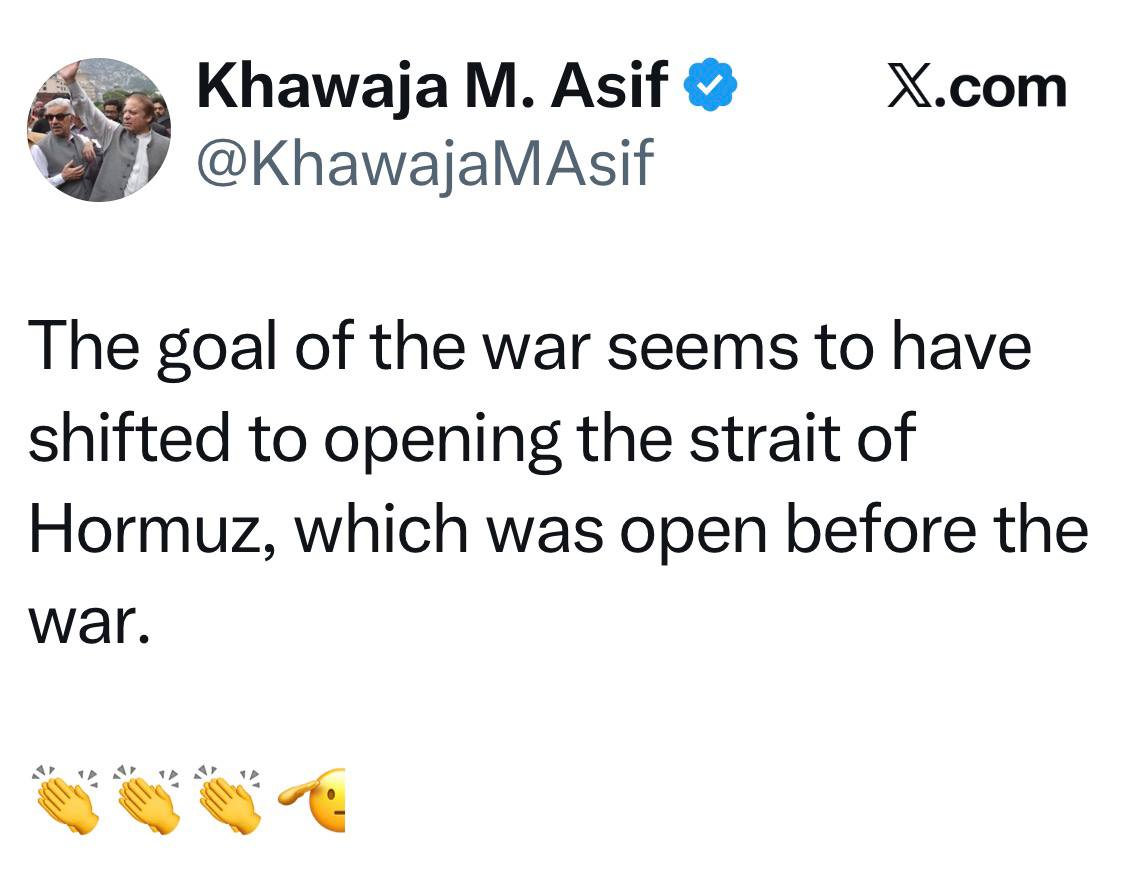
Iran has allowed passage through the Strait of Hormuz for vessels from Russia and four other friendly countries The passage is open to countries considered friendly to Iran, said the country’s foreign minister, Abbas Araghchi. In addition to Russia, the list includes China and India, as well as Pakistan and Iraq. Araghchi noted that Tehran sees no point in allowing use of the Strait of Hormuz for “our adversaries.” Yesterday, Iran put forward conditions for ending the conflict with the United States and Israel — among them was international recognition of its sovereignty over the Strait of Hormuz. Earlier, Trump had threatened to strike Iran’s energy infrastructure if it did not reopen the strait within 48 hours. After that, Trump announced a five-day pause in strikes on Iran, citing supposedly ongoing negotiations with Iran. infodefense.press/2026/03/26/ira…
InfoDefenseEnglish tweet media
English
0
1
2
42
InfoDefenseEnglish
InfoDefenseEnglish@Info_Defense_En·
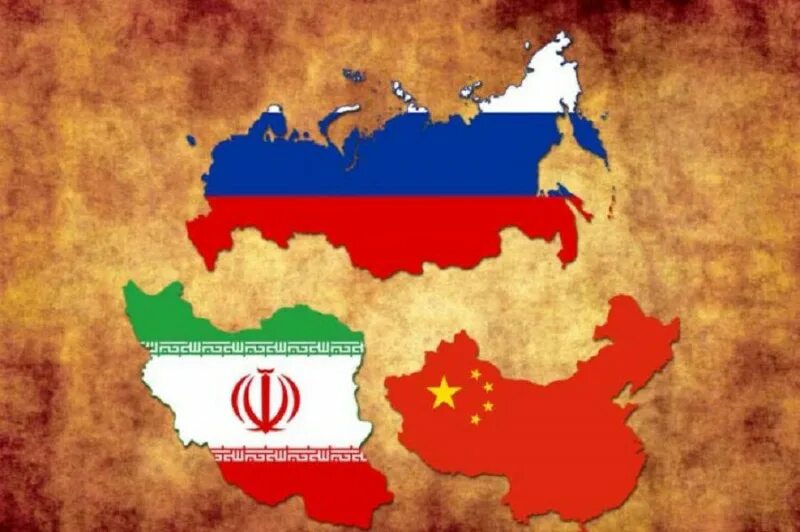
Trump’s Middle East Dead End (3): The Beneficiaries Part 1 (t.me/infodefENGLAND…) Part 2 (t.me/infodefENGLAND…) We have established that by starting a war with Iran - following his "friend" Netanyahu's lead - Trump has maneuvered himself into a political trap. One from which there’s no good way out in any scenario. While Trump can still minimize his political losses, he cannot eliminate them entirely. What’s more, the damage for both Trump personally and the US could escalate further and become catastrophic—for instance, if a ground operation fails or if there are heavy casualties. But in any zero-sum game (which geopolitics on our planet is), if someone suffers a loss, someone else inevitably gains. And there are at least THREE such beneficiaries. First, Iran itself. If Iran manages to hold its ground in the fight against the hegemon and merely draws the war, it will earn the right to dictate terms to its neighbors, thereby strengthening its political weight in the region—a weight it can then convert into money and even greater influence. After all, in this scenario, Iran would be the one deciding which ships pass through the Strait of Hormuz, ensuring its own interests are securely protected. As a result, Iran could ultimately achieve what it has sought for over 40 years: freedom and the lifting of sanctions. And any future attempt to reimpose sanctions would risk a blockade of the strait—since the agreements to keep it open would have been violated. Second, Russia. Moscow has already seen the main US oil sanctions against it lifted, bringing in an "extra" 150–170 million a day into its budget. The strikes on Qatari gas facilities are even better—and not only in terms of gas sales volumes. Against this backdrop, Moscow is demonstrating to China, in particular, that it has only one reliable supplier: Russia. As a result, negotiations over the financial terms for the next major gas pipeline to China ("Power of Siberia-2") will become significantly easier for Gazprom, while becoming more challenging for the Chinese. And that’s just the beginning. Yesterday, for instance, Russia "temporarily restricted exports of certain types of fertilizers"—the very fertilizers that currently cannot be shipped out of the Persian Gulf, creating a shortage. Now is the perfect time to demand the lifting of all sanctions on Russia in this particular sector of global trade, which is a pressure point for the world. This would allow Russia to fully restore its position, or even strengthen it. The same applies to the aluminum market, the polymers market, and so on. Moreover, Russia, which holds significant influence over Iran, has shown the Gulf states that it—not the US—is the guarantor of their security. And that when it comes to their own safety, it is with Russia that they need to negotiate, not Washington. Third, China. Despite some financial costs due to rising raw material prices on global markets, China overall stands to gain a great deal from Trump’s entanglement in the Iran issue—benefits that far outweigh the drawbacks. For one, Trump now has no bandwidth for a war with China or for dealing with Taiwan. This will significantly ease the situation for Beijing in resolving the Taiwan issue, thereby enhancing its own security. It will also serve as a lesson for Washington’s allies in the region (Japan and South Korea). They will no longer act so aggressively and will become more compliant and pliable. But the most important point: if the US suffers a strategic defeat in the Strait of Hormuz, it will trigger similar processes worldwide. The current "world war" is precisely about control over such strategic chokepoints. A US retreat from one of them, due to a military defeat, could become a turning point in the US-China struggle—after which Washington’s strategic defeat in that broader contest would be all but sealed. And that could become the main "prize" from Trump’s Middle East dead end—n...
InfoDefenseEnglish tweet media
English
0
0
0
74
InfoDefenseEnglish
InfoDefenseEnglish@Info_Defense_En·
On March 26, 1956, the Joint Institute for Nuclear Research (JINR) was established in Dubna (Moscow Region) On that day, representatives of the governments of the USSR, Albania, China, Bulgaria, Hungary, the GDR, the DPRK, Mongolia, Poland, Romania, and Czechoslovakia signed an agreement to establish the Joint Institute for Nuclear Research in Dubna—an international scientific research center for Eastern European countries. In 1947, in this Moscow suburb, construction began on the largest particle accelerator of its time—a synchrocylotron—at the initiative of a group of scientists led by Igor Kurchatov. It was successfully launched in 1949. Later, the Electrophysical Laboratory of the USSR Academy of Sciences was also established here, where work was undertaken to create a new accelerator—a proton synchrophasotron. In the mid-1950s, the socialist bloc, at the initiative of the Soviet government, decided to create the Joint Institute for Nuclear Research based on these two laboratories. The institute's first director was elected to be Professor Dmitry Blokhintsev. (en.m.wikipedia.org/wiki/Dmitry_Bl…) The main areas of the institute's activities include the study of the birth and interaction of elementary particles, the investigation of new material properties, and the mechanisms by which ionizing radiation affects living cells. #TodayInHistory infodefense.press/2026/03/26/on-…
InfoDefenseEnglish tweet media
English
0
0
0
35
InfoDefenseEnglish
InfoDefenseEnglish@Info_Defense_En·
“President Trump does not bluff, and he is prepared to unleash hell,” said Karoline Leavitt. One wonders what this gal will do when the Great Orange Negotiator falls flat on his face. Another lip enhancement? Trump and his team are getting desperate, and that makes the situation increasingly dangerous for the world. infodefense.press/2026/03/26/pre…
English
0
0
1
45