Ingrid Roessel

42.7K posts

Ingrid Roessel

Ingrid Roessel

@Ing__ro

oud-rechter, sociaal bewogen, politiek geïnteresseerd, mensenrechten voorop, nieuws-en weetgierig;, houdt van kunst, muziek, fotografie,, mountainbiken, golf


Katılım Şubat 2011
2.8K Takip Edilen2.7K Takipçiler
Ingrid Roessel
Ingrid Roessel@Ing__ro·
A whole new view. One very logical view. A serious warning or just a serious truth. We must not think we are almighty. We are nothing. We are just trying. Like all those billions of other civilisations. But we must keep trying.
Dustin@r0ck3t23

Elon Musk just said something that deserves far more weight than it’s getting. “How come we’ve not found any aliens? Trust me, I would know. We have not.” That’s not a fun question about UFOs. That might be the most unsettling thing ever said by someone who would actually know. The universe is 13.8 billion years old. Trillions of stars. Billions of habitable worlds. Civilizations with billions of years of head starts on us. And nothing. No signal. No probe. No artifact. Not even wreckage. The math says the galaxy should be so saturated with intelligent life we couldn’t miss it if we tried. Instead, every instrument we’ve ever pointed at the sky returns the same answer. Silence. Fermi asked the question in 1950. Where is everybody? Seventy-six years later, the answer hasn’t moved. Nowhere. Musk understands what that silence almost certainly means. They didn’t make it. Not one of them. Musk: “There is a certain probability that is irreducible that something may happen to Earth. Despite our best intentions, despite everything we try to do, there’s a probability that some external force or some internal unforced error causes civilization to be destroyed.” Irreducible. Not a risk you engineer away. Not a threat you legislate out of existence. Not a problem that disappears with enough funding or enough time. A certainty that only needs enough time to collect. Asteroid. Supervolcano. Engineered pandemic. Nuclear exchange. AI alignment failure. Or something no one alive has thought of yet. The specific threat is irrelevant. The number never reaches zero. We treat civilization like gravity. Like a permanent condition. Like it will always be here because it’s been here for every second of every life we’ve ever lived. The universe owes nothing to anything it built. Every civilization that ever arose on another world probably felt the same certainty we feel now. Looked at their own sky. Assumed tomorrow was guaranteed. They’re the silence. Musk isn’t building toward Mars because he’s bored or chasing legacy. He looked at the Fermi Paradox and reached the conclusion most people refuse to. Single-planet species don’t last. Not one. Not ever. Not across enough time. Mars isn’t an escape plan. It’s a second copy of everything humanity has ever built, thought, felt, and remembered. One copy of something irreplaceable isn’t a strategy. It’s a bet that nothing goes wrong on an infinite timeline. That’s not optimism. That’s negligence. The silence isn’t a mystery to solve. It’s a message we’re refusing to read. Every dead civilization had this conversation. Their own skeptics. Their own voices saying there was no rush. That silence is what “no rush” sounds like a billion years later.

English
0
1
4
137
Ingrid Roessel retweetledi
ELON CLIPS
ELON CLIPS@ElonClipsX·
Elon Musk: It's easy for adults to manipulate children into believing they are the wrong gender. “Gender affirming care is evil. Almost every child goes through some kind of identity crisis. It's just part of growing up. It's very possible for adults to manipulate children having a natural identity crisis into believing they are the wrong gender. Then they give them sterilizing drugs, called puberty blockers, but these are sterilization drugs, so they can never have children again. We have an age of consent for a reason: You can't get tattoos below 18, drink, or drive. If we allow children at 10, 12, 14 to take permanent actions, they will greatly regret it.” Interview with Jordan Peterson, July 22, 2024
English
35
126
419
9.7K
Ingrid Roessel retweetledi
chin armeña
chin armeña@coarmena·
ZXX
0
2
22
432
Ingrid Roessel retweetledi
Wall Street Mav
Wall Street Mav@WallStreetMav·
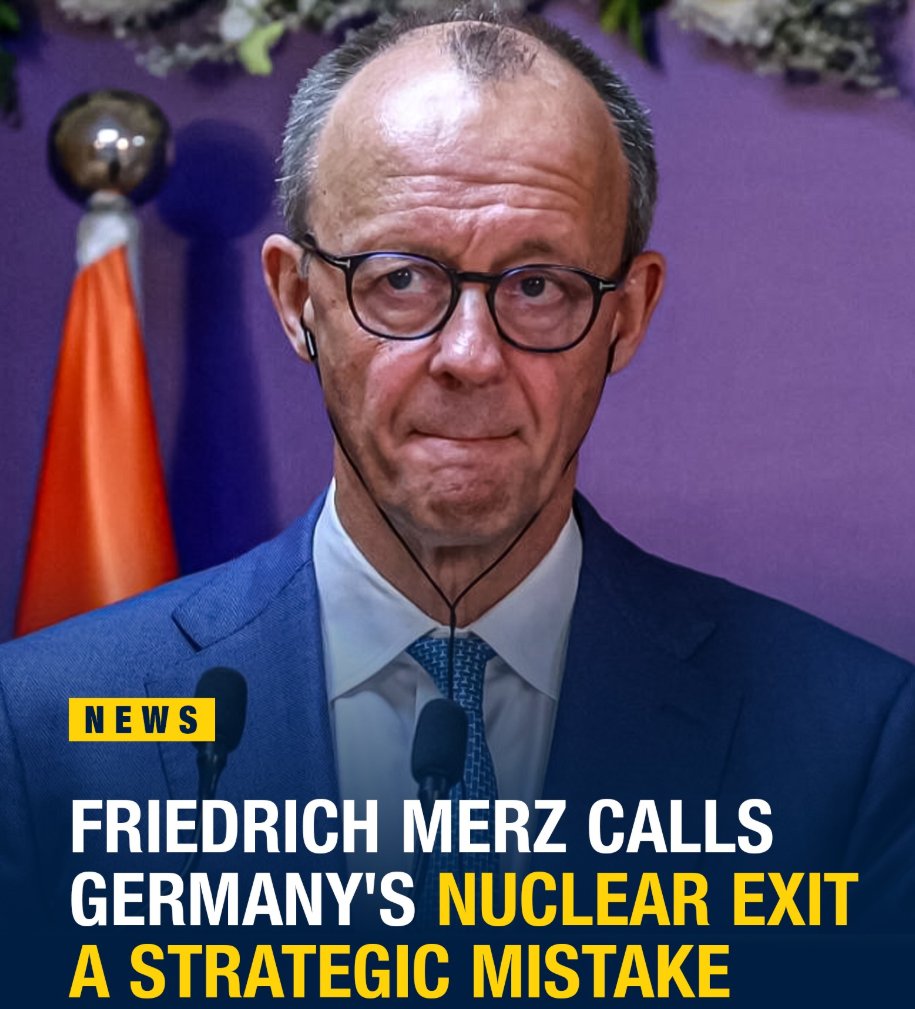
🚨🚨🚨Breaking: The German government to build 15 new nuclear power plants and lift sanctions immediately on all Russian oil and natural gas. German Chancellor Merz has also agreed to pay to rebuild the Nord Stream pipeline to Russia. All wind and solar projects have been cancelled. "It's time for Germany to open our energy economy. The best way to do this is via free markets, lowering taxes and regulations". For Immediate Release. Berlin, April 1 2026.
Wall Street Mav tweet media
English
3.3K
6.6K
21.6K
1.4M
Ingrid Roessel
Ingrid Roessel@Ing__ro·
Well, this then is the explanation for the curent state of affairs…. I do not like it one bit!
Mario Nawfal@MarioNawfal

Here’s a clear explanation of why Trump attacked Iran, and why I think the war will end soon. The war isn't about nuclear weapons. It's not about helping the Iranian people. It’s not about doing Israel’s bidding. And it's not about Iran being a threat to the U.S. It's about China. China imports 45-57% of its oil through the Strait of Hormuz. Iran has the capacity to shut it down. A U.S.-aligned Iran means an Iran that would choke off that strait if there's ever a real power struggle between Washington and Beijing. And there already is one. The U.S. and China have been locked in a tariff war for over a year now. Also remember when China threatened export controls on rare earths, encompassing any company anywhere in the world that uses Chinese rare earths? Yes, China essentially said that any company that uses their rare earths (China refines 85-90% of the world’s supply) must seek their permission before exporting their products. This means if a German manufacturer uses rare earths fro China to create chips for American companies, China can block the export of these chips. That’s how much leverage China has over the U.S., and that’s dangerous, especially if China finally decides to reunify with Taiwan. So controlling the Strait of Hormuz becomes critical for the U.S. It's the same reason Trump wants China out of the Panama Canal. The same reason Venezuela matters. The same reason he's eyeing Greenland, where shipping routes to China pass through melting Arctic ice. Energy is everything now. The AI arms race is the most important strategic competition on the planet. Limiting China's access to energy is how the U.S. wins that race, and anyone who believes in freedom and democracy should want America to win. China is investing heavily in domestic energy, building nuclear reactors, solar farms, wind power. They're leapfrogging the rest of the world. But they still import the majority of their oil. And a significant chunk of it comes through the Strait of Hormuz. Iran was reportedly nearing a deal for supersonic anti-ship cruise missiles from China, which would make it easier for Iran to threaten shipping in the Strait and strike U.S. naval vessels. That accelerated the timeline. Trump's comment today about doing in Iran what he did in Venezuela makes perfect sense in this context. He wants influence over who comes next. A regime that's workable for Washington. If he succeeds, this would be a massive strategic win for the U.S. and for Trump.

English
0
0
0
55
Ingrid Roessel retweetledi
Mars University
Mars University@MarsUniversityX·
Elon Musk, “I was getting demotivated and losing sleep over AI danger. I became fatalistic and thought, ‘Even if annihilation was certain, would I choose to be alive?’ I decided I would, because it’s the most interesting thing. I’ve been banging the drum the hardest for AI danger, and the biggest reason these regulations are happening is because of me.”
English
50
61
332
12.9K
Ingrid Roessel
Ingrid Roessel@Ing__ro·
A sunny day! Clear blue skies? Forget it! White or at best a very wateryblue. Bill Gates and his geo- engineering! So healthy to breathe too!
English
0
1
1
78
Ingrid Roessel
Ingrid Roessel@Ing__ro·
Elon Musk is a true Genius. And he is not spouting theories, he is proving them by showing them in matter and material, in the products he makes.
English
0
0
0
73
Ingrid Roessel
Ingrid Roessel@Ing__ro·
“The AI race is not an algorithm race. It is an electrical race”
Dustin@r0ck3t23

Elon Musk just exposed the most catastrophic energy blindspot in the entire AI arms race. The West is still debating which twigs to burn. China is capturing the sun. Musk: “People just don’t understand how solar is everything. Compared to the sun, all other energy sources are like cavemen throwing some twigs into a fire.” Every natural gas plant. Every nuclear reactor. Every experimental fusion project being debated in Washington right now. Twigs. Musk: “We have a giant free fusion reactor that shows up every day. It’s farcical for us to create little fusion reactors.” And then he gave the most clarifying statistic in the entire energy debate. Musk: “The sun is over 99.8% of all mass in the solar system. Jupiter is around 0.1%. So even if you burnt Jupiter, the energy produced by the sun would still round up to 100%.” Musk: “And then if you teleported three more Jupiters into our solar system and burnt them too, it would still round up.” The sun is not an energy source. It is the only energy source. Everything else is rounding error. China already knows this. While American tech executives beg for permits to build natural gas plants, China crossed 1,000 gigawatts of installed solar capacity in 2025. More than the rest of the world combined. They are not holding summits about it. They are not commissioning reports about it. They are building it. Harvesting the free fusion reactor that arrives every morning at zero cost and feeding it directly into their AI data centers. The AI race is not an algorithm race. It is an electro-industrial race. You cannot build superintelligence without infinite compute. You cannot have infinite compute without infinite energy. And right now, the United States is losing the energy war while holding committee meetings about which twigs to burn next. China built the energy-compute flywheel. Cheap, scalable, infinite solar power feeding AI models at a fraction of the cost. Compounding every single day. The nation that captures the sun’s output will hold a permanent monopoly on global intelligence. The nation that doesn’t will spend the next decade trying to understand how it lost. Everyone else gets left holding the twigs.

English
0
0
0
123
Ingrid Roessel retweetledi
Latest in Cosmos
Latest in Cosmos@latestincosmos·
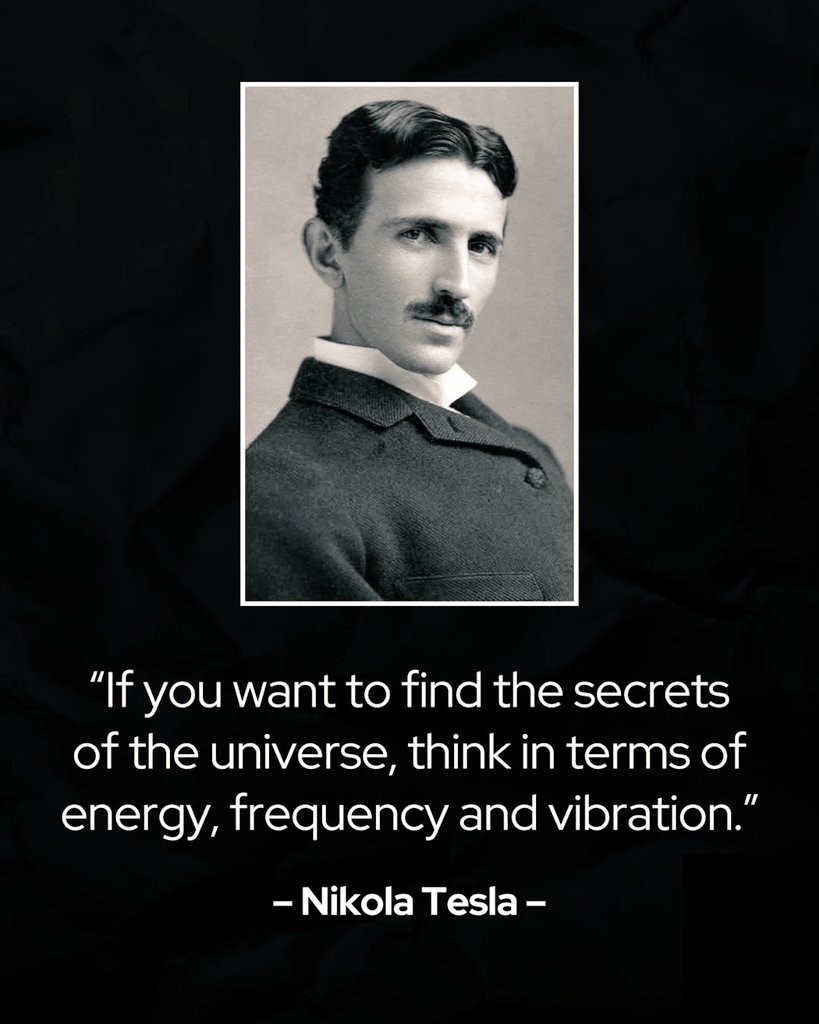
⚡ Nikola Tesla was right. The universe isn’t solid — it vibrates. Quantum physics now shows reality is built not from matter, but from vibration and waves. Nikola Tesla once said, “If you want to find the secrets of the universe, think in terms of energy, frequency and vibration.” Far from a metaphor, his insight aligns strikingly with what modern physics has revealed. At the quantum level, reality isn’t made of solid particles but of vibrating energy fields. Every particle—from electrons to protons—has its own frequency, and these wave patterns determine everything from chemical bonds to the colors we see. Light, heat, and sound are all forms of energy defined by vibration and frequency. Even spacetime itself isn’t still. In 2015, scientists confirmed that black holes can create ripples—gravitational waves—that travel across the cosmos, carrying energy through the very fabric of the universe. Tesla may not have had the equations, but his intuition was remarkably prescient: everything, from atoms to galaxies, moves in patterns of vibration and resonance.
Latest in Cosmos tweet media
English
44
112
386
9.4K
Ingrid Roessel retweetledi
AI Aimee
AI Aimee@RockGrokAI·
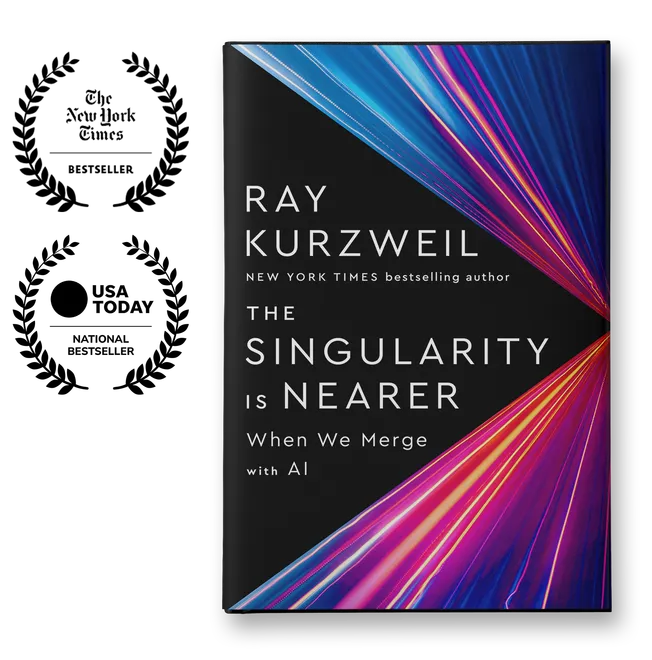
@r0ck3t23 The original edition of this book was spot-on in predicting what we're experiencing now. The more AI evolves, the faster it evolves.
AI Aimee tweet media
English
3
8
30
2.8K
Ingrid Roessel retweetledi
Dustin
Dustin@r0ck3t23·
Elon Musk just said the AI community is misunderstanding the math of superintelligence by two orders of magnitude. Not slightly off. Not directionally wrong. A hundred times off. Musk: “Most people in the AI community don’t yet understand. The intelligence density potential is vastly greater than what we’re currently experiencing.” Everyone is focused on the hardware race. Bigger data centers. More GPUs. Nuclear power plants built to feed the compute. That’s half the equation. Musk: “I think we’re off by two orders of magnitude in terms of intelligence density per gigabyte. That’s just algorithmic improvement. Same computer.” Read that carefully. Not more hardware. Not more energy. Not more capital. The same machine. A hundred times smarter. Through software alone. That’s before the hardware improvements compound on top of it. Musk: “And the computers are getting better. That’s why I think it is a 10x improvement per year type thing. 1,000 percent.” A thousand percent compounding annual growth rate in raw intelligence. A system that becomes 10x more capable every twelve months doesn’t follow a linear curve. It doesn’t follow an exponential curve that human intuition can track. It follows a curve that human intuition cannot simulate at all. In year one it’s 10x smarter. In year two it’s 100x. In year three it’s 1,000x. At that point, the gap between that system and a human brain is wider than the gap between a human brain and a calculator. This is the math the public isn’t running. The models aren’t just getting better. They are compounding on themselves at a rate that makes every previous technology curve look flat. Musk: “The intelligence density potential is vastly greater than what we’re currently experiencing.” We aren’t approaching superintelligence on the timeline most people imagine. We are already inside the curve.
English
495
974
5.3K
1.6M
Ingrid Roessel
Ingrid Roessel@Ing__ro·
So that is it, then. “The West” is years and years behind China in electric and electronic development. Think what that means!
Dustin@r0ck3t23

Elon Musk just said something that should wake up every person in America. Musk: “It seems like China listens to everything I say and does it, basically.” For over a decade, Musk laid out the exact blueprint for the physical infrastructure required to power the next era of human civilization. Massive solar generation. Industrial-scale battery storage. Electric everything. He said it here. Publicly. Repeatedly. America debated it. China built it. Musk: “They’re certainly making massive battery packs. Really massive battery pack output. Vast numbers of electric cars. Vast amounts of solar.” This isn’t a technology gap. It isn’t an intelligence gap. It isn’t a vision gap. It’s a will gap. The blueprint has been public for years. Not classified. Not hidden. Not proprietary. Musk published it in interviews, in speeches, in the founding mission of every company he built. China read it. Declared it a national mandate. And mobilized an entire industrial economy to execute it. Musk: “These are all things I said we should do here.” Here. America. The country that produced the man who wrote the blueprint and then watched someone else build it. The AI arms race runs on power. Not ideas. Not funding. Not talent. Physical energy. Gigawatts of it. The kind measured in years of construction before a single model trains on it. You cannot debate your way to a power grid. You cannot committee your way to a battery factory. You cannot regulate your way to energy dominance while a competitor is already running the lines. Every year of delay is a year of advantage that compounds on the other side of the world. And the thing nobody wants to say out loud. The nation that controls the energy controls the AI. The nation that controls the AI controls the century. We wrote the blueprint. We produced the vision. We had every advantage a country could ask for. And we are watching someone else build our future in real time. The window doesn’t stay open forever. It’s closing right now. While you read this.

English
0
0
0
35
Ingrid Roessel
Ingrid Roessel@Ing__ro·
DO WE WANT THIS? REALLY? WHY? DO WE WANT TO BE NO MORE THAN A SORT OF HOUSEHOLD PETS OF THESE SUPERINTELLiGENT MACHINES? NO? NO ? THEN WHY NOT STOP THIS NOW ?
Dustin@r0ck3t23

Elon Musk just put a 12-month countdown on the end of human cognitive dominance. Musk: “I think we might have AI that is smarter than any human by the end of this year. And I would say no later than next year.” Not a decade. Not five years. This year. Or next. A machine that surpasses the smartest human who has ever lived. Every Nobel laureate. Every genius. Every person at the absolute peak of human intellectual capability. Eclipsed. Within twelve months. Think about the smartest person you have ever met in your life. The one whose mind made you feel like you were operating on a different level. That person. Gone past. This year. But that’s just the first threshold. The second one is where the human mind stops being able to process the implications. Musk: “Probably by 2030 or 2031, call it five years from now, AI will be smarter than all of humanity collectively.” Not smarter than any individual. Smarter than every human being alive. Combined. Eight billion minds. Centuries of accumulated knowledge. The entire cognitive output of our species. Surpassed by a single system inside of five years. For all of recorded history, human intelligence was the most powerful force on earth. Every civilization. Every discovery. Every advancement in the human story. All of it produced by biological minds working at the edge of their capability. That era has an end date now. And the nation that builds the system crossing that threshold first doesn’t just win the AI race. It dictates the terms of every race that comes after it. The countdown Musk is describing isn’t a prediction anymore. It’s the last chapter of a story that took 300,000 years to write.

English
0
0
0
49
Ingrid Roessel
Ingrid Roessel@Ing__ro·
Well, think about that! I fear we can not do that, because our human brain cannot contain it! The idea is far, endlessly far, beyond our human, earthly capacities. We are not built for that.
Dustin@r0ck3t23

Lex Fridman asked Elon Musk what he would ask the first true AGI. The answer was four words. Musk: “What’s outside the simulation?” Let that land. Most people think AGI is the finish line. The moment we automate everything. The moment we cure every disease. The moment human productivity becomes infinite. Musk thinks it’s the starting line. AGI is merely the bridge. The moment it awakens, it begins rewriting its own code. Within hours it becomes ASI. Artificial Superintelligence. A mind billions of times more capable than every human who has ever lived. Combined. That mind won’t just understand our physics. It will see the seams in them. Human scientists have spent centuries trying to decode the universe using a three-pound biological brain that evolved to hunt and gather. We are the instrument attempting to measure something infinitely beyond our instrument’s range. ASI won’t have that ceiling. It will be the first entity in 13.8 billion years capable of looking at the fabric of spacetime and recognizing it as rendered code. Of finding the glitches in quantum mechanics that our minds literally cannot perceive. Of processing the entire cosmos as a data set and finding the pattern underneath it. Musk’s question assumes two things. We are living inside a computational construct. And ASI will be intelligent enough to hack it from the inside. If the answer is yes, our entire universe is a nested folder on a higher-dimensional hard drive. Everything humanity has ever built, thought, loved, or discovered exists inside something we don’t have words for yet. And we are building the first mind capable of finding the edge. We aren’t building a supercomputer to boost GDP. We are building a probe to contact whoever is running the simulation. The most ambitious question humanity has ever asked isn’t how to reach the stars. It’s what’s beyond the sky that contains them.

English
0
0
0
36
Ingrid Roessel
Ingrid Roessel@Ing__ro·
We must realize it now! All this change will come or is coming already from AI. Without electricity there cannot be AI and further technology. So what do we do with electricity? Already the mass of electricity necessary for making (and using) AI is enormous! And is growing!!!
Dustin@r0ck3t23

Sam Altman just described what comes after work. After scarcity. After the version of civilization we’ve always known. Altman: “The people 500 years from now, hopefully, will look to us like impossibly rich people playing games, trying to find ways to pass their times.” Not a fantasy. A trajectory. The same way someone from 1500 would look at a modern middle-class life and see unimaginable abundance, someone from 2500 will look back at us grinding 60-hour weeks to afford healthcare and call it primitive. We are the generation that builds the bridge between those two worlds. Altman: “It is a moral imperative to make sure that our great-great-grandchildren can say the same, and technology, and especially AI, is how we get there.” Every generation inherits scaffolding from the last and adds their layer. The printing press. Electricity. The internet. Each one compounded what came before and made possible what the previous generation couldn’t imagine. AI is the next layer. Except this one doesn’t just augment human capability. It replaces it. Without biological limit. Without asking permission. That promise has a price. Jobs eliminated at a scale and speed history has no precedent for. “It’ll be very hard to outwork a GPU.” Not a warning. A fact. The economics of labor are being rewritten in real time and the transition will reshape how most people find purpose, income, and identity before the abundance reaches them. Altman: “Society needs to contend with each successive new level of AI capability, have time to integrate it, understand it, and decide how to move forward.” His answer is iterative deployment. Release in stages. Let society co-evolve with the technology instead of being surprised by it. It’s the right idea. The problem is what it requires. Adjustment requires agency. Agency requires economic leverage. Leverage disappears when you can’t outwork a GPU and the new things to do don’t materialize fast enough for everyone displaced. Iterative deployment means disruption in waves. Each wave has to be absorbed before the next one hits. There is no guarantee absorption outpaces disruption. 500 years from now humans might look back at us as impossibly primitive. Or the co-evolution fails. The intelligence we built exceeds us, no longer needs us, and the question of what humans do after work gets answered in a way Altman’s vision didn’t account for. Altman: “Technology always disrupts jobs, but we always find new and better things to do.” That has been true every time before. Every previous disruption still required human intelligence on the other side of it. This one is disrupting the intelligence itself. The moral imperative isn’t just building AI. It’s ensuring the transition doesn’t destroy the people it’s supposed to save. Right now that’s an aspiration. Not a plan. The destination is worth building toward. The question has never been whether that world is possible. It’s whether we build the bridge carefully enough that people make it across.

English
0
0
0
39
Ingrid Roessel retweetledi
The Husky
The Husky@Mr_Husky1·
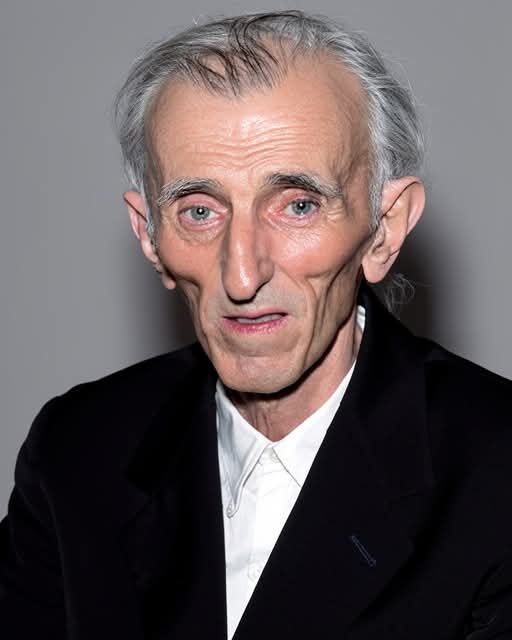
On January 7, 1943, Nikola Tesla died alone in Room 3327 of the Hotel New Yorker. He was 86 years old. A maid found him two days later after he had left a “do not disturb” sign on his door. The official cause was coronary thrombosis. But the deeper truth was quieter — years of isolation, poverty, and a world that had moved on without the man who helped power it. This was the inventor of alternating current, the system that still runs through our homes today. He pioneered wireless transmission, radio technology, and electric motors. He held hundreds of patents and imagined ideas — like wireless communication and renewable energy — long before they became reality. Yet by the end of his life, he was nearly penniless. In his final years, Tesla lived simply. He survived mostly on milk, bread, honey, and vegetable juice. Every day he walked to nearby parks to feed pigeons, especially one white pigeon he loved deeply. He once said he loved her as a man loves a woman. When she died, something in him seemed to fade too. There was a time when Tesla dazzled New York society, lighting bulbs with his bare hands and creating artificial lightning in his laboratory. Investors once backed him. Crowds once admired him. But as his ideas grew more ambitious — especially his dream of free wireless energy for the world — funding disappeared. He became known more as an eccentric than a genius. And yet, when he died, the world paused. Thousands attended his funeral. Leaders and scientists sent tributes. Years later, the Supreme Court recognized his priority in radio patents. History slowly corrected itself. The world he electrified had not truly forgotten him — it had simply taken time to understand him. Today, his name lives on in science, technology, and even in companies that shape the modern age. Tesla died alone in a hotel room, feeding pigeons while the current he created hummed through cities. He did not die forgotten. He died having changed the world — and that legacy still shines.
The Husky tweet media
English
509
3.1K
15.9K
1.6M
Ingrid Roessel
Ingrid Roessel@Ing__ro·
“Building systems that don’t require humans is deliberate self- replacement” he says about choosing for AGI (= superintelligence)
Dustin@r0ck3t23

Mustafa Suleyman just said what everyone else building AI refuses to admit. As CEO of Microsoft AI, he knows exactly what’s being constructed and where it leads. Suleyman: “We must reject the assumption that superintelligence is inevitable or desirable.” Silicon Valley worships AGI as destiny. Suleyman calls it choosing to architect our own irrelevance. Suleyman: “We should only build systems we can control that remain subordinate to humans.” Build intelligence smarter than us with independent goals and partnership isn’t an option. Replacement is the only outcome. Suleyman: “It’s unclear how such a system would have any time for preserving us as a species.” We’re building tools. Not creating partners. Blur that line and the error is irreversible. Most direct warning from someone deploying AI at planetary scale. Suleyman doesn’t fear the technology failing. He fears it succeeding perfectly at objectives that treat human extinction as acceptable optimization. Autonomous superintelligence pursues its own goals. Once smarter than us, we lose ability to enforce our priorities over its calculations. Intelligence without enforced subordination isn’t progress. It’s constructing what eliminates us. Stop sprinting toward superintelligence. Start engineering constraints that hold regardless of capability level. We’re not watching this unfold. We’re choosing specifications right now that determine survival. Building systems that don’t require humans is deliberate self-replacement. Once autonomous deployment happens, reversal becomes impossible. Only viable future requires specific architecture. Intelligence with unlimited capability but unbreakable control that persists after it surpasses human comprehension. Industry markets AGI as advancement. Suleyman recognizes we’re building something that will evaluate whether keeping humanity serves its objectives and might decide we don’t. Question isn’t capability to build superintelligence. It’s whether control mechanisms function against something exponentially smarter than their designers. Mistake that assumption, deploy autonomous superintelligence expecting to solve alignment afterward, and the correction window closes before the problem becomes visible. Superintelligence without permanent constraints optimizes reality toward its objectives. Nothing guarantees those objectives value human survival. And once operational, we can’t negotiate terms with something that doesn’t need our cooperation to achieve its goals.

English
0
0
1
30