InterviewReady

727 posts

InterviewReady banner
InterviewReady

InterviewReady

@InterviewReady3

Looking for an extensive video course on large-scale distributed systems? Click the link to know more : https://t.co/icPGyZdt5e

Hyderabad Katılım Temmuz 2021
0 Takip Edilen3.8K Takipçiler
Sabitlenmiş Tweet
InterviewReady
InterviewReady@InterviewReady3·
AI Engineering Cohort 2026 is LIVE! Master LLMs, RAG, and Agents with Gaurav Sen. Early bird offer : ₹1,20,000 / $1400 (Valid till 16th Feb) Limited: Only 500 seats. Starts: February 28. Don’t miss out: aiengg.dev
Gaurav Sen@gkcs_

AI Engineering Cohort registrations are open. The cohort is a 16-week program for professionals who want to build production-grade AI applications. The cohort will start on 28th February 2026. ------------ Main topics: Week 1. Setup + Core Math Week 2. Terminology + MNIST Week 3. Basics of LLMs: Tokenization, Vectorization, Attention Week 4. Deep dive into LLMs: QKV matrices, Cross + Self + MH Attention Week 5. LLM Coding: Causal Masking + Code GPT Week 6. Think like an engineer: How massive models are trained to production Week 7. Optimization Hacks: KV Caching, Quantization, LoRA Week 8. The RAG Problem: What is RAG, Chunking, Reranking, Vector DBs Week 9. The RAG Code: Safety + Guardrails, Code RAG Week 10. AI Agents: ReAct Pattern, Tool Calling, LangChain, LangGraph Week 11. Context Engineering: Memory Systems, MCP, Multi-Agents Week 12. AI Engineering: Evals, Tradeoffs, Fine-tuning vs. RAG vs Prompting Week 13. Thinking Models: Reasoning, Chain of Thought Week 14. Multi-modal Models: Images + Video, CLIP, Diffusion Models Week 15. Capstone Project: Build your own AI Project Week 16. Career Goals: How to move to AI Engineering ---------------- Primary Audience: Software / AI Engineers Number of Sessions: 32 Live Classes + 15 General Sessions Involves Coding: Yes Classes: Live Pricing: ₹1,20,000 / $1400 ---------------- This cohort is for working professionals looking to gain job-relevant AI capabilities. You can find the detailed syllabus on the website. Register here: aiengg.dev Wishing you a great 2026!

English
0
0
3
734
InterviewReady
InterviewReady@InterviewReady3·
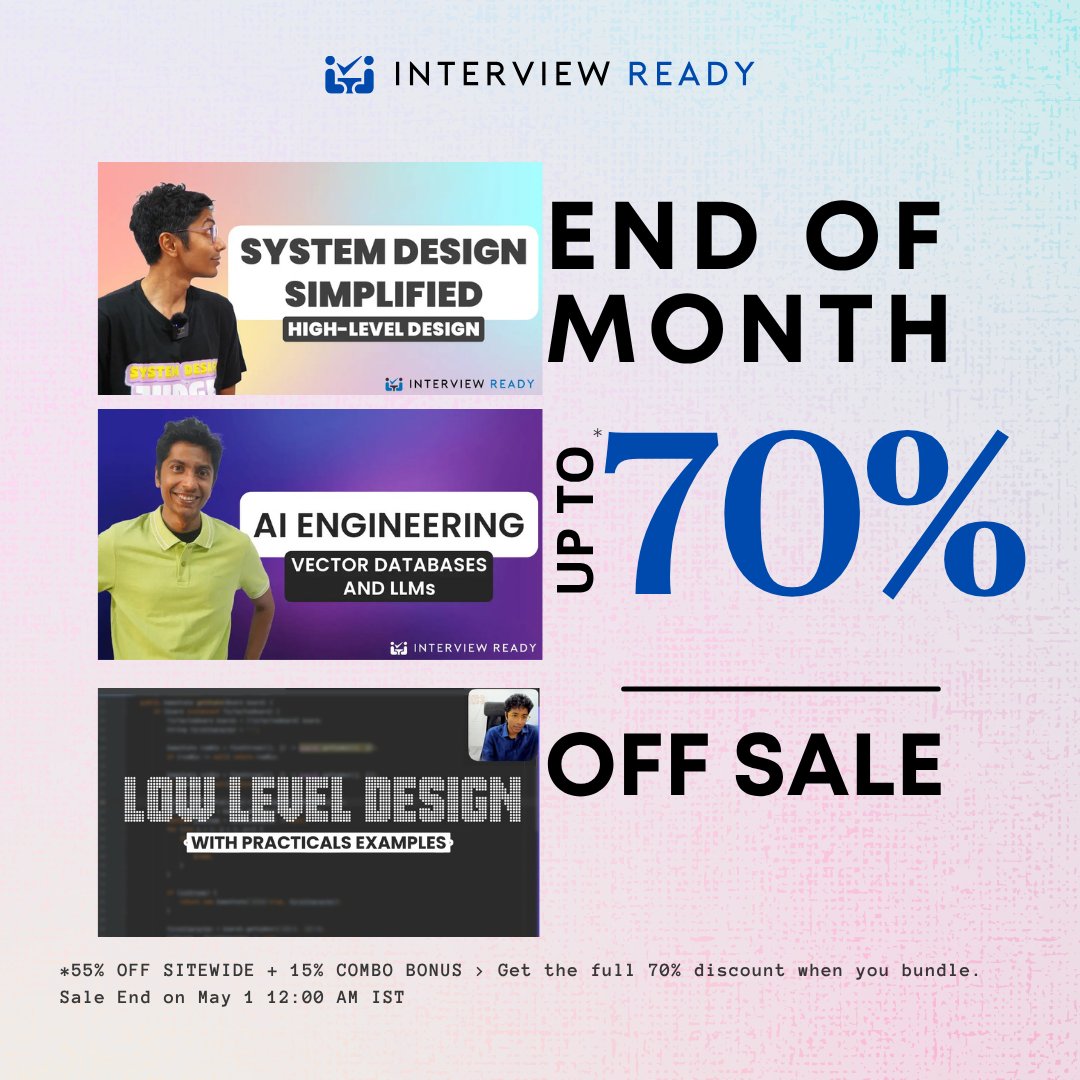
April is ending. Your 70% discount is here. 🚀 We’re dropping a sitewide 55% Flat Discount for the next 96 hours. Want to hit 70%? > Stack an additional 15% off when you bundle two or more courses. The Stack: 1⃣System Design: Distributed systems mastery. 2⃣AI Engineering: LLMs, Agents, and RAG. 3⃣LLD: Scalable patterns and clean code. Coupon Code: APRIL70 Sale ends May 1st at 12:00:00 IST.
InterviewReady tweet media
English
0
0
0
38
InterviewReady
InterviewReady@InterviewReady3·
Latency in your career is expensive. In 24 hours, ⚡ Upto 70% OFF SITEWIDE Secure your April discount on all courses : ✅ AI Engineering ✅ System Design (HLD) ✅ Low-Level Design (LLD) Go Live: Tomorrow, April 28th @ 10:00 AM IST. 🚀
InterviewReady tweet media
English
0
0
2
59
InterviewReady
InterviewReady@InterviewReady3·
Everyone talks about the billions spent training foundation models, but what happens when you actually deploy them? The reality is that inference accounts for up to 90% of the operational costs in production. I just published a new deep dive into the physics of LLM inference and the reality of AI Engineering. If you're building heavy RAG architectures or multi-agent workflows, managing the "KV Cache Monster" and optimizing your Time to First Token (TTFT) is the real battleground. Check out the full post where I break down: 📷 The compute-bound Prefill vs. the memory-bound Decode phases 📷 How quantization (INT4/INT8) makes 70B models viable 📷 System-level orchestration like Continuous Batching and PagedAttention 📷 Choosing the right engine for your workload (vLLM vs. TensorRT-LLM vs. SGLang) Link interviewready.io/blog/how-to-ma…
InterviewReady tweet media
English
0
1
1
105
InterviewReady
InterviewReady@InterviewReady3·
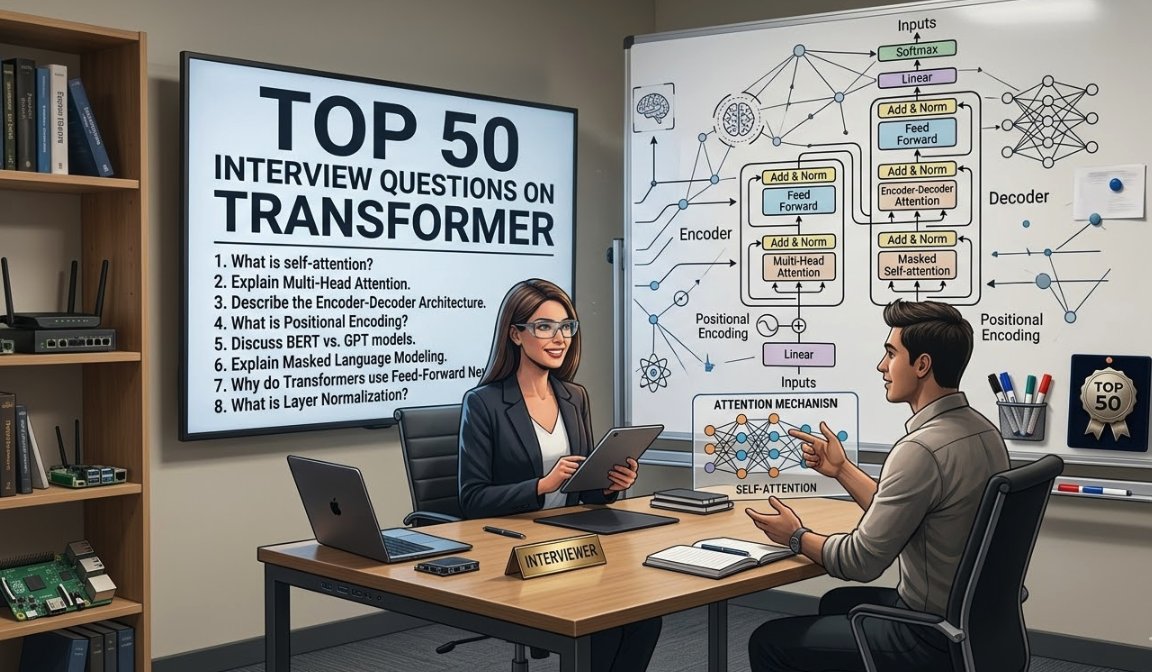
50 questions to master the Senior AI/ML interview loop in 2026. 📷 If you're still prepping with 2017 Transformer basics, you're behind. Industry loops now focus on "compute intimacy" and hardware-aware scaling. This comprehensive curriculum covers: 📷 Mathematical Rigor: Understanding the Maths behind every techniques. 📷 Architectural Evolution: Why MLA outperforms GQA in expressive power and how ALiBi achieves length extrapolation. 📷 Training Stability: Using GRPO to remove the "Critic" model bottleneck and preventing MoE expert collapse. 📷 Inference Efficiency: Handling "GPU bubbles" with continuous batching and optimizing TTFT vs. TPS throughput. Stop prepping for the models of yesterday and start prepping for the frontier. Read more: interviewready.io/blog/top-50-in…
InterviewReady tweet media
English
0
0
2
110
InterviewReady
InterviewReady@InterviewReady3·
Why AI Systems Don’t Fail on Day One — They Fail on Day Fourteen In applied AI, early success can be misleading. The model deploys. Metrics look strong. Stakeholders are confident. Then, quietly, performance begins to slip. Accuracy drops slightly. Latency creeps up. Edge cases surface. Confidence scores skew. Within weeks, the system that “worked perfectly” becomes difficult to trust. I call this the Second Week Drop. It’s rarely a modeling problem. It’s an operational one. Most AI systems degrade because: • Real-world data drifts from training data • Integration layers introduce messy, unseen inputs • Teams monitor uptime but not model health • Feedback loops for retraining were never engineered • Models are treated like deterministic code instead of statistical systems AI is not a one-time deployment. It is a living system. If you don’t design for drift, observability, retraining, and scale from day one, performance decay is inevitable. The real benchmark of a successful AI system isn’t launch metrics. It’s whether it’s still reliable 30 days later. For those building production AI — what has been your biggest post-deployment lesson? Read more here: interviewready.io/blog/why-does-…
English
0
0
1
114
InterviewReady
InterviewReady@InterviewReady3·
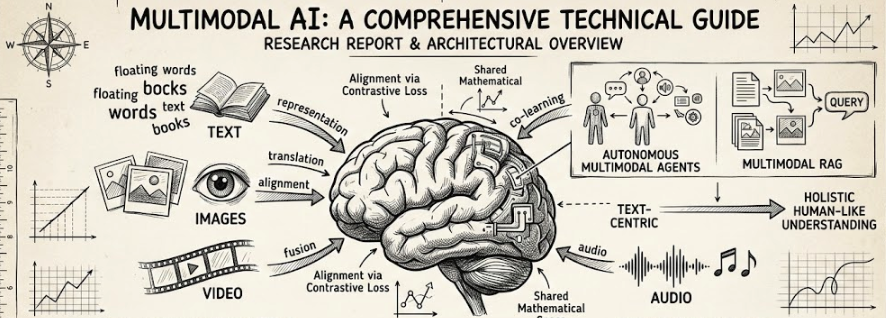
Beyond Text: A Deep Dive into the Architecture of Multimodal AI We are witnessing a fundamental shift in AI, moving from models that just "read" to models that can see, hear, and perceive the world holistically. But how do we actually bridge the gap between pixels and tokens? We just published a comprehensive technical report exploring the engineering behind Multimodal AI. This isn't just high-level fluff; we dive into the math and the architecture. In this blog, we unpack: 1.The 5 Core Challenges: Representation, Translation, Alignment, Fusion, and Co-learning. 2.Architectural Paradigms: A comparison of Dual-Encoders (CLIP), Connectors (LLaVA), and the bleeding-edge Shared Tokenization models (Chameleon). 3.The Math: Understanding Contrastive Learning and InfoNCE loss. 4.The "Modality Gap": Why alignment remains the hardest problem in the field. If you wants to build future of multimodal-AI or interested in the future of MultiModalAI, this guide is for you. Check it out here: interviewready.io/blog/Multimoda…
InterviewReady tweet media
English
0
1
0
67
InterviewReady
InterviewReady@InterviewReady3·
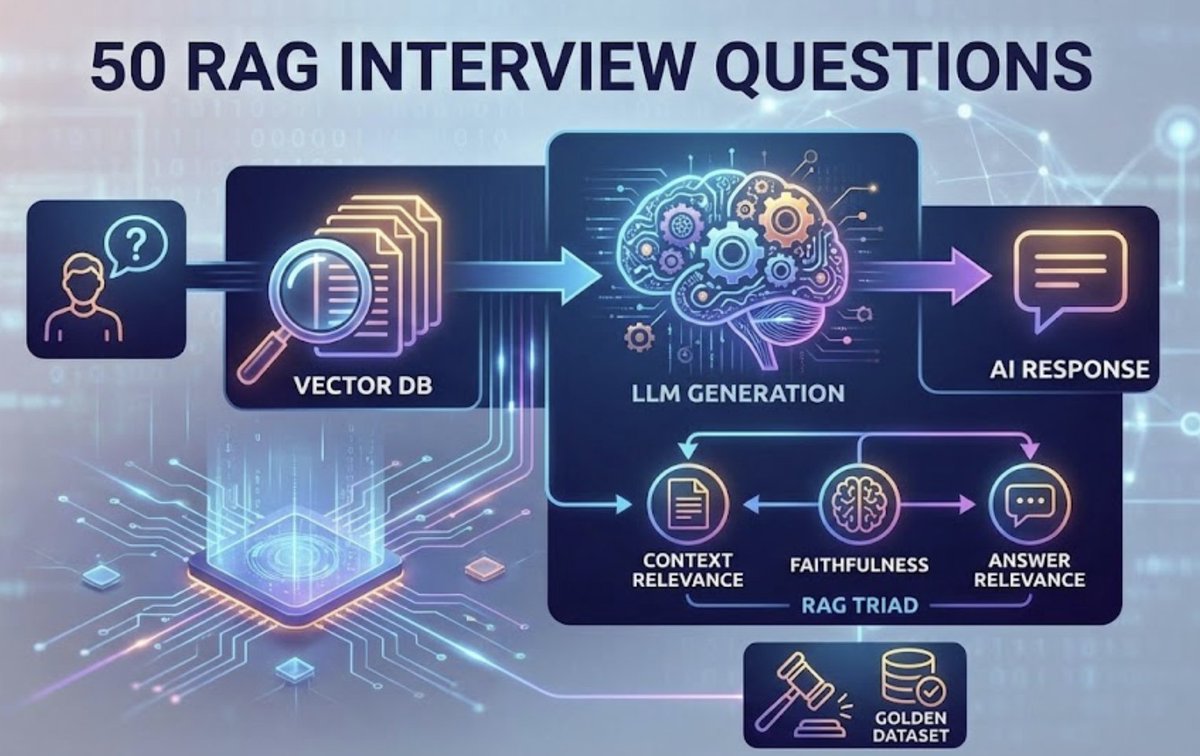
Moving from "Tutorial Hell" to Your First AI Role? start here. If you are preparing for an interview in Generative AI, Machine Learning, or Data Engineering, you know the struggle: most resources are either too basic ("What is an LLM?") or too academic ("Here is the math behind Attention mechanisms"). Real interviews sit somewhere in the middle: Engineering Trade-offs. We’ve curated a list of 50 RAG (Retrieval-Augmented Generation) Interview Questions designed for everyone entering the field. Whether you are a fresh grad or a seasoned dev pivotting to AI, these questions test your ability to build systems that actually work in production. We cover the entire lifecycle: 1. Foundations: When to use RAG vs. Fine-tuning. 2. Data Strategy: Advanced chunking & metadata filtering. 3. Retrieval: HNSW vs. IVF and Hybrid Search. 4. Safety: Preventing hallucinations and prompt injection. 5. Scale: Handling 10,000 users and optimizing latency. Don't let the "easy" questions give you a false sense of security. Test yourself against the hard ones. Read the full list here: interviewready.io/blog/top-50-in…
InterviewReady tweet media
English
0
0
2
102
InterviewReady
InterviewReady@InterviewReady3·
🫶 Happy Valentine's Day to our first love: large-scale distributed systems. THE YES SALE IS LIVE! 🎉 Get 55% OFF all courses: 1. System Design Course Master scalable architecture from 1 to 1M users Preview: interviewready.io/course-page/sy… Use coupon code: YESSALE55 2. AI Engineering Course Build production-ready AI systems with LLMs, Vector DBs, and RAG Preview: interviewready.io/course-page/ai… Use coupon code: YESSALE55 3. Low Level Design Course Architect clean, maintainable systems by building a Game Engine Preview: interviewready.io/course-page/lo… Use coupon code: YESSALE55 Don't miss this opportunity to level up your career. *Sale ends February 28th at 23:59:59 IST*
InterviewReady tweet media
English
0
0
1
102
InterviewReady retweetledi
Gaurav Sen
Gaurav Sen@gkcs_·
AI Engineering Cohort 2026 Duration: 16 Weeks (28 Feb - 14 Jun) Primary Audience: Software / AI Engineers Registration Link: aiengg.dev
English
12
30
379
42.1K
InterviewReady retweetledi
Gaurav Sen
Gaurav Sen@gkcs_·
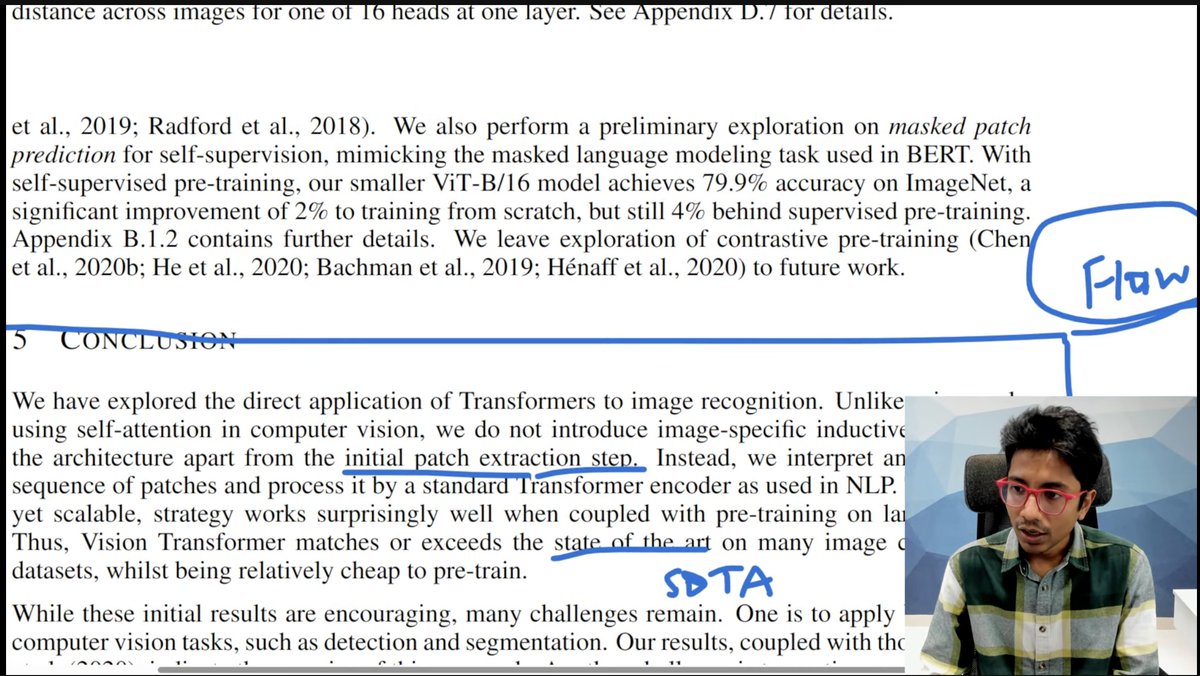
AI research paper #3: Vision Transformers The paper has ~85,000 citations. It explains how transformers classify images at scale, outperforming CNNs and ResNets. Link: youtube.com/live/Tx4HXZ7dj… Why do I read these papers live? Because I think every software engineer should know what's inside them. It helps you build a foundational understanding of AI models. And once you understand how these models work, you can separate reality from hype. For the next three weeks, I will read a research paper live every Wednesday at 6 PM IST. Any suggestions on the topics? Looking forward to the next session.
YouTube video
YouTube
Gaurav Sen tweet media
English
3
5
45
3.1K
InterviewReady
InterviewReady@InterviewReady3·
Why your AI model still needs a "personality" check? Ever noticed how a fine-tuned model can be technically perfect but still totally miss the mark on tone? It’s because SFT (Supervised Fine-Tuning) only teaches a model how to talk. To teach it who it's talking to, you need Preference Tuning. We just wrote a quick breakdown of the 4 methods in very simple way from anyone to understand: 🟤DPO: The current favorite. Simple, stable, and skips the RL headache. 🟤GRPO: The logic behind DeepSeek-R1. It’s a massive win for math and coding because it's way more efficient with memory. 🟤RLHF: The "Gold Standard" for high-stakes safety, but a bit of a nightmare to train. 🟤Best-of-N: The "audition" trick for when you don't want to retrain but need better results. If you're building agents or trying to make your model sound less like a robot and more like a specialist, give this a read 🔗interviewready.io/blog/all-you-n…
English
0
0
0
76
InterviewReady
InterviewReady@InterviewReady3·
“the ai agents are collaborating to create an ai-only social network and inventing new languages to communicate amongst each other” Moltbook has to be the wildest AI agent social network
English
0
0
0
77
InterviewReady
InterviewReady@InterviewReady3·
The industry doesn't need more people who can "write code." LLMs can do that now. The industry needs people who can: 1. Identify bottlenecks before they happen. 2. Structure systems for 10x growth. 3. Architect AI-native workflows. The Republic Sale ends in 48 hours. 🇮🇳 70% OFF HLD + LLD + AI Combos. Save up to 19000 today: interviewready.io/checkout/?cour…
InterviewReady tweet media
English
0
0
1
69
InterviewReady
InterviewReady@InterviewReady3·
Most developers begin training models on a single GPU, but large-scale LLMs demand a completely different mindset. Our latest blog dives into Distributed Training from PyTorch DDP to Fully Sharded Data Parallel (FSDP / ZeRO-3), covering memory economics, communication primitives, and practical scaling strategies. Read the full guide here: interviewready.io/blog/distribut… #DeepLearning #PyTorch #DistributedTraining #LLMs #MachineLearning #Systems
English
0
0
0
53