M

479 posts

M

M

@InvestMidas

Katılım Ekim 2020
1.3K Takip Edilen80 Takipçiler
M retweetledi
Nev
Nev@nevaaron·
Cryptographers are the good guys. I spent weeks (months?) researching and making this mini doc, I hope you like it. This topic means a lot to me. The future of humanity will be determined by many things, one of them cryptography, as it has been many times before. The people that care enough to do something about the reality we live in, even in the face of personal cost, aren’t given appreciation enough. They’ve saved the world many times, yet are treated like criminals because criminals also use the world saving technology. I hope this video is a small step towards changing that perception.
blocmates.@blocmates

AI is only as smart as the data it can see, which is why it's always hungry for your private data. That directly creates the temptation to build privacy-invading forms of AI. At this point, the tech space feels like the Wild West. The question is: what happens when we can’t keep it under control? And more importantly, is crypto(graphy) the only real solution?

English

7
6
23
2.7K
M retweetledi
DonAlt
DonAlt@DonAlt·
bitcoin:native Just gotta zoom out a bit
DonAlt tweet media
English
104
57
1.1K
77.1K
M retweetledi
plur daddy
plur daddy@plur_daddy·
What if we are in the foothills of the greatest bubble in history? I see a strong case that we are. We have the convergence of three powerful factors. The first is passive flows. This has been the biggest shift in financial markets over recent decades. We have roughly $6-7bn entering the US equity markets every day in the form of passive flows, through retirement accounts, corporate buybacks, and other sources. This transformative force has added an upward bias to the equity markets, which also means lower downside sensitivity to negative events such as geopolitical issues, economic weakness, or monetary tightening. This broader theme is well known but the incremental thesis here is it also drives a cumulative snowball effect. Passive flows eventually crowd out the free float, as any equities absorbed by passive flows have left the market permanently (other than specific conditions, such as mass job loss). A smaller free float reduces liquidity and makes price more sensitive to discretionary flows. The shrinking free float combined with an upward sloping character increases the odds of a parabolic blowoff in equity indices. The trading liquidity in the largest stocks (such as Mag7) has not proportionally increased with their market caps. As they get larger, the stocks get more sensitive to flows on a % basis, and price-agnostic passive flows continually jam more capital into them as they get progressively less liquid and more inelastic, which then further increases concentration and strengthens these effects in a loop. The second is behavioral training. As the passive flows paradigm has continued over time, equity market participants have become increasingly relaxed, more convicted in the idea of continual upside, and reluctant to sell in response to volatility or exogenous negative events. Naturally, this behavior shifts begets more upside-biased price action, which further shifts behavior, in a reflexive loop. This has to break at some point, but leading up to the apex, you could see how this would encourage a complete lack of selling and thus vertical price action on any incoming flows. The idea of a central bank put, in addition to a Trump put where he will find ways to influence the market higher, are key pillars of the market’s conviction to never sell equities. Many investors sold and got left behind during the tariff saga last year, and that traumatic memory was evident in the way the market has reacted to the Iran war. Despite a lack of resolution, the markets have powered higher and are now meaningfully above where they were sitting before the conflict. This is driven by the fear of missing out being greater than the fear of losing. This episode was instructive in that memetic consensus around buying every dip and never selling is only strengthening. It is easy to assume that any given amount of flows entering the market will have equal impact. One of my variant views is that this is highly untrue. The price impact of any given flows is highly connected to the psychology of those incremental participants: how urgently the buyer is trying to buy, and how convicted the potential sellers are. If the sellers have no motivation to sell, and will only part with their shares for a much higher price, and meanwhile the buyer is desperate to buy, then those flows can have a massive price impact, multiples of what it would be in a more relaxed scenario. When you combine this market training, with the shrinking free float, you have an evolving market structure that has greater odds of explosive upside. Now, take this highly leveraged market structure, and throw in the most transformative technology cycle the world has ever seen. The potential upside from AI is inherently non-linear as it will be applied to itself to recursively self-improve. I believe there are many ways AI can create value that we cannot comprehend and dimension yet. For a while I had been more ambivalent of the impact of AI on equities due to the potential for mass layoffs negatively impacting passive flows and disrupting aggregate economic demand, but it is now looking more likely that we see gradual job loss as businesses focus on holding headcount flat and harvesting productivity enhancements to capture more revenue. This increases the odds of a goldilocks scenario, where we see significant earnings growth as AI drives increases economic activity (both from AI capex and by increasing the capacity of all business), while disinflation allows rate cuts. These factors create a scenario where we get a late 90s-like bubble in the equity market. Why wouldn’t we? We have created the god machine, the greatest technology ever, and it is starting to drive real and tangible benefits to businesses today – why wouldn’t we get a huge move higher in the equity markets? This right tail outcome looks significantly mispriced in the QQQ LEAPS market, where favored strikes with Dec 2028 deep OTM expirations would 17x if the Nasdaq would double by the end of 2027. The asymmetry here comes from the market pricing in a normal distribution of outcomes. Given what I know and believe about AI and the evolving market structure, a normal distribution is not possible. These 3 factors above coming together to drive an explosive bubble upwards is not a guaranteed outcome, but I believe the odds are much greater than what is being currently priced into these LEAPS. A double in the Nasdaq is not necessary to get paid on these LEAPS, but it wouldn't be as crazy as it sounds. One way would be aggregate earnings going up by 50% over 2 years, which at +22.5% per year is what it already has been doing, and then multiple going up by 30%. This is arguably conservative on earnings given the thesis, and assumes a multiple around 31x, which is the range high over the last few regimes, and about half of the 60x+ at the peak of the dotcom bubble. The missing ingredient is monetary easing. You may ask, how can we get a crazy bubble without liquidity expansion? I would characterize the current liquidity environment as being in the middle, certainly not abundant. One answer would be that equities have shifted character to need less liquidity to move higher, because of the passive flow dynamics described above. Equities used to trade more like crypto does now, as a direct expression of liquidity conditions. Another would be that I believe liquidity will eventually expand, one way or another. I don't think it is imminent, but we have good odds of it happening at some point within the next 2 years, and that is what kicks off the vertical phase. Given Trump’s appointment of Kevin Warsh and the certainty that he extracted a promise to cut rates, there are forces brewing in that direction. Kevin will still have to convince the rest of the FOMC, and given the inflationary pressures created by the Hormuz closure, no easing is likely in the near term. What is more likely is that post-Hormuz the inflationary impact gradually eases, we start lapping the tariff headwinds from last year, and the disinflationary impact from AI starts coming in as well. In the goldilocks scenario, we could see employment being flattish and preventing wage growth, while the capacity of the economy expands from the use of AI. We also have had meaningful banking deregulation already, with more to come. This is mostly within Trump's power and doesn't necessarily require full control of the Fed, up to a point. This has already had some impact, and there is a lot of upside still, it's an underrated driver for more liquidity. There are also left tail outcomes possible, such as an explosion of job loss and unwind of passive flows. In these scenarios, the market structure described above offers leverage to the downside, it cuts both ways. I view the right tail outcome as much more likely than the left tail, as history shows that when productivity improvements are made, usually businesses will still hold onto employees until a recession forces their hand. This divergence in outcomes is why I am focused on owning the right tail upside through leaps, instead of simply getting levered long stocks and holding them for a couple of years. There will also be significant volatility along the way. I believe these LEAPS to be the best risk/reward way to express this view. While semiconductors/SOXX would be a more levered and direct view on the AI bubble, as passive flows are a key pillar of the thesis, I want to align my expression with the flows. I also like that the broader Nasdaq contains many businesses that will be able to enhance their margins and accelerate earnings growth through the use of AI. It is harder to bet on individual companies for this thesis, and the ideal expression is through the index as I believe AI will be a tailwind on broader earnings growth for many companies, not just direct beneficiaries. Given the nature of the thesis, I want to isolate my bet to as few variables as possible. I prefer QQQ LEAPS over NQ due to tax reasons (QQQ get full LTCG after a year vs. NQ would have 60/40 LTCG/STCG treatment for any time horizon, and also gets marked-to-market for tax purposes at year end) as I intend on holding these for a long time, and want to encourage myself to stick with this trade. I usually don't like to pitch specific trades because it can influence my level of objectivity and attachment. In this case, I am trying to psyop myself into holding these no matter what, so thought that sharing it publicly would be beneficial. Do your own research, this is not financial advice, etc.
English
35
44
508
68.1K
M retweetledi
:)
:)@smileycapital·
tested $KNX myself on android fully functional in airplane mode via handshake transfer, device-to-device with bluetooth ONLY everything went 100% smooth pricing in something that has never been done before successfully is impossible $KNX sets the stage for new age privacy
KnoxNet@knoxnetofficial

KNOXNET — $KNX Public Testing Now Live We are pleased to announce that "public testing for the KnoxNet Android APK" is now live. This release marks a major milestone in our development enabling value transfers without any internet connectivity. The current build allows users to experience the core offline infrastructure in a real-world environment for the first time ever. The ability to transfer value completely offline has never been achieved at this level. As this system matures and moves toward full integration with the KnoxNet chain, the implications become significantly larger. Key Features in this Build: * Offline send and receive of KNX notes * Device-to-device communication over Bluetooth * Local validation with instant acknowledgement (handshake-based transfer) * Works fully in airplane mode (no internet, no fallback) * Duplicate note detection on receiver side * On-device transaction history --- ⚠️ Disclaimer This is a testing environment. Each user will be provided with 10,000 KNX test notes upon setup. These are not real funds and are intended solely for testing and feedback purposes. --- 📲 Download the APK knoxnet.xyz/app-release.apk 📘 Documentation (How to Use) knoxnet.xyz/Knoxnet%20App%… 🛠 Support & Troubleshooting t.me/KnoxnetOfficial --- This release represents the first step toward a new category of infrastructure where value can move independently of network conditions. Privacy, as a sector, has seen limited innovation over the years and we intend to change that. What is being built here positions KnoxNet at the forefront of privacy infrastructure, not just competing within the category, but defining it. We encourage all users to test the application thoroughly and share feedback as we continue to refine and scale the system.

English
35
10
112
17.3K
M retweetledi
Horse
Horse@TheFlowHorse·
🧵I see people put together these open interest 101 tweets all the time for crypto but leave out the most important details. It's all so tiresome. Pull up a chair.. Time to cook them.
Horse tweet media
English
8
21
237
26.4K
M retweetledi
ray🖤🇰🇷
ray🖤🇰🇷@yoobinray·
The best coders are adapting and focusing on becoming expert system designers, database modelers, performance optimizers, product owners, sales experts, content creators, the list goes on and on Nothing’s over. ITS A BLESSING if you just look at it from a different angle You can now prompt your way to a plan after thinking through a the system design, iterate like 2-3 times, ask an agent to implement, review the code, repeat for features that would’ve taken weeks in the past We’re in an era where you can start focusing on other things as a software engineer like sales, marketing, content, literally anything that makes the product better or brings it in the hands of more customers If you don’t wanna work in companies anymore you can literally just spin up 10 agents and vibe code a 10k mrr consumer app in a month The future is too bright
David Scott Patterson@davidpattersonx

The best coders don’t even look at the code anymore. They aren’t coders anymore. It’s over.

English
16
48
680
32.6K
M retweetledi
Street
Street@StreetFDN·
Introducing the first ERC-S: @OpenDroids Robotics has been on rise in private markets. Average robotics startup valuations are up ~10x over the last three years. Crypto has not participated in this upside. Tokens branded as “robotics crypto” saw the opposite outcome: a median drawdown of ~75% in 2025. Why? Because they try to force blockchain into robotics, which is highly inefficient & they experience the bifurcation of valuable equity & worthless token, which ERC-S aims to fix. When we first spoke to OpenDroids, one thing was clear: This startup is something special, not only do they deliberately not buy into the humanoid with legs theatre which is currently turning out to be difficult to navigate with battery life, they also have secured substantial grounding in the robotics space, hitting pre-orders of which others can only dream of. Working out of @frontiertower in San Francisco, they are literally in the beacon of American innovation building hard to keep the "Made in US" robotics space alive & win the race against China. Working with OpenDroids isn't only a "hot narrative", it's a bet on american dynamism winning. With $RRC (the OpenDroids ticker), the goal is not only to bring the memetic culture of crypto onboard for OpenDroids, but to also create a currency which is anchored by the best robotics startups on this planet. More information on this to come soon, but small tease: This SPV used for $RRC will not only exist to hold OpenDroids equity. We built a cool flywheel for RRC. Backed by the Rockefeller Family Office, the founder of @tether & many more, with a board of an ex-Palentir/Anduril member and other awesome people, we are highly confident of the long term ambitions of this awesome team.
English
18
76
138
11.1K
M retweetledi
plur daddy
plur daddy@plur_daddy·
Do crypto traders have an edge in equities? The answer here is nuanced. Crypto is pure in the sense that most coins trade solely on attention, narrative, price action, charts, and memetic consensus. It's the most vibes-based asset class. Traders who have done well in crypto are well versed in these particular skillsets. In crypto, these factors are the pillars of having sustainable edge. That said, equities are different because they have real fundamentals, and thus offer a lot of information to be analyzed. Different parts of the equity market have differing proportions of fundamental vs. meme, but for the most part, none are as pure as crypto in that sense. Every 3 months, earnings rear their ugly head and that means fundamentals can shatter the narrative or chart by dumping a lot of incremental information. The universe of equities is immense, with thousands of names, so even initial table selection is more difficult than in crypto. In crypto, if you have been around for a while and have a decently curated TL + group chats, you will instinctively know the hot play of the moment. In equities in can be quite difficult to get your bearings if you are starting from scratch. The reality is that the amount of information to digest and analyze in equities is infinitely greater than in crypto. For the most part, crypto does not stress this skillset very much. Many of the sharps that I know, who have moved over from crypto to equities and done well, have this in spades. Not everyone does. As a participant in the equity market, you are trading against people who know way more than you. A meaningful part of the discretionary capital in equities is driven by sector experts who have covered a given sector for years, and know everything there is to know about it. They meet with the management teams regularly, talk to industry experts for channel checks, get proprietary data, etc. Of course this can lead to myopia as well, but as a general rule, you are starting off with a negative edge. You have to know whether an earnings print was good or bad, whether a catalyst was good or bad, and the exact magnitude relative to expectations, in order to feel out the price action relative to the news. Not just at a security specific level, but the overall market structure for equities is much more complex. There are many different layers of market participants with vastly varying styles and signatures, and the options market is a massive driver. Being able to see across the breadth of the market and understanding sector rotations and flows are a big part of assessing overall market dynamics. In crypto this is easy. In equities this is overwhelming due to its sheer size and complexity. It's doable but it takes a lot of bandwidth. The skillsets I mentioned before, attention, narrative, price action, charts, and memetic consensus, can help overcome this. Ultimately it becomes a matter of weighing out the positive edges and the negative ones. On the other hand, equities (esp. US equities) are much more forgiving in the sense that beta is on your side, given the passive inflows into the asset class. So there is a natural beta tailwind that offsets any negative edges from an alpha perspective, particularly in larger cap US stocks. Probabilistically, someone will do much better buying a random S&P500 stock than a random CMC Top 500 coin, this goes without saying. Not only that, but the lower volatility also lowers the psychological intensity, and makes it less likely to force you into mistakes. Given this element, if someone does not have the edge to generate alpha, it's better to acknowledge this and shift to being longer-term focused, to harvest the beta instead. I would guess that many crypto traders are not fully aware of how much the social layer has been a part of their success. In other words, the degree to which their compounded social connections and informational network have helped them make money in the space, instead of other edges. This does not transfer over in a new asset class and will fully reset. I know this is not necessarily the most hopeful message, but it is an honest one. I do think very sharp people can move over and crush it. Given this slow period as we approach year end, it's worthwhile to spend some time being transparent with yourself, assessing the state of your process as a trader, and understanding what your strengths and weaknesses are. No matter what, you can grow on every dimension, though natural abilities also matter.
Mikli@CryptoMikli

Threadguy explains why crypto traders have edge in stocks. “I think there is edge on the social narrative and attention side. Crypto traders make their career exploiting this. We could’ve traded American Eagle, Popmart, etc”

English
41
38
348
59.1K
M retweetledi
Titus Ching
Titus Ching@TitusChing·
Macro gives me the direction. Price gives me the entry. Risk is the cost of discovery. To operate at a high level, you must reconcile two opposing forces: The conviction of your opinion, and the empiricism of price. You must fully accept risk, yet have the humility to... ..accept that you do not know what will happen next. If you are a macro speculator, you may believe cycles dictate the future. If you are a chart technician, you may believe patterns guarantee the outcome. If you are a value investor, you may believe accounting governs price. None of this is true. These are merely edges—indicators of a higher probability of one thing happening over another. There is only one fundamental truth in markets: Every moment is unique. No pattern, no valuation, and no macro cycle ever repeats exactly the same way because the variables—liquidity, policy, participants, and psychology—are never aligned exactly the same way twice. ∴ I approach the market with a probabilistic mindset. Trading is not about being right. It is about executing an edge over a large sample size. Opinion is cheap. Execution is a state of mind.
Titus Ching tweet media
English
10
67
348
106.3K
M retweetledi
PerpetualCow.hl
PerpetualCow.hl@PerpetualCow·
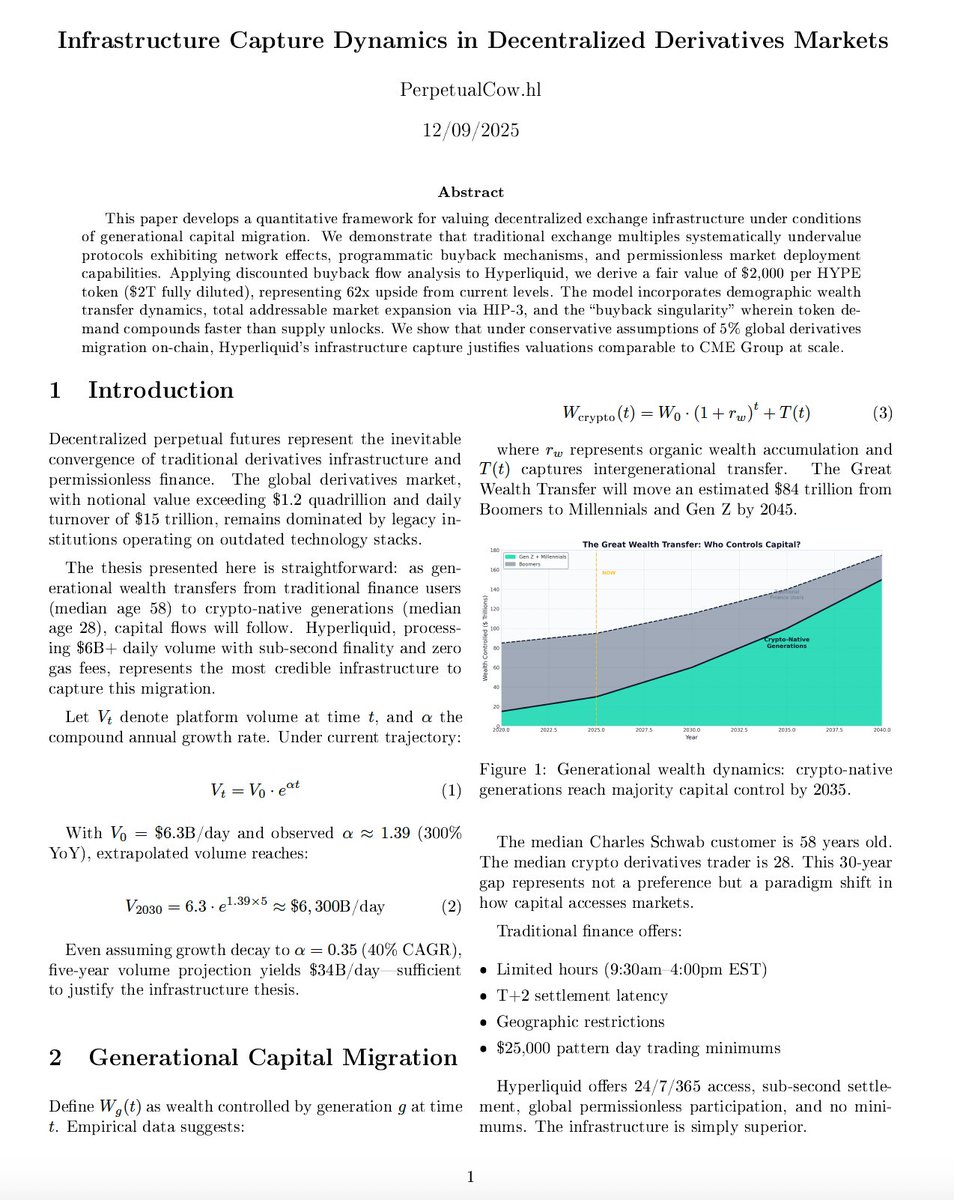
Couldn't sleep so I wrote my thesis of $HYPE to $2,000. Full paper attached 🐄 - PerpetualCow
PerpetualCow.hl tweet media
English
85
110
751
136.1K
M retweetledi
Haseeb >|<
Haseeb >|<@hosseeb·
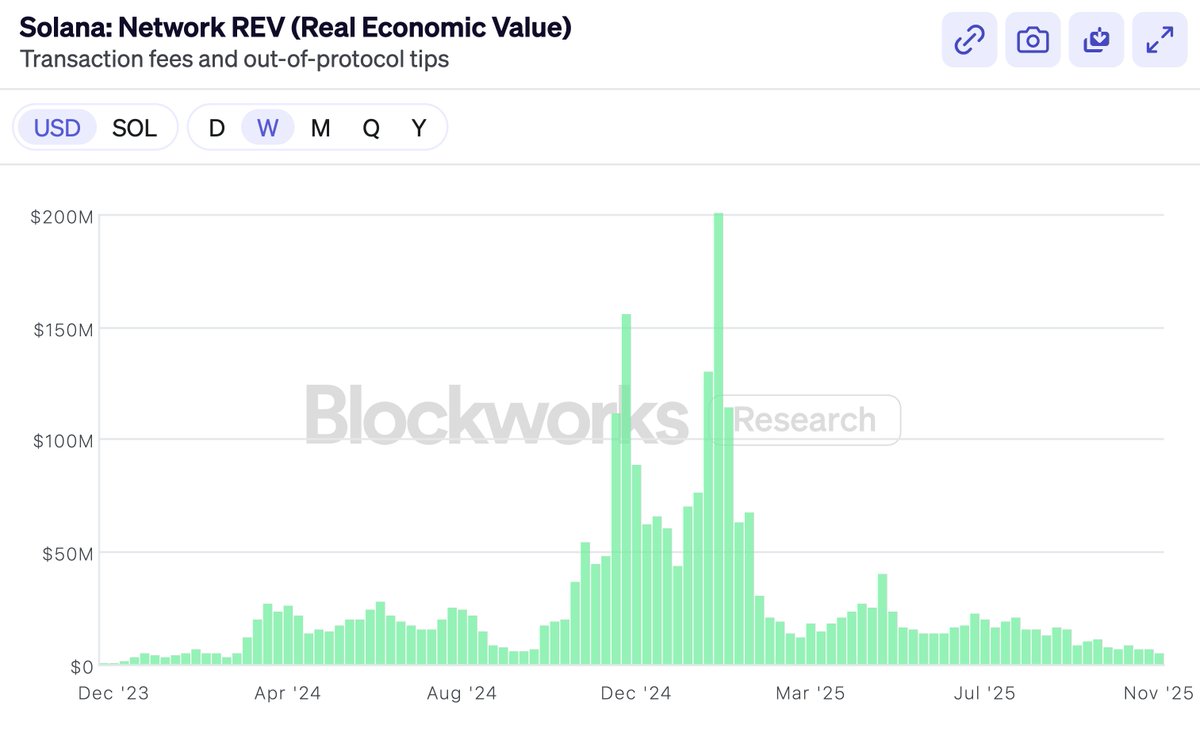
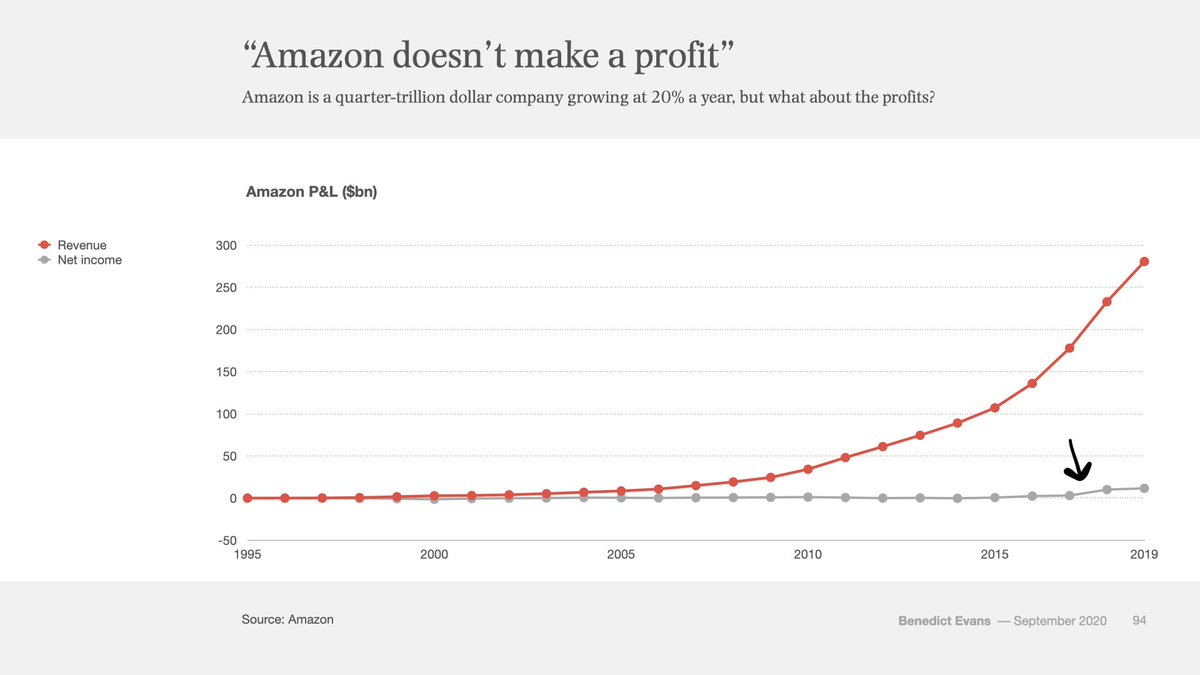
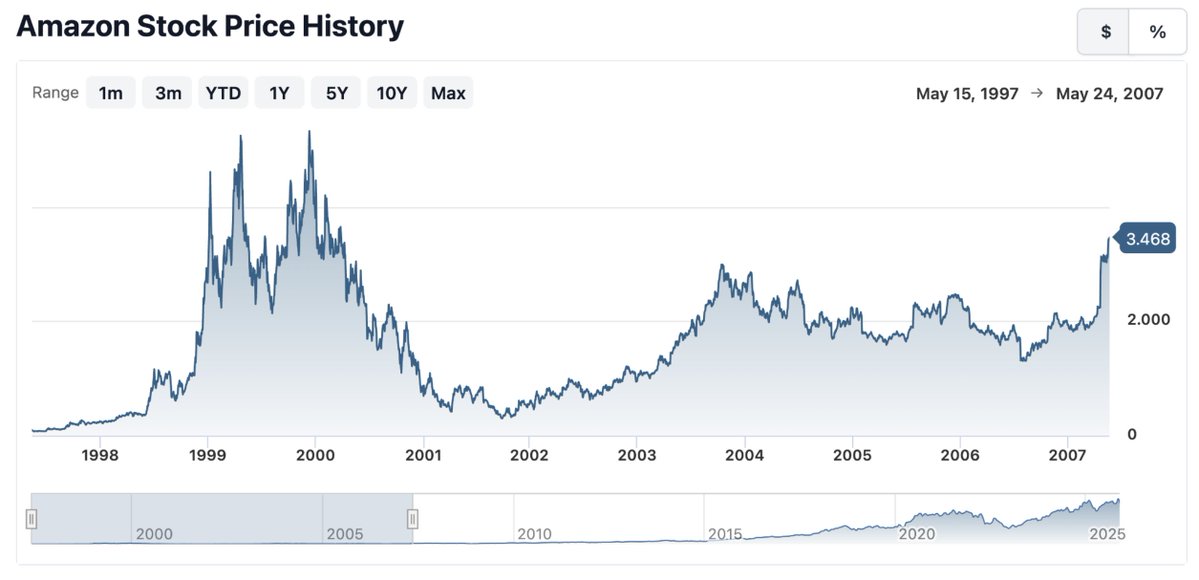
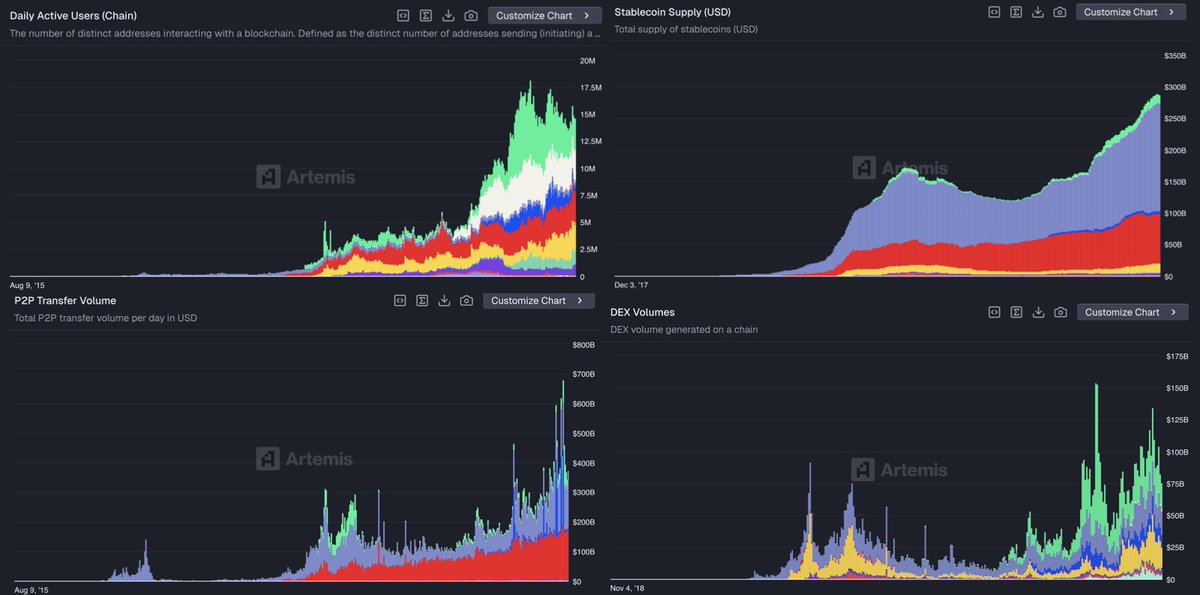
In Defense of Exponentials I used to tell founders, the reaction you are going to get to your launch is not hate, it’s indifference. By default, nobody cares about your new chain. I have to stop telling them that now. Monad just launched this week, and I’ve never seen so much hate about a blockchain that just launched. I’ve been investing into crypto professionally for 7+ years now. Before 2023, almost every chain I’ve ever seen that launched was mostly met with enthusiasm or indifference. But now, new chains are born into a chorus of hate. The amount of haters I’ve seen for projects like Monad, Tempo, MegaETH—before they even hit mainnet—is a genuinely new phenomenon. I’ve been trying to diagnose: why is this happening now, and what does it mean about the psychology of this market? The Cure is Worse than the Disease Forewarning: this is going to be the vaguest blockchain valuation post you ever read. I don’t have any fancy metrics or charts to sell you on. Instead, I’ll be arguing against the zeitgeist of Crypto Twitter, which for the last couple of years, I’ve been constantly on the opposite side of. In 2024, I felt like what I was arguing against was financial nihilism. Financial nihilism is the belief that none of these assets matter, it’s all memes at the end of the day, and everything we’ve built is inherently worthless. Thankfully, that’s no longer the vibe. We have broken out of that spell. But the zeitgeist now is what I’d call financial cynicism: OK, maybe some of this stuff has value, maybe it’s not all memes, but it’s grossly overvalued and it’s only a matter of time before Wall Street finds that out. Not that all chains are worthless. But these things are all maybe worth 1/5th-1/10th of what they’re currently trading at (have you seen these PE ratios?), and so you’d better pray like hell Wall Street doesn’t call us on our bluff, because once they do it’s all getting wiped out. You’ve got many bullish analysts now trying to conjure up optimistic L1 valuation models, inflating PE ratios, gross margins, DCFs, trying to fight against this mood. Late last year, Solana very proudly embraced REV as a metric that could finally justify their valuation. They proudly announced: we—and only we—are no longer bluffing to Wall Street! And, of course, almost immediately after REV was embraced, it fell off a cliff (though $SOL, tellingly, did better than REV did). Not that there’s anything wrong with REV. REV is a very clever metric. But the point of this post is not metric selection. Then came the launch of Hyperliquid. A DEX that had real revenue and buybacks and PE multiples. And the chorus said—look, look I told you! Finally, for the first time ever, a token that has some real profits and a proper PE multiple. (Nevermind BNB, we don’t talk about that.) Hyperliquid will eat everything because obviously Ethereum and Solana don’t make any real money, we can stop pretending to value them now. Hyperliquid, Pump, Sky, these buyback-heavy tokens are all great. But the market always had the ability to invest into exchanges. You could always buy Coinbase, or BNB, or whatever. We own $HYPE, and I agree that it’s a fantastic product. But that’s not why people were investing in ETH and SOL. The fact that L1s don't have exchange-like profit margins is not why people were buying them—if they wanted that, they could’ve bought Coinbase stock. So if I’m not critiquing blockchain financial metrics, maybe you think this post is going to be chiding the sinfulness of the token-industrial complex. Obviously, everyone has lost money on tokens in the last year, VCs included. Alts are down bad this year. And so the other half of the zeitgeist on CT is arguing about who's to blame. Who’s become greedy? Are the VCs greedy? Is Wintermute greedy? Is Binance greedy? Are the farmers greedy? Are the founders greedy? The answer, of course, is the same as it’s ever been. Everyone is greedy. Everyone. The VCs, Wintermute, the farmers, Binance, the KOLs, they're all greedy, and you are greedy too. But it doesn't matter. Because no functioning market has ever required anyone to act against their self-interest. If we're right about crypto, we can all be greedy and the investments will still work out. Trying to analyze a market that has gone down by figuring out “who’s greedy” is going to be about as fruitful as commissioning witch trials. I guarantee you, nobody just started being greedy in 2025. So this, too, is not what I’m going to be writing about. Many people want me to write a post about why $MON should be valued at X or $MEGA at Y. I’m not interested in writing this post, or advocating that you buy anything in particular. In fact, you probably shouldn’t buy any of them if you don’t already believe in them. Will any new challenger chain win? Who knows. But if it has a material chance of winning, it's going to be priced on that basis. If Ethereum is worth $300B or Solana is worth $80B, a project that has a 1-5% chance of becoming the next Ethereum or Solana will be priced according to those probabilities. Somehow CT is scandalized by this, but it’s no different than Biotech. A drug that has less than a 10% chance of curing Alzheimer's is priced by the market as worth billions of dollars, even if 90% chance it won’t pass stage 3 trials and will go to 0. That's how the math works—and turns out, markets are pretty good at doing math. Binary outcomes are priced on probabilities, not on run rates or moral turpitude. It’s the “shut up and calculate” school of valuation. I really don’t think that’s an interesting question to write about. “5% chance to win? No way, that’s clearly a 10% chance!” Markets, not articles, are the best way to assess that for any individual token. So here’s what I am going to write about: CT doesn't seem to believe anymore that chains are valuable. I don’t think this is because they don’t believe new chains can win market share. We just saw Solana dominate market share after emerging from the ashes less than 2 years ago. It’s not easy, but of course it’s possible. It’s more that people have come to believe that even if a new chain wins, there’s no prize worth winning. If $ETH is just a meme, if it’ll never generate real revenue, then even if you win, you won’t be worth $300B. The contest is not worth winning, because these valuations are all bunk and it’ll all come crashing down before you go to claim your prize. Being optimistic about chain valuations has become passé. Not that nobody is optimistic—obviously there must be optimists out there. For every seller there’s a buyer, and as much as CT cool kids love to drag L1s, people are comfortable buying SOL at $140, ETH at $3000. But there’s a perception now that all the smartest people are over buying smart contract chains. Smart people know the jig is up. If not now, then soon. The only people buying here are suckers—Uber drivers, Tom Lee, and KOLs who say stuff like “trillions.” And maybe the US Treasury. But not the smart money. This is bullshit. I don’t believe it, and you shouldn’t either. So I felt like I had to write a smart person’s manifesto on why general purpose chains are valuable. This post is not about Monad or MegaETH. It’s really in defense of ETH and SOL. Because if you believe ETH and SOL are valuable, the rest is straight downstream. Defending ETH and SOL valuations is generally not my job as a VC, but fuck it, if nobody else is willing to do it, then I’ll write it. Feeling the Exponential My partner Bo experienced the Chinese Internet boom first-hand as a VC. I’ve heard how “crypto is like the Internet” so many times now that it doesn’t even register for me anymore. But when I hear his stories, it always reminds me how costly it is to be wrong about these things. A story he often tells is about when all the early e-commerce VCs (it was a small group back then) got together for coffee in the early 2000s. They debated: how big is the market for e-commerce going to be? Is it going to be mostly electronics (maybe only techies will use PCs)? Could it ever work for women (perhaps they’re too tactile)? What about food (maybe impossible to manage perishables)? These were deeply important questions for early VCs to decide what to invest in and what prices to pay. The answer, of course, was that literally every single one of them was devastatingly wrong. E-commerce would sell everything, and the target audience was the whole fucking world. But nobody at the time actually believed it. And even if they did, it would be too absurd to say out loud. You just had to wait long enough for the exponential to show you. Even among the believers, very few thought e-commerce would become as big as it became. And those few who did, almost all of them became billionaires from just not selling. Every other VC—as Bo tells me, since he was one of them—sold too early. It has become passé in crypto to believe in the exponential. I believe in the crypto exponential. Because I’ve lived it. When I started in crypto, nobody used this stuff. It was tiny and broken and awful. TVL on-chain was in the millions. We invested into the first generation of DeFi, MakerDAO, Compound, 1inch, back when they were science projects. I remember playing around on EtherDelta back when DEXes traded single digit millions a day, and that was considered to be a huge success. It was complete dogshit. Now we routinely trade in the tens of billions on-chain every day. I remember believing it was crazy that Tether hit a billion dollars in issuance and was being written up in the NYT as a ponzi scheme on the brink of shutdown. Now stablecoins are over $300B and regulated by the Federal Reserve. I believe in the exponential because I’ve lived it. I’ve seen it over and over again. But you might respond—well, stablecoin growth might be exponential, maybe DeFi volumes are exponential, but they don’t accrue to ETH or SOL. The value doesn’t get captured by the chains. To which I answer: you still don’t believe in the exponential. Because the exponential’s answer is always the same: it doesn’t matter. This stuff is going to be so much bigger than it is today. And when it’s absolutely enormous, you’ll make it up on scale. Study this chart. This is Amazon’s P&L from 1995 to 2019. That’s 24 years. Red is revenue, gray is profit. You see that little blip on the end where the gray line goes up? That’s when, 22 years in, Amazon started actually making a profit. Amazon was 22 years old when this little gray line of net income first peeled off of 0. Every single year before then, there were op eds and critics and short sellers claiming that Amazon was a ponzi scheme that would never make any money. Ethereum just turned 10 years old. This is what the first 10 years of Amazon stock looked like: 10 years of chop. All along the way, Amazon was beset with doubters and non-believers. Is e-commerce a VC-subsidized charity? They’re selling underpriced cheap low-quality knick-knacks to bargain hunters, who cares? How are they ever going to make actual money, like Walmart or GE? If you were arguing about Amazon’s P/E ratio, you were in the wrong regime. That’s the regime of linear growth. But e-commerce was not a linear trend, and so every single person for 22 years arguing about P/E ratios was devastatingly wrong. No matter what you paid, no matter when you bought, you were not bullish enough. Because that’s what exponentials do. When it comes to truly exponential technologies, no matter how big you think it’s going to get, it just keeps getting even bigger. This is the thing that Silicon Valley has always understood better than Wall Street. Silicon Valley was raised on exponentials, while Wall Street was raised on linearity. And over the last few years, crypto’s center of gravity has migrated from Silicon Valley to Wall Street. You can feel it. Granted, crypto growth doesn’t look as smooth as e-commerce’s growth. It’s burstier, it goes in fits and starts. This is because crypto, being about money, is deeply tied to macro forces, and it also has more violent regulatory push and pull than e-commerce. Crypto strikes at the heart of the state—money—and so it’s more unnerving to governments than e-commerce ever was. But the exponential is no less inevitable. It's a crude argument. But if crypto is exponential, then the crude argument is correct. Zoom out. Financial assets want to be free. They want to be open. They want to be interconnected. Crypto turns financial assets into file formats, makes it as easy to send a dollar or a stock as to send a PDF. Crypto makes it possible for everything to talk to everything. It makes it all 24/7, global, interconnected, and open. That will win. Open always wins. If there’s no other lesson I've learned from the Internet, it’s that. Incumbents will fight against it, governments will huff and puff, but eventually they will give up against the adoption, the generativeness, the sheer efficiency that this technology enables. It’s what the Internet did to every other industry. Blockchains are how that same trend will gobble up all of finance and money. Yes—with enough time—all of it. An old saying goes: people overestimate what can happen in two years, but they underestimate what can happen in ten. If you believe in the exponential, if you zoom out enough, then it’s all still cheap. And it should humble you that every day, the holders outlast the sellers and naysayers. Big capital has a longer time horizon than CT swing traders might lead you to believe. Big capital has been trained through history not to fade big technologies. You know, the big gushy story that originally got you to buy $ETH or $SOL? Big capital believes that story and hasn't stopped. So what exactly am I arguing? I am arguing that applying P/E ratios to smart contract chains (the “revenue meta,” as it’s now called), is giving up on the exponential. It means you have consigned this industry to the regime of linear growth. It means you believe 30 million DAUs on-chain and <1% of M2 is it. Crypto is just one of the things in the world. A sideshow. It did not win. It was not inevitable. More than anything, I’m arguing to be a believer. Not just a believer, but a long-term believer. I’m arguing that this exponential will be bigger than anything else you’ve been a part of in your life. That this is your e-commerce. That you will look back when you’re old and tell your kids—I was there when it all happened. Not everyone believed it was possible, that whole societies could change, that all of money and finance would be transformed by programs running on decentralized computers that we collectively owned. But it actually happened. It changed the world. And you were a part of it. Disclosure: These are my own views. Dragonfly is an investor in $MON, $MEGA, $ETH, $SOL, $HYPE, $SKY among many other tokens. Dragonfly believes in the exponential. This is not investment advice, but is advice of another kind.
Haseeb >|< tweet mediaHaseeb >|< tweet mediaHaseeb >|< tweet mediaHaseeb >|< tweet media
English
927
682
3.7K
2.1M