English
InvisibleMic
184 posts

@InvisibleMic
| @radixdlt | + researching #DePIN and #DeSci



Soak testing to billions and billions of #swaps @ hundreds of thousands and thousands per second! #radix #cassie $xrd #crypto #blockchain x.com/i/broadcasts/1…

I am thrilled to announce that we have updated our new website, XIDAR.io. Here, you will find all the relevant information about our project and our products/services. Let's highlight the dAPP Easy Creator. You may already be familiar with the XIDAR Token Creator, which allows you to create tokens without any coding. With Babylon, it will evolve into a dApp Easy Creator! 🚀🚀 This is a 100% no-code solution for creating your Scrypto Smart Contracts. Simply drag and drop the components, relationships, conditions, and actions to create your Scrypto smart contract! The components will be enriched with Radix blueprints, as well as XIDAR components exclusively reserved for $IDA holders. We will also provide a list of pre-built Smart Contract templates, including: - Fungible Tokens - Non-fungible Tokens - Trade Fees - ... If you require something more specific, our partner and development teams are available to create that specific component that you are missing at a very competitive rate. See you soon on XIDAR.io Twitter : @XIDAR_IDA Telegram : t.me/XIDAR_IDA Buy $IDA : ociswap.com/xidar / astrolescent.com/token/IDA


Solana is broken; it fails to meet demand! Before leaving crypto, try other chains! Here are all L1s in the top 100 based on decentralization & scalability:🧵 BTC - Low capacity❌ BNB - Centralized❌ ETH - At capacity & centralized L2s❌ SOL - At capacity (parallelization)❌ XRP - Centralized❌ DOGE - Low capacity❌ TON - High capacity (sharding)✅ ADA - Low capacity❌ AVAX - Has capacity✅ BCH - High capacity (simple)✅ DOT - Has capacity✅ TRON - Has capacity✅ NEAR - High Capacity (sharding)✅ ICP - Has capacity✅ LTC - Low capacity❌ APT - High capacity (parallelization)✅ ETC - Low capacity❌ FIL - Has capacity✅ ATOM - Has capacity✅ XLM - Centralized❌ HBAR - Centralized❌ VET - Centralized❌ KAS - High capacity (simple DAG)✅ FTM - High capacity (DAG)✅ XMR - Has capacity✅ TIA - Low capacity❌ SUI - High capacity (parallelization)✅ ALGO - Centralized❌ SEI - High capacity (parallelization)✅ BSV - High capacity (simple)✅ EGLD - High capacity (sharding)✅ XEC - High capacity (simple)✅ QNT- Has capacity✅ WLD - Has capacity✅ NEO - Centralized❌ XTZ - High capacity (sharding)✅ EOS - High capacity (parallelization)✅ MINA - Low capacity❌ KAVA - Has capacity✅ IOTA - Centralized❌ KSC - Has capacity✅ A harsh truth distilled in a few words for each chain, as you either have the capacity or not To explain my methodology: Anything below 100 TPS is low capacity, anything above 1k TPS is high capacity. TPS is counted based on how many simple 1 to 1 TXs fit within a single block Any blockchain with permissioned elements is considered "centralized," deal with it! In brackets, I also highlight what scaling tech is being used, as the truth is that it is not possible to scale a blockchain without using some sort of exotic tech The exception is "simple" chains; without Turing complete smart contracts, no exotic scaling tech is required at all Sharding remains my favorite approach, as the upper limit can exceed 1M TPS! Parallelization has a lower total capacity but is significantly faster DAGs are theoretically infinitely scalable but come with other trade-offs, such as more difficulty in tracking a single global state Ultimately, we want cryptocurrency to succeed & it can only succeed if it is scalable. The recent failures in SOL are disappointing, which makes it all the more important to drive this message home hard Blockchains can scale to meet demand despite the recent growing pains!





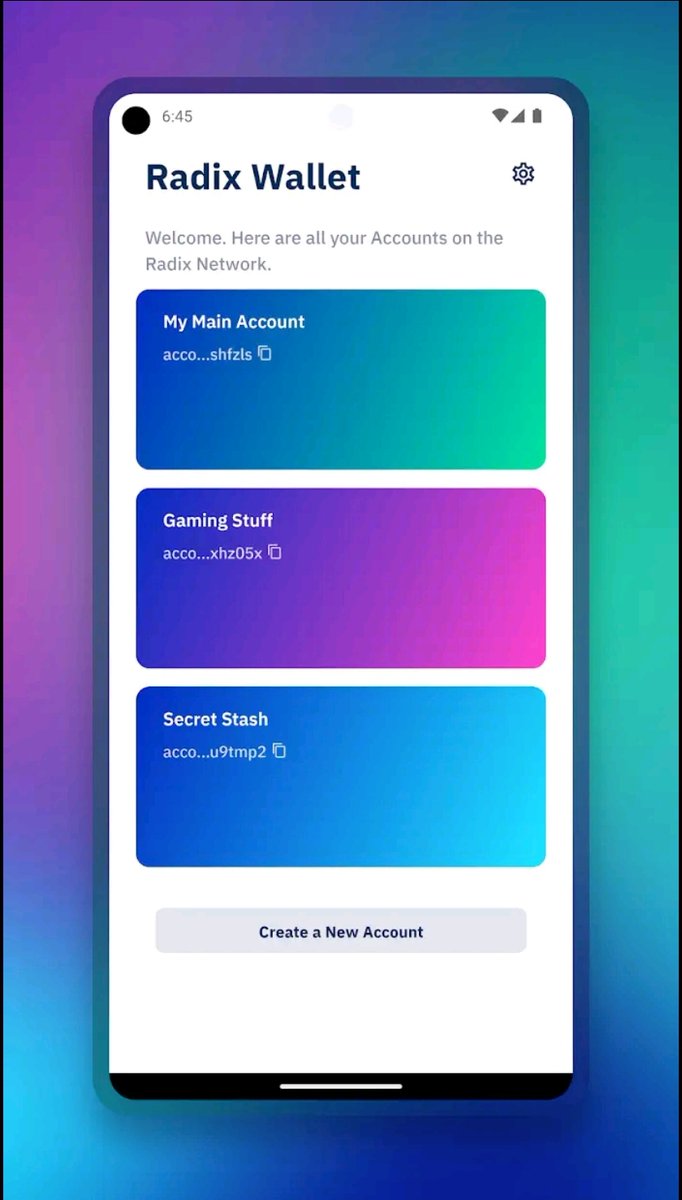
The Radix Babylon Mainnet Upgrade is now complete! A new chapter in Web3 and DeFi has begun, welcoming a radically better experience for developers and users alike. Here's everything you need to know about the Babylon Upgrade 👇🧵 radixdlt.com/blog/babylon-m…