Isaque Franklin

289 posts

Isaque Franklin banner
Isaque Franklin

Isaque Franklin

@IsaqueFranklin0

23, metallurgical engineering at @ufmg | Developer & Cypherpunk | Bitcoin research fellowship @Vinteum_org & Founder of @UFMGBitcoinClub

Belo Horizonte, Brazil Katılım Aralık 2022
553 Takip Edilen171 Takipçiler
Sabitlenmiş Tweet
Isaque Franklin
Isaque Franklin@IsaqueFranklin0·
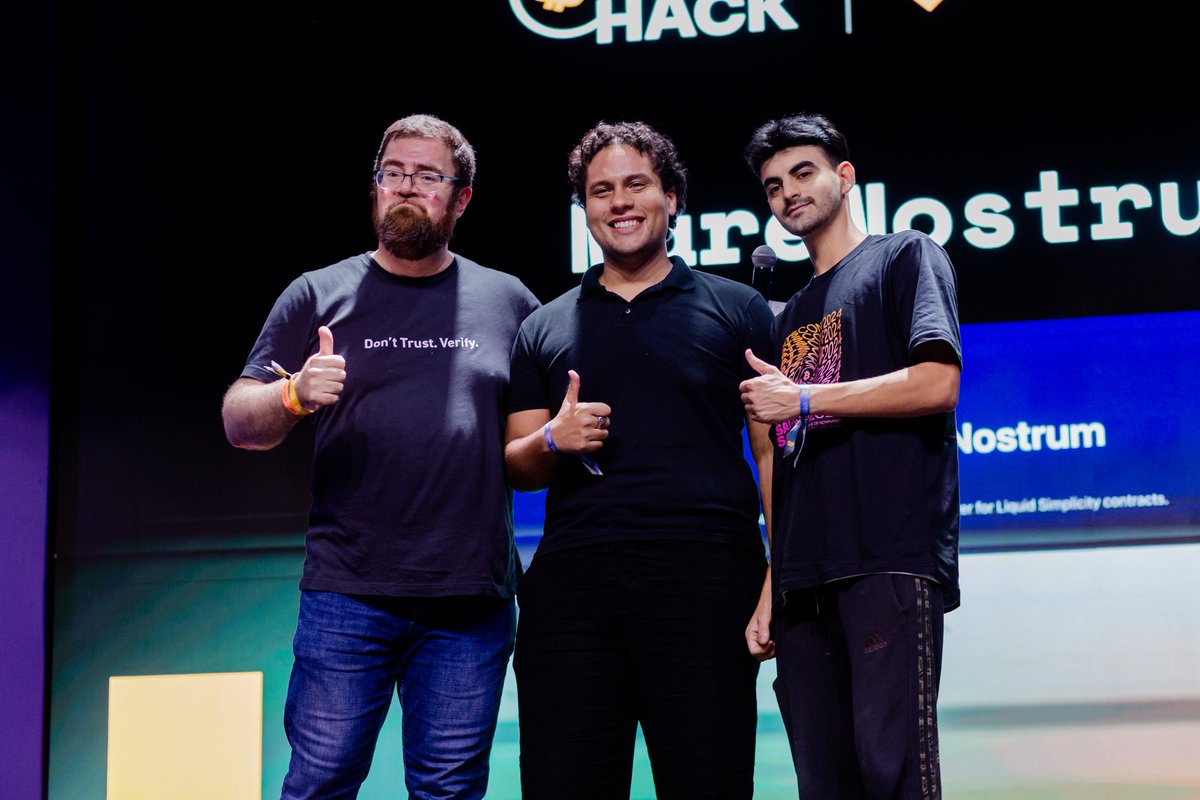
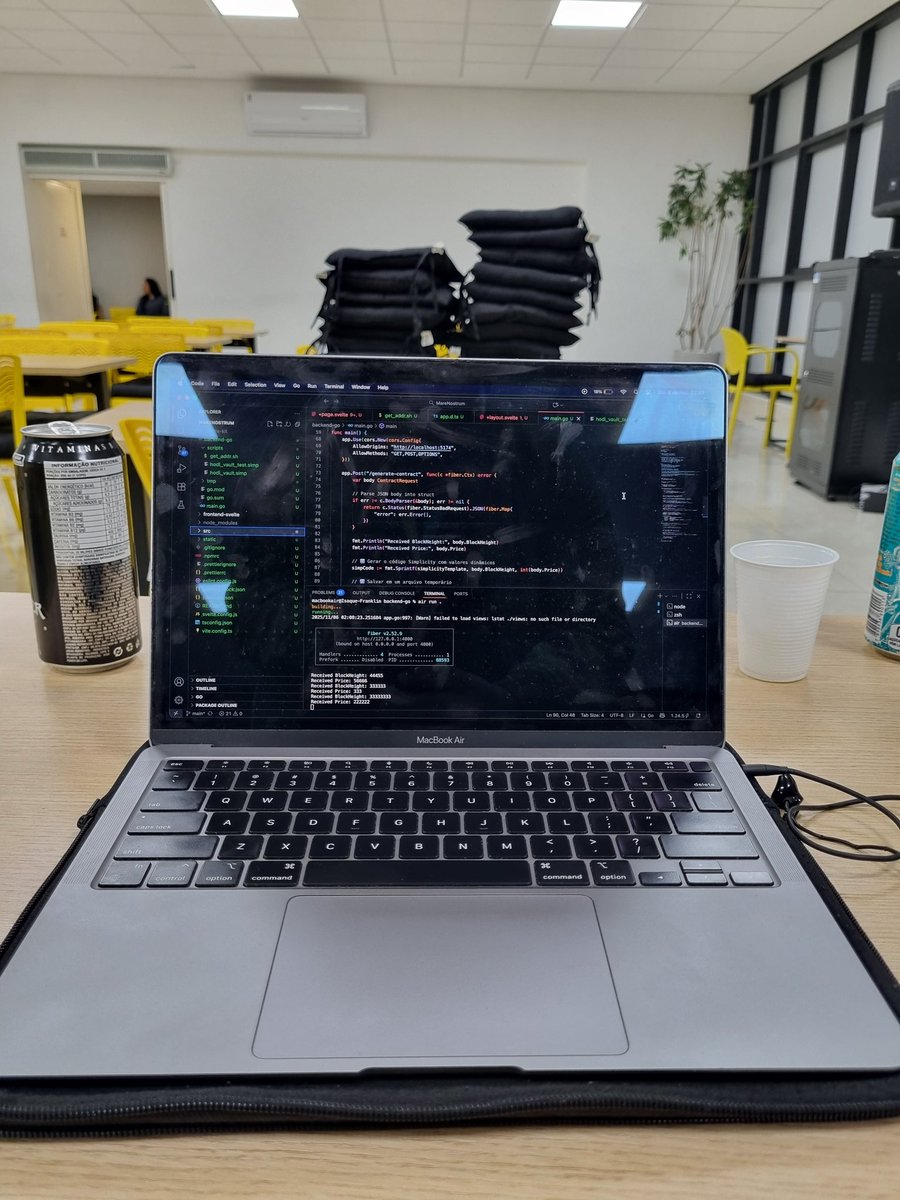
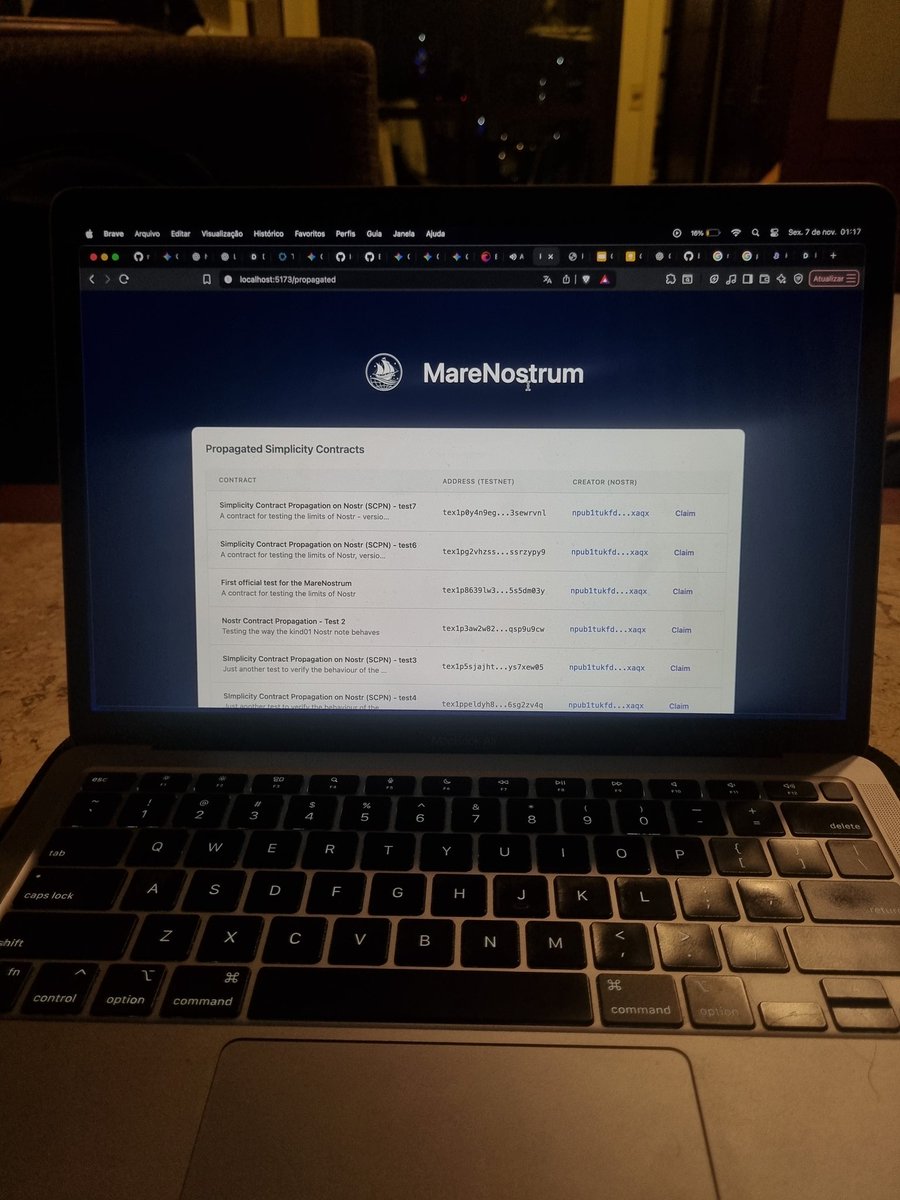
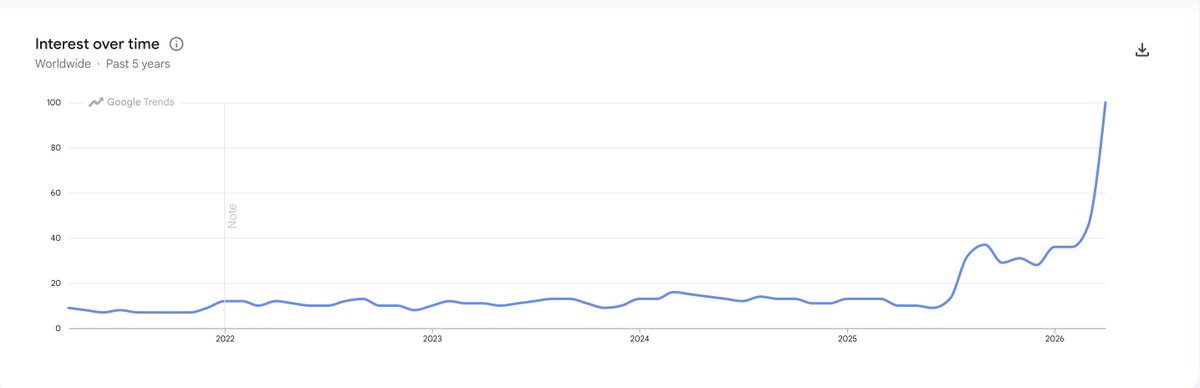
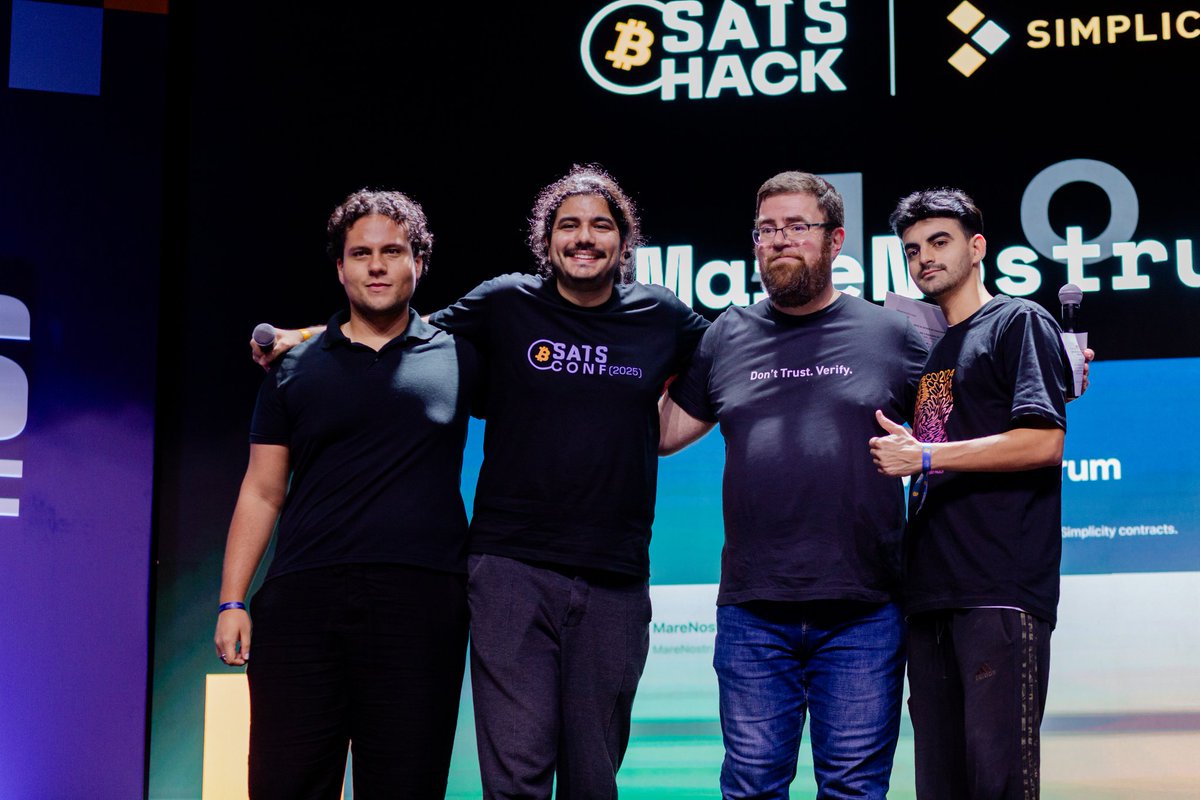
We (@xVFcrypto and I) won the @satsconf hackathon! I'm very grateful to the @Blockstream team for the Liquid & Simplicity bootcamp they held just before the event. It was essential for our project. A thanks also goes to @lucasdcf for organizing such an amazing event. I'll continue to work on MareNostrum.
Isaque Franklin tweet mediaIsaque Franklin tweet mediaIsaque Franklin tweet mediaIsaque Franklin tweet media
English
3
2
27
5.6K
Isaque Franklin retweetledi
TheMhv⚡
TheMhv⚡@TheMhv·
Happy birthday @halfin
TheMhv⚡ tweet media
English
0
1
2
29
Isaque Franklin retweetledi
Ancient Philosophy🦉
@RichardDawkins Looks at the universe, sees no God. Looks at a midwit opinion generator, thinks it's conscious.
English
158
1.5K
22.7K
391.4K
Thiago ➔ hodle.com.br
Thiago ➔ hodle.com.br@ThiagoMot_·
pix de 3k brl: senhor, essa transação é suspeita transferência onchain de 100 bilhões de reais em BTC sim, senhor next block
Português
1
0
23
701
Isaque Franklin retweetledi
Belo Horizonte BitDevs
Belo Horizonte BitDevs@bhbitdevs·
Based Mineiros seeking freedom since 1789 🫡
Belo Horizonte BitDevs tweet media
English
0
5
10
312
Isaque Franklin
Isaque Franklin@IsaqueFranklin0·
@lorenzolfm I wish astronauts would become the new icons and celebrities for the youth. An astronaut is much cooler than a rapper, soccer player, or digital influencer.
English
1
0
2
34
Lorenzo
Lorenzo@lorenzolfm·
"NASA Careers" searches over the past 5 years. Artemis inspired a generation!
Lorenzo tweet media
English
1
0
35
1.5K
Isaque Franklin retweetledi
Nadim Kobeissi
Nadim Kobeissi@kaepora·
I spent the evening looking into quantum computing timelines as a non-expert in quantum computing. Here is what I’ve learned: We currently have machines with ~1,000–1,500 physical qubits at error rates around 10⁻³, and Google’s algorithm requires ~500,000 physical qubits operating coherently together with surface code error correction, yoked qubit storage, magic state cultivation producing ~500K T states per second, and reaction-limited execution at 10μs cycle times — none of which has been demonstrated beyond small-scale proof-of-concept experiments. Scaling from where we are to where this needs to be isn’t a matter of incremental improvement along a Moore’s Law curve; it requires solving qualitatively new engineering problems in qubit fabrication yield, correlated error suppression across a massive chip (or multi-chip interconnects that don’t exist yet), cryogenic wiring and control electronics for half a million qubits, real-time classical decoding at the required throughput, and sustained coherence of a “primed” quantum state across minutes of wall-clock time — any one of which could prove to be a multi-year bottleneck, and all of which must be solved simultaneously.​​​​​​​​​​​​​​​​ Given the above, I just don’t see how we’re going to get to a cryptographically relevant quantum computer by 2030, especially given that we need a ~350× increase in physical qubit count with simultaneously tighter error correlations, an entirely new cryogenic control and wiring architecture to address half a million qubits, real-time decoding infrastructure that doesn’t exist yet, magic state distillation factories operating at industrial throughput, and multi-minute coherent idle times for primed states — and historically, solving even one of these at scale has taken the field the better part of a decade.
English
60
61
394
78.9K
Isaque Franklin retweetledi
Isaiah Taylor - making nuclear reactors
Insane to wake up to this. I’ve grown up with photos of the orb of the earth from spacecraft. But they were all from before I was born. First time seeing a photo of this fresh of the wire, such a crazy feeling
NASA@NASA

Good morning, world! 🌎 We have spectacular new high-resolution images of our home planet, all of us looking back through the Orion capsule window at our Artemis II astronauts as they continue their journey to the Moon.

English
10
15
647
36K
Isaque Franklin retweetledi
Floresta
Floresta@getfloresta·
Floresta v0.9.0 is out. This release aligns our networking layer with the Utreexo messaging flow (BIP-0183), while improving validation, testing, and performance across the stack. Checkout our in-depth post for more info getfloresta.org/blog/release-v…
English
2
37
83
11.2K
Isaque Franklin retweetledi
Prometheus
Prometheus@CaribbeanRythms·
this is the average moon landing denier: >never applied himself in a technical field >can’t do basic math problems let alone trigonometry, calculus, linear algebra >”what’s a vector?” >has never set foot in an engineering workspace >never seen a P&ID let alone read one >never coded >can’t read a schematic >confuses mass and weight >confuses voltage, current, and resistance >”bernoullis principle?” >cannot calculate slope between two points >”I love Ancient Greeks, wrestling naked in the sun. Wait, pythagorean theorem? why would I need that? >does not understand order of operations >struggles with exponents and powers >cannot work with fractions or ratios >doesn’t know the difference between diameter, circumference and radius of a circle >essentially mathematically illiterate >thinks g force is a watch I’d like to convince you one day about how great of an achievement this was for humanity, Sol.
Prometheus tweet media
⚡️🌞 Sol Brah 🌞🐬@SolBrah

They want you believe this aluminium foil wrapped hunk of junk went to the moon and back. The amount of fluoride in the brain to swallow this is staggering.

English
255
763
9.1K
421.6K
Isaque Franklin retweetledi
Jameson Lopp
Jameson Lopp@lopp·
It's not FUD to point out that significant advancements are being made in quantum computing. It is FUD to make claims that ECC will be broken in X years. No one can honestly make predictions about the rate of progress we'll see in the future, and many breakthroughs are needed.
English
37
36
321
30.4K
Isaque Franklin retweetledi
Stephan Livera
Stephan Livera@stephanlivera·
So everyone's talking about Google Quantum AI’s new research paper, “Securing Elliptic Curve Cryptocurrencies against Quantum Vulnerabilities: Resource Estimates and Mitigations.” Cue the predictable Bitcoin quantum FUD: “Why haven’t the devs fixed this already?!” Reality is, it’s not a simple patch. Post-quantum signatures come with serious tradeoffs and Bitcoin faces unique constraints that general tech and web apps don’t. Post-quantum signatures are generally much larger transaction sizes - often 5–50× or more in the signature-heavy parts → higher fees, more compute. Hardware wallets would need a big shift. The choice of scheme (stateless, stateful, or hybrid) would change how we custody coins. HD wallets, watch-only wallets, FROST, MuSig2, silent payments… some of the privacy and UX wins we love today could be gone, degrade or require clunky workarounds. Bitcoin has to stay decentralized: small blocks, permissionless validation. Web servers can throw bigger payloads around; Bitcoin can’t without sacrificing the very properties that make it Bitcoin. Even “standard” post-quantum schemes like ML-DSA (which Android is integrating) produce signatures 35–66× larger than today’s ~70-byte ECDSA signatures, making them too heavy for Bitcoin’s tight constraints on block space, fees, and hardware. That’s why researchers like @n1ckler (and @blksresearch) are doing vital work right now: exploring the right tradeoffs for Bitcoin specifically. Hash-based crypto? Lattice-based? Something else? Which Bitcoin-optimized forms of SPHINCS make sense? SHRINCS (tiny ~324-byte stateful signatures with static backups) or SHRIMPS (for multi-device stateful setups)? How many times will a user sign with the same key? Can we assume user devices can securely maintain state, or do we need fully stateless fallbacks? Would we expand the block size with some kind of quantum witness discount? What do we do about quantum-vulnerable coins? These are the hard, Bitcoin-specific questions that matter. Practical steps are already being taken. BIP 360, proposed by @cryptoquick, @Ethan_Heilman, and @isabelfoxenduke, is a thoughtful first step: it introduces a new Pay-to-Merkle-Root (P2MR) output type that gives us Taproot-like functionality without the quantum-vulnerable keypath spend. It’s designed as an enabling primitive — conservative, upgradable, and focused on reducing address exposure risks while the ecosystem figures out the heavier lifting of actual post-quantum signatures. Bitcoin builders have spent 15+ years improving what is otherwise a very clunky experience in a decentralized environment. Rushing big protocol shifts risks breaking that. This isn’t something to knee-jerk “just fix.” It deserves careful, ongoing research and exploration, not panic. That said, informed skeptics like @reardencode and @bergealex4 are also right to push back. The paper improves resource estimates for breaking secp256k1 (fewer logical qubits, potentially minutes-long attacks on a hypothetical machine), but as @reardencode notes, it’s still theorycrafting: we’d need a large-scale fault-tolerant quantum computer with hundreds of thousands of physical qubits maintaining coherence for minutes — something far beyond today’s best devices (hundreds of qubits coherent for microseconds). A true CRQC capable of breaking ECDSA by 2029 (or even soon after) remains a big maybe. Bitcoin's strength is in deliberate, methodical and conservative steps to address threats.
Stephan Livera tweet mediaStephan Livera tweet media
English
36
57
329
41.2K
Spritz
Spritz@iamspritz·
Rio Atlântico. I have a plan. Straight out from what worked in Europe, we're gonna make this city once again not only look good but feel good.
English
7
3
45
4.6K