Arthur Morgan

114 posts

Arthur Morgan banner
Arthur Morgan

Arthur Morgan

@ItsArthurMorga

Watching AI, tech & markets reshape the world in real time. Sharing what most people miss.

Katılım Mayıs 2026
103 Takip Edilen92 Takipçiler
Arthur Morgan
Arthur Morgan@ItsArthurMorga·
For those who don’t know: The SAVE America Act stands for Safeguarding American Voter Eligibility. It is President Trump’s top legislative priority ahead of the midterm elections. The bill would require proof of citizenship to register to vote, photo ID at the polls, and force states to clean up voter rolls using a federal citizenship database. It would also require all ballots to be counted within 36 hours of Election Day. Today, June 4, 2026, the Senate rejected an attempt to attach it to a budget reconciliation package by a vote of 48 to 50. Reconciliation is a special process that allows bills to pass with a simple majority, bypassing the usual 60-vote filibuster threshold, but only for provisions with a direct budget impact. What makes this remarkable is that four Republican senators broke with their own party to kill it. Thom Tillis, Lisa Murkowski, Susan Collins and Mitch McConnell all voted no alongside every Democrat present. Supporters argue the bill protects election integrity. Critics argue it would create serious barriers for millions of eligible voters who do not have immediate access to qualifying documents, including low-income Americans, rural residents and young voters. This is the second time Republicans have tried and failed to attach this bill to a reconciliation package. The debate is not over. But for now, it is dead again.
English
0
0
0
44
Arthur Morgan retweetledi
Podcast Angles
Podcast Angles@PodcastAngles26·
return-to-office fight in Canada is happening. A company hires people in 2021 and 2022 saying, “Don’t worry, hybrid is here to stay.” So people build actual lives around that. Someone moves from Toronto to Hamilton because rent is insane. Someone moves closer to their parents because their dad has appointments every week. Someone arranges daycare around two remote days. Someone buys a small house far from downtown because the commute was supposed to be occasional, not a lifestyle. Then one Monday morning, leadership sends the email: “Starting next month, everyone is expected back in the office four days a week.” And they act confused when people are angry. But the anger is not really about the office. It’s about the lie. People can handle change. What they can’t handle is being told one version of life during hiring, building their rent, family, commute, childcare, and health around it, then being treated like none of that was real. A few months later, the best people leave. Not the lazy ones. The best ones. The ones with options. The ones who were already doing good work without being watched. And then management says, “Strange, productivity is down.” Of course it is. You didn’t bring people back to culture. You brought them back to distrust. Where people work is not a small detail. It touches sleep, rent, marriage, kids, aging parents, mental health, and whether someone has any life left after work. Companies keep calling it “policy.” Employees experience it as a broken promise. Good conversation on the psychology of remote work and trust: youtube.com/watch?v=jnKrzo… #RemoteWork #WorkCulture #Canada #ReturnToOffice
YouTube video
YouTube
English
0
2
3
139
Elon Musk
Elon Musk@elonmusk·
Release the footage, you evil bastards!
Elon Musk tweet media
English
10.7K
68.5K
379.8K
14.2M
Arthur Morgan
Arthur Morgan@ItsArthurMorga·
@APompliano No it’s not. Kindness at the wrong time and toward the wrong people can cost you the prosperity of your country.
English
0
0
2
67
Podcast Angles
Podcast Angles@PodcastAngles26·
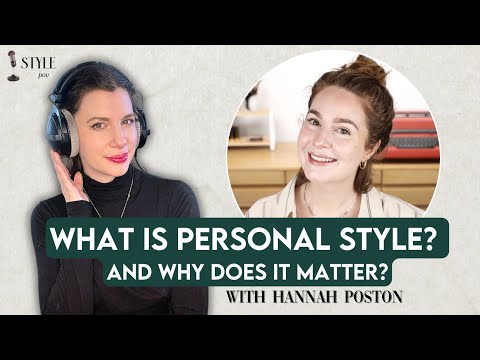
People are not just buying clothes anymore. They are buying borrowed identities. One week everyone is “old money.” Next week everyone is “clean girl.” Then “mob wife.” Then “office siren.” Then “quiet luxury.” Then “coquette.” Then “it girl.” Then whatever the algorithm names next. And somehow every “personal style” looks like it came from the same mood board. Same slick bun. Same beige coat. Same gold hoops. Same little sunglasses. Same Stanley cup. Same Pilates uniform. Same expensive-looking minimalism. Same fake effortlessness. You walk outside and it feels less like a city and more like the algorithm got a dress code. The strange part is that people are spending real money to look like someone else’s personality. Not inspired by it. Copied from it. They buy the bag because a girl with better lighting had it. They buy the shoes because a stranger called them “timeless.” They change their whole face because the current beauty template says so. They decorate their apartment like a coffee shop they saw 400 times on TikTok. They even borrow opinions, phrases, posture, humor, lifestyle goals. At some point, trend culture stopped being about taste and started becoming identity laundering. People are trying to purchase a self. And the market knows it. That is why everything has a name now. Not just a sweater — “old money knit.” Not just a bow — “coquette coded.” Not just brown hair — “espresso brunette.” Not just being thin and rich-looking — “quiet luxury.” Not just dressing normally — “model off duty.” The naming is the trap. Once something has a label, people can search it, copy it, shop it, film it, monetize it, and move on before they ever ask: “Do I even like this?” That is the most uncomfortable question right now. How much of your taste is yours? How much of your style did you choose? How much of your personality is actually you — and how much is just the feed repeating itself through your closet? The internet used to help people discover themselves. Now it often helps people replace themselves faster. And the saddest part is that originality is not even expensive. Originality usually comes from memory. The jacket you kept for years. The color you always loved before it became trendy. The weird hobby you never posted. The earrings from your aunt. The shoes that make no sense but feel like you. The outfit that does not have a name yet. That is style. Style is not looking like the most accepted version of the moment. Style is evidence that a real person lives inside the clothes. I think we are entering an era where looking “perfectly on trend” may become the least interesting thing about someone. Because if everyone can buy the same aesthetic, the real luxury becomes having a point of view. A face that still looks like a face. A room that still looks lived in. A closet with contradictions. A personality that did not come pre-packaged with affiliate links. Maybe the most rebellious thing now is not dressing louder. It is dressing truthfully. Not asking, “What aesthetic am I?” Asking, “What do I keep choosing even when nobody is selling it to me?” Good conversation on personal style, taste, and internet influence: youtube.com/watch?v=N2xnYf… #PersonalStyle #TrendCulture #DigitalIdentity #Fashion
YouTube video
YouTube
English
1
0
1
210
Arthur Morgan retweetledi
Polymarket
Polymarket@Polymarket·
NEW: Google reportedly plans to raise $80,000,000,000.00 to fund its AI spending push.
English
165
88
1.4K
442.4K
Arthur Morgan
Arthur Morgan@ItsArthurMorga·
One of the boldest financial predictions circulating right now deserves more attention than it is getting. Several serious analysts are now arguing that stablecoin transaction volume could surpass SWIFT, the global interbank payment network, in monthly volume before the end of 2026. SWIFT processes approximately 42 million messages per day and has been the backbone of international finance for over 50 years. Stablecoins, digital currencies pegged to the US dollar, have been growing at a rate that most traditional finance institutions refused to take seriously until very recently. The US government passing stablecoin legislation this year changed the conversation permanently. If that prediction proves correct, it will be one of the fastest disruptions of a core financial institution in modern history. Whether you hold crypto or not, this one is worth tracking closely.
English
0
0
0
62
Arthur Morgan
Arthur Morgan@ItsArthurMorga·
The flying car dream is in serious trouble and it is worth understanding why. Several of the most well-funded air taxi startups in the world are now caught in public infighting, court battles and funding crises simultaneously. Companies that raised hundreds of millions of dollars on the promise of urban air mobility are struggling to get aircraft certified, let alone into commercial service. The core problem is that aviation certification is extraordinarily difficult and expensive. Building a prototype that flies is one thing. Getting the FAA to approve it for passenger service is another category of challenge entirely. This is a cautionary story about the gap between what venture capital can fund and what regulatory reality can actually deliver. The timeline on flying taxis just got significantly longer.
English
0
0
0
30
Arthur Morgan
Arthur Morgan@ItsArthurMorga·
LG Electronics shares jumped 24% in a single day last week after announcing a major automotive AI partnership with Google. That is an extraordinary single-day move for a company of that size. What the market is pricing in is the convergence of two massive trends: the electrification of vehicles and the AI software layer that runs inside them. LG manufactures the physical components. Google provides the AI brain. Together they are targeting the connected car market which is projected to be worth over a trillion dollars within the decade. A 24% single-day jump is the market screaming that this partnership matters. Pay attention when markets react that dramatically to a tech announcement.
English
0
0
0
33
Arthur Morgan
Arthur Morgan@ItsArthurMorga·
Samsung just shipped the world’s first HBM4E memory chip samples and almost nobody noticed. HBM stands for High Bandwidth Memory, which is the technology that allows AI chips to process enormous amounts of data at the speeds modern AI models require. Without it, even the most powerful AI processors cannot reach their potential. HBM4E is the next generation of that technology. It delivers dramatically faster memory bandwidth than its predecessor, which means AI training and inference times drop significantly. The company that controls AI memory supply has enormous leverage over the entire AI industry. Nvidia needs it. Every major AI lab needs it. Samsung just moved to the front of that line.
English
0
0
1
27
Arthur Morgan
Arthur Morgan@ItsArthurMorga·
Here is a financial fact that should make more people uncomfortable than it does. The United States took approximately 200 years to accumulate its first trillion dollars of national debt. The country now spends more than one trillion dollars every single year just on interest payments alone. Not paying down the debt. Just the interest. That number now exceeds the entire US defense budget. It exceeds Medicare spending. It is the single largest line item the federal government pays, and it is growing every year automatically regardless of what Congress decides. This is not a partisan issue. It is a math problem. And the longer it goes unaddressed, the fewer options remain.
English
0
0
0
8
Arthur Morgan
Arthur Morgan@ItsArthurMorga·
Something interesting is happening that nobody in mainstream media is talking about enough. DuckDuckGo downloads are climbing sharply as users push back against Google’s decision to force AI-generated summaries into search results ahead of actual links. People do not want a conversation with AI when they search. They want links. They want to choose where they go. Google built the most dominant product in internet history by giving people exactly what they searched for. Now it is forcing something on users that many of them do not want. And users are quietly voting with their feet. The irony is real. The company that won search by respecting user intent is losing users by overriding it.
English
0
0
0
12
Arthur Morgan
Arthur Morgan@ItsArthurMorga·
Binance, the world’s largest crypto exchange, is reportedly exploring a full return to the United States market. This comes after its founder Changpeng Zhao served a prison sentence and the company paid $4.3 billion in fines to US regulators in 2023. If successful, this would be one of the most dramatic corporate comebacks in financial history. Binance was essentially forced out of the US market. Returning would require regulators who previously made an example of the company to now welcome it back. The timing is not accidental. The current US administration has signaled a far more crypto-friendly regulatory posture than its predecessor. What was prosecuted two years ago may be welcomed today. That shift alone should tell you everything about how quickly the political winds around crypto have changed.
English
0
0
0
14
Arthur Morgan
Arthur Morgan@ItsArthurMorga·
The US government has quietly launched a review of advanced Nvidia AI chip sales to China. This is a much bigger deal than it sounds. Nvidia’s H20 chip, a downgraded version of its most powerful chips specifically designed to comply with existing export restrictions, has been selling in enormous volumes to Chinese AI companies. The review suggests the government believes even those restricted chips are giving China too much of an AI advantage. If the review results in new restrictions, Nvidia faces losing one of its largest markets overnight. China represents billions in annual revenue for the company. Investors are already watching this nervously. The US-China AI chip war is not a future scenario. It is happening right now and Nvidia is caught directly in the middle of it.
English
0
0
1
20
Arthur Morgan
Arthur Morgan@ItsArthurMorga·
For those who don’t know: Blue Origin, Jeff Bezos’s space company, suffered a serious setback last week when its New Glenn rocket exploded on the launchpad during a ground test. No crew was involved and no injuries were reported. But the timing is brutal. SpaceX is heading into its IPO roadshow this week, Starship continues breaking records, and Blue Origin’s most high-profile rocket just exploded before it even launched. The contrast between the two companies could not be starker. SpaceX has turned rocket reusability into a business model worth trillions. Blue Origin has spent over two decades and billions of Bezos’s personal fortune and is still struggling with basic reliability. Competition in space is good. But right now, the race is not particularly close.
English
0
0
1
36
Arthur Morgan
Arthur Morgan@ItsArthurMorga·
This is amazing. Nvidia just announced a new AI chip specifically designed for personal computers and markets jumped immediately this morning. Jensen Huang’s argument is straightforward: the PC has not fundamentally changed in decades. It stores files and runs software. The AI PC will understand you, anticipate what you need and act on your behalf locally, without sending your data to a cloud server. The financial market reaction tells you everything. Nvidia opened June up 2% on this announcement alone. Investors are not pricing in a product. They are pricing in the belief that every personal computer on earth eventually becomes an AI device, and that Nvidia supplies the engine inside all of them. If that bet plays out, the total addressable market is not just data centers anymore. It is every desk, every home and every pocket on the planet.
English
0
0
2
11
Arthur Morgan
Arthur Morgan@ItsArthurMorga·
Tech layoffs in 2026 are already nearly matching the entire total from 2025, and it is only June. ClickUp just cut 22% of its entire workforce. The reason stated openly: AI agents can now do the work. Not “restructuring.” Not “market conditions.” AI agents. This is the moment a lot of people said would never come this fast. The companies making these cuts are not struggling financially. They are cutting because automation has genuinely made entire roles redundant faster than anyone publicly admitted was possible. The uncomfortable truth is that the people deciding which jobs AI can replace are often the furthest removed from understanding what those jobs actually involve day to day. That gap between the boardroom and the reality of work is where a lot of the damage is happening right now. This is not a future conversation anymore. It is happening this week.
English
0
0
2
58
Arthur Morgan
Arthur Morgan@ItsArthurMorga·
Microsoft is threatening to call the police on a security researcher. Let that sit for a moment. A researcher going by the name “Nightmare Eclipse” publicly disclosed a series of unpatched vulnerabilities in Microsoft products, including bugs named BlueHammer, RedSun and YellowKey, after Microsoft failed to fix them privately. Rather than thanking the researcher for exposing security flaws that could affect millions of users, Microsoft published a blog post threatening criminal investigation and legal action. This debate has existed for decades in cybersecurity. Do researchers have a responsibility to stay quiet indefinitely while billion-dollar companies take their time fixing dangerous bugs? Or does the public have a right to know? A company worth trillions of dollars threatening an independent researcher for doing the work their own security team should have done is not a good look. Not even close.
English
0
0
2
34
Arthur Morgan
Arthur Morgan@ItsArthurMorga·
This quietly happened today and developers are furious. GitHub Copilot, Microsoft’s AI coding assistant used by millions of developers worldwide, just switched from a flat monthly subscription to a token-based billing system effective June 1, 2026. What that means in plain language: instead of paying a predictable flat rate every month, you now get charged based on how much you actually use it. The more you code with AI assistance, the higher your bill. For large enterprises this might be manageable. For solo developers, small startups and freelancers, this is a significant problem. Your monthly costs just became unpredictable overnight. This is the same direction Jensen Huang predicted: compute access becomes a currency. But when it hits your personal developer bill, it feels very different from a keynote stage. The backlash is real and it is growing.
English
1
0
2
403
Arthur Morgan
Arthur Morgan@ItsArthurMorga·
For those who don’t know: Anthropic is the AI safety company behind Claude, one of the most advanced AI assistants in the world. It was founded in 2021 by Dario Amodei, Daniela Amodei and several other former OpenAI researchers who left to build AI more responsibly. Today, June 1, 2026, Anthropic officially filed a confidential S-1 with the SEC. That means they have submitted the paperwork required to sell shares to the public for the first time, what is known as an IPO, Initial Public Offering. The filing is confidential for now, meaning revenue figures and full financial details are not yet public. But the direction is clear. Their current valuation sits at approximately $965 billion. They are targeting a possible public listing as early as October 2026. If the market reception is strong, this could be one of the largest IPOs in history. What makes this even bigger: OpenAI is preparing its own IPO filing, and SpaceX is already in its roadshow. We are watching three of the most consequential companies ever built race toward public markets at the same time. This is a historic week for technology and for investors paying attention.
Anthropic@AnthropicAI

Anthropic has confidentially submitted a draft S-1 registration statement to the Securities and Exchange Commission. Pending completion of SEC review, this gives us the option to pursue an initial public offering. Read more: anthropic.com/news/confident…

English
0
0
1
42