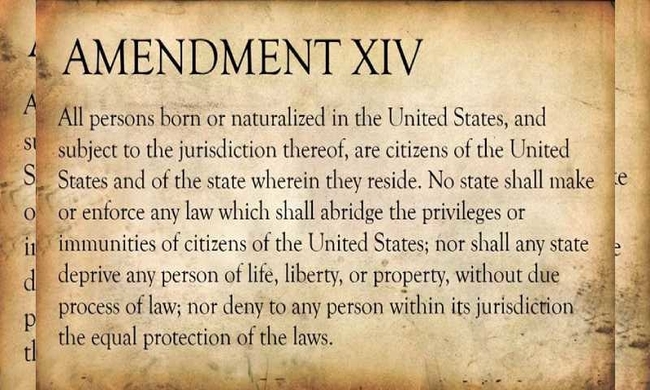
Short answer: Yes — the 14th Amendment is what makes someone an American citizen if they are born in the United States. It does this through its Citizenship Clause,
The key sentence reads:
“All persons born or naturalized in the United States, and subject to the jurisdiction thereof, are citizens of the United States…”
This clause does two major things:
Birthright citizenship: If you are born on U.S. soil, you are a U.S. citizen.
Naturalization citizenship: If you legally complete the naturalization process, you are also a U.S. citizen.
This clause was written in 1868 to overturn the Supreme Court’s Dred Scott decision, which had denied citizenship to Black Americans.
Why It Matters
The 14th Amendment:
Defines who is an American — ending any ambiguity about citizenship after the Civil War.
Ensures equal protection and due process for all citizens and persons within U.S. jurisdiction.
What “Subject to the Jurisdiction” Means
Courts have consistently interpreted this phrase to include almost everyone born in the U.S., except for very narrow exceptions (like children of foreign diplomats).
This is why birthright citizenship has been upheld for over a century.
Bottom Line
If you are born in the United States, the 14th Amendment is the reason you are automatically an American citizen. If you are not born here, it is the amendment that guarantees your citizenship once you complete the naturalization process.
If you want, I can also explain:
What counts as “jurisdiction”
How birthright citizenship debates work today
How naturalization differs from birthright citizenship
and mandating equal protection under the law. Its broad language has allowed it to serve as a foundation for civil rights, voting rights, and anti-discrimination protections, making it one of the most consequential amendments in U.S. history.
National Archives+2
Why the 14th Amendment Is So Influential
It’s one of the most litigated and interpreted amendments in U.S. history. Courts use it to evaluate fairness, discrimination, and fundamental rights. In many ways, it’s the constitutional foundation for modern civil rights.
If you want, I can go deeper into:
How courts interpret “equal protection”
Major Supreme Court cases
The history behind its creation
How Section 3 is being debated today
Just tell me where you want to take it next.