
Jah Wasul retweetledi
Jah Wasul
2.2K posts


Jah Wasul retweetledi

They put zip ties on babies before killing them. How is anyone with a conscience supposed to process this horror?
Ramy Abdu| رامي عبده@RamAbdu
Inside the mass graves, they found children & babies with their hands bound with zip ties This photo is from 2 mass graves discovered at Nasser Hospital, southern Gaza, in April During the genocide, the @EuroMedHR documented over 130 mass graves of victims of the Israeli genocide
English
Jah Wasul retweetledi

🚨Footage reveals a mass grave at Nasser Hospital in Gaza containing victims killed by the Israeli army after the hospital was devastated during Israel’s assault.
English
Jah Wasul retweetledi
to whomever made this: thank you from the wells of history and farthest echoes of indigenous screams for justice for this labor of love and justice.
their terror will not be whitewashed.
Suppressed News.@SuppressedNws1
WOW A website is DOCUMENTING Israel’s crimes with GEOLOCATION, dates, categories of crimes, and footage of the incidents themselves. One click and you can see EXACTLY what Israel did. An enormous digital archive built for ACCOUNTABILITY. Link: genocide.live Direct Link: #zoom_to_selection=true" target="_blank" rel="nofollow noopener">experience.arcgis.com/experience/3fb…
English
Jah Wasul retweetledi

A team of researchers in New Zealand followed 1,037 babies from the day they were born for the next 45 years to find out what actually determines a successful adult life, and the strongest predictor they found had almost nothing to do with intelligence or family wealth.
The findings have been published in the most prestigious scientific journals in the world.
Almost no parent has heard of them.
His name is Avshalom Caspi.
Her name is Terrie Moffitt.
They are a husband and wife research team based at Duke University and King's College London, and the study they have spent their careers running is called the Dunedin Multidisciplinary Health and Development Study. It started in 1972 in a single hospital in Dunedin, New Zealand. Every baby born there in a 12-month window was enrolled. 1,037 of them. The study is still running today.
The retention rate is the part that should astonish anyone familiar with how research usually works. After more than 45 years, over 90 percent of the original participants are still being tracked. Most longitudinal studies lose half their sample inside ten years. The Dunedin team has lost almost nobody.
They measured everything. Blood. DNA. Brain scans. Income. Criminal records. Romantic relationships. Drug use. Dental health. Sleep. Mental health. Lung function. They flew participants who had moved abroad back to Dunedin every few years for a full day of assessments. Some of those people now live in seven different countries. They still show up.
For the first decade of life, the team did something nobody else was doing systematically. They measured each child's self-control. Not IQ. Not family income. Not parenting style. Self-control. They watched 3-year-olds in a research lab and rated their ability to wait, regulate frustration, follow instructions, and resist impulsive reactions. They added teacher ratings. They added parent ratings. They added the children's own self-reports as they grew older. They combined all of it into a single highly reliable score.
Then they did the thing nobody else had the patience to do. They waited.
When the data came in at age 32, the result was so consistent it should be illegal to teach a child without it.
The children who scored lowest on self-control at age 3 grew into adults with worse physical health, more substance dependence, lower incomes, more credit card debt, higher rates of single parenthood, more criminal convictions, and worse mental health than the children who scored highest. The pattern was not subtle. It was a clean gradient. Every step up in childhood self-control produced a measurable step up in adult outcomes across every domain the team could measure.
The detail that should disturb every parent reading this is what happened when the researchers controlled for the obvious objections.
When they controlled for IQ, the effect held.
When they controlled for family income and social class, the effect held.
When they compared siblings inside the same family, the sibling with lower self-control still had worse adult outcomes than the sibling with higher self-control. Same parents. Same house. Same dinner table. The trait was running independently of everything researchers expected to explain it.
The paper landed in the Proceedings of the National Academy of Sciences in 2011. The title was as plain as it gets. "A gradient of childhood self-control predicts health, wealth, and public safety." It has been cited thousands of times since. Almost no policy maker has acted on it.
The reason most people resist this finding is that it sounds like a sentence handed down before the child could speak. If the trait that determines your adult life is locked in by age 3, the rest of your life is a formality.
The Dunedin researchers say that is the wrong way to read the data.
They found something else in the same paper that almost nobody quotes. Some of the children whose self-control scores improved between childhood and adolescence ended up with adult outcomes far better than their early scores predicted. The trait is not destiny. It is a muscle. Children who learned to wait, regulate, and resist between ages 5 and 15 caught up with kids who started ahead.
Self-control is the one childhood trait nobody seems to teach on purpose anymore. Schools focus on test scores. Parents focus on activities. Coaches focus on performance. The part of the brain that decides between five seconds from now and five years from now is left to develop on its own, and the data shows it usually does not.
The most uncomfortable part of the research is the cost calculation Moffitt and Caspi ran. They estimated that if a country could move the bottom 20 percent of children up one rung on the self-control ladder, it would measurably reduce healthcare spending, welfare dependency, and incarceration costs at the national level. The intervention is cheaper than almost any other public health investment available. Almost no country has tried it at scale.
The reason adults struggle with money, weight, addiction, and relationships is rarely intelligence. It is the gap between what you want right now and what you want in ten years, and which side of that gap your nervous system is built to listen to.
Most people lost that fight at age 4 and never went back to learn the technique.
You were not behind because life dealt you a bad hand.
You were behind because the part of you that decides between right now and the rest of your life was never taught how to choose. The good news is the muscle is still there. Almost nobody trains it after age 10.
You can be the one who does.

English
Jah Wasul retweetledi

Arab men: it has come to this. Arab, Muslim women in the hands, literally, of these demons. Where is the Ummah?
Middle Eastern Affairs@OpsHQs
The Israeli ambassador to Denmark is protesting the spread of this video. Let's make this go viral all around the world."
English
Jah Wasul retweetledi

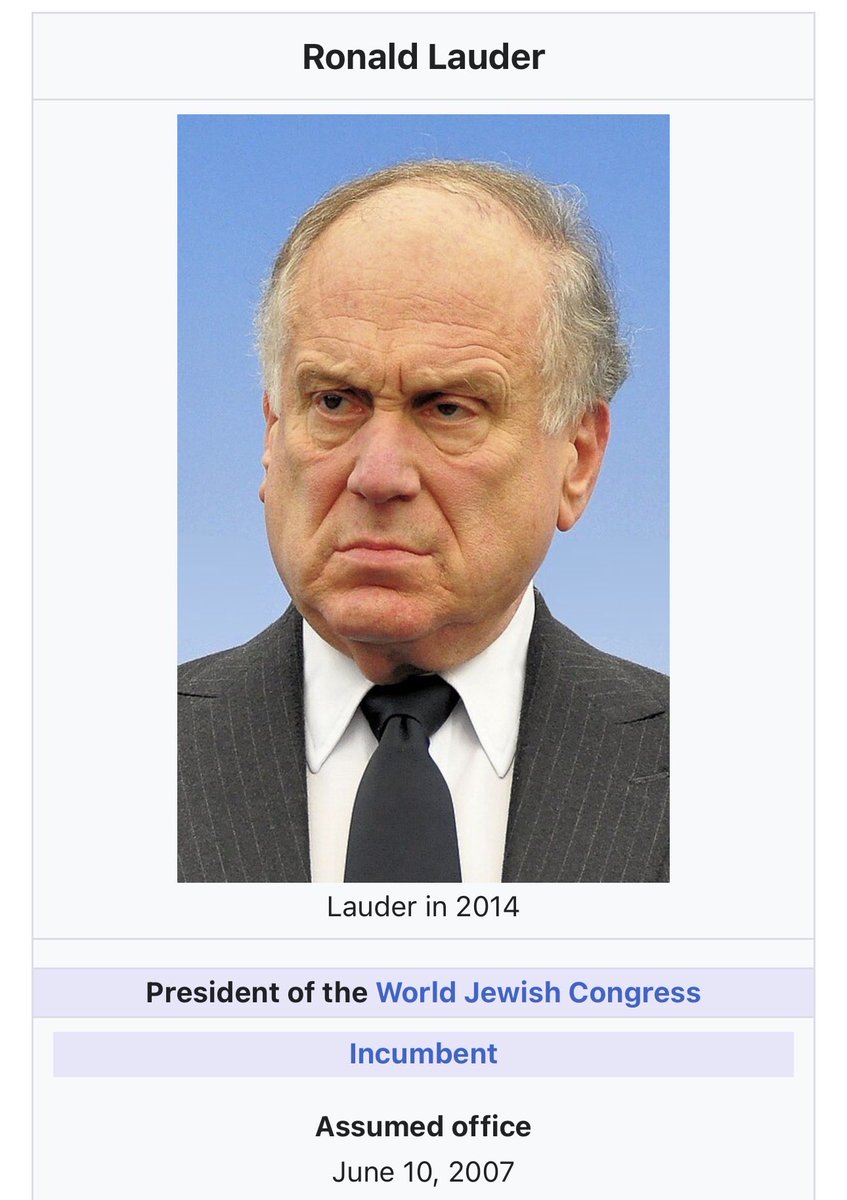
@Humanbydesign3 @ArtyMartyGiles Economic slavery. Worked this one out as a teenager
English
Jah Wasul retweetledi

Jah Wasul retweetledi

Jah Wasul retweetledi

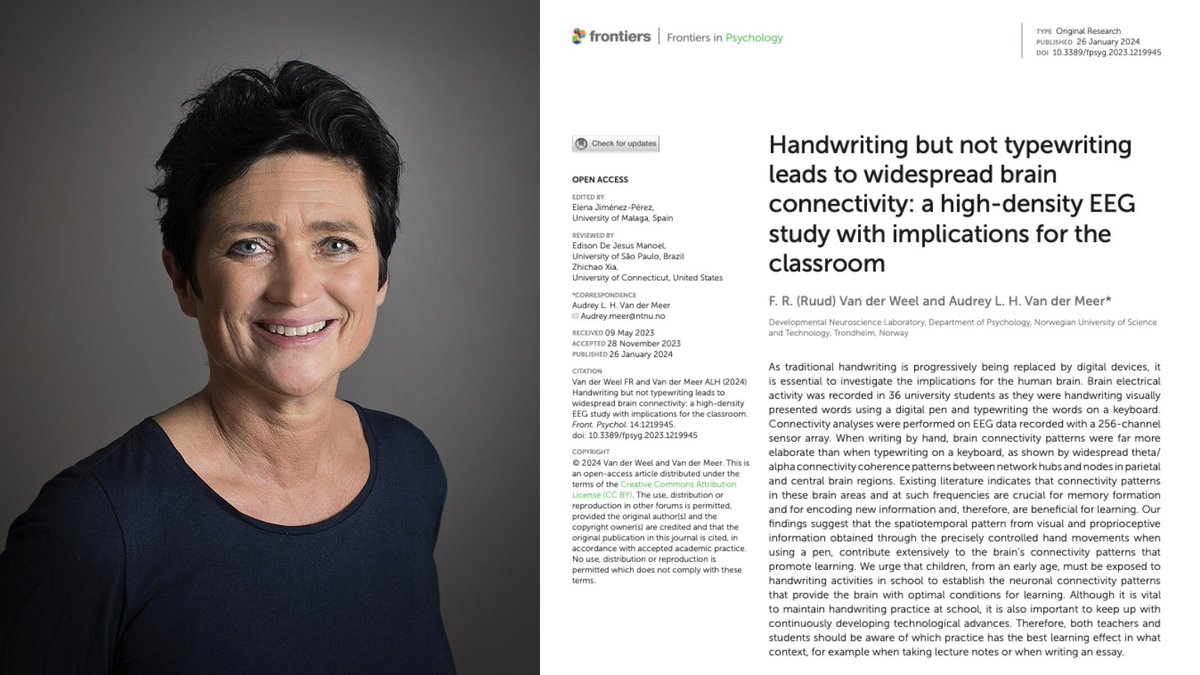
A Norwegian neuroscientist spent 20 years proving that the act of writing by hand changes the human brain in ways typing physically cannot, and almost nobody outside her field has read the paper.
Her name is Audrey van der Meer.
She runs a brain research lab in Trondheim, and the paper that closed the argument was published in 2024 in a journal called Frontiers in Psychology. The finding is brutal enough that it should have changed every classroom on Earth.
The experiment was simple. She recruited 36 university students and put each one in a cap with 256 sensors pressed against their scalp to record brain activity. Words flashed on a screen one at a time.
Sometimes the students wrote the word by hand on a touchscreen using a digital pen, and sometimes they typed the same word on a keyboard. Every neural response was recorded for the full five seconds the word stayed on screen.
Then her team looked at the part of the data most researchers had ignored for years, which is how different parts of the brain were communicating with each other during the task.
When the students wrote by hand, the brain lit up everywhere at once.
The regions responsible for memory, sensory integration, and the encoding of new information were all firing together in a coordinated pattern that spread across the entire cortex. The whole network was awake and connected.
When the same students typed the same word, that pattern collapsed almost completely.
Most of the brain went quiet, and the connections between regions that had been alive seconds earlier were nowhere to be found on the EEG.
Same word, same brain, same person, and two completely different neurological events.
The reason turned out to be something nobody had really paid attention to before her work. Writing by hand is not one motion but a sequence of thousands of tiny micro-movements coordinated with your eyes in real time, where each letter is a different shape that requires the brain to solve a slightly different spatial problem.
Your fingers, wrist, vision, and the parts of your brain that track position in space are all working together to produce one letter, then the next, then the next.
Typing throws all of that away. Every key on a keyboard requires the exact same finger motion regardless of which letter you are pressing, which means the brain has almost nothing to integrate and almost no problem to solve.
Van der Meer said it plainly in her interviews.
Pressing the same key with the same finger over and over does not stimulate the brain in any meaningful way, and she pointed out something that should scare every parent who handed their kid an iPad.
Children who learn to read and write on tablets often cannot tell letters like b and d apart, because they have never physically felt with their bodies what it takes to actually produce those letters on a page.
A decade before her, two researchers at Princeton ran the same fight using a completely different method and ended up at the same answer. Pam Mueller and Daniel Oppenheimer tested 327 students across three experiments, where half took notes on laptops with the internet disabled and half took notes by hand, before testing everyone on what they actually understood from the lectures they had watched.
The handwriting group won by a wide margin on every question that required real understanding rather than surface recall.
The reason was hiding in the transcripts of what the two groups had actually written down.
The laptop students typed almost word for word, capturing more total content but processing almost none of it as they went, while the handwriting students physically could not write fast enough to transcribe a lecture in real time, which forced them to listen carefully, decide what actually mattered, and put it in their own words on the page.
That single act of choosing what to keep was the learning itself, and the keyboard had quietly skipped the choosing and skipped the learning along with it.
Two studies. Two countries. Same answer.
Handwriting makes the brain work. Typing lets it coast.
Every note you have ever typed instead of written went into your brain through a thinner pipe. Every meeting, every book highlight, every idea you captured on your phone instead of on paper was processed at half depth.
You did not forget those things because your memory is bad. You forgot them because typing never woke the part of the brain that would have made them stick.
The fix is the thing your grandmother already knew.
Pick up a pen. Write the thing down. The slower road is the faster one.
English
Jah Wasul retweetledi

Jah Wasul retweetledi

Fox News stages a propaganda-for-war interview with retired Robert Harward, former Deputy Commander of U.S. Central Command.
However, it’s not what he said that’s making him go viral.
The world is a stage.
English
Jah Wasul retweetledi

DOES THIS MAKE ANY SENSE? 🇺🇸 🇮🇱
This was the HIGHEST overall vote count in HISTORY for this seat.
The total turnout more than DOUBLED 2024.
But Thomas Massie only increased his turnout by 19%…
While Ed Gallrein increased the opposition turnout by an ‘unbelievable’ 357%…
Not only that, but Gallrein dominated the absentee/mail-in vote; 10.8k to Massie’s 8.4k.
And Ed only won by 10.2k votes…
All this while Ed (who didn’t do debates) can barely draw a crowd over 100?
🤔

English
Jah Wasul retweetledi

Absolute insanity. Tech billionaire Oracle CEO Larry Ellison confesses a dystopian AI mass surveillance network designed to constantly track citizens.
He confirms the administration plans to use AI to monitor every camera, creating an inescapable dragnet over the entire nation.
English
Jah Wasul retweetledi

⚡️BREAKING:
The New York Times obtained autopsy reports for 14 of the 15 people killed in the March 23 Israeli attack on an ambulance and fire truck in Gaza.
The reports show that most victims—paramedics and rescue workers—were killed by gunshots to the head, chest, or back. Four were shot directly in the head [executed]. Others had shrapnel wounds. Despite wearing medical uniforms and traveling in marked vehicles with sirens, they were shot multiple times at close range.
Israel initially lied about the crime committed then later took responsibility once the lies were exposed. The 15 victims included 14 rescue workers and a UN employee. Israeli soldiers buried the bodies in a mass grave and crushed and buried the ambulances, fire truck, and UN vehicle.

English
Jah Wasul retweetledi

Jah Wasul retweetledi

Before the existence of Israel, the world didn’t know that 70 kilograms of flesh in a plastic bag could equal an adult man, or that 20 kilograms of flesh in a plastic bag could equal a child.
This is the bloody civilization that Israel has created and exported to the entire world, a civilization built on blood, massacres, slaughter, and starvation; a civilization built on theft, looting, and lies; a civilization built on the silence and betrayal of a despicable world.
If they believe that we will forget and forgive, then they are fools.

English
Jah Wasul retweetledi

@HaterReport @NBA__Courtside Perkins. Do people actually waste their life listening this this buffoon speak?
English

THIS IS GETTING CRAZY
Kendrick Perkins shares text messages from former Celtics players and claims they don’t ‘rock’ with Jaylen Brown 😳
(h/t @NBA__Courtside)
English