

James Howie 🇬🇧🇪🇺🇺🇦🌻🌿
614 posts
James Howie 🇬🇧🇪🇺🇺🇦🌻🌿
@JamesHowie14
Cancer bioinformatics. Host-path-vector dynamics, sexual selection. Music, Art.
Vienna Katılım Şubat 2012
274 Takip Edilen79 Takipçiler

Stumbled on this old Nature headline on FOXP2 — oh, the optimism of 2000s era genomics news!

English


I am too occupied to explain
would some British people please explain the difference between biscuits and cookies on my behalf
loading…@sonikudzu
@m_ashcroft @algekalipso biscuits and cookies aren’t the same thing??
English
@jasonhickel With respect, what kind of reliable data can there be for an entire subcontinent from 16-1800 aside certain regions. Also, how do you account changes in perception of basic need
English

The key question is: how is industrial capacity used? Is it used to secure decent lives for all, or to maximize capital accumulation? How are workers treated? This depends on the political system, the provisioning system, and the balance of class power. More on this soon.
English
How did the rise of capitalism affect human welfare? Did it make poverty better or worse? Where did progress come from?
We have a new study that explores these questions, looking at 500 years of data. It's a troubling but also inspiring story... 🧵 sciencedirect.com/science/articl…
English


Men will take one good headshot every 5 years and use it for their LinkedIn pic, hinge pic, passport pic, background pic until they rinse and repeat
English
@pitdesi Isn’t the most likely third variable linked to hypothesis 1 - low income areas lead to more crime, but an individual won’t auto shed habits the second they get money. A time lag effect seems likely. Long term investment may work But the study while interesting can’t distinguish
English

People with lower incomes commit more crimes.
This new paper set out to test whether increasing peoples incomes would reduce their crime rate, and found that randomly giving people money did NOT reduce their crime rate.
There are 2 theories on why poor people commit more crimes:
1) Lack of financial resources creates crime:
They commit crime to get money. If this is true, giving them money would reduce their crime rate.
2) Third variable causality:
Negative correlation between income and crime may not be causal but could be caused by a third variable correlated with both income and crime, such as higher IQ or greater conscientiousness. This implies that giving people money may not reduce their crime rate.
Cesarini et al.'s study used a natural experiment to test these theories. They analyzed the crime rates of 280,000 lottery winners (including prize-linked savings winners) and compared them to similar non-winners.
The results showed that:
1) There is a causal relationship between income and crime.
2) Randomly increasing people's income does not reduce their crime rate.
The evidence supports the third variable causality theory, meaning that the negative correlation between income and crime is not due to the lack of financial resources but could be caused by other factors correlated with both income and crime.
via @ATabarrok
English
@tunguz A nice achievement but total useless at that error rate, except for flagging potential risks to be aware of, and even that is borderline dystopian
English


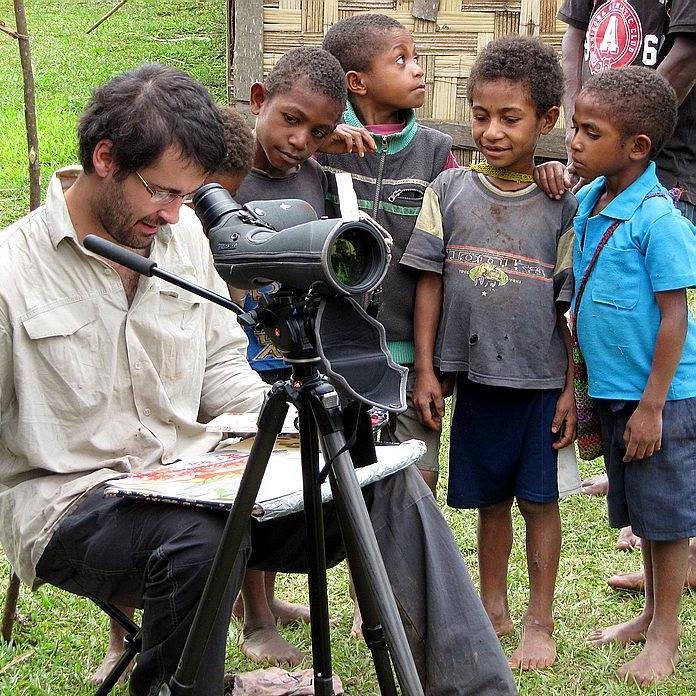
Finally completed my bird of paradise plate! Checked my records, the work started 3 years ago!!! It was a huge task, my biggest bird plate ever. Sill need to scan it properly, then the designwork of the poster can begin! I would like to wish you all Merry Christmas with it!

English

I made it to my first meeting. I went to the "bathroom" a few times that morning and sneaked in a few more minutes of prep. I gave the talk. It was ok but not great. I was deeply embarrassed & disappointed in myself. I still feel guilty about the disrespect to my audience. 11/
GIF
English
On the flip side, my worst seminar visit ever was of my own making. This was years ago. I had been invited by two different departments at the same university, at two different times, to give a seminar. But I didn't pay attention and they ended up being scheduled a week apart. 1/
GIF
Lior Pachter@lpachter
On the flip side, my best seminar visit ever had the host organize a lunch followed by a siesta for me after the talk. I was ushered to an empty dorm room, given 1.5 hours to nap in a comfortable bed, and provided with a stocked fridge in case I was still hungry after lunch.
English
@MaartenvSmeden I’m assuming this is a joke and actually in favour of statisticians, in wuchsen I agree
English

Do not understand why not every PI is hiring a statistician. There is a wealth of data showing that statisticians are very effective in making research slower, more difficult to understand for non-statisticians, analyses more expensive, results less impressive and more boring
English

So the £38,700 income threshold *will* apply to spouses of British citizens who are already in the UK.
They need to satisfy new, higher threshold when applying for extension of their visas.
This is unbelievably low and appalling, even for the Tories.
independent.co.uk/news/uk/politi…
English

I've decided to give away the 2024 edition of my 'Reflecting Forwards' Annual Review template.
Over 300 people have used it, and although I'm biased, I think the questions are pretty darn helpful.
Reply with a 6-word story that sums up your 2023 & I'll DM you the link ;)

English
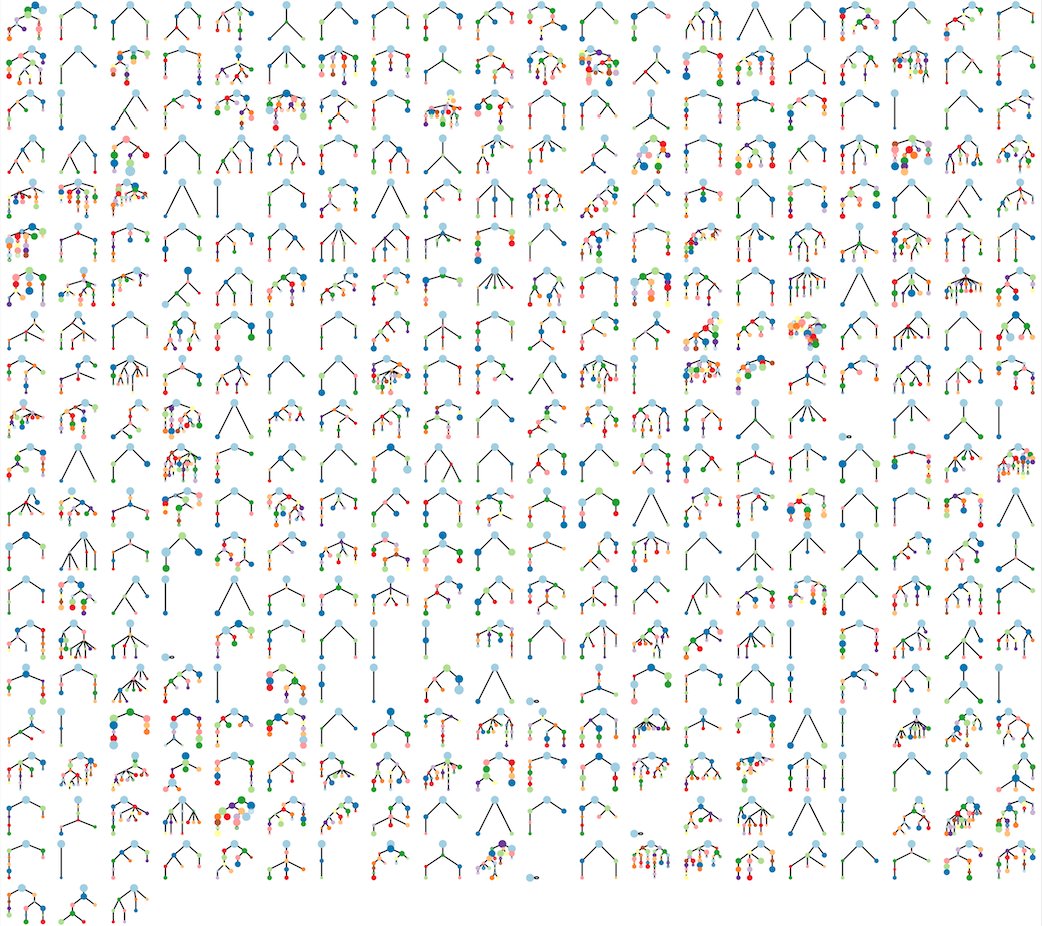
CONIPHER, our method for automated reconstruction of tumour subclonal structure and phylogeny that we used in our recently published TRACERx studies, is now out in Nature Protocols! (nature.com/articles/s4159…). Welcome to the CONIPHER TREEtorial, just in time for Christmas! 🌲 1/n
English
@MHogworth33397 @wil_da_beast630 Probably younger tests give better estimates in the sense that fewer people are trained, but intelligence increases into early adulthood etc., so even if later estimates are more training biased they are likely closer to a persons adult intelligence, or a specific component of it
English

@wil_da_beast630 Younger tests are more accurate measures of true "IQ" - imo
English

One reason I am a "culturalist" on IQ is that my own (tested) IQ has repeatedly changed, following periods of substantial mental training and then pull-back.
As a high school kid in the hood, I got a practice SAT score of about 1100, and first IQ score of 106. By my senior year, I'd gotten at least the test score up to 1360: IQ would have correlated. A few years later, in law school - where people did logic games and cross-words for fun, and we briefed 5-9 cases daily - my IQ tested at 156, and I got a GRE score of close to 1500. Now, I don't go to the "mental gym" daily, and am around 130. Many acquaintances and casual friends, like @Noahpinion, have described almost identical experiences.
These aren't all formal in-office IQ scores, but all come from fairly serious tests like the MENSA boards - and the aptitude tests just are the aptitude tests. To me, arguing that studying the exact things ON IQ or board tests (geometry, vocabulary) won't boost your score seems...nuts.
English
@SpannersReady Depends, the apex is always a bit blurry. I think viewed one way he was ahead, viewed another not. But shows how stupid the current rules are, should
Just be to leave one car width
English
