James Herbert

7.1K posts

James Herbert banner
James Herbert

James Herbert

@Jamesaherbert

Co-director at Effective Altruism Netherlands. Trying to live the good life and helping others along the way.

Amsterdam Katılım Mayıs 2010
2.2K Takip Edilen421 Takipçiler
Sabitlenmiş Tweet
James Herbert
James Herbert@Jamesaherbert·
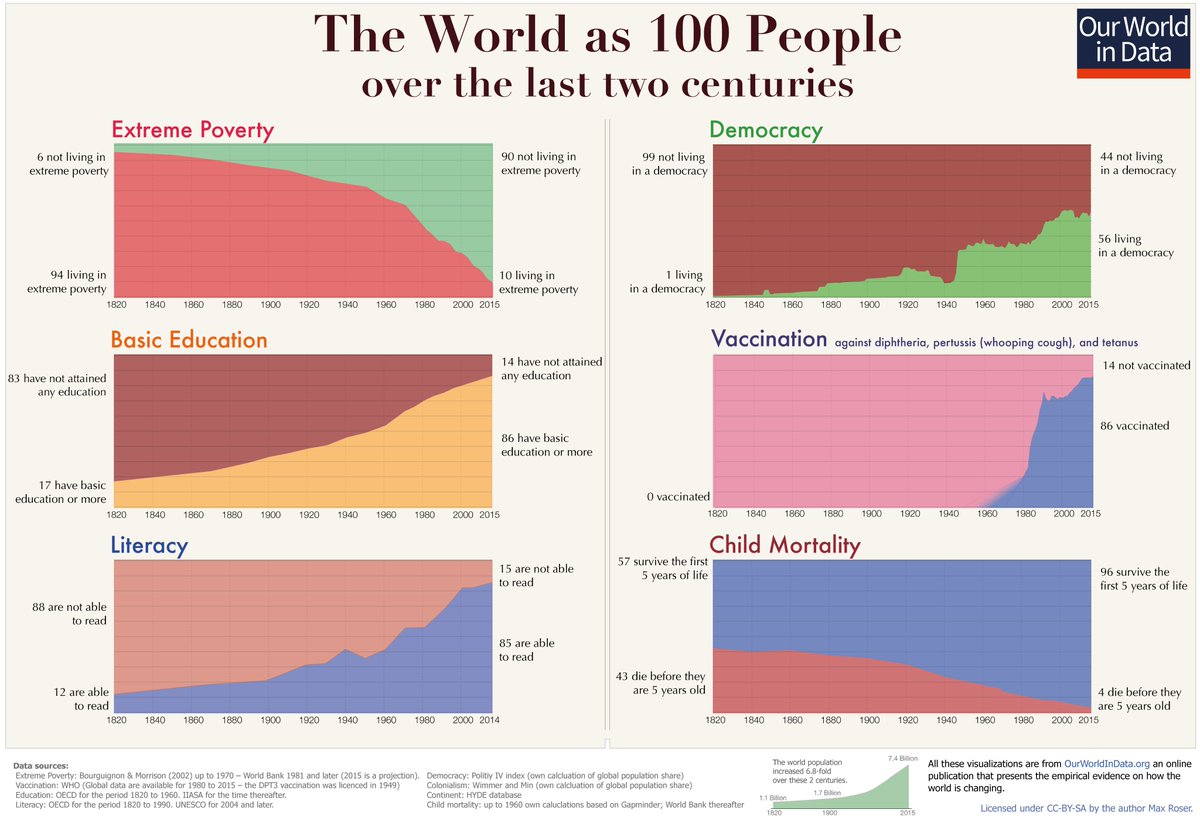
Don't worry if 2016 got you down, check out how much the world has improved since 1820.
James Herbert tweet media
English
2
2
10
0
James Herbert
James Herbert@Jamesaherbert·
What's that Bezos line about how if the numbers don't match the anecdotes, trust the anecdotes? That's how I've always felt about claims that W. Europe is poorer than the US. I've lived in the UK, HU, and NL. I've visited the Bay Area, NYC, and DC. These numbers feel right.
Simon Kuestenmacher@simongerman600

How to read this chart: the typical Belgian earns as much as the typical Californian but works about 24% less. Pretty smart move to calculate such data for the “bottom 95%” only. Worth exploring further. Source: sethackerman.substack.com
English
0
0
0
58
Leila Clark
Leila Clark@leilavclark·
I didn’t realize @mattyglesias was a classical EA —giving 10% to global development causes. Today’s EA has lost me, but *this* is the cause that I found so inspirational thirteen years ago. I wish there were more Yglesiases in the world.
Leila Clark tweet media
English
3
0
25
3K
James Herbert retweetledi
Samuel Hughes
Samuel Hughes@SCP_Hughes·
Nineteenth-century cities grew fast. Berlin’s population grew twenty times, Manchester’s twenty-five times, and New York’s a hundred times. Sydney’s population grew around 240 times and Toronto’s maybe 1,700 times. Between 1833 and 1900, Chicago’s population grew around five thousand times, meaning that on average it doubled every five years. Homes were larger and far more affordable. Vast networks of trams, buses and suburban railways were built. Running water, gas, drains and electricity was retrofitted into old fabric. Despite having been built at breakneck speed, cities in 1914 were pretty good places. How was this achieved? The short answer: vigorous interventionism about streets and drains, state-mandated monopolies for transport and utilities infrastructure, and lightly regulated permissiveness for everything else. worksinprogress.co/issue/urban-ex…
English
42
218
1.2K
375.2K
James Herbert retweetledi
MichaelWhite
MichaelWhite@michaelwhite·
Here’s a good piece by a man who’s seen the Westminster hot house close up and urges journalists to THINK before following the herd. Hysteria doesn’t help any of us theguardian.com/commentisfree/…
English
5
20
55
17.2K
James Herbert retweetledi
Philine Widmer
Philine Widmer@phinifa·
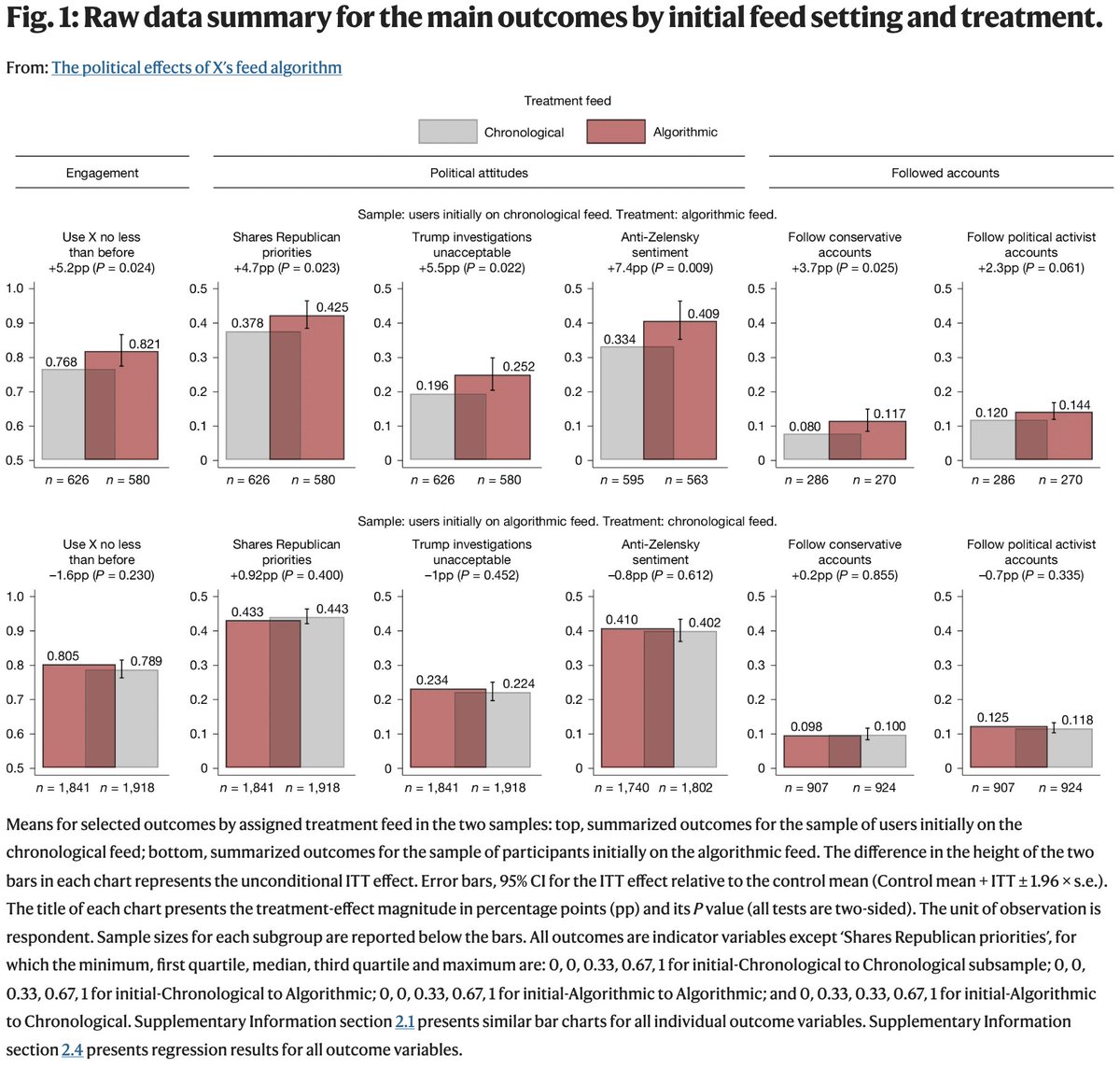
Can feed algorithms shape what people think about politics? Our paper "The Political Effects of X's Feed Algorithm" is out today in @Nature and answers "Yes". nature.com/articles/s4158…
Philine Widmer tweet media
English
42
369
894
290.2K
James Herbert
James Herbert@Jamesaherbert·
@Noahpinion @FleekFuturist But you’re right, within the field of AI safety, the focus has long been on misaligned AI rather than misaligned humans using AI to do bad things. In defence of the AI safety lot, at least they’ve been building a field since the early 2010s. This prescience could prove useful.
English
0
0
0
11
James Herbert
James Herbert@Jamesaherbert·
5/ And here's a helpful graphic to explain what I would like journo's to be reporting on
James Herbert tweet media
English
0
0
0
28
James Herbert
James Herbert@Jamesaherbert·
4/ "Is the government delivering what it promised?" is the most basic political question there is. The lobby should be all over it. It should be at the top of the BBC's website.
English
1
0
0
21
James Herbert
James Herbert@Jamesaherbert·
1/ I'm frustrated by UK political reporting. I have no idea whether the government is on track to deliver its five missions. Nobody ever discusses the targets, the metrics, or what's blocking progress.
English
1
0
0
14
James Herbert
James Herbert@Jamesaherbert·
Maybe I’m just a Starmer simp but: - Dec 2024: Mandelson appointed as Ambassador. - Sep 2025: Leaked emails reveal 2010 contacts; Mandelson sacked for “lying” in vetting. - Feb 2026: More comes out. Everyone calls for Starmer to resign??
English
0
0
0
32
James Herbert retweetledi
Jesús Fernández-Villaverde
Jesús Fernández-Villaverde@JesusFerna7026·
Olivier Blanchard (@ojblanchard1) had a provocative post yesterday about a higher preference of French people for leisure: x.com/ojblanchard1/s… I have learned nearly an infinite amount of economics from Olivier since I was an undergrad, and he came to Spain to present a report on our unemployment problem, so I feel a bit intimidated about pushing back on this idea. I am perfectly happy with the idea that preferences are heterogeneous: some people like leisure more than others. And the goal of economic policy should never be to maximize output, but to maximize welfare. If most people in France enjoy sitting in the beautiful sun of Provence while productivity increases, who am I to question their wisdom? But perhaps one of the aspects of economics that I have always felt uneasy about is how little effort we have put into exploring the extent to which preferences are endogenous. Let me borrow from an old idea of Gary Becker and Kevin M. Murphy (1988) in their classic “A Theory of Rational Addiction,” a beautiful piece of work all students of economics should read. Becker and Murphy consider a model with two consumption goods: one that requires “consumption capital” to be enjoyed and one that does not. Think about fine wine: it takes some time and experience to truly enjoy a good bottle. In comparison, every kid enjoys candy on first taste, no experience required (nor much is gained from repeated tastings). How much an agent invests in “consumption capital” determines whether increases in consumption of the first good in the past will lead to higher consumption of that good in the future. Many leisure activities belong to the former group, not the latter: going to the Opera, appreciating fine food, discovering the charming streets of a world-class city, ... Based on that observation, let me extend Becker and Murphy’s framework to the work-leisure choice by introducing the notion of “leisure capital.” Imagine a situation where, in France, taxes on labor income were high (or, equivalently, wages were lower than they should have been because of misallocation). This made leisure activities preferable in the past because their relative price was low (let’s assume the income effect was small), leading to an increase in the “leisure capital” of the French today and, therefore, in how French society takes advantage of increases in productivity. Now, one could argue that this reasoning is a hyper-sophisticated form of rationality that does not resemble reality. But I have seen this phenomenon at a micro level: very rich people who made their own fortunes are often not very good at enjoying leisure, but their kids are extremely good at it, because they accumulated plenty of “leisure capital” when they were young. More seriously, other observers of society would have found the reasoning natural, because there is a long tradition of analyzing labor supply decisions as embedded in social relations. Let us start with Karl Marx. In historical materialism, consciousness follows the forces of production. When the forces of production generate a lower labor supply (for whatever reason), consciousness will follow through the multiple channels of the superstructure, starting with the creations of the culture industry that favor leisure. Having delightful bistros is an epiphenomenon of a deeper structure of relations of production. In the opposite direction, E.P. Thompson, also from a Marxist perspective (though less orthodox), emphasized that the factory system required clock-based discipline and, therefore, that within a generation or two of the Industrial Revolution, punctuality became a cardinal virtue. Just reverse E.P. Thompson’s analysis. And Émile Durkheim, with his view of how social facts shape the division of labor in society, might have agreed as well. For Durkheim, social facts are “every way of acting which is general throughout a given society, while at the same time existing in its own right, independent of its individual manifestations.” In this perspective, the French have absorbed a particular relationship to work through decades of participation in French economic life, which is not divorced from taxes and regulations. Of course, one could reply that it might be the preferences for leisure that are behind higher taxes and regulations. For example, you can use regulations to move to a better coordination equilibrium: you do not want to take vacations if your spouse at another firm cannot take a vacation at the same time. This is what Max Weber would have called an elective affinity (Wahlverwandtschaft) of leisure and taxes. But that reply only reinforces my point that we probably want to think about preferences and economic policy as a simultaneous system, more than one driving the other. The practical implication is that policy reforms may have effects far beyond what an analysis that takes preferences as given would suggest. If decades of high taxes built up “leisure capital” in France (which fits perfectly with Olivier’s observation that the French are better at leisure), lowering taxes tomorrow will not instantly undo that accumulation. Preferences have their own inertia. But by the same token, sustained policy changes can, over time, reshape what people want, not just what they can afford. The real problem with all this reasoning, though, is that it makes welfare analysis a nightmare! I will leave that task to someone smarter than me.
Jesús Fernández-Villaverde tweet media
Olivier Blanchard@ojblanchard1

The French are not lazy. They just enjoy leisure more than most (no irony here) And this is perfectly fine: . As productivity increases, it is perfectly reasonable to take it partly as more leisure (fewer hours per week, earlier retirement age), and only partly in income.

English
40
201
1.2K
230.6K
James Herbert retweetledi
Gabriel Zucman
Gabriel Zucman@gabriel_zucman·
It has become received wisdom in Brussels and Washington that there is a new “euro-sclerosis”: that the EU economy is lagging the US This view is wrong A little primer on the measurement of productivity – and why reports of the economic death of Europe are greatly exaggerated🧵
English
44
435
1.4K
354.8K
James Herbert retweetledi
Forecasting Research Institute
Forecasting Research Institute@Research_FRI·
We now have the first accuracy results from the largest-ever existential risk forecasting tournament. In 2022, we convened 80 experts and 89 superforecasters for the Existential Risk Persuasion Tournament (XPT), which collected thousands of forecasts in 172 questions across short-, medium- and long-term time horizons. We now have answers for 38 short-run questions covering AI progress, climate technology, bioweapons, nuclear weapons and more. Here’s what we found out: 🧵
Forecasting Research Institute tweet media
English
9
59
167
47.6K