

JavanLu
1.3K posts


De retour après deux semaines passées à Tokyo, Hangzhou, Shanghai, Wuxi et Chongqing.
Entre technologies de pointe, urbanisme maîtrisé, gares impeccables, efficacité collective et culture culinaire d’une richesse exceptionnelle, le retour est assez brutal.
Signalisation confuse dans le RER, dysfonctionnements à répétition, saleté omniprésente… difficile de ne pas ressentir un profond décalage. On a parfois l’impression que notre pays, et plus largement une partie de l’Occident, a renoncé à certaines exigences fondamentales : l’ambition, le respect du collectif, la tradition, la rigueur, le sens de l’effort et la fierté de bien faire.
Ce qui frappe le plus, au fond, ce n’est pas seulement la différence d’infrastructures ou de propreté. C’est la différence d’état d’esprit. Là-bas, on sent encore une forme de projection vers l’avenir, une volonté de construire, d’améliorer, d’avancer.
Ici, trop souvent, on semble s’être installé dans l’illusion confortable de l’oisiveté et de la jouissance immédiate, en oubliant que la prospérité, la beauté et l’ordre ne sont jamais acquis : ils se cultivent, se défendent et se méritent.
À peine rentré, je compte déjà les jours avant mon prochain déplacement. Après quelques heures seulement, j’ai déjà l’impression d’étouffer.
@BetterCallMedhi



Français
JavanLu retweetledi

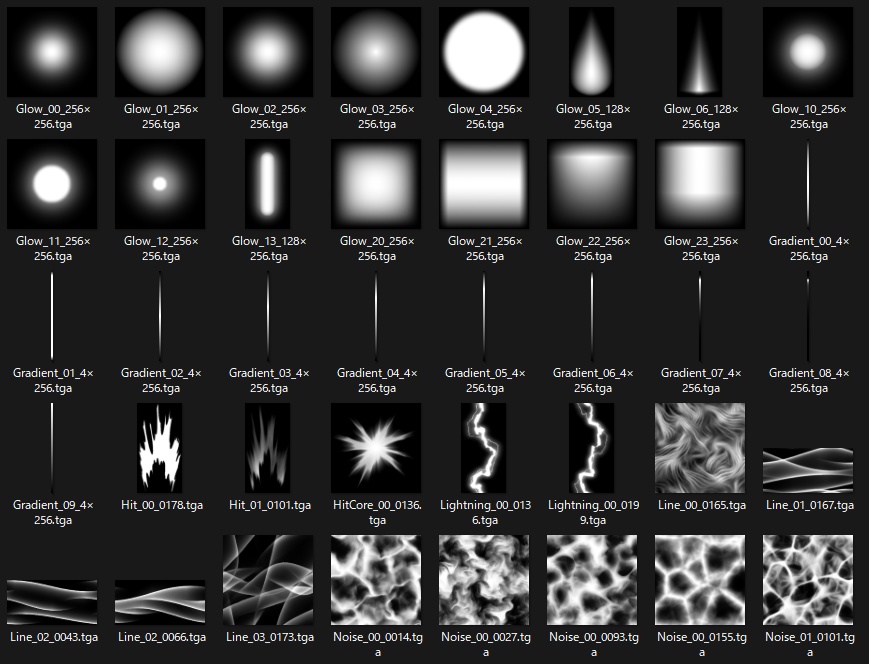
⭐️Booth 商品紹介⭐️
エフェクト用のテクスチャライブラリを無料配布しています!
テクスチャ100種類以上に加え、それを作成した Substance 3D Designer の元データなども内包しています📗
#VFX #Substance3DDesigner
▼ダウンロードページはこちら
booth.pm/ja/items/81967…

日本語

@ricwe123 If it was me. I will shot down the communist China plane. It is a threat to my plane. Therefore in order to protect my crew and assets. I will definitely shot it down. Since then all communist plane will be afraid and grounded. We are not fooling around
English

Let's be real,the arrogance of Western countries knows no bounds.
One day this CNN reporter decides to step on a US navy plane.
He is then flying all the way to the South China Sea and starts complaining;
"Why is this Chinese jet in such a close proximity"
😂😂😂😂
Shen Shiwei 沈诗伟@shen_shiwei
Why does a Dutch warship travel all the way from Europe to approach China's coastline and intrude into China's islands? Weird. 🇨🇳China on May 27 expelled🇳🇱Dutch warship De Ruyter, which illegally intruded into China's Xisha Islands waters in #SouthChinaSea, and repeatedly launched its shipborne helicopter to violate China's territorial airspace. This was confirmed by the Chinese PLA Southern Theater Command.
English
JavanLu retweetledi

How China’s Central Planning Actually Works
There’s a widespread perception in the West that China runs a classic Soviet-style command economy: CPC sits in Beijing and dictates every detail, magically implementing perfect plans across the country.
In reality, the central government lacks the granular knowledge to micromanage every sector. Instead, it sets directional guidelines and strategic priorities. Major initiatives like Made in China 2025, the Belt and Road Initiative, and broader industrial policies are folded into the national Five-Year Plans. These serve as high-level signals rather than rigid production quotas.
The Five-Year Plan Process: Top-Down Meets Bottom-Up
Every five years, China releases a new Five-Year Plan. The preparation is more consultative than many outsiders realize:
•Government bodies (NDRC, ministries, and local governments) actively gather input from industries, state-owned enterprises, private companies, academics, and local officials.
•They synthesize market realities, technological trends, supply-chain bottlenecks, and competitive gaps.
•This bottom-up information is then merged with top-down strategic goals set by the leadership (e.g., technological self-reliance, green transition, or national security priorities).
•The process is often iterative — drafts circulate, feedback is incorporated, and adjustments are made to improve alignment between central vision and on-the-ground feasibility.
The result is a plan that is ambitious yet somewhat realistic, functioning more like a national strategy document than a detailed engineering blueprint.
How Companies Respond: Alignment, Financing, and “Overcapacity”
Once the Five-Year Plan is announced and publicized, companies across China study it carefully. Executives and strategists look for priority sectors, technologies, and goals.
•If the plan emphasizes electric vehicles (EVs), semiconductor independence, or new-energy equipment, dozens of companies — state-owned and private — incorporate those priorities into their own corporate strategies.
•When these aligned companies seek bank loans, land approvals, or regulatory support for expansion, their plans match government priorities, making financing and permissions significantly easier to obtain.
•The outcome: rapid scaling. Multiple players rush into the same strategic sector, pouring in capital and building capacity quickly.
Western observers often label this “overcapacity.” In China’s system, it is an intentional feature of directed competition. Intense domestic rivalry follows: price wars, rapid iteration, cost-cutting, and technological improvement. Weak players exit or consolidate. The survivors emerge extremely competitive — hardened by brutal home-market competition, with economies of scale and refined supply chains.
This is exactly why Chinese firms in EVs, solar, batteries, and other targeted sectors have become formidable global competitors. The central government doesn’t pick individual winners in advance; it sets the direction and lets fierce market-like competition (within a guided framework) determine the victors.
Bottom Line
China’s model is neither pure central planning nor unfettered free markets. It is coordinated industrial strategy — directional guidance from the center, massive bottom-up execution, and Darwinian competition to sort the strong from the weak. This approach has clear downsides (inefficient capital allocation in some cases, debt buildup, environmental costs), but it also explains the speed at which China has moved up global value chains in strategic industries.
Understanding the actual mechanics — rather than cartoon versions of “central planning” — is essential for anyone analyzing China’s economy or crafting policy responses.

English





@IndianGems_ 感谢科技掌握在文明手中,相比欧洲那群只会罢工的白左环保主义者来说,中国不知道强了多少。中国已经是绿色能源使用量最大的国家,不知道欧美有什么资格指责中国不环保
中文

🇨🇳China has planted about 78 billion trees across its vulnerable northern regions.

English
JavanLu retweetledi

China’s message on the next UN secretary-general is clear:
The UN does not need another rubber stamp for empire.
It needs someone committed to the UN Charter, capable, impartial, responsible, and willing to defend the interests of developing countries.
Because a real international order should not allow one country to kidnap foreign presidents, assassinate foreign leaders, bomb sovereign states at will, or turn “security” into a license to erase entire peoples.
A functioning global institution should not stand by while Gaza’s homes are shattered, mothers are killed, children are maimed, and genocide is dressed up as self-defense.
The UN was created to prevent the strong from deciding the fate of the weak.
If it cannot do that, then it is not order.
It is empire with a conference room.
The world does not need another secretary-general trained to bow when empire enters the room.
It needs someone with a spine.
𝘊𝘰𝘳𝘳𝘪𝘯𝘦@OopsGuess
China’s message at the UN is very clear: The United Nations must be defended, revitalized, and strengthened — because the very institution meant to uphold the postwar international order has been severely weakened by the country that once helped build it. That is the irony. The US helped create the UN system after World War II. Now it treats international law as optional, the Security Council as inconvenient, sovereignty as negotiable, and other nations’ lives as bargaining chips. As American power declines, its empire becomes more reckless. That is why China is calling not for a new hegemon, but for a more balanced, restrained, and multipolar order — one where no single country can decide who lives, who dies, who develops, and who must be destroyed. China understands something very old: Power without restraint always runs toward the cliff. A world governed by one empire is not order. It is domination with paperwork. What China is proposing is not submission to China. It is the restoration of basic dignity to all nations — large or small, rich or poor, powerful or vulnerable. A community with a shared future for humanity means exactly this: No country should be above the world. No people should be beneath it.
English

JavanLu retweetledi

Dans le manifeste "techno-optimiste" de Marc Andreessen, il y a une phrase qui m'a marqué :
"Our enemies are not bad people – but rather bad ideas."
Nos ennemis ne sont pas des mauvaises personnes. Ce sont des mauvaises idées.
Prenons Jancovici. L'homme est brillant, sincère, travailleur. Il ne se lève pas le matin en se disant qu'il va nuire à l'humanité. Mais l'idée qu'il porte la décroissance, le rationnement, la frugalité érigée en horizon civilisationnel est une idée profondément destructrice. Elle prend des esprits brillants et les transforme en commissaires politiques d'un futur appauvri.
Et le plus fascinant, c'est ce que cette idée fait aux gens qui l'adoptent.
Dans mon entourage, une grosse partie de mes amis est sur cette ligne décroissantiste, avec tout le package qui va avec. L'argent c'est mal mais ils en veulent. Il faut moins prendre l'avion mais ils rêvent de voyager partout. Il faut consommer moins mais ils ne renoncent à rien de ce qu'ils aiment vraiment.
Et tous ont un point commun : ils sont déprimés. L'un d'eux m'a même confié qu'il était sous antidépresseurs.
Ce n'est pas un hasard. C'est mécanique.
Quand tu crois que ton désir de vivre, de créer, de t'élever est moralement suspect tu te détruis de l'intérieur. Tu passes ta vie à t'excuser d'exister. Tu vis dans la dissonance permanente entre ce que ton corps veut (plus, mieux, plus loin) et ce que ton idéologie t'ordonne (moins, sobre, immobile).
D'où ma théorie :
Quand on pense quelque chose de fondamentalement faux décroissance, communisme, extrémisme religieux (de tout ordre) ce n'est qu'une question de temps avant que ça devienne vraiment destructeur.
D'abord pour soi. Puis pour les autres.
Les mauvaises idées tuent. Lentement chez ceux qui y croient, brutalement chez ceux qui les subissent.
C'est pour ça que la bataille des idées n'est pas un luxe d'intellectuel. C'est la bataille la plus importante de notre époque.
Français
@Ryan_tt1019 @thecyrusjanssen @xdd18874?si=q7R56LbLsM-_fIrH" target="_blank" rel="nofollow noopener">youtube.com/@xdd18874?si=q…
QME


Today I’m exploring one of China’s most rural villages, the Tianlong Tunpu Ancient Town 🇨🇳
This place is incredible! Most the house in this town are built out of stone and have stood here for over 600 years 🤯
I’ve travelled to many cities in China, but it’s always amazing to get out outside of the major cities and experience the countryside life 🏔️
Feel like I’ve travelled back in time, watching these elderly men enjoy a smoke on the side of the river
English


@Options_IndiaAB 我家乡在天津一个县城,现在我生活在上海,这两个地方这些年都在发展和进步,我相信中国的其他任何地方都有在进步,甚至沙漠都长出了植物!印度也是伟大的文明,找到正确的方向,一起进步吧!
中文

I recently spent 2 weeks in China.
6 cities: Shanghai, Beijing, Xi’an, Zhangjiajie, Chongqing and Chengdu.
I went there with curiosity.
Like many Indians, I had heard a lot about China through media, social media and conversations. I expected to see progress, maybe discover some business ideas, and understand what the country is actually building.
I came back with a very uncomfortable feeling.
Not because I found a business idea for myself.
But because I saw 100 things that governments can do when infrastructure, tourism, transport, urban planning and civic systems are treated seriously.
I travelled within China by flights, trains, cars and local transport. The infrastructure was honestly stunning.
Clean cities. Smooth roads. High-speed trains. Well-managed traffic. Public spaces that actually feel designed for people. Tourist destinations that are built, maintained and promoted like national assets.
And then I kept thinking about India.
We keep comparing ourselves to China. Our media keeps telling us how India is catching up, how China is restrictive, how we are better in so many ways.
After spending time there and speaking to people, I realised how much of that narrative is just comfort food.
China is not perfect. No country is.
But on infrastructure, execution, tourism, civic discipline and quality of urban life, they are not 5 years ahead of us.
They are decades ahead.
The saddest part for me was the currency.
Everything felt expensive. Not because China was insanely expensive, but because the rupee has weakened so much that even normal spending starts feeling heavy. As an Indian taxpayer, that genuinely hurt.
We pay taxes. We work hard. We talk about becoming a global power.
But where is the quality of life?
Where is the civic sense?
Where is the infrastructure that makes daily life easier?
Where is the tourism vision beyond religious tourism?
I met travellers from other countries who were excited to visit China because they wanted to see its progress. When I asked about India, many had no real desire to visit. Not out of hate. India simply was not on their aspirational travel list.
That should bother us.
Even the so-called “closed internet” surprised me. We are told people there are missing out because they don’t use Google, Instagram, WhatsApp or Facebook.
But China has built its own digital ecosystem. Payments, maps, transport, messaging, shopping, everything works inside their own infrastructure. People did not seem to feel deprived. They seemed adapted.
Again, this is not a hate post.
I love India. That is exactly why this trip bothered me.
Patriotism cannot only be about saying we are great.
Real patriotism is having the courage to admit where we are falling behind.
China made me realise one thing very clearly:
India’s potential is not the problem.
Execution is.
And unless we stop comforting ourselves with comparisons and start demanding better infrastructure, better governance, better tourism, cleaner cities and a higher quality of life, we will keep celebrating the idea of progress instead of actually living it.
English