Javish

105 posts

Javish

Javish

@Javish35

Co-founder https://t.co/9A07hIIsOb. More than 30 years of experience in the IT and Pharma industry. Crypto Insights.

Katılım Temmuz 2011
34 Takip Edilen12 Takipçiler
Javish
Javish@Javish35·
Day 7 - More Indicators Don’t Mean Better Decisions
Javish@Javish35

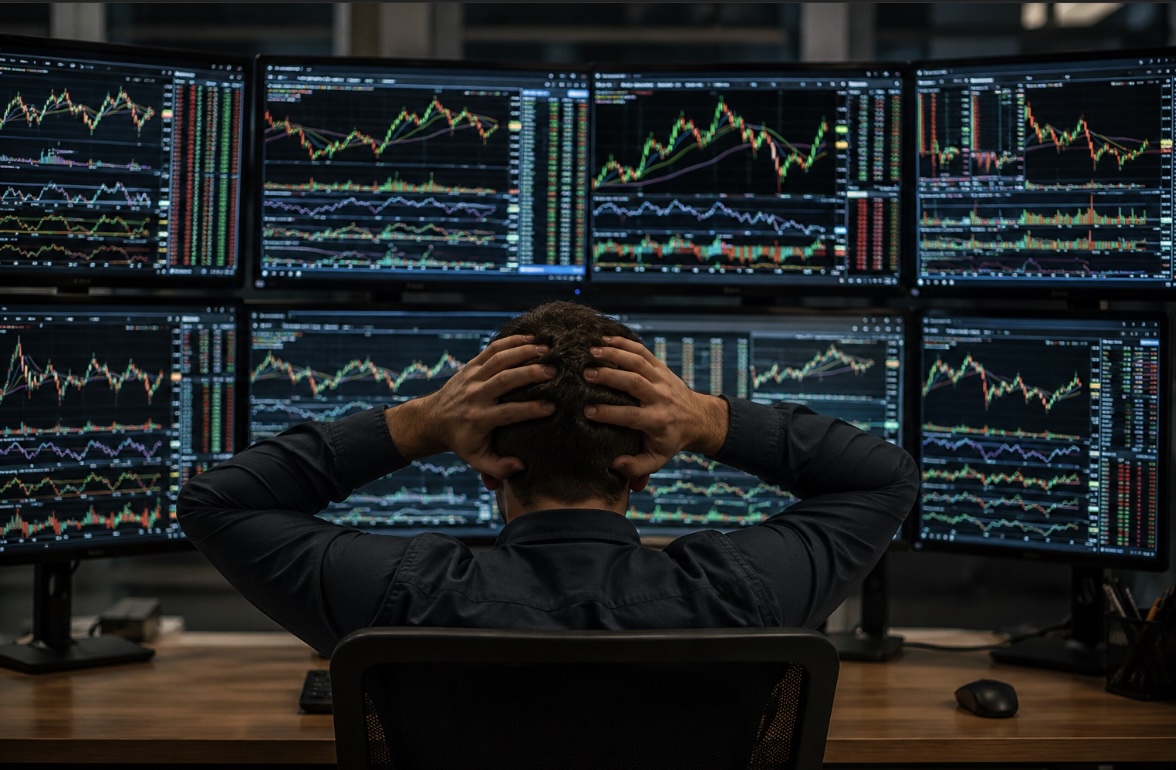
Day 7 - More Indicators Don’t Mean Better Decisions There was a phase in my trading journey where my charts looked extremely sophisticated. RSI. MACD. Bollinger Bands. Moving averages across multiple timeframes. The screen looked less like a chart… and more like an aircraft cockpit. And honestly, it made me feel confident. I thought the more indicators I added, the more accurate my decisions would become. But something strange started happening. Every indicator was telling me something slightly different :- - RSI said the asset was overbought. - MACD still looked bullish. - Moving averages suggested continuation. - Bollinger Bands hinted exhaustion. So instead of becoming clearer… I became slower and more hesitant. By the time I finally entered a trade, the move was often already gone. One day, out of frustration, I removed almost everything from my chart. No complicated setup. Just price and volume. At first, it felt uncomfortable. Almost like I was trading with less information. But over time, something unexpected happened. - My thinking became clearer. - My execution became faster. - And my decisions became calmer. Now, this doesn’t mean indicators are useless. They absolutely have value. But indicators are meant to support decision-making… not replace it. And adding more indicators doesn’t automatically improve clarity. Sometimes it only increases noise. That’s when I realized:- I didn’t have an information problem. I had a clarity problem. 👉 Clarity doesn’t come from adding more. It comes from removing what doesn’t matter. #CryptoLearnings @humbexchange

English
0
0
0
10
Javish
Javish@Javish35·
Day 7 - More Indicators Don’t Mean Better Decisions There was a phase in my trading journey where my charts looked extremely sophisticated. RSI. MACD. Bollinger Bands. Moving averages across multiple timeframes. The screen looked less like a chart… and more like an aircraft cockpit. And honestly, it made me feel confident. I thought the more indicators I added, the more accurate my decisions would become. But something strange started happening. Every indicator was telling me something slightly different :- - RSI said the asset was overbought. - MACD still looked bullish. - Moving averages suggested continuation. - Bollinger Bands hinted exhaustion. So instead of becoming clearer… I became slower and more hesitant. By the time I finally entered a trade, the move was often already gone. One day, out of frustration, I removed almost everything from my chart. No complicated setup. Just price and volume. At first, it felt uncomfortable. Almost like I was trading with less information. But over time, something unexpected happened. - My thinking became clearer. - My execution became faster. - And my decisions became calmer. Now, this doesn’t mean indicators are useless. They absolutely have value. But indicators are meant to support decision-making… not replace it. And adding more indicators doesn’t automatically improve clarity. Sometimes it only increases noise. That’s when I realized:- I didn’t have an information problem. I had a clarity problem. 👉 Clarity doesn’t come from adding more. It comes from removing what doesn’t matter. #CryptoLearnings @humbexchange
Javish tweet media
English
0
0
1
16
Javish
Javish@Javish35·
Day 6 — Missing a Trade is Cheaper Than a Bad Trade Early in my trading journey, I used to believe that every big move needed a response. If the market moved and I didn’t participate, it felt like I had failed to capitalize on an opportunity. One day, I was tracking a token that had been consolidating for weeks. Finally, the breakout came. Clean. Strong. Convincing. I watched it move… without entering. My entry never came. The risk-reward no longer made sense to me. But the token kept climbing. 10%. 20%. 30%. And with every candle higher, the regret grew stronger. By the end of the day, I felt terrible. Not because I lost money. But because I had “missed” money. The next morning, determined not to repeat the mistake, I forced a trade on another token showing similar momentum. This time I entered quickly. No patience. No proper setup. Just the emotional need to participate. Within hours, the trade reversed sharply. And suddenly I understood something. The pain of missing a good trade is emotional. The pain of taking a bad trade is financial. One disappears quickly. The other stays with you. That day changed the way I look at missed opportunities. Now, when I miss a move, I don’t chase the next thing just to compensate for it. Because not every missed opportunity needs a reaction. 👉 Missing a trade is frustrating. Taking a bad trade is expensive. #CryptoLearnings @humbexchange
Javish tweet media
English
0
0
0
13
Javish
Javish@Javish35·
Day 5 - Fast Trades Are Usually Late Trades I used to believe that speed was an advantage. If I saw a move, I wanted to act immediately. Get in before it “runs away”. So I moved fast. What I didn’t realize was this: If I’m seeing it now, others have already seen it earlier. And if others are already in, I’m not early. I’m late. And late entries come with poor risk. That changed how I approached trades. Now I ask: Am I really early… or just reacting quickly? 👉 Speed feels smart. Timing is what actually matters. #CryptoLearnings @humbexchange
Javish tweet media
English
0
0
0
18
Javish
Javish@Javish35·
Day 4 - If you don’t define your risk, the market will define it for you One of the biggest mistakes I made early in trading was thinking that risk begins after you enter a trade. It doesn’t. Risk begins the moment you decide to enter without knowing where you’re wrong. I remember a trade very clearly. A token was moving aggressively. Strong momentum. Everyone was talking about it. I entered quickly because I didn’t want to miss the move. Looking back, FOMO was making the decision - not me. The plan in my head was simple: “If it goes up, I’ll book profit.” But I had no plan for the opposite scenario. No stop loss. No invalidation. No predefined risk. So when the trade started going against me, I did what most beginners do. I held. Then I justified the hold. Then I averaged down. Then I hoped. What started as a small manageable loss slowly became a large emotional decision. And that’s when I understood something important: The market is not dangerous because it moves. It’s dangerous when you enter without defining what happens if you’re wrong. Now, before every trade, I ask one question first: “Where does this trade fail?” If I cannot answer that clearly, I don’t enter. 👉 If you didn’t define your risk before entering, you already took too much. #CryptoLearnings @humbexchange
Javish tweet media
English
0
0
0
125
Javish
Javish@Javish35·
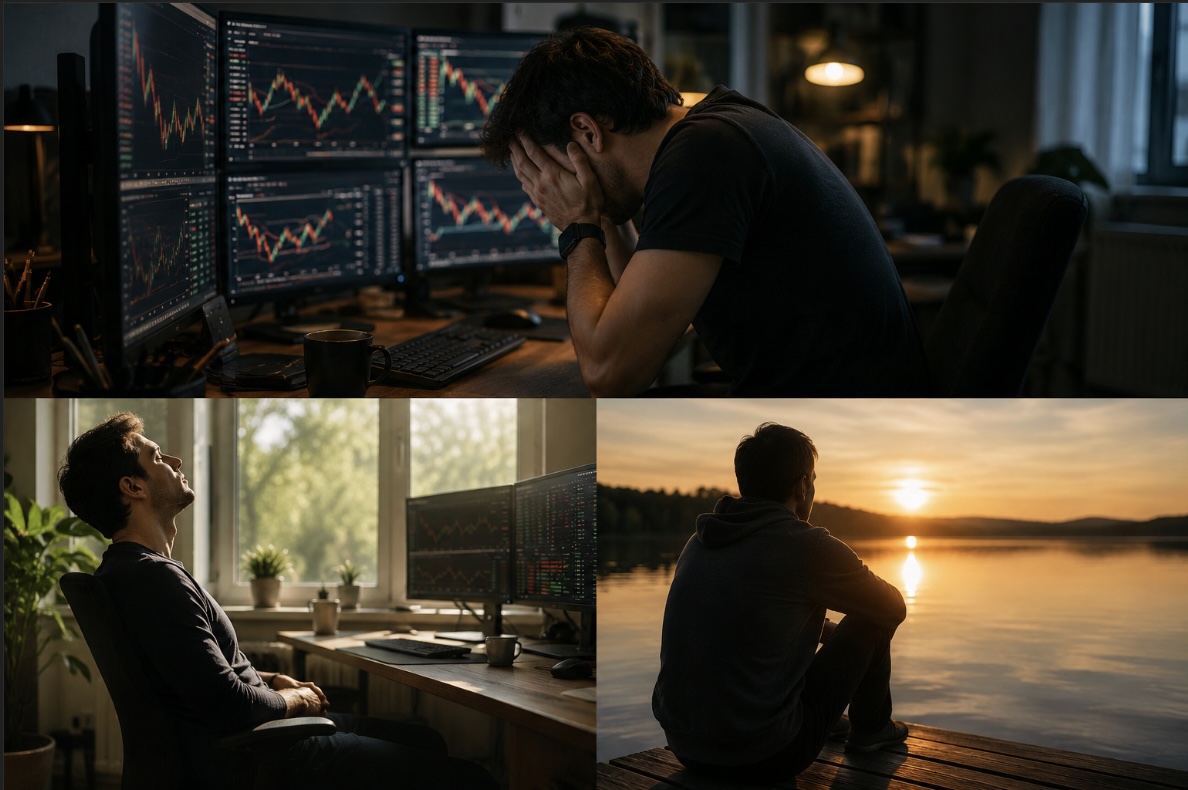
Day 3 - You Don’t Need to Trade Every Day In the beginning, I felt the need to always be in a trade. If I wasn’t trading, I felt like I was missing out. Like I wasn’t “active enough”. So I traded. Often. Sometimes Unnecessarily. What I didn’t realize then: - The market doesn’t reward participation. - It rewards precision. Some of my worst trades came from boredom, not opportunity. Over time, I learnt to sit out. And strangely, that improved my results more than trading more ever did. That made me realise that: 👉You don’t make money by trading more. You make money by trading better. #CryptoLearnings @humbexchange
Javish tweet media
English
1
0
1
78
Javish
Javish@Javish35·
Day 2 - Faster is not always Better There was a phase early in my trading journey when I believed speed was everything. Markets were moving fast. Twitter was buzzing. Charts were breaking out. And somewhere in my head, I had internalized a simple rule: THE FASTEST TRADER WINS One day, I saw a token breaking out. Clean chart. Strong volume. Everyone seemed to be talking about it. I didn’t think much. I just acted. Entered quickly. Felt good about it. For about 30 seconds. Then the price reversed. Not slowly. Violently. What I had entered into wasn’t a breakout. It was exhaustion. I exited with a loss. Not massive. But enough to sting. Later, I went back to the chart. Everything I needed to see… was already there. The volume spike was unsustainable. The move was extended. There was no proper consolidation. But I hadn’t PAUSED. I had REACTED. That day, I learnt something fundamental. The market doesn’t reward speed. It rewards clarity. Speed makes you feel smart. Clarity makes you money. Since then, I’ve tried to build a simple habit. Before every trade, I ask myself: “Am I early… or am I just late and fast?” That small pause has saved me more than any indicator ever has. #Cryptolearnings @humbexchange
Javish tweet media
English
0
0
0
86
Javish
Javish@Javish35·
Day 1 - The Market Owes You Nothing When I first started trading, I believed something without realizing it. That if I studied enough… watched enough charts… put in enough effort… the market would eventually reward me. It felt fair. It wasn’t. The market doesn’t know you. It doesn’t track your effort. And it certainly doesn’t owe you outcomes. That realization was uncomfortable. But it changed how I approached everything. I stopped expecting results. And started focusing on decisions. 👉 The market doesn’t owe you anything. You earn your place through discipline. #CryptoLearnings @humbexchange
Javish tweet media
English
0
0
1
92
Javish
Javish@Javish35·
Over time, trading teaches you things. - Not from books.
- Not from courses.
But from decisions, their consequences and experience. Some lessons are small. 
Some are expensive. 
But all of them stay. Over the years, I’ve made my share of mistakes.
- Assumptions that didn’t hold.
- Trades that didn’t make sense in hindsight.
- Decisions that looked right… until they weren’t. And slowly, patterns started emerging. Not just about the market, but about how we think, act and react within it. This series is a collection of those learnings. - Simple observations.
- First principles.
- Things I wish I understood earlier. No noise. No predictions. No shortcuts. Just one learning a day. Learnings from a Crypto Trader - Day 1 starts tomorrow. Follow me if it makes sense. #LearningsFromACryptoTrader @humbexchange
English
0
0
0
27
Javish
Javish@Javish35·
@humbexchange brings to the crypto trading community HUMB Affiliate program. Join now.
HUMB Africa@HumbAfrica

THE WAIT IS FINALLY OVER! @Humbexchange is opening its doors to skill traders with community. Are you ready to make extra income while trading? We've built a pathway Which provides that opportunity for you. Watch the video below & follow due process to be a part of HUMB. Stay HUMB'le 💜

English
0
0
0
9