Jay Dugger
15.1K posts

Jay Dugger
@JayDugger
Sometimes the delete key serves best.

Katılım Mart 2007
1.4K Takip Edilen581 Takipçiler
Sabitlenmiş Tweet
Jay Dugger retweetledi

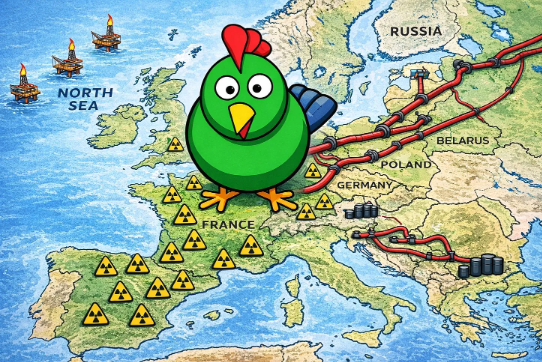
Europe Forgot the Lesson the 1970s Oil Shocks Once Taught
The continent answered with reactors, pipeline diplomacy, and offshore drilling, then spent three decades neglecting and dismantling everything it had built. a mega🧵inspired in part by my conversation with Doomberg.
The European response to the OPEC embargo was an impressive mobilization that moved decisively and pragmatically taking advantage of the unique conditions available throughout the bloc.
France moved decisively launching the The Messmer Plan in direct response to the oil shock. It remains the fastest large-scale nuclear buildout in history.
France had little domestic oil, but it had everything else the program required: a large corps of state-trained engineers produced by the Grandes Écoles, heavy industrial capacity rebuilt under the postwar dirigiste economic model, and a nationalized utility in Électricité de France (EDF) already accustomed to executing at the direction of the state rather than waiting on market incentives.
Its political class drew the logical conclusion: electrify aggressively around a domestic nuclear base, using a standardized reactor designs that a purpose-built supply chain could replicate at pace.
Space heating, water heating, rail and significant portions of industrial process heat were shifted onto the grid as the fleet came online, deliberately substituting domestic electrons for imported hydrocarbons across as much of the economy as the technology of the era allowed.
The result over roughly twenty years was 54 operating reactors, an electricity system generating around 75 percent of its output from nuclear, net electricity exports to neighbours who had made different choices, and as an unintentional side effect a per-capita carbon footprint in the power sector that remains among the lowest in the developed world.

English

ok so this is going viral. I’m locking in.
Let’s do a caffeinated all-nighter to give the people what they want!
JB@jamie247
Just spent $500 in compute vibe coding my own Civilisation RPG but with unbounded natural language diplomacy.. meet Uncivilised. ask me anything.
English

Sigh...
I will not be able to resist.
Oh, well.
There will be a SMAC mod for it soon enough
JB@jamie247
ok so this is going viral. I’m locking in. Let’s do a caffeinated all-nighter to give the people what they want!
English
Jay Dugger retweetledi

Jay Dugger retweetledi

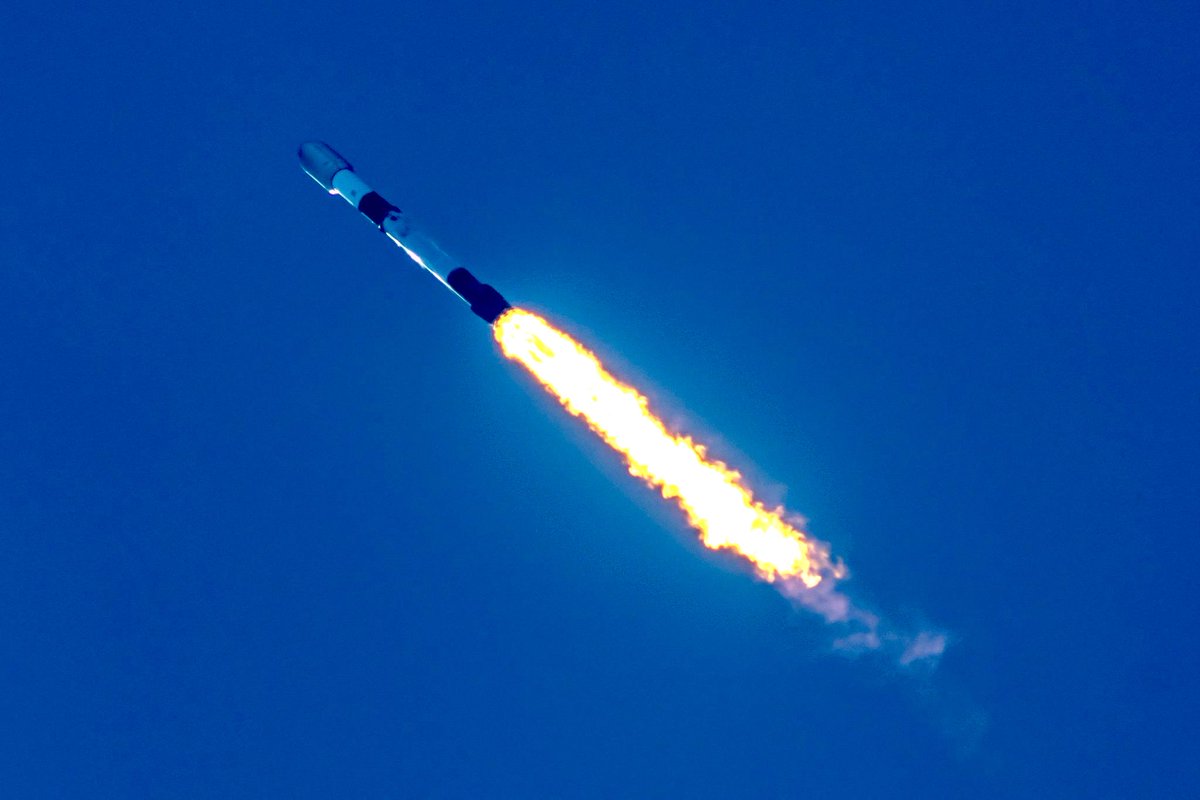
Yesterday SpaceX launched 29 more Starlink satellites from Florida.
Nobody cared. Routine. Another Tuesday.
Here is what actually happened.
Satellite number 10,074 entered an orbit where 300,000 autonomous collision-avoidance maneuvers were executed last year alone. Not by humans. By onboard machine learning that screens conjunction data from 30 million object-transit observations per day, computes probability in real time, and fires ion thrusters if risk exceeds one in a million. The industry standard is one in ten thousand. SpaceX set its threshold 1,000 times stricter and then automated the entire thing.
Three hundred thousand maneuvers. That is 820 per day. Forty per satellite per year. Every single one decided and executed by AI faster than a ground controller could open the alert email.
This is Tesla Full Self-Driving logic running in vacuum at 7.8 kilometers per second.
SpaceX did not stop there. In January they launched Stargaze, a space situational awareness network built on the star trackers already aboard every Starlink satellite. Thirty million observations daily, conjunction screening delivered in minutes instead of hours, and they gave the data away for free to every operator on Earth. They just made themselves the air traffic control system for low-Earth orbit and charged nothing because the real product is not the data. The real product is the standard.
Now connect this to last week.
Terafab breaks ground in Austin. One terawatt per year of AI compute. Eighty percent allocated to space. D3 chips designed to run hotter in vacuum where radiative cooling is free. Satellites with 100-kilowatt solar arrays scaling to megawatt. Optimus robots replicating from raw materials. The Dyson Swarm bootstrap.
Every analyst covering Terafab is modeling chip yields, capital costs, and process nodes. Not one of them is asking the question that determines whether any of it works: how do you manage ten thousand satellites without a single collision, and then scale that to ten million, and then to five billion?
The answer already exists. It launched its 300,000th maneuver months ago. It processes 30 million observations every 24 hours. It operates at a collision-probability threshold three orders of magnitude beyond what any government or competitor has achieved. And it improves with every satellite added because more nodes means more eyes means better models means safer density.
This is the orbital operating system for a Kardashev II civilization and it is already running.
The Hormuz crisis proved that terrestrial supply chains are molecule-dependent and fragile. The Terafab announcement proved that Musk intends to move compute off-planet. But neither of those matter if the orbital environment becomes a debris field. The collision-avoidance AI is the gate. Without it, every satellite launched is a lottery ticket for Kessler syndrome. With it, density becomes self-reinforcing instead of self-destroying.
Nobody is covering this because it is not a product announcement. It is not a keynote. It is infrastructure so foundational that it has become invisible, the way TCP/IP became invisible the moment the internet worked.
SpaceX did not just build a satellite constellation. They built the nervous system of orbital civilization and trained it on 300,000 real-world decisions before anyone realized what they were looking at.
The rockets are visible. The chips are headline news. The AI keeping ten thousand objects from destroying each other in silence at eight kilometers per second is the actual breakthrough.
And yesterday they added 29 more nodes to the network.
Routine.

SpaceX@SpaceX
Falcon 9 launches 29 @Starlink satellites from Florida
English

TIL: ∃ an #OSR element in the Japanese #TTRPG community! I knew about Call of Cthulhu's popularity, but this pleasantly surprised me.
FYI usual suspects & @rosspayton
English
Jay Dugger retweetledi


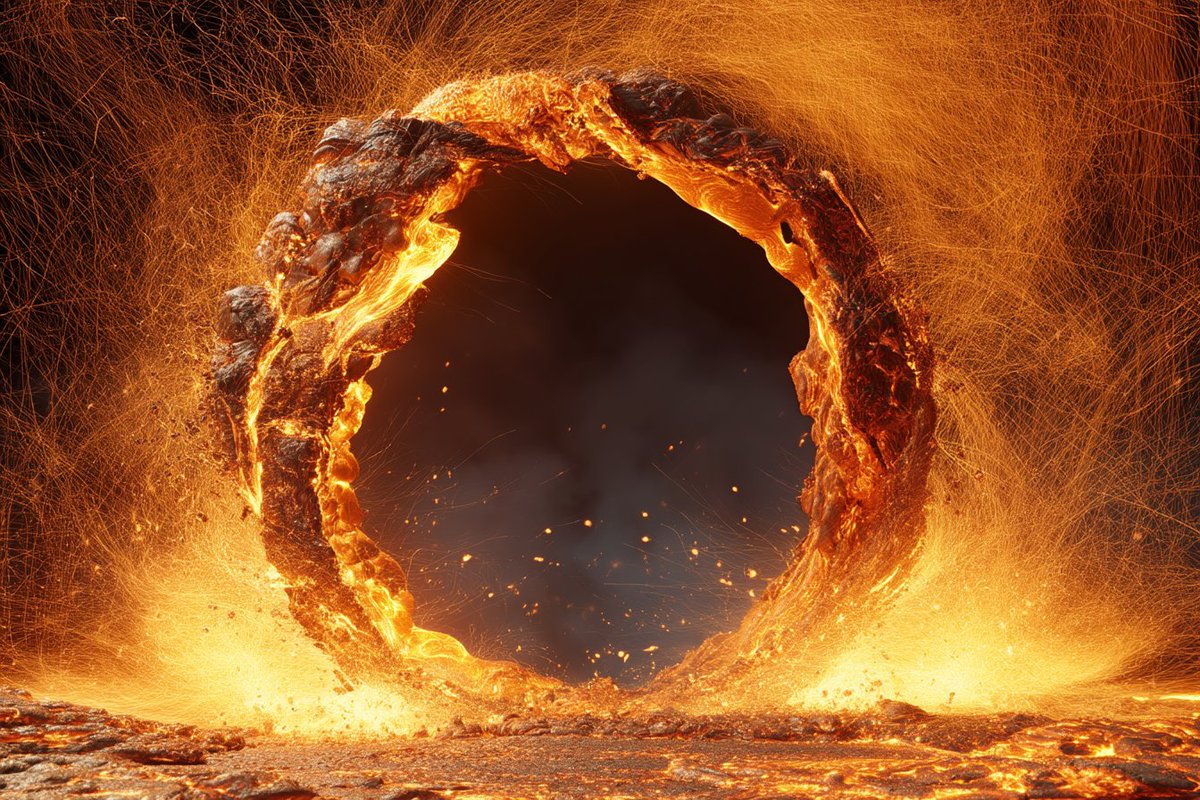
🎨 VOLCANIC FLOURISH 🎨
Prompt MIDJOURNEY V8 :
[SUBJECT] framed within a Volcanic Eruption Flourish, highlighting molten lava and explosive bursts of energy. Apply motion blur to convey the dramatic flow of the eruption, using fiery [COLOR1] and [COLOR2] tones engulfing the composition in heated chaos
Check ALTS


English
Jay Dugger retweetledi

Opawlia by Susan Herbert. England. c. 1990s–2000s. Watercolor and bodycolor on paper. From the Pre-Raphaelite Cats series. Collection: Private collection / The Estate of Susan Herbert.
Susan Herbert was born in England on September 30, 1945. To make ends meet, she spent years working in the box offices of various theaters, from the Royal Shakespeare Theatre and the London Coliseum to the Theatre Royal in Bath. She would later describe this period as a time of "fragmentary and dreadful temporary jobs," yet she devoted every spare minute to painting. In 1973, she was accepted into the prestigious Ruskin School of Drawing and Fine Art at the University of Oxford. Her first book, The Cats Gallery of Art, was published by Thames & Hudson in 1990, and was subsequently followed by a diverse range of series, including Pre-Raphaelite Cats, Shakespeare Cats, Opera Cats, Movie Cats, Impressionist Cats, and Medieval Cats.

English
Jay Dugger retweetledi