

Jay Vardhan Singh
6.3K posts
Jay Vardhan Singh
@Jayvtweets
PhD Candidate, Indian History @ JNU. I also make videos on Indian History. https://t.co/2okn7Zyvrs
Madhyadeśa Katılım Haziran 2021
58 Takip Edilen12.6K Takipçiler
A more comprehensive comparison of temples and their heights.

Yadu@Yaduvam
Height comparison of some iconic structures in India.
English
Meet Henry George Raverty, a British Indian Army major, who first made his career in the military and gained first-hand knowledge of Punjab during the Anglo-Sikh Wars.
In 1849, he authored what may be India’s first district gazetteer (Peshawar). It was during this time that he began to learn Pashto, and learnt it so well that he wrote a grammar and a dictionary of it, and, to keep poetry enthusiasts happy, also translated some Afghan poetry.
Then he thought, why not try some Persian, and gave to us a translation of Tabakat-i-Nasiri, which people like me still use to this day.
And if this was not enough, he went on to write a report investigating the ‘Mihran’ river mentioned in Arab sources.
English
@Gulzaar_e_farsi padh ke mujhe bhi yaad aaya "unchi dukaan fike pakwan"
हिन्दी
Still in the process of finding a “perfect” pen that suits my handwriting. Pencils, meanwhile, have been quietly getting it right since primary school days.
English
@Jayvtweets अगर तुम्हारे इतने फॉलोवर न होते, और सोशल मीडिया पर इतनी इज़्ज़त न होती तो हम इस ट्वीट के जवाब में एक मुहावरा से देते 😂
हिन्दी
You can see Allauddin Khilji's sword in Mumbai.
Mumbai Heritage@mumbaiheritage
Hit me with the craziest Mumbai history facts you know.
English

Jay bhaiya ka video bahot time baad aaya hai. Ab aaj ke boring din mai kuch mazedaar dekha jaayega 🫡
Jay Vardhan Singh@Jayvtweets
Appeared on Vaad Podcast to talk about Ancient Iranian History. Do listen. youtu.be/qr8Nt3OI5Kg?si…
हिन्दी
@Anushervanef have read it partially, but it doesn't cover pre modern history of Iran.
English

For those looking for a book that provides a good overview of Iranian History read this one

Jay Vardhan Singh@Jayvtweets
Appeared on Vaad Podcast to talk about Ancient Iranian History. Do listen. youtu.be/qr8Nt3OI5Kg?si…
English
From my review of Avik Chanda’s Dara Shukoh, which I read a couple of years ago.
One of the great what-ifs of Indian History is- What if Dara Shukoh had become the Mughal Emperor instead of Aurangzeb Alamgir. These two personalities were poles apart from each other. Dara Shukoh was a mystic who was tolerant and was a scholar in his own right. On the other hand, Aurangzeb was a zealous Muslim who believed in the orthodox version of Islam. In this book, the author gives us a detailed account of the life of Dara Shukoh. The circumstances in which he was born to his tragic end, the author tells us the story of the eldest son of Shahjahan with great lucidity. The personal aspect of Dara Shukoh's life has also been dealt with in great detail. One thing which I didn't like about this book is that sometimes the author tends to focus more on mystic elements of Dara's personality. It would have been a delight if the author had given more detail about the military aspect of Dara's life.
After reading this book, it has become quite apparent why Aurangzeb became the Emperor, and Dara Shukoh did not. Dara Shukoh, apart from being the eldest son of Shah Jahan, was also his favorite son. Shahjahan kept him as close to the center of power as possible. Shahjahan believed that by keeping Dara beside him, he would make sure Dara becomes the next Emperor. But all this failed because of Dara himself. The kind of advantage which Dara had was truly astonishing. The Mughal Emperor favored him, and he had all the resources the Mughal Empire had to offer at his feet. Still, all this meant nothing because of inherent weakness in Dara's personality. A Mughal Emperor was expected to be a good general and a shrewd politician who can pick trusted men. In both these accounts, Dara failed miserably. He wasn't a good general, and there is ample evidence that shows how, even after having a military advantage over Murad and Aurangzeb's forces, he still managed to lose dismally. Dara wasn't a shrewd politician either. He failed to understand who was loyal to him and who was colliding with his enemies. These were great flaws, and it shouldn't come as a surprise to us how things turned out the way it did.
Being a contender to the throne of an empire where the sword decides who will become the Emperor, not the right of primogeniture, his mystic and scholarly personality was no match for his brother Aurangzeb who was shrewd to the core. It is quite painful to read how tragic Dara Shukoh's end was, but that's how it is.
Shekhar Gupta@ShekharGupta
'Dara Shukoh is India’s biggest ‘what-if’. A Mughal ‘Ram Raj’ that could have been' Ibn Khaldun Bharati @IbnKhaldunIndic, student of Islamic history, writes #ThePrintOpinion theprint.in/opinion/dara-s…
English
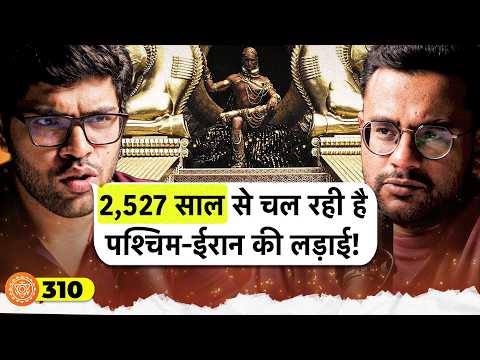
Appeared on Vaad Podcast to talk about Ancient Iranian History. Do listen.
youtu.be/qr8Nt3OI5Kg?si…
YouTube
English
For those looking for an introductory video on it, I think this is quite good, but still you have to know some basic details and terminologies
youtube.com/watch?v=cqcOlI…
YouTube
English
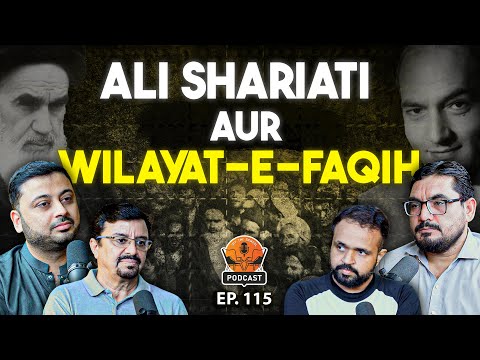
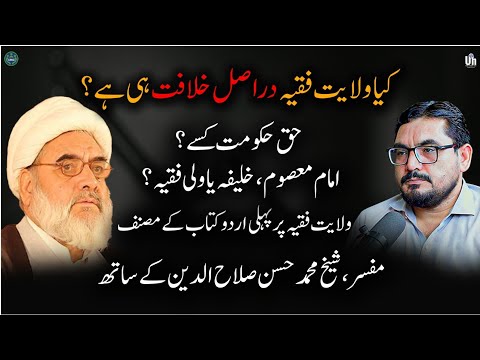
Found this video on Wilayat e Faqih quite informative.
youtube.com/watch?v=NCKHCF…
This is not an introductory video, but you can still learn a lot.
YouTube
Hasnain Mirza@HasnainWizard
The concept of Wilayat e Faqih is not something that Ayatollah Khomeini introduced out of nowhere. It's very much present in Shia tradition.. Sheikh al Tusi and Muhaqqiq al Karaki elaborated on it. Imami Shia traditions of Imam Jafar & Hasan Askari also elaborated it in detail
English
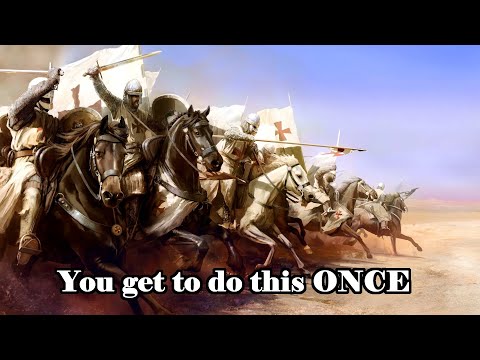
Anyone who thinks that riding a horse in battle was like riding an armoured car in combat should watch this video.
youtube.com/watch?v=zviMg5…
YouTube
Alexander 𖤓 Nietzschean Vitalist@UbermenschMind
"I'm too scared to talk to this girl" What your ancestors did on a random Tuesday:
English
A rather interesting feature of copper-plate inscriptions belonging to the Sangama dynasty of Vijayanagara is that, even when the rest of the inscription is in Telugu or Tamil, the signature is always in Kannada characters. This detail becomes crucial for scholars in identifying the authenticity of such copper plates.
English
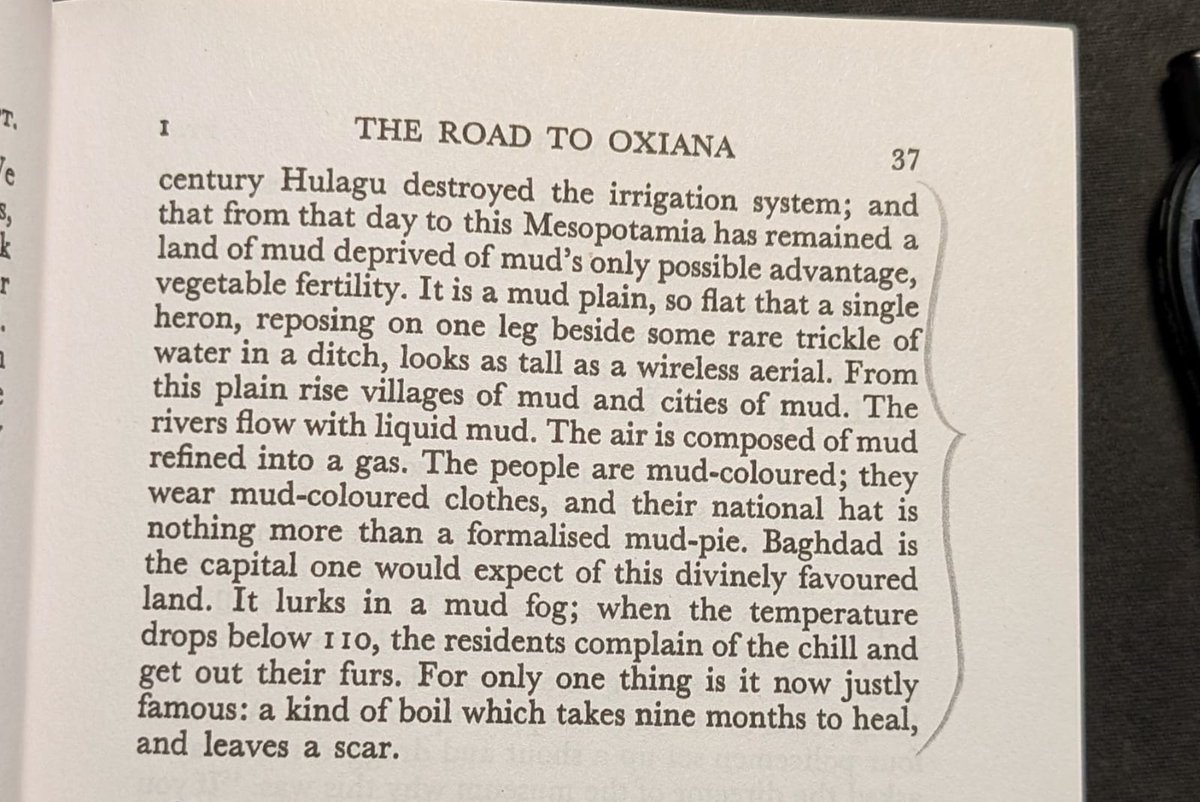
It appears that Robert Byron did not like Iraq that much.
English
Kind of interesting that in ancient times, the region and the people of what is now eastern Uttar Pradesh (particularly east of Prayag) and Bihar were known as Prācya (the easterners). In medieval times, when a separate Muslim kingdom was established in Jaunpur, by what name was it known? Sharqis—i.e. easterners.
English