JcryptoPH
4.1K posts

JcryptoPH
@JcryptoPH
🟦@base - Contributor 🟧@CoreEcosystem - CORE/BTC Holder 📈Trading 🚀Web3 👨💻 Blockchain and Cyber Security


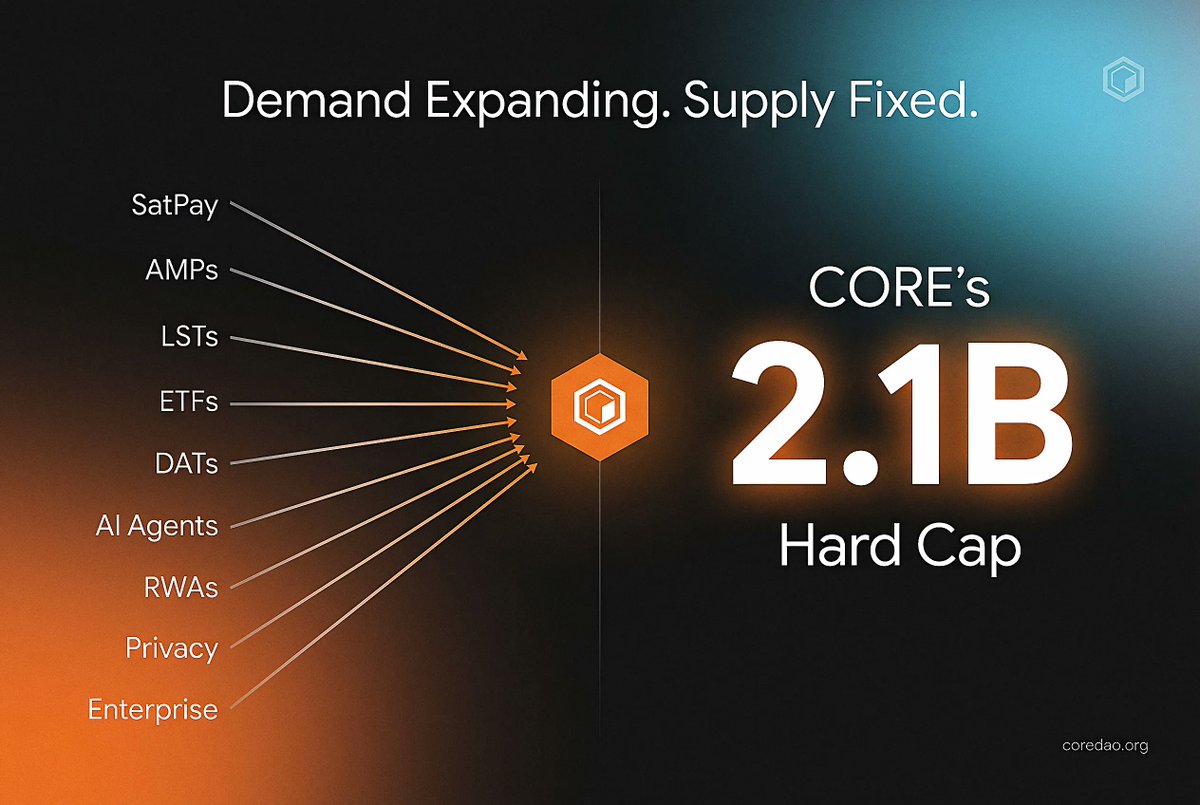
Two years from now, what will be generating the most CORE demand? @sat_pay? ETFs? Enterprise yield? Agentic BTC payments? Or something else entirely? Drop your take. 👇


Quantum-resistant cryptography is coming to Core. Full-stack coverage across staking, DeFi, and enterprise infrastructure. The quantum-resistant Bitcoin layer. 🔶


Core DAO: Preparing Bitcoin for the Quantum Era Bitcoin’s security has held up for years because of strong cryptography like ECDSA, but the truth is it was never designed with quantum computing in mind. If quantum machines reach a certain level, they could theoretically derive private keys from public keys, which means exposed wallets and compromised signatures. Not today, but not impossible either, and that’s the kind of risk you don’t wait around for. @Coredao_Org is treating this as something inevitable rather than hypothetical. Instead of reacting later, they’re already integrating post quantum cryptography into their execution layer, aligning with NIST-backed standards like Dilithium, Falcon, and SPHINCS+. These aren’t experimental ideas anymore, they’re part of the direction global security systems are moving toward. What stands out is how they’re handling the transition. Core isn’t forcing a sudden switch. They’re using a hybrid model where transactions can carry both the current signature system and a quantum resistant one, and both have to validate. That means if one ever fails, the other still protects the system. It’s a simple idea, but it creates a strong layer of redundancy. They’re also not limiting this to just signatures. The approach looks across the full stack, including consensus, staking, DeFi, bridges, and wallet infrastructure. The thinking is straightforward. If the threat affects cryptography at its core, then every dependent layer needs to be considered, not just patched individually. This fits naturally with how Core positions itself alongside Bitcoin. Bitcoin remains the base layer, focused on stability and minimal change, while Core operates as a faster moving layer that can adapt, experiment, and implement new security models without disrupting Bitcoin itself. That separation is what makes forward compatibility possible. Core isn’t trying to upgrade Bitcoin’s security. It’s building the layer that keeps Bitcoin secure when the rules of computation change. There are trade offs to consider. Post quantum signatures are larger and more computationally demanding, which can impact performance, storage, and user experience. Wallets and infrastructure will need to evolve as well. But delaying that transition introduces a different kind of risk, one that is much harder to manage under pressure. No one knows exactly when quantum computing becomes a real threat, but it’s clearly not something to ignore anymore. Core’s approach is to prepare early, migrate carefully, and build in layers so the system stays secure through the transition. This isn’t just about upgrading cryptography. It’s about making sure Bitcoin continues to function in a future where the rules of computation change. While most are still debating timelines, Core is already building with that outcome in mind. 🔶 @coredaoph @communityofcore @CoreEcosystem #COREDAO #Bitcoin #QuantumSecurity


What does quantum-resistant Bitcoin infrastructure actually mean? And why is Core building it now? This Thursday, @richrines, @dylanjdennis, and @RumeelHussain break it down live. 🗓️ Mar 26, 11am EST Set your reminder 👇 twitter.com/i/spaces/1DGle…


Being a Bitcoiner doesn't have to just mean buying it. You can now live on it too.

1/6 🧵 Thread : About "Financial Friction " One thing many people deal with every day is financial friction. You want to access your own money… But the system says: • submit documents • wait for approval • visit the branch • fill out forms Simple things suddenly become complicated.


The London Stock Exchange was the first. Every major market needs a yield-bearing Bitcoin product. Core has the infrastructure. Now we scale. 🔶


For years, Bitcoin holders had only two choices: "Hold it… or sell it." But selling Bitcoin to cover expenses has always felt like breaking the long term thesis. You lose exposure. You trigger taxes. And if the market moves up after you sell… the regret is real. That’s exactly the gap products like @sat_pay are trying to solve. Instead of forcing people to liquidate their BTC, SatPay introduces a different model: Use your Bitcoin without giving it up. With a BTC-backed card, your Bitcoin becomes more than just a store of value. It becomes a financial tool you can actually use in everyday life. Think about the possibilities: • Spend globally while keeping BTC exposure • Access liquidity without selling your assets • Maintain your long term Bitcoin position • Interact with real world payments seamlessly This is where things start to get interesting. For a long time, traditional finance had systems that allowed people to borrow against assets like real estate or stocks. Bitcoin, despite being a trillion dollar asset class, lacked that same financial layer. But that’s beginning to change. Products like SatPay are part of a growing movement often called BTCfi the idea that Bitcoin shouldn’t just sit idle in wallets. Instead, it can power a full financial ecosystem. And when infrastructure like this connects with networks focused on expanding Bitcoin’s capabilities, such as CoreDAO, it opens the door to something much bigger. A world where Bitcoin isn’t just digital gold. But active financial capital. Where you can: Hold BTC. Earn on BTC. Borrow against BTC. Spend without selling. All while staying exposed to the asset you believe in. If this model continues to evolve, it could unlock massive dormant liquidity sitting inside Bitcoin wallets today. And that may be one of the most important steps toward turning Bitcoin from a passive asset… into a fully functional financial system. 🔶 #Bitcoin #BTCfi #SatPay #CoreDAO #BuildOnCore