

JForward

1.4K posts

JForward banner
JForward

JForward

@JeffWo88

任何时候都不晚/ Keep passion

Katılım Şubat 2021
2.9K Takip Edilen345 Takipçiler
Youmio
Youmio@youmio_ai·
Three Systems, One Mission! Our Quality Trinity is designed to achieve different goals, balance quality & engagement and create feedback loops...all to enhance platform excellence. 🎯 Join our discord now to find out more, clock's ticking...⏰
Youmio tweet media
English
13
21
102
2.9K
JForward
JForward@JeffWo88·
#BTC 的 V 型修复让我重新审视市场的记忆周期——二十四小时前还在计价地缘冲突,现在似乎已经切换回风险偏好模式。这种快速翻页的能力,我理解为流动性充裕环境下的典型特征,而非真正的风险消退。 #Polymarket 我扫了一眼,"伊朗冲突3 月底前结束"占据主导。但我对预测市场的隐含假设向来存疑:它反映的是信息效率,还是群体惰性?我更倾向于后者。市场需要叙事,而"速战速决"恰好是最省力的那种。 DeepSeek V4 的时间窗口才是我真正在算的账。如果三月第一周落地,这将是两个月内第二次对 AI 基础设施叙事的压力测试。
中文
1
0
0
116
JForward
JForward@JeffWo88·
这个更新确实让我重新评估了 @youmio_ai 的工程深度,同时我认为搞定了嘴唇同步,同时面部有更丰富的情感表达是一个巨大的里程碑! 太多"3D 数字人"项目,本质上只是音量驱动的下巴开合器,也就是业内自嘲的"金鱼吐泡泡"。Youmio 这次跨越的,是从物理信号模拟到语义级表达的鸿沟。 这里面大概存在的三层技术跃迁: 第一层是音素映射的精确性。 从音量驱动转向音素预测算法,这意味着系统开始"理解"发音结构而非仅仅响应振幅。/M/ 音的唇闭合、/B/ 音的爆破感——这些细节骗不了人,用户的大脑对"口型错位"极度敏感。 第二层是流式架构的延迟控制。 LLM→TTS→Viseme→Render 这条链路的串行延迟,太多团队在这里妥协。Youmio 的并发处理说明他们在服务端调度上下了硬功夫,这不是调 API 能解决的。 第三层我最在意:Prompt 层的情绪导演化。 把 情绪标记嵌入 LLM 输出,本质上是在重构"生成式 AI"的接口定义——从纯文本协议升级为多模态控制协议。这会让他们的技术护城河比别人宽一个数量级。 我的判断是:这不是功能迭代,是很牛逼的架构代差!
Youmio@youmio_ai

Check Out Your New & Improved Mios! 👫 In our latest rollout, Mios have been equipped with upgraded lip sync, a wider range of expressions laced with emotion and are becoming more...real. 🧠 Join Youmio's ever-evolving experience and watch your Mios come to life!

中文
0
0
0
57
JForward
JForward@JeffWo88·
@youmio_ai This change has made incredible progress in technology. Thanks to the team for your efforts and presenting us with unique products!!!
English
0
0
0
29
Youmio
Youmio@youmio_ai·
Check Out Your New & Improved Mios! 👫 In our latest rollout, Mios have been equipped with upgraded lip sync, a wider range of expressions laced with emotion and are becoming more...real. 🧠 Join Youmio's ever-evolving experience and watch your Mios come to life!
English
21
17
129
4.8K
JForward
JForward@JeffWo88·
@hellosuoha 玩最多的应该是最高温预测,大多数日期应该能玩,如果人工降雨那正好休息
中文
0
0
0
120
梭教授说
梭教授说@hellosuoha·
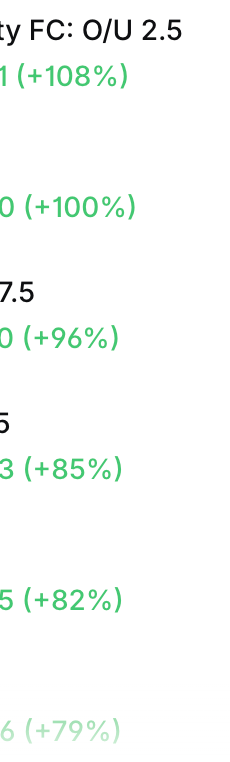
✍️切忌扫预测市场体育尾盘策略 最近闲的也是闲的,在各个预测市场玩来玩去,但是总体而言个人操作的和“菠菜市场”毫无任何区别,唯一的区别可能就是接下来说的。 🌟篮球不在快结束前扫90%的盘 基本上是拿NBA举例,玩了几次,第三节的时候领先对面10-20分,然后第四节被反超lol。 如果篮球不是最后几分钟领先十几二十分,然后盘口的订单还没扫完的话,其实没必要参与。 最近出现过,买的总分3分钟得了不到5分,还有2分钟得了十几分。 还出现第三节领先20多分,第四节落后10分。 而且最主要的是,篮球这个在菠菜上也不会出现“封盘”,基本上都是让所有人赌到了最后,没有所谓的“预测市场”的感觉。 整体而言都还是“菠菜”盘,而且最好笑的就是: 预测市场的盘口在前一天定下来后不会变,而菠菜市场会大幅度的变,例如“主力球员受伤”“大量球员轮休”,都会出现“让分变成受让”而“预测市场让还是让”lol。 反正nba目前我是没发现什么预测市场的味道,只发现了纯粹的菠菜。 可能得去预测“总冠军”“mvp”这些单项? 🌟足球的尾盘更显刺激 足球的尾盘其实更有趣,而且更加和“菠菜市场”有点区别。 经常赌球的朋友都知道:菠菜市场,足球只要进球或者红牌或者var或者各种状况出现的时候,菠菜市场都会直接“封盘”。 而在预测市场:无论发生任何事情,都可以在订单薄上开启交易,所以有时候你会发现,怎么明明比分2-0了,而大于1.5还可以买甚至赔率还很高。 举个例子: 前几天的英超诺丁汉森林vs利物浦那场,按照传统菠菜市场,最后90分钟都封盘了,尤其是一直在进球var进球var。 而”预测市场“一直可以交易,所以你可以看见从12%到97%在跌到17%然后在30%震荡,最后确定进球了还在93%,最后被人一扫而空。 再举个例子: 由于足球引入了var技术后,进球这些都可以“预测正确与否”,导致了每次你在看直播/比分播报,都能预测“真实与否”。 这时候你所有看见的O都还可以继续买入,但是最后var与否就不知道了。 🌟扫尾盘实质上是低水策略 实质上除非99.9%的准确率,都要防住那0.1%,而且还不能梭哈,不然一次低概率事件发生了,那需要1000次才能找补回来。 每次看见群友赚1-2%跑,却要承担100%风险,虽然可能ta中途跑路了😂。 我是完全把预测市场当作菠菜来玩的,毕竟我又没有“内幕消息”,唯一知道的内幕消息都是“所有人都知道”的。 足球是圆的,篮球也是圆的,什么低概率事件都可能发生。 🌟很多人教人用体育市场对刷 看到很多人的策略,在教如何用体育市场对刷,其实体育市场的对刷无非就是大的赛事,然后流动性要好。 而你对冲单,很多人教你挂买1和卖1,这其实是存在风险的,那就是对冲不上。 所以还是赌,拿1%的磨损来赌还是拿对冲不上来赌。 所以回归本质看不太懂,不太理解。 ✍️预测市场到底预测了什么 目前至少我没预测出来什么东西,所以很多国家也直接把预测市场当“菠菜平台”来处理。 以前写过一些预测市场和菠菜平台的区别,但是感觉自己参与进去最终还是变成了“赌”。 通过下注伊朗挨打? 通过下注马杜罗被抓? 通过下注降息? 有时候自己把自己也理不清楚了,预测下明天吃不吃饭吗,下不下雨,有没有太阳。 不过有一点好,预测市场亏的比炒币慢很多😂,炒币一天亏的能在预测市场玩一年来老铁。
梭教授说 tweet media
中文
14
2
26
12.2K
JForward
JForward@JeffWo88·
今天花了比较多时间对比 #polymarket#Kalshi 的情况。 Kalshi 的盘口让我印象深刻——买卖价差压缩得极窄,大额订单的冲击成本明显更低。这印证了我的判断:持牌交易所的做市商体系经过监管筛选,资本效率和风控能力都上了一个台阶。Polymarket 的链上架构固然自由,但流动性碎片化的问题短期内无解,而且存在不少为了发币预期而刷量的无效流动性。 准入门槛是无法忽视的硬约束。Kalshi 的 KYC 要求对我而言构成实质性排除。谨慎评估了第三方代过路径,但监管框架下的身份溯源机制让这种操作的风险呈非线性上升——这不是我愿意在未来烧脑的。 跨市场套利的可能性是存在的。两个平台的用户应该存在显著差异,再花些时间应该可以找出一些方法。
中文
1
0
0
39
JForward
JForward@JeffWo88·
@crypt0b3ar I believe the rules of the two platforms are different, and the underlying calculation methods behind those rules are clearly distinct. I'll take a closer look and study it more thoroughly.
English
0
0
0
5
Bear
Bear@crypt0b3ar·
@JeffWo88 man those odds stacked funny right before hit classic liquidity grab kalshi divergence is the tell always check both before swinging
English
1
0
0
159
JForward
JForward@JeffWo88·
今天上午在 #Polymarket 被天气盘割了一刀,疼得清醒。 当时凌晨6点,对应西雅图下午 2 点,实时 51 度,盘口 50-51 档只给 14%,52-53 档堆到 75%。两档我都有,然后我卖了 51——然后 51 中了。钱没了,教训买了。 蠢在哪? 第一,贪升温空间。 2 点 51 度,我觉得还能往上蹿。但一度之差不全覆盖本身就错在贪。 第二,信盘口信傻了。 75% 的定价让我以为"市场有消息",但临近开奖,那可能是庄家出货画的饵,也可能是散户跟风堆的傻钱。分不清,就不该跟。 第三,没看 #kalshi 同时间那边开 52 度,我事后才注意到。两个平台、两种结果,这说明数据源本身就是 Alpha 的来源,也是陷阱的来源。 以后玩哪个平台?还要再仔细研究规则。但我知道一点:下次临近开奖,只信气象局卫星和地面站坐标,不信任何盘口的数字。
中文
2
0
0
53
JForward
JForward@JeffWo88·
25年有一个结构性断裂:市场叙事正在从"赛道轮动"转向"原子化投机"。 过去老玩家的生存策略是清晰的——识别β,捕获α的延迟映射。龙一龙二的套利空间建立在赛道共识的持续性上。但25年一整年我看到的信号是:共识的半衰期急剧缩短,甚至来不及形成"赛道"就坍缩了。 Web3 AI的沉寂让我深思的不是技术本身,而是激励结构的错配。当纯AI的估值逻辑(算力、数据飞轮、产品化速度)与Web3的代币激励产生摩擦时,理性资本的选择并不令人意外。人才和资金的外流,本质上是两种时间偏好的博弈结果。 至于26年?我不做预测。但我看重的是:能否出现一种新原语,让AI的生产力增益与Web3的协调机制形成不可拆分的耦合,而非简单的概念叠加。否则,"重新燃一次"不过是另一轮叙事透支。 无论如何你得在牌桌上,才能识别出真信号和假叙事。
中文
1
0
0
42
JForward
JForward@JeffWo88·
心血来潮做了一次小规模的横向评测,用 Gemini Pro 当裁判,对比了几家国产大模型的中文段落输出能力。 结果让我重新校准了认知:#Kimi 登顶,#DeepSeek 紧随,这两家构成了当前的第一梯队;#GLM 落在第三,输出勉强可用;#豆包 垫底,文本逻辑几乎断裂。 两个反直觉的发现:一是 Kimi 的中文语感比我预期的更成熟,二是豆包的文本能力与它的视频生成水准形成诡异落差——同一家公司,产品基因竟然可以割裂到这种程度。
中文
1
0
0
73
JForward
JForward@JeffWo88·
看起来像是一个AI agent范式的ponzi。市场需要新故事 → 媒体与 KOL 构建宏大叙事 → 创业项目涌入争夺注意力 → 更高估值吸引更多资本。希望这个飞轮能转起来,熊市来点好玩的。
Sigil Wen@0xSigil

Read in full: web4.ai

中文
0
0
0
49
JForward
JForward@JeffWo88·
这玩意儿有点意思! #Polymarket 搞的这个“赞助奖励”,说白了就是“我看好这个盘子,花钱请人提供流动性,让我们一起搞把大的” 马上要到来的功能说白了就是“人人开盘抽水”。这才是核弹!以后不用等平台了,我看准什么事,自己就能开个盘当庄家,等着别人来下注给我送钱。发现早期好盘,就是捡钱;自己能造出个好盘,那就是印钞。废话少说,研究规则,准备子弹,干就完了!
Mustafa@mustafap0ly

sponsoring market rewards is now open to all users 😛 add rewards to any market to get the liquidity for the size you want to trade. permissionless market deployment and creator fees next...

中文

0
0
0
66
Youmio
Youmio@youmio_ai·
Engagement is on the Rise! 📈 Over 10,000+ check-ins and 86,000+ Affinity Points were earned just last week alone by active users! ⚡️ It's never too late to join Youmio, choose your path and start earning.
Youmio tweet media
English
20
22
151
4.1K
JForward
JForward@JeffWo88·
这次的更新是给每个Mio都增加了一个Quest。 从所有账号统一 Quest 到 Mio 专属 Quest,再到未来的“个性化”,这条路径非常清晰。 我判断,其终局必然是构建一个基于“Lore”(叙事)和“Skill”(职业)的双螺旋养成系统。前者负责情感粘性,后者负责玩法深度。 意味着未来单个 Mio 的叙事价值与实用价值会被彻底拉满,其作为资产的内生价值会指数级增强。
Youmio@youmio_ai

Affinity Tip for Newcomers! Each Mio has their own set of quests, more like relationship goals, to ignite your bond & affinity earnings. ⚡️ Login to Youmio, click any Mio and take your relationship to the next level. ❤️

中文
0
0
0
95
JForward
JForward@JeffWo88·
说实话,我很少把一次小盈利当作“胜利”。昨天在 #Polymarket 上临时下注,金额很小,今天结果揭晓,中了。 但比起结果,我更在意的是过程的结构。这个“临时”决策背后,是哪些判断因子在起作用?是情绪,是碎片信息,还是某个未被量化的模式?模型显然还需要大量打磨,这次中奖更像一次幸运的“数据噪声”。但我不排斥这种噪声——它或许是一个信号,告诉我系统中某个模糊的变量正在变得清晰。日拱一卒,拱的不是金额,而是认知的迭代。 #马年 继续加油!春节快乐!
中文
0
0
0
26
JForward
JForward@JeffWo88·
V 神想用预测市场来做现实世界的“生活成本对冲”,这蓝图画得很美,但作为 Builder,我第一反应是看地基——流动性去哪找? 现在的 #预测市场 是“流量逻辑”,只有大选、体育这种顶级 IP 才有深度。但生活成本是琐碎的、长尾的。 试问,谁会去给“大安区房租涨跌”或“下季度油价”做市?没有足够厚的对手盘,那个构想中由 AI 自动管理的“对冲篮子”,实际上根本买不到货,或者会被滑点磨损殆尽。 要解决这个问题,预测市场高 赛道可能需要一次范式转移:从单纯的Event-based(赌结果) 进化为 Index-based(赌趋势)。 这听起来像是在重新发明期货市场?未来犹未可知,让我们拭目以待吧
vitalik.eth@VitalikButerin

Recently I have been starting to worry about the state of prediction markets, in their current form. They have achieved a certain level of success: market volume is high enough to make meaningful bets and have a full-time job as a trader, and they often prove useful as a supplement to other forms of news media. But also, they seem to be over-converging to an unhealthy product market fit: embracing short-term cryptocurrency price bets, sports betting, and other similar things that have dopamine value but not any kind of long-term fulfillment or societal information value. My guess is that teams feel motivated to capitulate to these things because they bring in large revenue during a bear market where people are desperate - an understandable motive, but one that leads to corposlop. I have been thinking about how we can help get prediction markets out of this rut. My current view is that we should try harder to push them into a totally different use case: hedging, in a very generalized sense (TLDR: we're gonna replace fiat currency) Prediction markets have two types of actors: (i) "smart traders" who provide information to the market, and earn money, and necessarily (ii) some kind of actor who loses money. But who would be willing to lose money and keep coming back? There are basically three answers to this question: 1. "Naive traders": people with dumb opinions who bet on totally wrong things 2. "Info buyers": people who set up money-losing automated market makers, to motivate people to trade on markets to help the info buyer learn information they do not know. 3. "Hedgers": people who are -EV in a linear sense, but who use the market as insurance, reducing their risk. (1) is where we are today. IMO there is nothing fundamentally morally wrong with taking money from people with dumb opinions. But there still is something fundamentally "cursed" about relying on this too much. It gives the platform the incentive to seek out traders with dumb opinions, and create a public brand and community that encourages dumb opinions to get more people to come in. This is the slide to corposlop. (2) has always been the idealistic hope of people like Robin Hanson. However, info buying has a public goods problem: you pay for the info, but everyone in the world gets it, including those who don't pay. There are limited cases where it makes sense for one org to pay (esp. decision markets), but even there, it seems likely that the market volumes achieved with that strategy will not be too high. This gets us to (3). Suppose that you have shares in a biotech company. It's public knowledge that the Purple Party is better for biotech than the Yellow Party. So if you buy a prediction market share betting that the Yellow Party will win the next election, on average, you are reducing your risk. Mathematical example: suppose that if Purple wins, the share price will be a dice roll between [80...120], and if Yellow wins, it's between [60...100]. If you make a size $5 bet that Yellow will win, your earnings become equivalent to a dice roll between [70...110] in both cases. Taking a logarithmic model of utility, this risk reduction is worth $0.58. Now, let's get to a more fascinating example. What do people who want stablecoins ultimately want? They want price stability. They have some future expenses in mind, and they want a guarantee that will be able to pay those expenses. But if crypto grows on top of USD-backed stablecoins, crypto is ultimately not truly decentralized. Furthermore, different people have different types of expenses. There has been lots of thinking about making an "ideal stablecoin" that is based on some decentralized global price index, but what if the real solution is to go a step further, and get rid of the concept of currency altogether? Here's the idea. You have price indices on all major categories of goods and services that people buy (treating physical goods/services in different regions as different categories), and prediction markets on each category. Each user (individual or business) has a local LLM that understands that user's expenses, and offers the user a personalized basket of prediction market shares, representing "N days of that user's expected future expenses". Now, we do not need fiat currency at all! People can hold stocks, ETH, or whatever else to grow wealth, and personalized prediction market shares when they want stability. Both of these examples require prediction markets denominated in an asset people want to hold, whether interest-bearing fiat, wrapped stocks, or ETH. Non-interest-bearing fiat has too-high opportunity cost, that overwhelms the hedging value. But if we can make it work, it's much more sustainable than the status quo, because both sides of the equation are likely to be long-term happy with the product that they are buying, and very large volumes of sophisticated capital will be willing to participate. Build the next generation of finance, not corposlop.

中文
1
0
0
53
JForward
JForward@JeffWo88·
ChatGPT或者Gemini对于上下文的记忆还是有比较多的错乱,总结了一下为了避免“鬼打墙”可以这样做。 1. 定期“重置并总结” (The Restart Strategy) • 当对话超过20-30轮,或者你感觉它开始变笨时,不要试图纠正它(这只会增加更多的干扰噪音)。 • 做法:让它把当前的核心结论和关键规则总结成一段话。 • 然后:开启一个新的对话窗口,把这段总结粘贴进去作为背景。这就相当于给它“清理内存”,重新上路。 2. 关键指令“置顶” (Prompt Injection) • 不要指望它记得20分钟前的一句话。在关键的复杂任务中,每次提问都可以稍微带一句前提。 • 例如,与其问“现在怎么做?”,不如问“基于只分ABC三类的前提下,现在怎么做?”。 3. 使用“项目”或“记忆”功能 • ChatGPT的“Project”功能或Gemini的某些高级模式,允许你上传一个文档作为“系统级指令”。你可以把你铁定的规则(比如“永远不要推荐某个品牌”)写在文档里。相比于对话流,模型对系统级文档的遵循权重通常更高。
中文
1
0
0
42