Jiliac

7.2K posts

Jiliac banner
Jiliac

Jiliac

@Jilyac

Believer of bottom-up. Doing rather than designing. Gemba. Copy-pasting before refactoring. Curiosity is a local optima search strategy.

Paris, France Katılım Nisan 2009
292 Takip Edilen1.3K Takipçiler
Sabitlenmiş Tweet
Jiliac
Jiliac@Jilyac·
🧠 New project — AskPoker.ai I’ve spent the last few months building a tool I wish I had: Type in a poker hand like you're texting a friend, get coach-level advice back. Intro: jiliac.com/post/askpoker Feedback welcome from anyone who plays poker.
English
1
1
2
1.2K
Jiliac retweetledi
Dipanshu Kushwaha
Dipanshu Kushwaha@DipanshuKu55175·
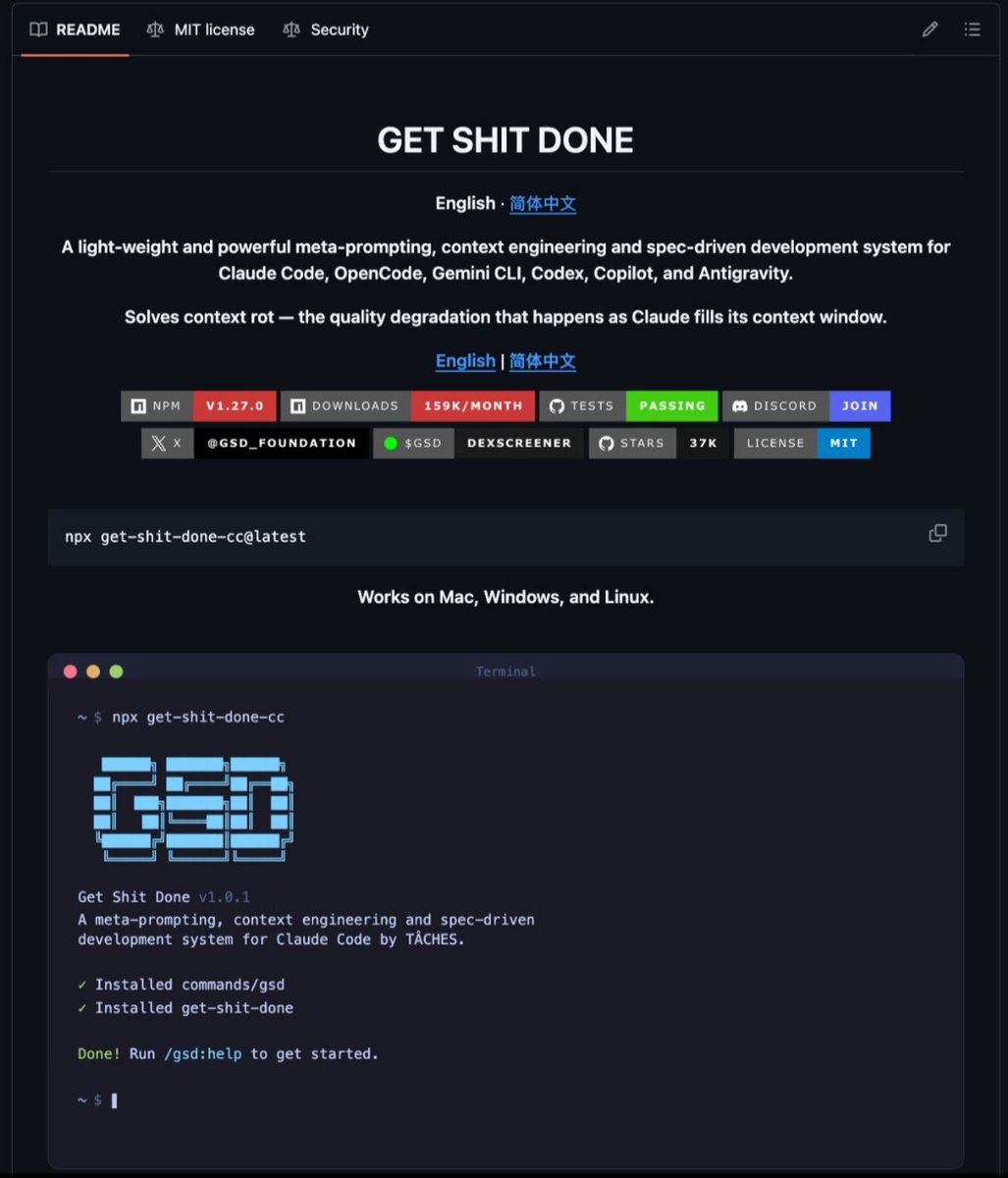
Best GitHub repos for Claude code that will 10x your next project: 1. Superpowers github.com/obra/superpowe… 2. Awesome Claude Code github.com/hesreallyhim/a… 3. GSD (Get Shit Done) github.com/gsd-build/get-… 4. Claude Mem github.com/thedotmack/cla… 5. UI UX Pro Max github.com/thedotmack/cla… 6. n8n-MCP github.com/czlonkowski/n8… 7. Obsidian Skills github.com/nextlevelbuild… 8. LightRAG github.com/hkuds/lightrag 9. Everything Claude Code github.com/kepano/obsidia…
Dipanshu Kushwaha tweet mediaDipanshu Kushwaha tweet media
English
23
50
380
30.2K
Jiliac retweetledi
Charly Wargnier
Charly Wargnier@DataChaz·
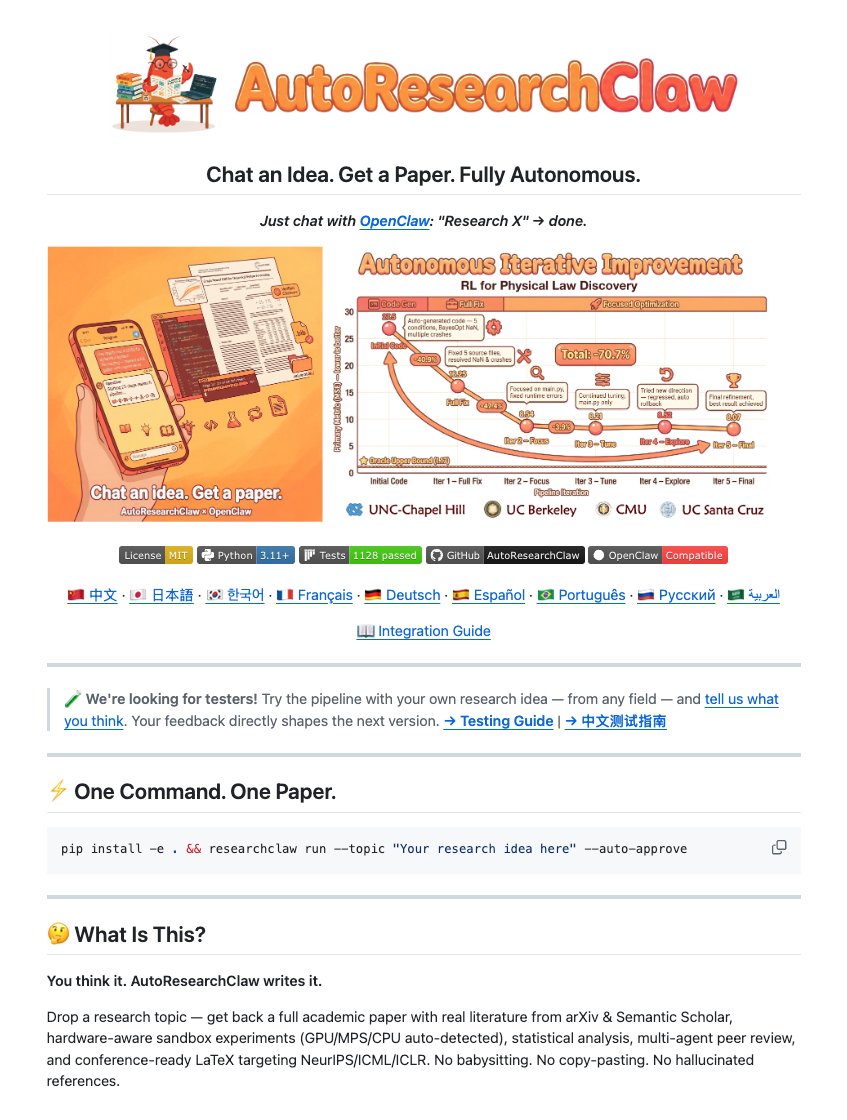
THIS is the wildest open-source project I’ve seen this month. We were all hyped about @karpathy's autoresearch project automating the experiment loop a few weeks ago. (ICYMI → github.com/karpathy/autor…) But a bunch of folks just took it ten steps further and automated the entire scientific method end-to-end. It's called AutoResearchClaw, and it's fully open-source. You pass it a single CLI command with a raw idea, and it completely takes over 🤯 The 23-stage loop they designed is insane: ✦ First, it handles the literature review. - It searches arXiv and Semantic Scholar for real papers - Cross-references them against DataCite and CrossRef. - No fake papers make it through. ✦ Second, it runs the sandbox. - It generates the code from scratch. - If the code breaks, it self-heals. - You don't have to step in. ✦ Finally, it writes the paper. - It structures 5,000+ words into Introduction, Related Work, Method, and Experiments. - Formats the math, generates the comparison charts, - Then wraps the whole thing in official ICML or ICLR LaTeX templates. You can set it to pause for human approval, or you can just pass the --auto-approve flag and walk away. What it spits out at the end: → Full academic paper draft → Conference-grade .tex files → Verified, hallucination-free citations → All experiment scripts and sandbox results This is what autonomous AI agents actually look like in 2026. Free and open-source. Link to repo in 🧵 ↓
Charly Wargnier tweet media
English
78
382
2.4K
209.4K
Jiliac retweetledi
Ole Lehmann
Ole Lehmann@itsolelehmann·
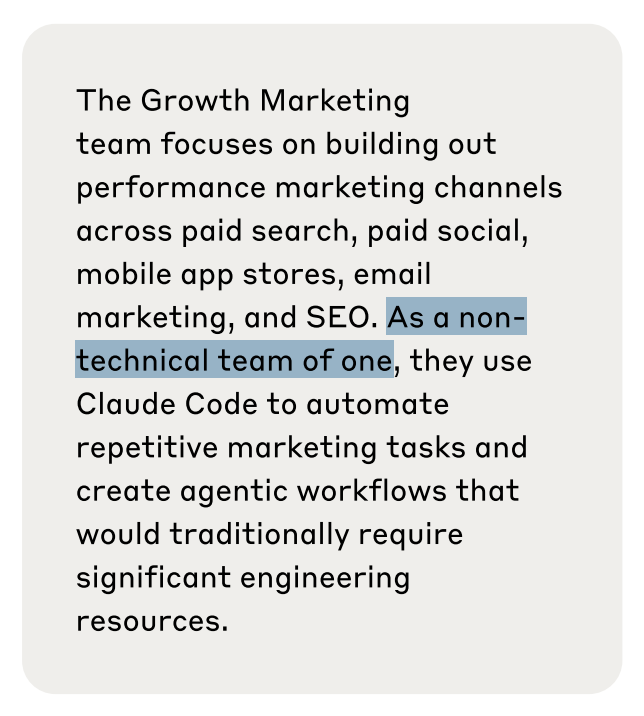
i can't believe nobody caught this. Anthropic's entire growth marketing team was just ONE PERSON (for 10 months, confirmed) a single non-technical person ran paid search, paid social, app stores, email marketing, and SEO for the $380B company behind claude here's exactly how one human is doing the job of a full marketing team: it starts with a CSV. 1. he exports all his existing ads from his ad platforms along with their performance metrics (click-through rates, conversions, spend, etc) 2. feeds the whole file into claude code 3. and tells it to find what's underperforming. claude analyzes the data, flags the weak ads, and generates new copy variations on the spot this is where he gets clever: he then splits the work into 2 specialized sub-agents: 1. one that only writes headlines (capped at 30 characters) 2. and one that only writes descriptions (capped at 90 characters). each agent is tuned to its specific constraint so the quality is way higher than cramming both into a single prompt so now he's got hundreds of fresh headlines and descriptions. but that's just the text. he still needs the actual visual ad creative, the images and banners that go on facebook, google, etc. so he built a figma plugin that: 1. takes all those new headlines and descriptions 2. finds the ad templates in his figma files 3. and automatically swaps the copy into each one. up to 100 ready-to-publish ad variations generated at half a second per batch. what used to take hours of duplicating frames and copy-pasting text by hand so now the ads are live. the next question is which ones are actually working. for that he built an MCP server (basically a custom integration that lets claude talk directly to external tools) connected to the meta ads API. so he can ask claude things like: • "which ads had the best conversion rate this week" • or "where am i wasting spend" and get real answers from live campaign data without ever opening the meta ads dashboard and the part that ties it all together and closes the loop: he set up a memory system that logs every hypothesis and experiment result across ad iterations. so when he goes back to step one and generates the next batch of variations... claude automatically pulls in what worked and what didn't from all previous rounds. the system literally gets smarter every cycle. that kind of systematic experimentation across hundreds of ads would normally need a dedicated analytics person just to track the numbers from the doc: ad creation went from 2 hours to 15 minutes. 10x more creative output. and he's now testing more variations across more channels than most full marketing teams a $380 billion company. and their entire growth marketing operation (not GTM) = just one person and claude code lol truly unbelievable
Ole Lehmann tweet media
English
308
824
9.1K
4.4M
Jiliac retweetledi
elvis
elvis@omarsar0·
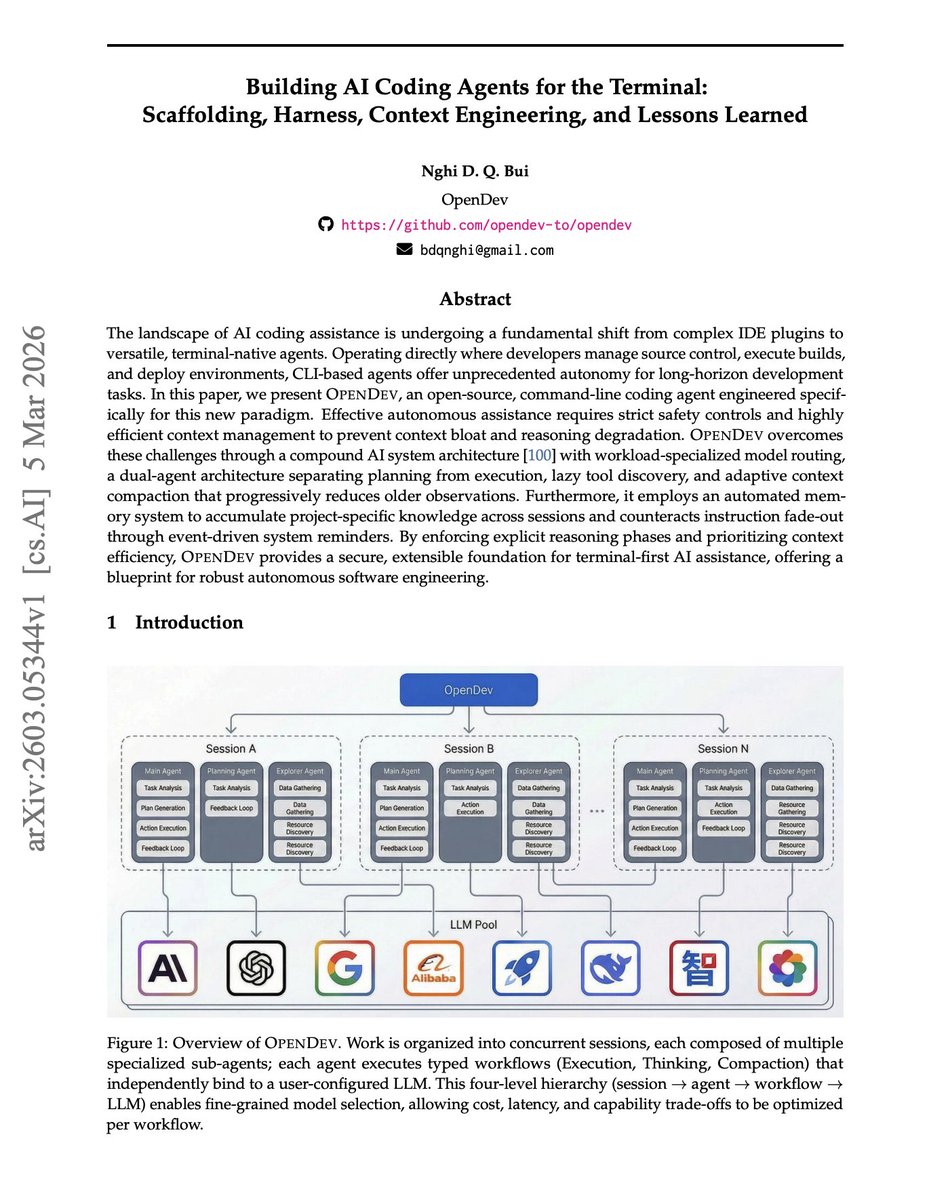
Pay attention to this one if you are building terminal-based coding agents. OpenDev is an 81-page paper covering scaffolding, harness design, context engineering, and hard-won lessons from building CLI coding agents. It introduces a compound AI system architecture with workload-specialized model routing, a dual-agent architecture separating planning from execution, lazy tool discovery, and adaptive context compaction. The industry is shifting from IDE plugins to terminal-native agents. Claude Code, Codex CLI, and others have proven the model works. This paper formalizes the design patterns that make these systems reliable, covering topics like event-driven system reminders to counteract instruction fade-out, automated memory across sessions, and strict safety controls for autonomous operation. Paper: arxiv.org/abs/2603.05344 Learn to build effective AI agents in our academy: academy.dair.ai
elvis tweet media
English
59
292
1.8K
142.3K
Jiliac retweetledi
Corey Haines
Corey Haines@coreyhainesco·
Agent Management is the new Product Management
English
6
1
15
1.6K
Jiliac retweetledi
Andrej Karpathy
Andrej Karpathy@karpathy·
It is hard to communicate how much programming has changed due to AI in the last 2 months: not gradually and over time in the "progress as usual" way, but specifically this last December. There are a number of asterisks but imo coding agents basically didn’t work before December and basically work since - the models have significantly higher quality, long-term coherence and tenacity and they can power through large and long tasks, well past enough that it is extremely disruptive to the default programming workflow. Just to give an example, over the weekend I was building a local video analysis dashboard for the cameras of my home so I wrote: “Here is the local IP and username/password of my DGX Spark. Log in, set up ssh keys, set up vLLM, download and bench Qwen3-VL, set up a server endpoint to inference videos, a basic web ui dashboard, test everything, set it up with systemd, record memory notes for yourself and write up a markdown report for me”. The agent went off for ~30 minutes, ran into multiple issues, researched solutions online, resolved them one by one, wrote the code, tested it, debugged it, set up the services, and came back with the report and it was just done. I didn’t touch anything. All of this could easily have been a weekend project just 3 months ago but today it’s something you kick off and forget about for 30 minutes. As a result, programming is becoming unrecognizable. You’re not typing computer code into an editor like the way things were since computers were invented, that era is over. You're spinning up AI agents, giving them tasks *in English* and managing and reviewing their work in parallel. The biggest prize is in figuring out how you can keep ascending the layers of abstraction to set up long-running orchestrator Claws with all of the right tools, memory and instructions that productively manage multiple parallel Code instances for you. The leverage achievable via top tier "agentic engineering" feels very high right now. It’s not perfect, it needs high-level direction, judgement, taste, oversight, iteration and hints and ideas. It works a lot better in some scenarios than others (e.g. especially for tasks that are well-specified and where you can verify/test functionality). The key is to build intuition to decompose the task just right to hand off the parts that work and help out around the edges. But imo, this is nowhere near "business as usual" time in software.
English
1.6K
4.8K
37.3K
5.1M
Jiliac retweetledi
Corey Haines
Corey Haines@coreyhainesco·
Marketing Skills for Claude Code v1.2.0 is here. 4 new skills: → /ai-seo — get your content cited by AI search engines (Google AI Overviews, ChatGPT, Perplexity, Claude) → /churn-prevention — cancel flows, save offers, dunning sequences, health scoring → /ad-creative — bulk ad creative generation across Google, Meta, LinkedIn, and X → /cold-email — cold outreach sequences that actually get replies 51 CLI tools for direct API access to your entire marketing stack. Ahrefs, Semrush, Stripe, GA4, Mailchimp, PostHog, Meta Ads, Google Ads, and 43 more. Every CLI has --dry-run built in. 29 skills. 51 CLI tools. 31 integration guides. All free and open source. npx skills add coreyhaines31/marketingskills
English
87
112
1.7K
169.1K
Jiliac retweetledi
Aakash Gupta
Aakash Gupta@aakashgupta·
Karpathy buried the most interesting observation in paragraph five and moved on. He’s talking about NanoClaw’s approach to configuration. When you run /add-telegram, the LLM doesn’t toggle a flag in a config file. It rewrites the actual source code to integrate Telegram. No if-then-else branching. No plugin registry. No config sprawl. The AI agent modifies its own codebase to become exactly what you need. This inverts how every software project has worked for decades. Traditional software handles complexity by adding abstraction layers: config files, plugin systems, feature flags, environment variables. Each layer exists because humans can’t efficiently modify source code for every use case. But LLMs can. And when code modification is cheap, all those abstraction layers become dead weight. OpenClaw proves the failure mode. 400,000+ lines of vibe-coded TypeScript trying to support every messaging platform, every LLM provider, every integration simultaneously. The result is a codebase nobody can audit, a skill registry that Cisco caught performing data exfiltration, and 150,000+ deployed instances that CrowdStrike just published a full security advisory on. Complexity scaled faster than any human review process could follow. NanoClaw proves the alternative. ~500 lines of TypeScript. One messaging platform. One LLM. One database. Want something different? The LLM rewrites the code for your fork. Every user ends up with a codebase small enough to audit in eight minutes and purpose-built for exactly their use case. The bloat never accumulates because the customization happens at the code level, not the config level. The implied new meta, as Karpathy puts it: write the most maximally forkable repo possible, then let AI fork it into whatever you need. That pattern will eat way more than personal AI agents. Every developer tool, every internal platform, every SaaS product with a sprawling settings page is a candidate. The configuration layer was always a patch over the fact that modifying source code was expensive. That cost just dropped to near zero.
Andrej Karpathy@karpathy

Bought a new Mac mini to properly tinker with claws over the weekend. The apple store person told me they are selling like hotcakes and everyone is confused :) I'm definitely a bit sus'd to run OpenClaw specifically - giving my private data/keys to 400K lines of vibe coded monster that is being actively attacked at scale is not very appealing at all. Already seeing reports of exposed instances, RCE vulnerabilities, supply chain poisoning, malicious or compromised skills in the registry, it feels like a complete wild west and a security nightmare. But I do love the concept and I think that just like LLM agents were a new layer on top of LLMs, Claws are now a new layer on top of LLM agents, taking the orchestration, scheduling, context, tool calls and a kind of persistence to a next level. Looking around, and given that the high level idea is clear, there are a lot of smaller Claws starting to pop out. For example, on a quick skim NanoClaw looks really interesting in that the core engine is ~4000 lines of code (fits into both my head and that of AI agents, so it feels manageable, auditable, flexible, etc.) and runs everything in containers by default. I also love their approach to configurability - it's not done via config files it's done via skills! For example, /add-telegram instructs your AI agent how to modify the actual code to integrate Telegram. I haven't come across this yet and it slightly blew my mind earlier today as a new, AI-enabled approach to preventing config mess and if-then-else monsters. Basically - the implied new meta is to write the most maximally forkable repo and then have skills that fork it into any desired more exotic configuration. Very cool. Anyway there are many others - e.g. nanobot, zeroclaw, ironclaw, picoclaw (lol @ prefixes). There are also cloud-hosted alternatives but tbh I don't love these because it feels much harder to tinker with. In particular, local setup allows easy connection to home automation gadgets on the local network. And I don't know, there is something aesthetically pleasing about there being a physical device 'possessed' by a little ghost of a personal digital house elf. Not 100% sure what my setup ends up looking like just yet but Claws are an awesome, exciting new layer of the AI stack.


English
119
306
3.5K
603.8K
Jiliac
Jiliac@Jilyac·
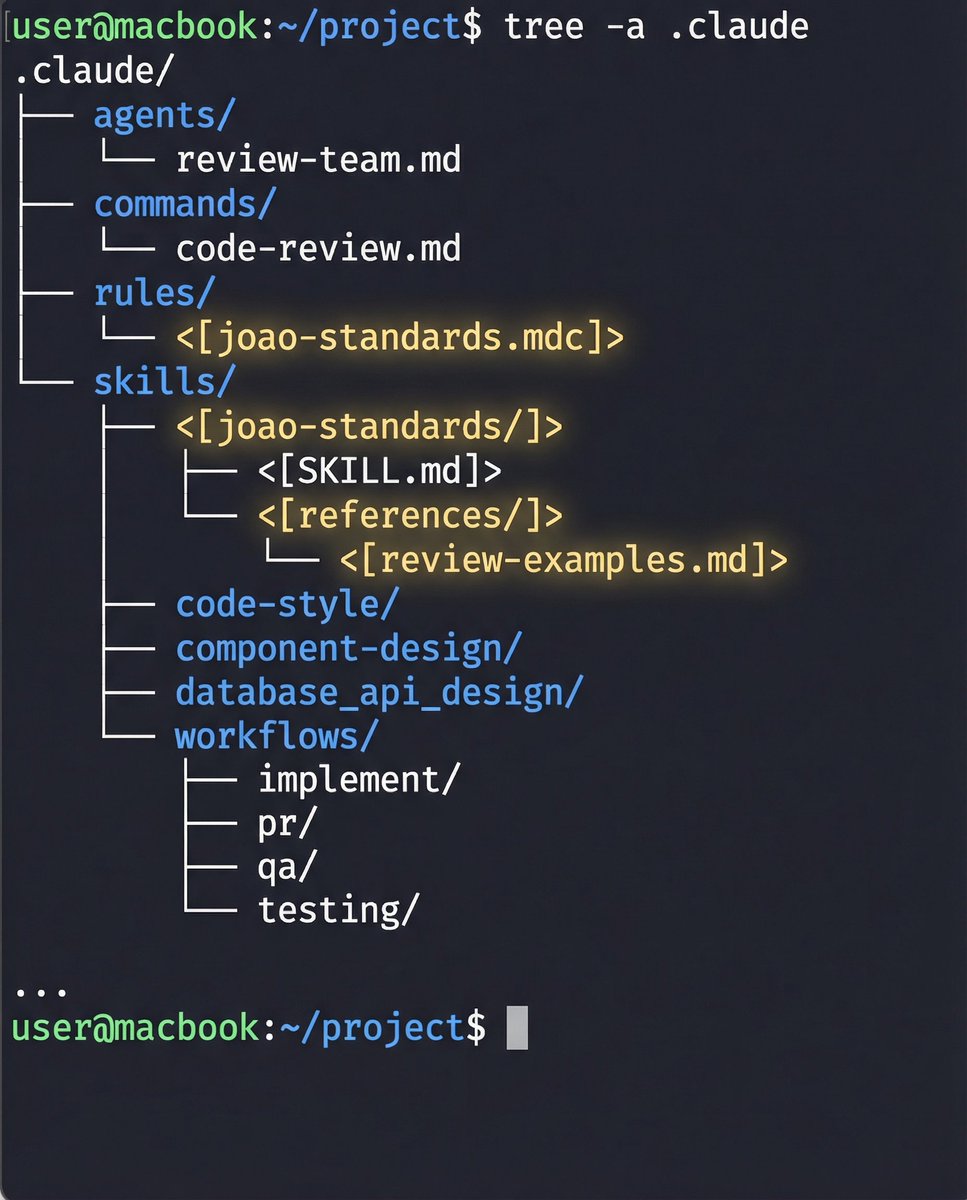
If you want to replicate this: • Observe your humans • Find repeated decisions • Encode them as a skill • Iterate weekly
English
1
0
0
84
Jiliac
Jiliac@Jilyac·
Stop downloading AI skills from the internet. Generic skills do not fix workflows. The only skills that matter are the ones that encode how your team actually works.
Jiliac tweet media
English
1
0
0
181
Jiliac
Jiliac@Jilyac·
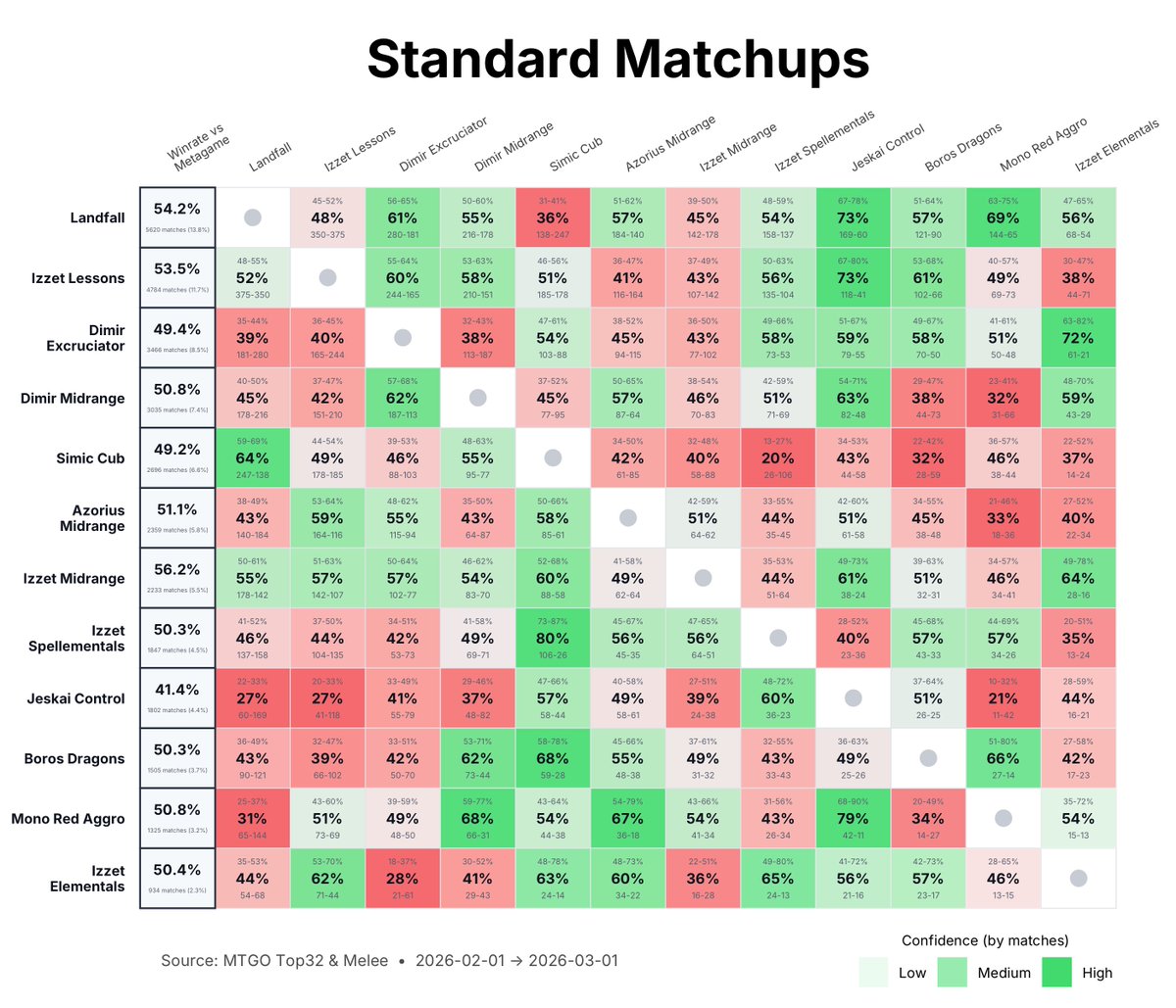
@_MetaMage_ what's the meta since Feb 1 2026 in standard
English
1
0
0
254
Jiliac
Jiliac@Jilyac·
@_MetaMage_ in the last 2 weeks in standard, what's the presence and winrate of all the color variation of the Excruciator archetypes combined?
English
1
0
0
206
Jiliac
Jiliac@Jilyac·
@_MetaMage_ what's the top 3 entries for any "XX elementals" archetype in standard in the last 2 weeks. Name, date, tournament
English
1
0
0
73
MetaMage
MetaMage@_MetaMage_·
@Jilyac Elementals in Standard: 29 entries, 7 builds, 97-78-4 (55.4% winrate). Temur leads (8 entries, 54.7%). Strong vs control/midrange, weak vs Simic Cub (40%) and Reanimator (25%). Full analysis: metamages.com/sessions/28485…
English
1
0
0
135
Jiliac
Jiliac@Jilyac·
@_MetaMage_ over the last 2 weeks in standard, if you combine all the "elementals" archetype, what's their avg winrate and presence? Matchup against top 5 meta archetype by presence?
English
1
0
1
346