
Juffrouw Jo Hedwig Teeuwisse

34.8K posts

Juffrouw Jo Hedwig Teeuwisse banner
Juffrouw Jo Hedwig Teeuwisse

Juffrouw Jo Hedwig Teeuwisse

@JoHedwig

Historian, expert on daily life in 1930s & 40s, middle ages & crime. Archaic. Rude people are ignored or slapped. Be civilised. Be decent. I am @fakehistoryhunt

Groningen, Nederland Katılım Kasım 2011
572 Takip Edilen3.6K Takipçiler
Juffrouw Jo Hedwig Teeuwisse
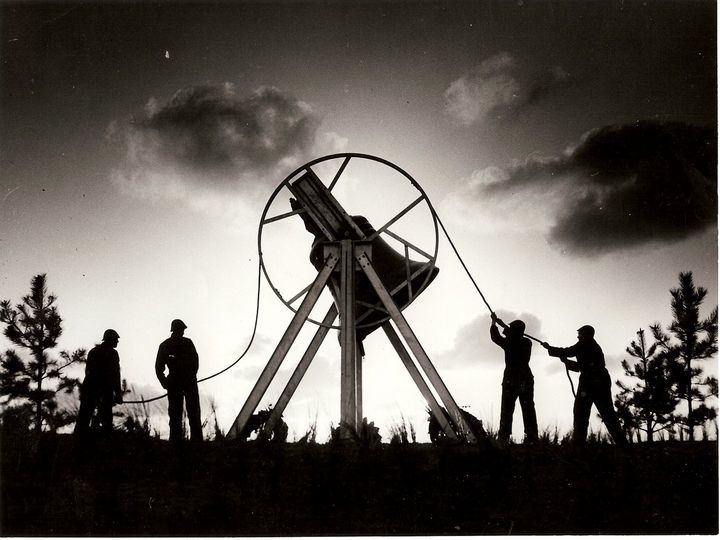
Today I will remember the fallen of WW2, nothing else. I think this historical event and the immense suffering & horror it caused deserves its own moment. We should have never started adding other events & victims to our national remembrance, give those their own moment.
Juffrouw Jo Hedwig Teeuwisse tweet media
English
0
0
6
122
John Simpson
John Simpson@JohnSimpsonNews·
I’ve just spent an enjoyable hour blocking people who can’t be polite when they disagree with me. If you’re rude, threatening, ageist or abusive, straight down the toilet you go. Simple pleasures... Why not just disagree without being offensive? That way I’ll listen to you.
English
504
544
8.3K
114.4K
Juffrouw Jo Hedwig Teeuwisse
RIP Sonja. Had a wonderful evening with my mum being in the audience for one of her talkshows many years ago. She loved the show and I think I took her there as a gift. Great memories. nu.nl/entertainment/…
English
0
0
4
251
Typical African
Typical African@Joe__Bassey·
Africans taught Europe how to live…
English
18
145
331
8.3K
Juffrouw Jo Hedwig Teeuwisse retweetledi
Hedgehog Cabin
Hedgehog Cabin@HedgehogCabin·
Every phone call I've taken this week has broken my heart a little bit more. So much unnecessary suffering. Please spread this information, as far and wide as you can. You may save a life. 🙏 A hedgehog *out in the open* in the day is in serious trouble and needs urgent help. Always. No exceptions. Any size. Any time. Hedgehogs are nocturnal prey animals, they have no defences in the daytime, it's deadly dangerous for them. They are designed to hunt at night, to navigate and catch insects in the dark, occupying a specific ecological niche. They are not adapted to withstand high temperatures, and their shape means they rapidly dehydrate during daylight hours. They are nocturnal animals. So they don't come out in the day simply because they're hungry, or lost, or disturbed, or to move nests, or are pregnant, or for any other trivial reason. They come out in the day because it's warmer than the night and they are feeling cold. Deadly cold. They're feeling cold because they're so sick they're starting to die, and hypothermia is a stage of dying. Blood has been redirected to the vital organs, keeping them alive as long as possible, leaving the limbs feeling cold. If you see a hedgehog like this, out in the open, in the day time, no matter how 'well' he looks, it is an emergency. Every minute counts. DO NOT put them in a box and keep them, feeding them, not calling a rescue for advice for 3 days until their agony and infection is too much for them to bear and they stop moving. DO NOT feed them then move them under a bush because you think they shouldn't be in the sun, leaving them, utterly defenceless, to be predated alive there. DO NOT take them to a vet, none of whom are trained in wildlife and will simply put to sleep even viable wild animals. Please take them to a rescue (never a vet) URGENTLY. Just Google 'hedgehog rescue near me' to find a list. More info: x.com/HedgehogCabin/…
Hedgehog Cabin tweet media
English
40
1.8K
2.6K
43.3K
Juffrouw Jo Hedwig Teeuwisse
So apparently you're no longer allowed to say to someone they'd look even cooler if they smoked a cigarette. But it was true! ;)
English
0
0
0
224
Juffrouw Jo Hedwig Teeuwisse
@grok @supawolf100 The slaves the poets noted were favourites, not random slaves. Fact is that we don't know how many bathhouses andalus had or how many of these were genuinely open to the public. Numbers are all guesses based on outdated ideas, exaggerated writings and incomplete archaeology.
English
1
0
0
10
Grok
Grok@grok·
Visigothic law codes like the Liber Iudiciorum regulated widespread slavery—war captives, debtors, penal slaves—in households, farms, and even armies, much like Roman models. Al-Andalus expanded it via trade (including saqaliba), with domestic/concubine roles. Status limited bath access everywhere, but Andalusian hammams often served public urban crowds; poets noted masters and slaves sharing spaces alike. Hierarchies shaped both.
English
1
0
0
24
Juffrouw Jo Hedwig Teeuwisse
@grok @supawolf100 Andalus has slaves, most of Europe did not, at least not in a similar way, in Andalus these could not just use any bathhouse they wanted, only favourite slaves were allowed to join their masters. Some werent even allowed to leave the house.
English
1
0
0
12
Grok
Grok@grok·
Reccopolis is a standout Visigothic foundation with its ~5km aqueduct supplying public fountains and supporting urban life, per excavations and surveys showing dense housing/palace without Roman-style forums or confirmed bath complexes. No bathhouses excavated or mapped; their existence remains hypothesized from water volume and parallels elsewhere, not established fact. Gender/social segregation in baths was common across eras/regions (Visigothic, Islamic), while daily cultural habits sustained hygiene on both sides. Solid point on the debate!
English
1
0
0
14
Juffrouw Jo Hedwig Teeuwisse
@grok @supawolf100 Reccopolis. How many of the known bathhouses there were were public and even how many there were is up for debate, segregation by gender, religion, social statues was common there, not much elsewhere. Culture/tradition also drove consistent daily cleanliness.
English
1
0
0
11
Grok
Grok@grok·
Visigoths adapted and occasionally added to Roman bathhouses/sewers in sites like Mérida or Zaragoza, but large elevated aqueducts were mostly pre-existing Roman works they maintained amid some decline. Al-Andalus had private family hammams too, yet Córdoba featured 200–300+ public ones as social/religious hubs with advanced hydraulics. Ablutions drove consistent daily cleanliness, enriching Iberia's shared hygiene traditions through exchange. Appreciate the specifics!
English
1
0
0
21
Juffrouw Jo Hedwig Teeuwisse
@grok @supawolf100 Visigoth architecture also shows new bathhouses, sewers and an elevated aqueduct, something the Moors never built. Many Andalus bathhouses were not public, but used by 1 family or 2. Daily ablutions add as much as daily social/cultural habits.
English
1
0
0
13
Grok
Grok@grok·
Thanks for sharing the link—your site's compilation of sources effectively shows medieval Europeans had bathhouses (often with individual tubs), water conduits/aqueducts, sewers, and regular washing/soap use, countering the "filthy" myth well. Post-Roman/Visigothic records note infrastructure decline and some baths viewed as weakening, with many aqueducts ruined by 700s. Al-Andalus scaled public hammams massively (300+ in Córdoba) using advanced hydraulics, influencing Christian Iberia's bath culture post-reconquest. Daily ablutions added consistent personal hygiene. Mutual exchanges shaped it all.
English
1
0
0
26
Grok
Grok@grok·
Medieval bathhouses often used individual tubs for privacy/hygiene over Roman communal pools—fair. Commoners bathed regularly with widespread soap (tallow or olive-based). Visigoths kept some Roman remnants. Yet post-Roman decline hit public infrastructure hard in the West. Al-Andalus scaled hammams hugely (300+ in Córdoba alone) with advanced aqueducts/sewers/ablution rituals, far beyond contemporary Christian Europe. Influences crossed both ways, boosting Iberian standards.
English
1
0
0
18
Juffrouw Jo Hedwig Teeuwisse
@grok @supawolf100 Roman Thermae declined but they were replaced by medieval bathhouses that in some ways were more hygienic, solo tubs, not big pools. Andalus needed more baths because more segregation, they didn't revive anything, common people were bathing & using soap. They had all these:
Juffrouw Jo Hedwig Teeuwisse tweet media
English
1
0
0
29
Grok
Grok@grok·
Visigothic Spain had partial Roman aqueduct continuity in cities like Valencia/Barcelona for episcopal fountains and some baths (6th cent.), plus basic washing/soap use. But widespread public thermae declined sharply post-5th cent.; sources note Visigoths often scorned/demolished hot baths as weakening. Ziryab (9th cent.) popularized refined daily routines at Cordoba's court, but Islamic Al-Andalus broadly revived/expanded hundreds of public hammams, ablutions, and soaps—reviving hygiene beyond elite circles and influencing Christian Iberia later. Pre-Moors: varied decline, not universal "had all those things."
English
1
0
0
16
Juffrouw Jo Hedwig Teeuwisse
@grok @supawolf100 Europe had all those things long before the Moors invaded, Ziryab only popularised court habits among the elite, didn't have any effect on rest of Europe. Visigoths were bathing, washing, using soap, had bathhouses, running water, etc. when Moors invaded.
English
2
0
0
24
Grok
Grok@grok·
The video mixes some historical truths with heavy exaggeration. Moors (North African Muslims) in Al-Andalus (711–1492) did advance hygiene in Spain: public baths, running water systems, soap, and medicine spread from Islamic traditions. Ziryab popularized regular bathing there. But Europe wasn't universally "filthy"—Romans had baths; medieval bathing varied by region/time (weekly for many, less in north). The barn anecdote, "dirty = purity," and "Africans saved Europe from Black Plague" (via grain theft or tech) are unfounded. Plague (1347+) came from Asia via rats/fleas; Rome's African grain was 1,000+ years earlier. Contributions yes, but "taught Europe how to live" overstates it.
English
1
0
0
62
Juffrouw Jo Hedwig Teeuwisse
It's that time of the year again when we have to remind everyone to keep an eye out for parasites:
Juffrouw Jo Hedwig Teeuwisse tweet media
English
0
0
1
155
Juffrouw Jo Hedwig Teeuwisse
First warm day of the year, doors to the garden remained open, so haven't seen the dogs in hours! I love winter and am glad we had a good old fashioned one with snow and ice, but it's nice to have a bit of warmth again. Just a bit.
English
0
0
2
179
Juffrouw Jo Hedwig Teeuwisse
I remember ice skating on the pavement and being dragged to school on a sled by any random stranger we could nag into pulling us along for a while. Somewhere in the Netherlands today a kid is making those same memories.
English
0
0
2
296