@sainsburys hi, is there a problem with your website and app today? I can’t amend my orders and I get this error?

English
Jo Morgan
3.3K posts

@JoMorganUK
a lover of all things from the 1980s; the music, hair and shoulder pads! My hobby is sewing: dresses, bags, cushions.... The crazier the fabric, the better 🤣



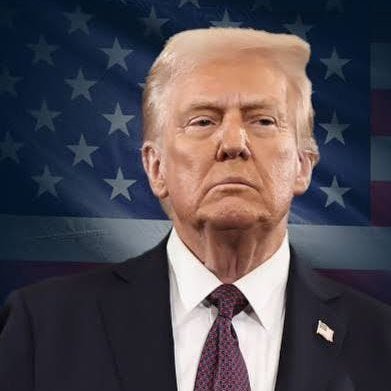







My monologue on The Times at One with Andrew Neil on @TimesRadio : That Britain got off relatively lightly in Donald Trump’s maelstrom of tariffs should not obscure the fact that it is nevertheless the end of global free trade as we’ve known it since the Second World War. And a return to a pre-war era of Protectionism. Neither development is good news for an open, trading economy like the UK, whatever tariffs Trump wants to charge us. The President announced a new 10% baseline tariff, the minimum that all countries exporting to the US will have to pay, including Britain. For countries running big trade surpluses with America but protecting their domestic markets with tariffs of their own Trump announced a set of penal reciprocal tariffs. These were rather arbitrarily calculated by adding up a country’s tariffs, non-tariff barriers and any currency manipulation to make its exports cheaper. This results in an exaggerated figure for other countries’ tariffs allowing Trump to divide it by two to establish the scale of America’s reciprocal tariffs, so that Trump can claim, falsely, that he’s really being generous. So China faces 34% tariffs — in fact its 54% if you include previous tariffs — India and Japan 24%, the European Union 20%. Britain remains on the 10% baseline. Overall the average tariff for goods exported to the US will now be 24%. That’s higher than the notorious Smoot-Hawley tariffs blamed for prolonging the Great Depression in the 1930s. Last year the average US tariff was 2%. So Trump has erected a protectionist wall over 10 times bigger than before around America. Of course some countries might move to cut their tariffs in the hope Trump will do the same. Vietnam, which faces a 46% reciprocal tariff looks like doing just that. But others — China, Japan, the EU — are more likely to retaliate, sparking a series of tit for tat beggar thy neighbour policies which always result in shrinking world trade, slower growth, perhaps even recession — or worse. Prices also rise behind protectionist walls and there are predictions US inflation could increase to over 4% before the year is out, reducing the chance of further interest cuts to come. And companies mollycoddled from foreign competition simply become less efficient over time. Trump’s nationalist vituperation for foreigners — depicting them as plunderers and scavengers on the US economy — was nasty, unnecessary and mistaken. The US has enjoyed unprecedented growth and prosperity these past 70 years. It was largely the architect of the trade rules under which it prospered. Even though powerful new economies like China emerged to challenge the US, America has held on to its 25% share of global GDP for decades. Unlike, say, Britain or the European Union, whose share of global GDP has declined. The British government indicates it will try to conclude a trade deal with America which will reduce the 10% tariffs it currently faces (not forgetting 25% for cars and vehicles). But Trump seems to regard that 10% as an irreducible minimum. After all he’s predicted tariffs will generate trillions and trillions of dollars in new revenues, which is ridiculously fanciful. But if he cuts his tariffs too much he’ll get very little at all. The British economy is already weak enough to be holed below the waterline by even 10% tariffs. The American economy is also stuttering. As stock markets plummet almost everywhere the chances of a global recession are rising, which would bring the UK economy to a grinding halt. Trump claims his new era of protectionism will mark a new golden age for America. It’s more likely to usher in a new age of economic doldrums not just for America but Britain and much of the global economy.