@ionafyfe Tragic for Scotland and the SNP members
English
Jock Wishart 🏴 End Colonial Rule
47.2K posts
@Jockio
The conditioned will always defend their manipulators. Every time.




After Peter Murrell plead guilty today, politicians began turning the finger on Nicola Sturgeon. Our Editor Laura Webster and Political Reporter Steph Brawn discuss

After Peter Murrell plead guilty today, politicians began turning the finger on Nicola Sturgeon. Our Editor Laura Webster and Political Reporter Steph Brawn discuss




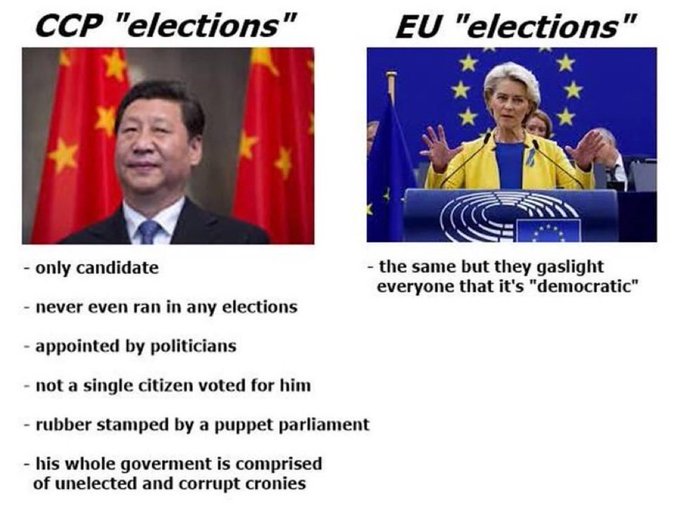
Big Brother’s Rebrand: Surveillance, Spectacle, and the Kindly Aunt The aesthetics of control have evolved from the brutalist architecture of the 20th century into something more ambient and digital, softened into algorithms, regulatory frameworks, and media spectacle. The figure of Big Brother was never really a man. It was a mood, a texture of power that tells you how it feels to be watched, managed, and ruled. The aesthetics of control no longer demand your fear as long as you comply. And more and more, they DO know if you comply, far beyond anything Orwell (or Hitler) could have conceived of. The literary warnings were clear. Yevgeny Zamyatin’s We (1924) established the original blueprint: a clinical, glass-walled machine-state where mathematical logic and enforced collectivism erase the individual long before the boot ever arrives. Aldous Huxley’s “Brave New World” (1932) offered control through comfort and distraction - who would rebel when a Soma pill was available? Sinclair Lewis’s “It Can’t Happen Here” (1935) gave us Berzelius “Buzz” Windrip, a folksy demagogue who uses radio and resentment to hollow out democracy from within. George Orwell’s “Nineteen Eighty-Four” (1949) gave us the cold, monolithic surveillance state. Even Moore’s “V for Vendetta (1982-1989) was a response to authoritarianism that had learned to wear a civilized face. We’ve cycled through all these aesthetics, sometimes simultaneously. The real 20th-century strongmen understood power as theater. Mussolini and Hitler built it through choreographed rallies and mythic symbolism. “Triumph of the Will”, Leni Riefenstahl’s brilliant film of Hitler’s 1935 Nuremburg rally is still the masterpiece of “strongman” aesthetic. Franco, on the other hand, ruled through Catholic austerity and silence. Oswald Mosley tried to import the aesthetic to Britain, complete with black shirts and street violence, before the public rejected the performance. Jean-Marie Le Pen represented a shift toward media-savvy nationalism, but he wasn’t alone; the far right learned to package grievance for television, then for the internet. Donald Trump uses the attention economy, where control flows through personal branding and the churn of outrage.while maintaining the democratic overlay. He has taken on the persona of a Big Brother for the Oprah and Internet age, Big Brother as reality TV host - loud, transactional, and intimate. But there’s another aesthetic emerging, one that doesn’t shout at all. Ursula von der Leyen, gynacologist, mother of seven (!), our modern day Big Sister, embodies this shift perfectly. She doesn’t rant or loom; she explains, but as if to little children. She has the vibe of a kindly but stern aunt who knows what’s best for you, even if you don’t want to hear it. Her authority wears the uniform of technocracy, living in compliance frameworks and cross-border standards. The EU’s Digital Services Act is the perfect artifact of this aesthetic: control through regulation, framed as protection. It’s not a boot stamping on a human face; it’s a content moderation policy that decides what you can and cannot see, all in the name of safety and democratic values. Enter the tech bros and their algorithms, led by Peter Thiel and Palantir. They represent the privatization of the surveillance aesthetic, where control isn’t just governmental but corporate, algorithmic, and sold as a service. Palantir’s software doesn’t need to announce itself; it processes, predicts, and sorts. Thiel’s vision of power is libertarian-authoritarian, skeptical of democracy but obsessed with order and technological supremacy. This is Big Brother as a startup: sleek, data-driven, and convinced of its own necessity. And Thiel’s Antichrist “hobby”? Nothing to see there, and certainly not anything to do with Big Brother and authoritarianism... The aesthetics of control have fragmented because control itself has learned to blend in. It no longer needs a single face when it can live in your feed, your workplace guidelines, your supply chain, or your internalized sense of normalcy. The vibe today isn’t terror or grandeur. It’s inevitability, wrapped in the language of safety, efficiency, or common sense. And that may be the most effective disguise modern power has ever worn. Substack 👇👇👇