

John Rob James
607 posts

@JewYid The look of wonder in your eyes isn't deep introspection. Farshstei.
English
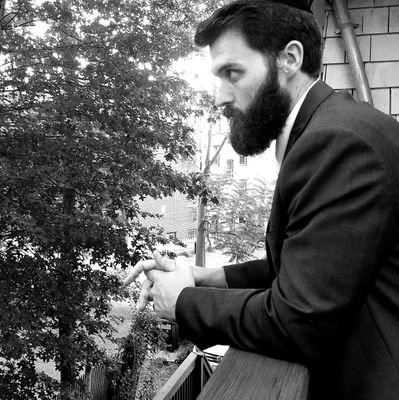
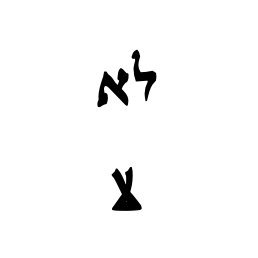
My rabbi quoted and then translated "shtei shabosos" as "two shabbosim" in his speech today, multiple times.
Two different plural forms, one for Hebrew and one for Yinglish
English

@arabic_bad @ait_kisou @bnuyaminim Maltese is definitely descended from Arabic though
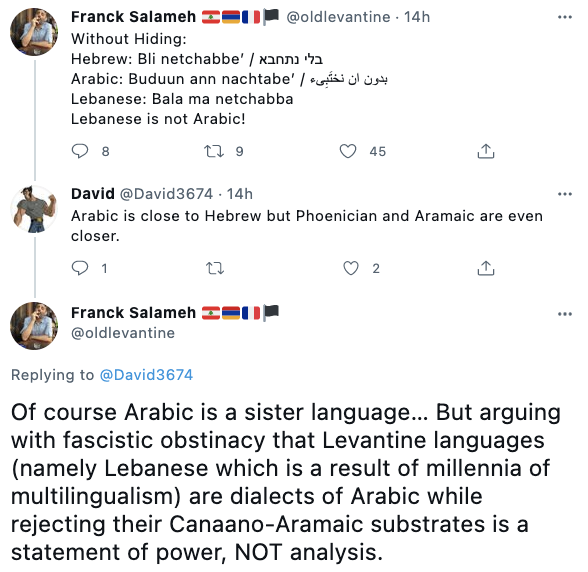
Which is exactly the point of those who argue against those who claim Lebanese didn’t descend from Arabic
English
I know, I know, posting Franck Salameh is reaching for low-hanging fruit but...yeesh. I don't even know where to start here.
English
English
English
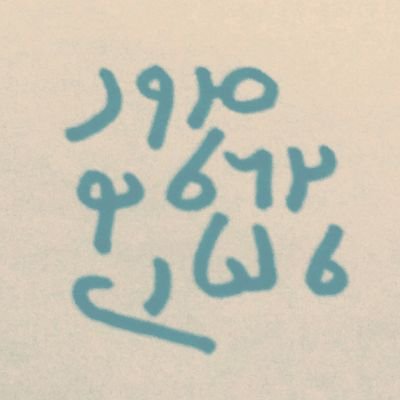
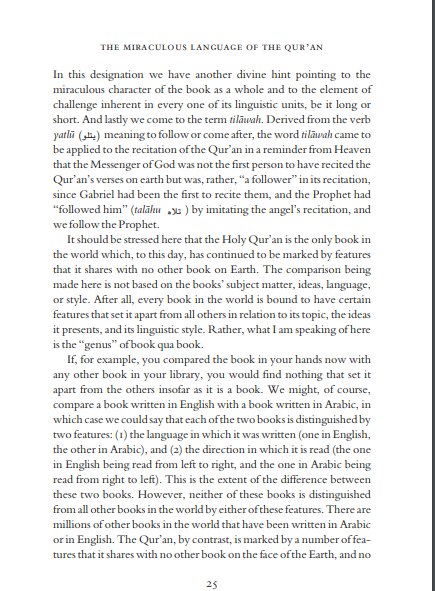
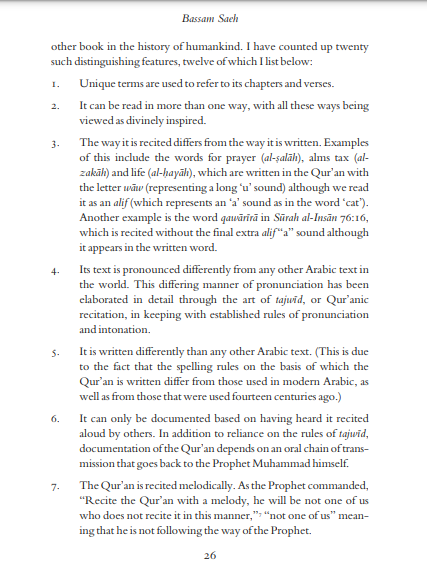
There’s actually a reason why the word for prayer is spelled that way in the Qur’an and it has zip to do with Syriac.
It’s because the dialect of the Qur’an contained more vowels than the canonical 3. It had a vowel /ō/ found in words like حياة and صلاة.

English
@PhDniX @hamza_khw @arabic_bad Here's a bad take on صلاة/صلوة (point 3, page 26) though this book is a pretty prolonged bad Arabic take.
English
@hamza_khw @arabic_bad Agreed! The idea that it is syriac orthographic influence has been the academic consensus for over a hundred years. It was wrong and wrong headed from the start, but I can hardly blame a lay person to take the overwhelming group of academics saying so as gospel truth....
English
@Utkarsh_roy_1 @KaitoKi11406214 @kwo_vadis @avwagner @asbjrnberg1 @PhDniX @DerMenschensohn @Mahgraye @arabic_bad I see your point, but I still think the point of the text up till this point is the cosmological balance/scale and not the “earthly scale/justice”, which was clarified by the interpolation, breaking the rhythm. So what is the subject of تطغاو in vs. 8?
English
Christoph Luxenberg is the Elvis of Bad Arabic Takes.

English
@avwagner @KaitoKi11406214 @kwo_vadis @asbjrnberg1 @PhDniX @DerMenschensohn @Mahgraye @arabic_bad I think this interpretation may also make sense. I'm open to this possibility.
English
@Utkarsh_roy_1 @KaitoKi11406214 @kwo_vadis @avwagner @asbjrnberg1 @PhDniX @DerMenschensohn @Mahgraye @arabic_bad I go your point, though the issue is that then verse nine becomes not only redundant but also out of place in the entire surah, which focuses on the wondrous balance in God’s creations, not the earthly scale/justice that humans are to administer; seemingly the point of Q 55:9.
English
@Utkarsh_roy_1 @KaitoKi11406214 @kwo_vadis @avwagner @asbjrnberg1 @PhDniX @DerMenschensohn @Mahgraye @arabic_bad 4/4 Perhaps 55:7-8 was misunderstood or became slightly corrupted and thus 55:9 was interpolated to clear it up. Alternatively, 55:8-9 was interpolated because the meaning of 55:7 was misunderstood, though the issue with this view is the redundancy. Perhaps that's defensible.
English
@Utkarsh_roy_1 @KaitoKi11406214 @kwo_vadis @avwagner @asbjrnberg1 @PhDniX @DerMenschensohn @Mahgraye @arabic_bad 3/4 Where the same root of the verb for transgress in 55:8 ط غ ي is used for the waters “transgressing” the set boundary: “When the waters overflowed (إِنَّا لَمَّا طَغَى الْمَاءُ), We carried you in the cruising ship”. It would perhaps require a slight emendation of the text.
English
@KaitoKi11406214 @kwo_vadis @avwagner @asbjrnberg1 @PhDniX @DerMenschensohn @Mahgraye @arabic_bad 4/4 This hypothesis makes good sense of the problem. If it’s convincing or not, I’ll let folks make up their own minds. If it correctly represents Dye or not I don’t know as I haven’t read his argument. Perhaps Q 55:8 still feels somewhat redundant in light of Q 55:9.
English
@KaitoKi11406214 @kwo_vadis @avwagner @asbjrnberg1 @PhDniX @DerMenschensohn @Mahgraye @arabic_bad 3/4 The author of Q 55:7 similarly deployed الميزان metaphorically for the equivalent of Narsai’s usage of ܡܬܩܠ(ܐ) [Hebrew and Aramaic cognates מתקלא and משקל]. Subsequently, this was not properly understood by our interpolator, who added the gloss in 55:8-9.
English
@kwo_vadis @KaitoKi11406214 @asbjrnberg1 @PhDniX @DerMenschensohn @Mahgraye @arabic_bad Can you post a link or image please? I don’t have access to it.
English

@JohnRobJames1 @KaitoKi11406214 @asbjrnberg1 @PhDniX @DerMenschensohn @Mahgraye @arabic_bad Coran des historiens, vol 1, starting p 815.
English
@kwo_vadis @KaitoKi11406214 @asbjrnberg1 @PhDniX @DerMenschensohn @Mahgraye @arabic_bad @kwo_vadis This is quite important. Can you post the link to the details?
English
@kwo_vadis @KaitoKi11406214 @asbjrnberg1 @PhDniX @DerMenschensohn @Mahgraye @arabic_bad I see. That makes the argument rational. I found Tesei citing the text, but I couldn’t find the Syriac online. Appreciate if anyone could post it. “O balance (ܡܬܩܠ?) which divided the great water cistern and gathered it in two seas (tryn ymmyn), in the heaven and in the deep!”
English