John Bogdasarian

223 posts

John Bogdasarian banner
John Bogdasarian

John Bogdasarian

@JohnnyBogs

Founder of RE PE Co. Promanas, Co-Founder and Manager of Angel Investing Co. Orange Seed Capital. Deal Maker, Husband, Father, Kite Surfer.

Ann Arbor, MI Katılım Ocak 2011
15 Takip Edilen39 Takipçiler
Sabitlenmiş Tweet
John Bogdasarian
John Bogdasarian@JohnnyBogs·
For Accredited Investors: Innovative Nashville Group Travel Hotel Investment Opportunity Introducing, 4th & Elm. This $190M project features 141 multi-bedroom suites targeting Nashville's booming group travel market, anchored by T-Squared Social—a 20,000 square foot entertainment venue backed by Tiger Woods and Justin Timberlake. Our 400+ accredited investors have already funded over $30M for this specific project, and we're now completing the final equity positions. Nashville's 17+ million annual visitors and status as the bachelorette party capital create strong fundamentals for this unique hospitality investment.
English

1
0
0
67
John Bogdasarian
John Bogdasarian@JohnnyBogs·
When considering a real estate deal, don't lead with questions about the deal itself. Do this instead: Ask questions about the sponsor first. But you have to know the right questions to ask. And sure, asking them might make you uncomfortable. You may feel like you're putting the sponsor on the spot. As a deal sponsor, I can tell you that tough questions are my favorite part of the process. Here's the 9 questions that matter most: 1: "Why do you do this (other than making money)?" Look for genuine passion beyond profit. 2: "Can you describe a time when you admitted a mistake on one of your deals?" Honest sponsors volunteer this information. 3: "What are the contingency fees in this deal? What are the layers of protection, or reserves, or other items that can be cut out in case of lower rents or sale prices and/or higher-than-projected costs?" This question reveals their risk management depth. 4: "What books can you recommend for me to learn more about real estate and real estate investing?" No answer means they're not putting time into learning the industry (a never-ending process). 5: "What are some of your better deals? What has been your worst deal?" This reveals experience, and the lessons learned from that experience. 6: "Who do you borrow money from and can I get in touch with your contacts at the bank?" Reputable sponsors have established lending relationships. 7: "How many people are in your office? Who are they? What is their background? What do they do?" Ensure everyone has the same motivations as the sponsor. 8: "Are you personally guaranteeing this loan?" If they're asking you to guarantee, walk away. 9: "Tell me about some of the deals you did that didn't work out, or weren't going to work out, and how did you address those concerns?" This reveals their problem-solving ability under pressure. The sponsor's willingness to answer these tough questions matters more than perfect answers. Great sponsors are transparent about challenges and protective of your downside.
John Bogdasarian tweet media
English
0
0
0
9
John Bogdasarian
John Bogdasarian@JohnnyBogs·
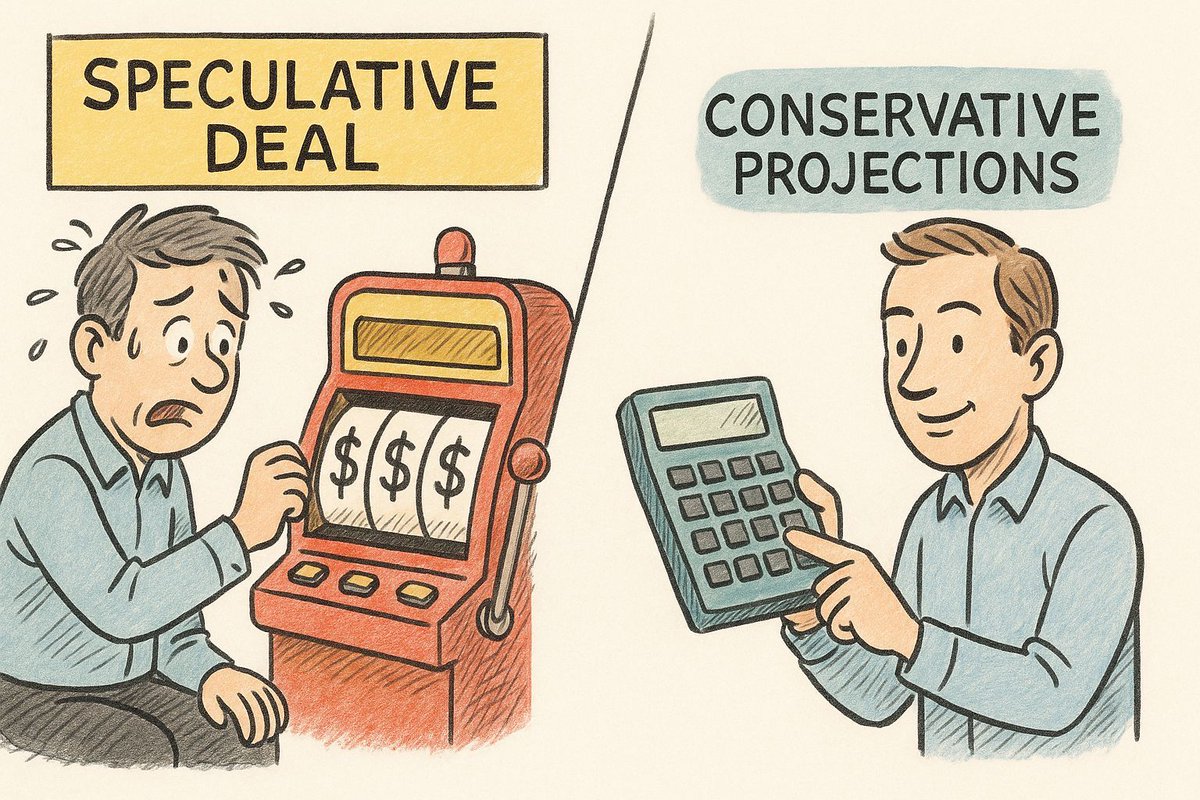
I've met investors who lost on one real estate deal and decided never to do it again. Here's what happens: Sponsors put out the best numbers they can justify to attract capital. It's not normally done on purpose, but they over-promise, under-deliver. It's a terrible approach. Now when I meet people who tell me they lost on a real estate investment deal, I dig a little deeper. I peel back the layers of the investment onion and find out that their particular deal never had a chance. Instead, you should follow the 3 core principles of our deal philosophy at Promanas: 1. Conservative projections only. We build in construction contingencies, maintain prudent leverage, and plan for economic setbacks. Location, supply-demand analysis, and risk management protect against downside scenarios. 2. Long-term cycles matter. Real estate moves in 20-30 year patterns. We're not interested in anything that feels like gambling or short-term speculation. 3. Investor returns first. Deal structures should heavily favor investors, not the sponsor. Investor capital comes back first, plus preferred returns. This philosophy means saying no to deals that might look stellar on paper but lack conservative fundamentals. It means measured growth but more predictable outcomes. Real estate investing is about doing the work once and getting paid forever. That only works when the foundation is built to last.
John Bogdasarian tweet media
English
0
0
0
10
John Bogdasarian
John Bogdasarian@JohnnyBogs·
Busy accredited investors face a tough decision when considering passive investments: Accept historical stock market returns OR settle for lower REIT yields that fluctuate with interest rates. Most high-net-worth professionals I work with already own stocks through their portfolios. They understand the S&P 500 delivers solid long-term returns, but they want diversification beyond public markets. So they turn to Real Estate Investment Trusts (REITs). REITs offer you passive real estate exposure, but they come with some downsides: • Share prices can drop dramatically when interest rates rise, even while the underlying properties perform well. • Returns are constrained by public market dynamics rather than property fundamentals. • You don't have direct access to the deal sponsor. Now you have a much stronger, third option: Our latest real estate investment opportunity, 4th & Elm Nashville. This luxury, group travel hotel will be operated by world-class Schulte Hospitality Group with our team's capital invested right alongside yours. You get direct access to sponsors with $1.5B+ in successful deals, not a faceless public company board. Compare the projected passive returns from 4th & Elm to other traditional investment vehicles:
English
1
0
0
33
John Bogdasarian
John Bogdasarian@JohnnyBogs·
The #1 mistake I see accredited investors make with real estate deals: They analyze the specific deal more than the deal sponsor. You should do the exact opposite. The person running the deal is far more important than the deal itself. Here's why:
English
1
0
0
18
John Bogdasarian
John Bogdasarian@JohnnyBogs·
When Meg Epstein cold-called me a few years ago, I had no idea we'd complete 4 Nashville projects together—all exceeding projections for investors. Now we're building our best development yet, catering to a significantly underserved market. Our proven Nashville track record at Promanas and CA South: ✅ Hyve: 83-Unit residential condo development with street level retail & office (zoned for short-term rentals) ✅ Illume: 5-story, 75-unit condo development steps from The Gulch, Nashville's premier urban neighborhood (zoned for short-term rentals) ✅ Alina: 51-unit condo development also steps from The Gulch ✅ River Tower: 37-unit residential condo development on the Cumberland River, a few blocks from lower Broadway (zoned for short-term rentals) Leveraging valuable insights from these last 4 successful projects, we’ve now pinpointed exactly how to deliver THE premium group experience in Nashville. Enter: 4th & Elm. Here's how we’ve specifically designed this innovative, luxury property to dominate group travel, the fastest-growing segment of Nashville’s booming hospitality market: 1. Single ownership eliminates pricing competition - Instead of multiple STR owners undercutting each other, we control pricing strategy and maintain premium, market-based rates across all 280 keys. 2. Best-in-class amenities drive higher revenue per stay - A stunning rooftop restaurant and pool, T-Squared Social entertainment venue, 5 world-class food & beverage options, and 24/7 fitness center all command premium ADRs (Average Daily Rates) and repeat bookings. 3. Centralized guest experience creates lasting loyalty - 24/7 concierge service, unified brand standards, and professional management by Schulte Hospitality Group ensure every touchpoint exceeds expectations. 4. Purpose-built design maximizes revenue efficiency - Rooms can be dynamically reconfigured based on seasonal demand patterns, allowing us to optimize occupancy and pricing throughout the year. 5. Professional hotel management reduces operating costs - Schulte's unified operations, centralized housekeeping, maintenance, and booking systems deliver economies of scale that individual STR owners can't achieve. Group travel demand in Nashville is soaring. Now we have the ideal hospitality asset to capture it for every investor.
English
1
0
0
23
John Bogdasarian
John Bogdasarian@JohnnyBogs·
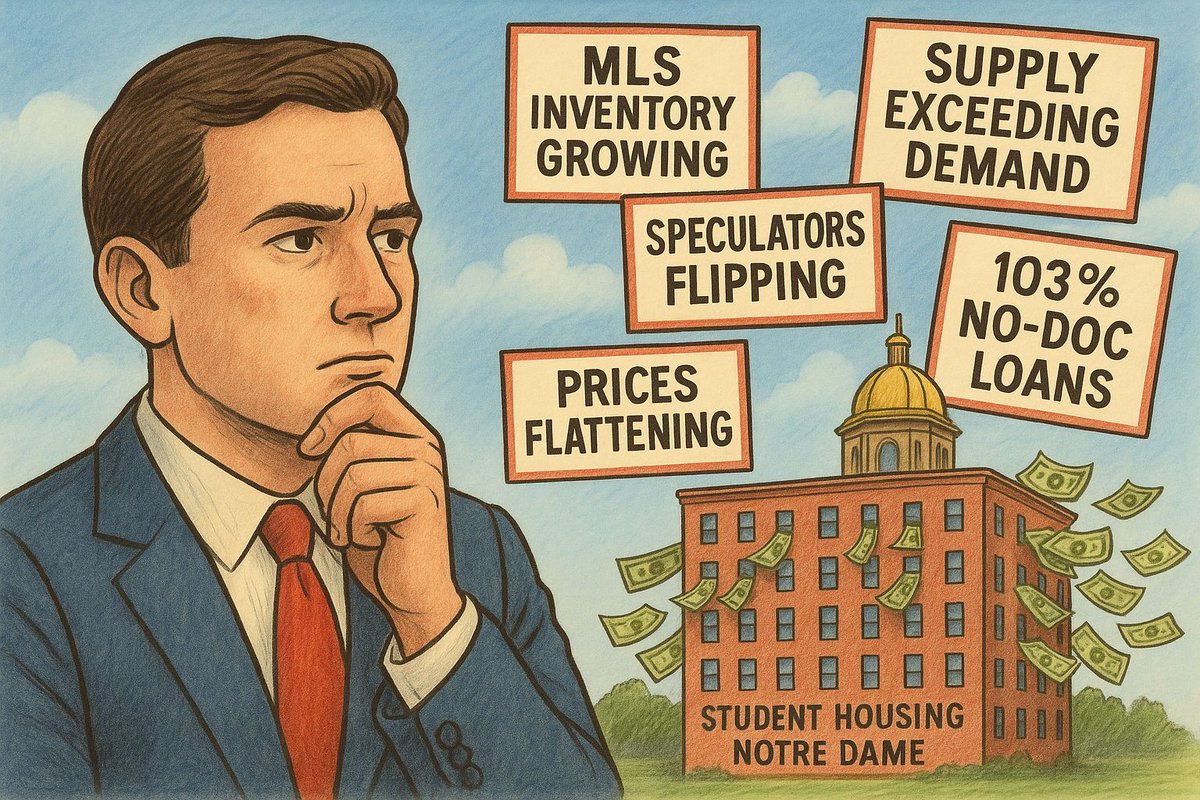
In 2005, I personally guaranteed an $8 million loan on a 480-unit Notre Dame student housing portfolio. By 2006, the market already showed cracks. I would soon have to make a critical decision. My South Bend portfolio was my first syndicated deal, and was performing exactly as I expected: ✅ Predictable rental income ✅ Stable occupancy ✅ Solid cash flow I originally planned to refinance in 2007 and hold the portfolio long-term. But I was watching the market carefully. What I saw concerned me. Then my broker asked while arranging the refinancing: "Would you consider selling?" That question kicked off a series of events that taught me 3 lessons I still use on deals today: 1. Read the warning signs others ignore - In 2006, I could see we were heading into trouble. Supply was exceeding demand. MLS inventory kept growing. Prices were flattening. New home sales were dominated by speculators putting down deposits on multiple properties hoping to flip before completion. No-doc loans at 103% LTV meant anyone with a pulse could get approved. If nobody has equity in their home and values drop, they walk. So I began offloading development deals and anything dependent on selling units. I also closed out my other office condo project. I did, however, keep my income-producing properties. But being personally on the hook for $8M on the South Bend portfolio—even with its solid cash flow—made me reconsider everything as the market weakened. 2. Pivot when the market requires it - The broker said he could get $14 million for the portfolio. I hadn't even considered selling. I wanted it to be a long-term hold. But I was personally on the hook for $8M heading into an uncertain market. The choice became clear. We sold in 2007. And my investors doubled their money. Right before everything collapsed. 3. Turn perfect timing into stronger positioning - That 2x return on my first syndicated deal built trust that still pays dividends today. But more importantly, the proceeds allowed me to pay off business debt and position myself with liquidity for what came next. 2008: Sat out completely (didn't buy anything). 2009: Started buying aggressively with a fund structure when properties were trading at 11-cap rates and everyone else was paralyzed. That student housing exit was the pivotal deal that allowed me to survive the downturn and capitalize on the lucrative opportunity that followed. From 7 investors in 2005 to building a portfolio with 400+ active investors across multiple markets today. Never let your original plan override what the market is telling you. I wanted a long-term hold. The market said sell. I listened.
John Bogdasarian tweet media
English
0
0
0
26
John Bogdasarian
John Bogdasarian@JohnnyBogs·
Failed HVAC system: $340K. Tenant buildout cost overrun: $180K. Accredited investor returns affected: None. How do we protect our real estate deals from these unexpected problems? Excess Cash. In other words, expect the unexpected. Many brokers will lowball reserve projections to make deals look attractive. But inadequate reserves leave projects vulnerable when problems arise. Experienced sponsors maintain excess cash reserves for 3 critical reasons: • Cost Overrun Protection - Development projects can easily exceed budgets. Smart sponsors build multiple layers of protection with reserves and contingencies rather than hope everything goes according to plan. • Vacancy Coverage - Tenant departures can happen suddenly, impacting cash flow. Single-tenant buildings can lose their entire tenant base overnight, while diversified properties risk losing key tenants. Without adequate reserves, this could hurt returns. • Capital & Operating Expenditure Buffer - Properties require major systems replacements, tenant improvements, and leasing commissions. Brokers rarely factor these into their projections, leaving deals undercapitalized from day one. Experienced sponsors create substantial reserve funds for each project. When temporary setbacks occur, they can weather the storm without forcing investors into capital calls (which I've never done because I take this approach). Excess cash. It's the ultimate investor protection strategy.
John Bogdasarian tweet media
English
1
0
0
16
John Bogdasarian
John Bogdasarian@JohnnyBogs·
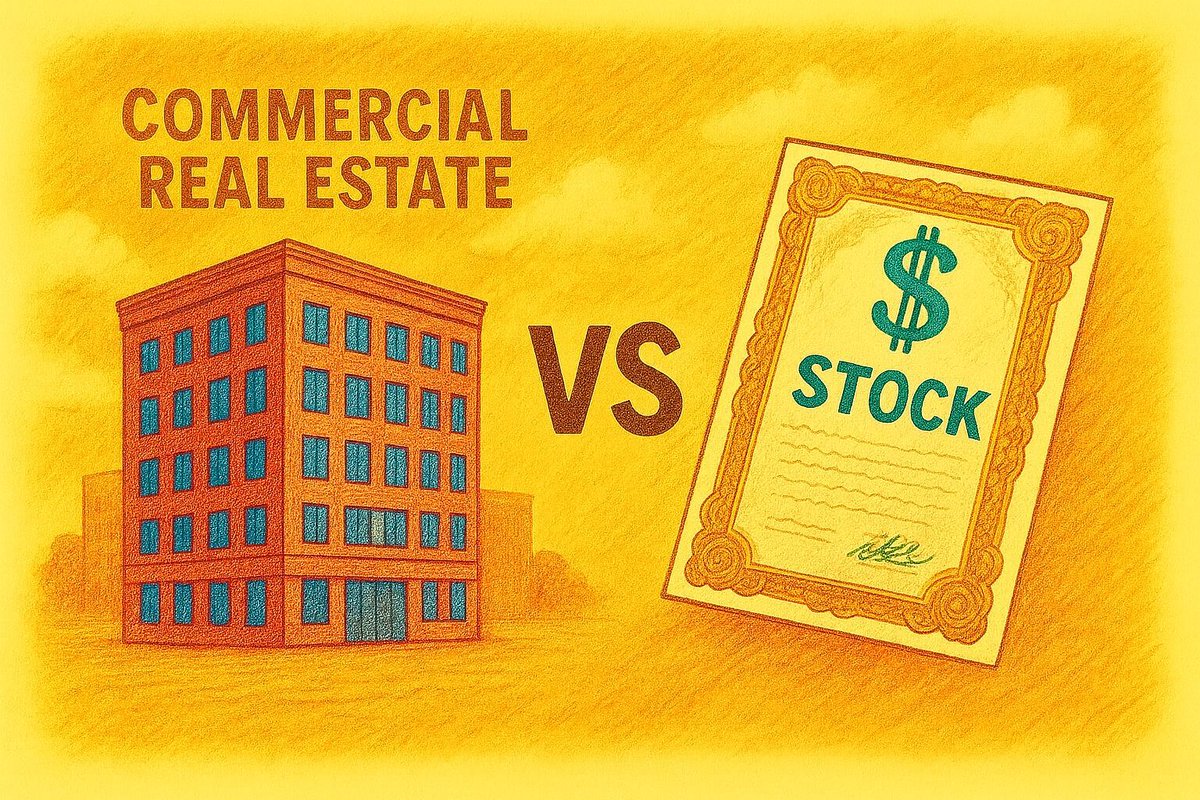
Real estate gives accredited investors a few massive advantages that stocks never will. Here are the 3 fundamental benefits that matter to accredited investors: • Tangible vs. Intangible: The stock market provides paper assets—conjured items, if you will. With real estate, you're buying bricks and mortar, a physical property that typically rises with inflation while providing significant tax benefits. • More Control & Longevity: With stocks, you own such a small piece that you have no say in what happens. Plus, most companies ultimately go out of business. But landlords continue collecting rent with new tenants. • The Liquidity Paradox: Stocks let you sell whenever you want, but that's actually a problem. You're more prone to act on emotion when you can panic-sell. Real estate's illiquidity forces you to stay logical. This is why we use a PPM (Private Placement Memorandum) structure for all real estate deals at Promanas. You get the passive investment nature of stocks with the wealth-building benefits of real estate and direct access to the deal sponsor. There's a reason wealthy families have owned real estate for generations while most stocks from 100 years ago no longer exist.
John Bogdasarian tweet media
English
0
0
0
14
John Bogdasarian
John Bogdasarian@JohnnyBogs·
Nashville has never seen anything like this. A luxury hotel, built from the ground up, specifically designed to delight and deliver to group travelers—an overlooked, yet booming market segment in America's Music City. Welcome to 4th & Elm. With 17 million visitors annually, large groups flock to Nashville for: 🎉 Bachelorette parties 💍 Weddings 🥳 Milestone celebrations 🤝 Corporate events Soon, they will all want to stay at THE premier hotel for group travel. Watch this clip where my business partner, Meg Epstein from CA South, shows how 4th & Elm fully captures this exciting market opportunity where traditional hotels and short-term rentals simply fall short:
English
1
0
0
48
John Bogdasarian
John Bogdasarian@JohnnyBogs·
I've asked 100’s of investors about other real estate investments they've participated in. Almost NONE met original projections. Here’s the good news: You can usually uncover this deal sponsor problem before investing by asking for 3 specific documents. I call this the Past Deal Transparency Audit. Ask for the complete documentation from one of their previous deals: • The initial investment packet - Review the original projections, timeline, and risk factors they disclosed upfront. Compare these assumptions to what actually happened. • Every monthly or quarterly report - Track how they communicated with investors through market changes. Did they report only wins? Or did they also address setbacks and their solutions? • The final disposition summary and investor returns - Did they deliver on their promises? Were delays explained? How did actual returns compare to projections? The sponsors worth your capital will volunteer this information immediately. They operate with complete transparency because their track record speaks for itself. At Promanas, we provide complete case studies from our previous deals to any accredited investor considering our projects. Our 100% transparency approach includes every report, update, and final disposition summary from deals spanning over $1.5 billion in real estate transactions. You should always feel like you know the things you need to know.
John Bogdasarian tweet media
English
0
0
0
9
John Bogdasarian
John Bogdasarian@JohnnyBogs·
I've been talking recently with family offices managing $100M to $1B+. Even if they call themselves "highly concentrated", I've noticed they still follow this strict allocation rule: Diversification. A family office that's highly concentrated in venture capital might put 40% in VC and businesses. The remaining 60% gets distributed across other asset classes: • 20% fixed income and municipal bonds • 20% public equities and international investments • 20% private placements and real estate And they don't chase yield. Family offices look for opportunities with minimal downside risk and strong IRR potential. They want investments that fit their allocation framework without creating operational headaches. That's exactly how we've structured our latest development project, 4th & Elm Nashville. 4th & Elm isn’t another generic hotel deal. We’ve specifically designed this innovative, luxury property to dominate group travel—the fastest-growing segment of Nashville’s booming hospitality market— by delivering: • Strategic unit design: Multi-bedroom suites house entire groups in one reservation rather than fragmenting them across multiple hotel rooms (or losing the reservation altogether). • Premium group experience: Purpose-built accommodations with full kitchens and oversized living areas, plus best-in-class amenities such as a stunning rooftop restaurant & pool and chic lobby dining. • Exclusive entertainment access: Guests enjoy advanced booking privileges at T-Squared Social, an elevated entertainment concept backed by Justin Timberlake and Tiger Woods, occupying our 20,000 square foot venue space. This approach maximizes revenue per stay through strategic configurations that traditional hotels and scattered STRs simply can't match. The investment breakdown: • 18%+ projected annual investor returns • 8% preferred return • 70% of profits to investors until you reach an additional 8% IRR • 50% of profits to investors thereafter • 3-5 hold period We've already completed four successful Nashville projects with our development partner, CA South, delivering superior returns to investors. Now we've positioned 4th & Elm to be our best Nashville project yet. For family offices evaluating private real estate allocations, 4th & Elm offers proven operators, institutional structure, and a compelling market strategy backed by 30+ years of development experience.
English
1
0
0
20
John Bogdasarian
John Bogdasarian@JohnnyBogs·
I'm always warning accredited investors about the constant grind of direct real estate investing. I break it down in 2 ways: The Hard Way: Direct Real Estate Investing Yes, you can make money going direct. That's exactly how I started in the early 90's. I bought a $50,000 condo with $5,000 down, found a roommate to cover the mortgage, then scaled to 20 single-family homes by my late twenties. But here's what that "learning experience" required: • Becoming a licensed broker • Hiring property managers & maintenance crews • Dealing with tenant issues (yes, even with property managers) • Understanding zoning laws • Creating marketing strategies • And a whole lot more After 30 years and over $1.5 billion in transactions, I can tell you the education was invaluable, but it took decades to master. The Easy Way For Accredited Investors: Experienced Deal Sponsors Smart accredited investors know a simple truth. Their time has value. Instead of spending years learning deal structures, market cycles, and operational challenges, they partner with sponsors who've already been through it all and thrived. We've navigated the 2008 financial crisis and 2020 pandemic, built portfolios across multiple asset classes, and developed risk-mitigating deal structures that protect investor capital. So you can either spend the next decade becoming a real estate expert OR find the right sponsor and generate strong returns passively. Then you can stay focused on what you do best.
John Bogdasarian tweet media
English
1
0
1
26
John Bogdasarian
John Bogdasarian@JohnnyBogs·
A record-breaking 17.1M people visited Nashville in 2024—many traveling in large groups. But most groups leave dissatisfied with Music City’s two main hospitality options: Traditional hotels and short-term rentals (STRs). Traditional hotels force groups of 8-12 to book multiple, cramped rooms. Short-term rentals (STRs) lack the luxury amenities and professional service that groups expect. Neither option captures the full revenue potential OR delivers the premium experience groups actually want. Our new luxury group travel hotel, 4th & Elm, solves both problems and will outperform traditional hotels and STRs by delivering: 1. Higher revenue per stay - Instead of booking multiple hotel rooms, we capture full-group bookings in large, multi-bedroom suites, driving higher revenue per reservation. 2. Centralized hotel operations - Unlike scattered STRs, 4th & Elm operates as a fully managed hospitality asset with controlled pricing, brand consistency, and premium service. 3. Best-in-class amenities - Guests enjoy on-site bars, a stunning rooftop pool/restaurant, a full gym, and 24/7 guest support—features that drive premium rates and repeat bookings. 4. Professional hotel management - Unlike independently managed STRs, 4th & Elm operates under Schulte Hospitality Group, a world-class hotel management team, ensuring seamless operations and exceptional guest experience. 5. Passive income for accredited investors - As an investor in this private placement memorandum (PPM), you receive stable, passive returns, unlike the hands-on management burden of short-term rental ownership. We project this exclusive opportunity will deliver 18% annual investor returns (including an 8% preferred return) over 3-5 years. This innovative hospitality asset captures revenue that the traditional hotel model simply misses. Don't miss out yourself. Click link below to learn more about this exclusive investment opportunity for accredited investors only. ⬇️
John Bogdasarian tweet media
English
1
0
0
20