ABME@ABMEjournal
To improve outcomes for patients with heart valve disease, we need to understand how their valves behave without performing invasive procedures.
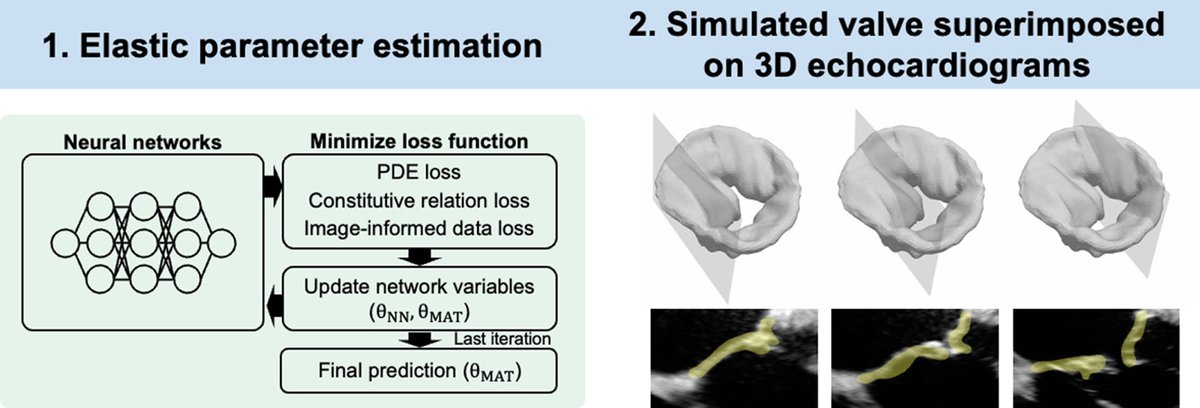
That’s where simulation comes in – but building accurate models is difficult when critical details, like tissue properties or valve support structures, are missing. These gaps make it hard to align simulations with real patient anatomy, limiting their clinical value.
A new open-source method called FINESSE allows simulations to match real valve geometry from 3D echocardiography, even when data is limited. Tested on synthetic models and pediatric cases, FINESSE accurately estimated how valve leaflets stretch and move. This paves the way for linking real-time valve behavior to clinical outcomes.
𝗥𝗲𝗮𝗱 𝗺𝗼𝗿𝗲: link.springer.com/article/10.100…
𝗦𝘁𝘂𝗱𝘆: FEBio FINESSE: An Open-Source Finite Element Simulation Approach to Estimate In Vivo Heart Valve Strains Using Shape Enforcement
𝗔𝘂𝘁𝗵𝗼𝗿𝘀: @DW_Laurence, Patricia M. Sabin, Analise M. Sulentic, Matthew Daemer, Steve A. Maas, @JeffWeissUT, and Matthew A. Jolley
Children’s Hospital of Philadelphia
University of Utah (@UUtah)
𝗦𝘂𝗯𝗺𝗶𝘁 𝘆𝗼𝘂𝗿 𝗺𝗮𝗻𝘂𝘀𝗰𝗿𝗶𝗽𝘁: link.springer.com/journal/10439