Jo retweetledi
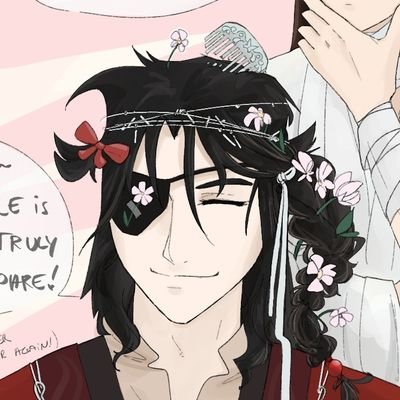
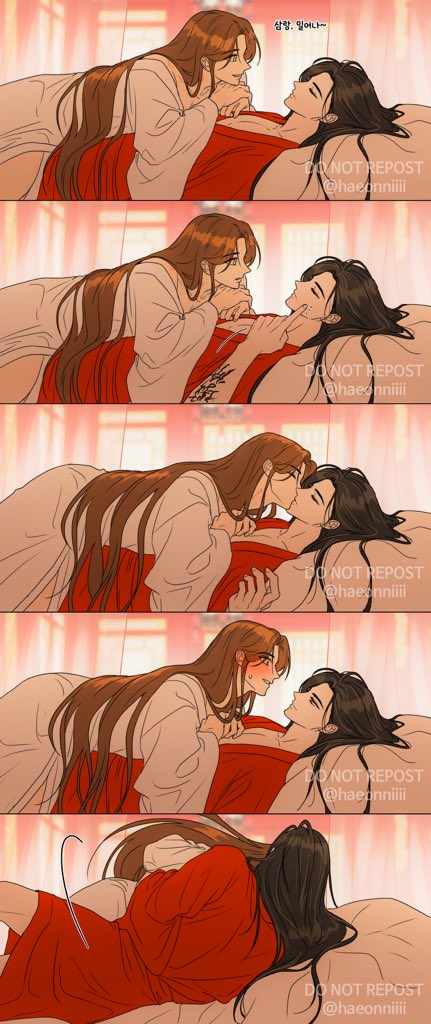
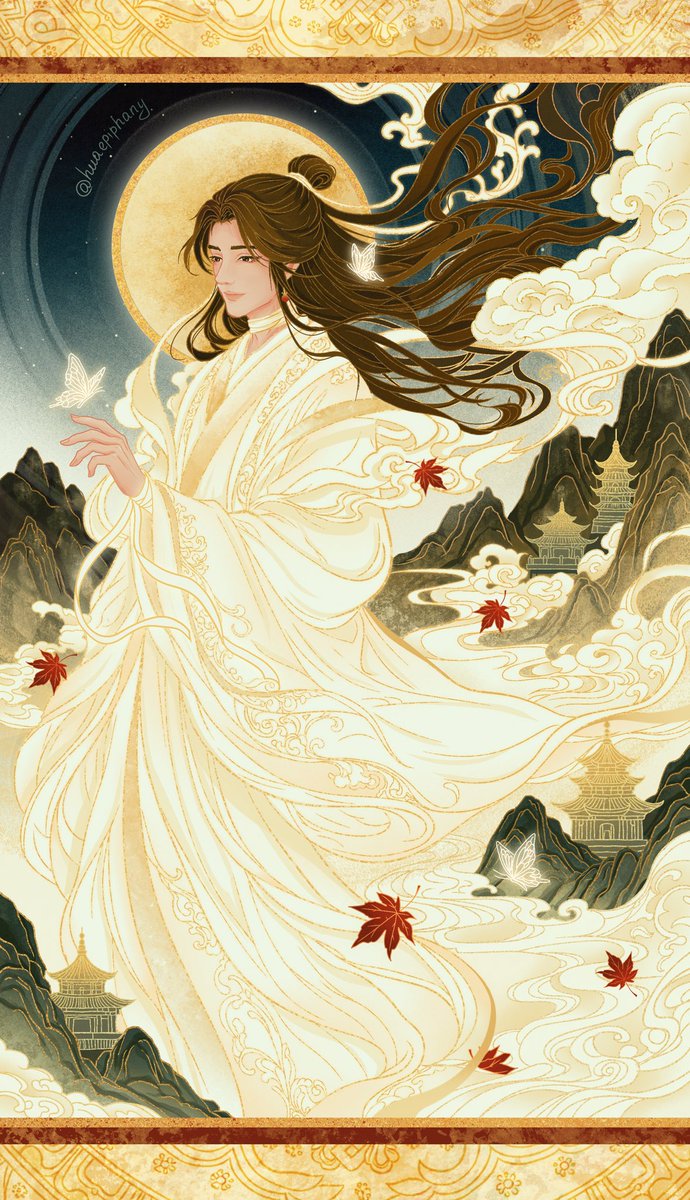
The second I saw this meme I knew I had to redraw it 🤗 (original in comments)
#tgcf #Heavenofficialsblessing #tianguancifu #xielian

English
Jo
8.9K posts

@Jomo_Life
escaping end stage capitalism in the jianghu || hualian❤️wangxian ❤️ranwan || danmei all || support fandom writers/artists || 18+ 🔞 || nsfw || AO3: Jomo_Life
I just added a massive translator's note for the last question of the One Thought Bridge ghost.👀 Maybe now you can understand the ghost a little more 😅 Read the full revised #tgcf with Smooth Reader smoothreads.world/c/gwyc/mo-xian…


Xuzhou (徐州) has long been a vital transportation hub in China, and it was also the hometown of Liu Bang (刘邦), the founder of the Western Han dynasty (202 BC–9 AD). Liu Bang was known for his bold and generous personality, though he also carried a certain roguish charm. Even around his forties, he was still an ordinary man. His position was like a chief of a small community police station today. One day, upon seeing the grand procession of the First Emperor of Qin (秦始皇), he could not help but exclaim: "A true man should be like this." At the time, it was probably nothing more than admiration. But fate was about to take a dramatic turn. In 209 BC, after the death of Qin Shi Huang, uprisings broke out across the land against the harsh rule of Qin. Amid the chaos, Liu Bang gradually built his own following, relying on his character, and a measure of luck. His leadership drew super talented strategists and formidable warriors to his side, many of whom became fiercely loyal to him. Gradually, the chaos of the age turned into a struggle for destiny between two men: Liu Bang, in his forties, and Xiang Yu (项羽), a warrior in his twenties. Xiang Yu was immensely strong and a brilliant military commander, fearless in battle. But he was indecisive, poor at governance, and often unwilling to heed advice. Liu Bang, by contrast, was no match for Xiang Yu on the battlefield. Yet he excelled at something else: He knew how to use people, and how to win their loyalty. What seemed like an uneven contest was rewritten again and again. Xiang Yu, despite his overwhelming advantage, missed critical opportunities at decisive moments. Liu Bang, seemingly the weaker side, advanced step by step, until victory was his. In 202 BC, the struggle ended. By a river, Xiang Yu took his own life. Less than a decade earlier, Liu Bang had been an unknown man, standing by the roadside, gazing at the emperor's procession in awe. Now, he became the Son of Heaven himself. Liu Bang had three brothers. The one he trusted most, also the most learned, was Liu Jiao (刘交). He was enfeoffed as King of Chu (楚), with his capital in their hometown, Xuzhou. The state of Chu had once been one of the most powerful kingdoms of the Warring States period (BC475-BC221), second only to Qin, controlling vast territories across southern China. Both Liu Bang and Xiang Yu were, in origin, men of Chu. In 223 BC, Qin conquered Chu. In bitterness, the people of Chu once swore: "Even if only three households of Chu remain, Qin will surely fall to Chu (楚虽三户,亡秦必楚)." And in the end, it did. Xiang Yu overthrew Qin. Liu Bang replaced the Mandate. Both were men of Chu. By enfeoffing his brother, Liu Bang, in a sense, gave Chu a new lease of life. The tombs of Liu Bang's brother and his descendants in Xuzhou were remarkably lavish. They were constructed by hollowing out entire hillsides, a method strikingly similar to the Valley of the Kings in Egypt. Their fate, too, was similar: they were almost all looted. In 1986, archaeologists discovered two gold belt hooks in the tomb believed to belong to an early Western Han King of Chu. Each was shaped like a swan-measuring just 3.3 cm in length and weighing 25 grams. But in another, even older tomb in Huainan, there was a far lonelier object. The images on the top right and below show the only gold artifact unearthed two years ago from the tomb of King Kaolie of Chu (楚考烈王)-the most powerful ruler of Chu in its final years during the Warring States period. It is shaped like a duck, 4.3 cm long and weighing 45 grams. King Kaolie's grandfather had once been held hostage in Qin, where he miserably died. Before becoming king himself, Kaolie too had lived bitterly in Qin as a hostage. After ascending the throne, he sought to restore Chu's former glory, but failed. His tomb, consisting of nine wood chambers, had already been looted a thousand years ago. Otherwise, this small golden duck would not have been the only piece of gold left behind. Although its form resembles the swan-shaped belt hooks left decades later in Han dynasty Chu tombs, its exact function remains unknown. Empires rise and fall, but what survives are not the winners, but the traces they leave behind.