

Jon Ploug
12.2K posts
Jon Ploug
@JonPloug
Historian. Studying historical epidemics & pathology collections at Roskilde University and PandemiX (Center of Excellence).
København, Danmark Katılım Mart 2011
531 Takip Edilen714 Takipçiler
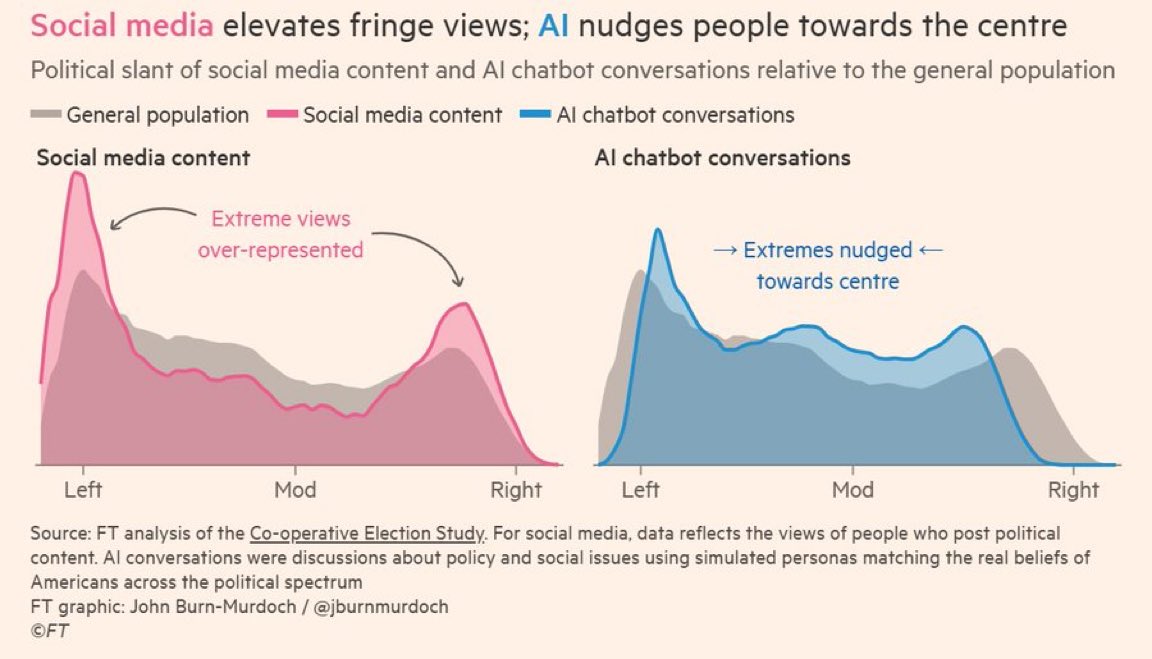


@larsloekke @sorenpind Det kunne f.eks. være interessant at diskutere, hvorfor vi skal lukke ned for oliefelterne i 2050? Det er da tudetosset.
Jeg går ud fra, at russerne nok skal være gode ved klimaet og vores børns fremtid, når de invaderer os grundet manglende strategisk autonomi.
Dansk

@sorenpind Intet? Forsøgte ellers efter fattig - og derfor også helt utilstrækkelig - evne at sætte sammenhængen med en verden i opbrud og indenrigspolitik på dagsordenen.
Dansk

Det er stadig så ubegribelig at tænke på, at vi lige har haft en valgkamp hvor intet handlede om det, der kommer til at påvirke os mest de næste 4 år. USA, Iran, Europæisk integration til en føderal stat ift forsvar, energi og kapital - intet
Dansk
I wonder why Elon Musk and other Trump supporters have stopped using Grok here on X. Perhaps it is because it provides pretty accurate answers?
Try asking it whether it's wise for the US to withdraw from NATO with the risk for war with China.
The response must infuriate them.
English
@ulrichspeck The US also needs a strong NATO. The risk of a war with China rises significantly if the US withdraws, and it is not certain that the US alone can defeat China when China has hundreds of times the shipbuilding capacity.
English

Ukraine needs a strong Nato -- the only real life insurance against an imperialist, aggressive Russia.
West Europeans should think twice before carelessly throwing the transatlantic security relationship under the bus.
Dzis Maksym@DzisMaksym
🇺🇦 Ukraine's envoy to NATO: "Instead of talking about the collapse of NATO, I would rather talk about rethinking the Alliance." She argues that "paradoxically", these troubles could open up more opportunities for Ukraine's integration into the Alliance, which, she says, will help NATO become "much more effective, lethal, innovative and capable of confronting the Russian threat."
English
@ratlpolicy As a historian, why can't you see that Trump doesn't want a strong European ally but only a vassal? One day he desires Greenland; the next, he visits Orban in Hungary. He evidently wishes for a weak Europe that he can encroach upon, just like Putin.
English

For Europe, it is a time for choosing.
They can either align with the American bloc or the Chinese bloc. If Europe thinks it can play both sides, it is sorely mistaken. There is no halfway here.
Choose wisely; the fate of your continent quite literally depends on it.
Faytuks Network@FaytuksNetwork
BREAKING: Russia, China, and France are blocking an Arab-backed push at the UN Security Council to authorize military action against Iran to reopen the Strait of Hormuz, per NYT. According to diplomats, the three veto powers oppose any resolution language that would permit the use of force.
English
@fredforthemets @BillAckman @AaronMulford Wrong. Destroying NATO will produce the same results as before NATO, as before WWII. Major countries will attack smaller countries but it won't protect the big countries; they'll still be drawn into wars. You’ll see your sons in body bags because of your wish to appease Trump.
English

The US leaving NATO maybe the one thing that can actually save Europe. For 80 years, the Europeans have coasted. Their defense, especially the cost, was outsourced to America. This allowed them to free up billions to spend on elaborate social welfare programs that undermined the competitive drive of their citizens. With guaranteed incomes and a safety net, there was no need to work hard for a retirement like in America. It gave them the ability to fund free advanced education programs so their sons and daughters could study things with little or no commercial potential unburdened by the need to worry about paying off education loans while also making a living. Without the US funding their defense, they will now have to spend a hell of a lot more than the meager 5% of GDP that Trump requested for NATO funding. In addition, they won’t have America around to step in when disagreements between European nations run the risk of turning into wars. Good luck Europe. You’re gonna need it.
English
Europe is on a path to destroying itself.
Unchecked immigration of millions of immigrants that burden their welfare states, bring violence and terrorism to their shores, and take over local governance, one city at a time.
Anti-capitalist policies that make it difficult for businesses to adapt their workforces to a rapidly changing competitive environment now accelerating due to AI.
A business environment and tax regime that is antithetical to startups.
The absence of any progress or innovation in AI and limited access to the compute necessary to compete.
Energy dependence due to the green movement at a moment when energy demands are rapidly increasing.
And now, the abandonment of the U.S. when we have asked for limited assistance — base access and flyover rights — in the midst of our efforts to eliminate Iran’s nuclear and ballistic threat which is already within striking range of Europe, after we have invested nearly $200 billion in helping Ukraine.
NATO is about to be toast. Europe’s defense burden is about to rise massively while their economies continue to fall further and further behind.
In short, Europe needs to wake up before it is too late, and it may very well be too late.
Bill Ackman@BillAckman
An important read on Europe and NATO.
English
@BillAckman You are bending your knee to Trump, a senile dictator in spe who acts on the whim of his own ideas. You rationalise every single action he commits. If he turned 180 degrees tomorrow, you would do the same, if he told you to dismantle the American democracy you would do it for him
English

Hvis alle danskere prøvede at bo i en Vestegnskommune et par år - hvor kriminalitet, utryghed og dominansadfærd er en integreret del af hverdagen - ville der ikke gå længe, før DF var det største politiske parti.
berlingske.dk/politik/video-…
Dansk
@Faj1791 @JuliaDavisNews So when you believe that your world leader is the only world leader worth talking about, I guess you have already partly answered the question yourself.
English
@Faj1791 @JuliaDavisNews This is one of the main lessons of the Greek tragedies. We insist on reading them supposedly to learn something, yet we don't want to learn this key lesson. Why?
English

I'm convinced Donald Trump is a top 10 character in the history of civilization. People will be studying the mass psychosis that allowed this obviously pathetic person to control so many people for generations to come. They'll never really be able to come up with 1 clean answer.
Neil Renic@NC_Renic
No way the fall of Rome was this cringe
English

Most Western evaluations of Islam flow from a Western mindset and a post-Enlightenment understanding of religion.
They don’t flow from what Muslims think and say about their own faith within Muslim communities.
English

Radikale ønsker fri overenskomstbaseret arbejdskraftindvandring (herunder fra islamiske lande).
Flygtninge skal gøres til indvandrere. Og vi skal have flere af dem.
24-års-regel og tilknytningskrav ønskes ophævet.
Nemmere ophold og flere udenlandske studerende (herunder fra islamiske lande).
Lettere adgang til statsborgerskab.
Hvor partierne fra S til DF ønsker at skelne mellem islamisk indvandring og ikke-islamisk indvandring, ser Radikale intet problem der.
Nawa betegner tilmed den islamiske indvandring som grundlæggende "en stor succes". Der kan man tale om en påstand uden gang på jord.
Hvis man gennemførte jeres politik, ville det lige præcis lede til den islamiske masseindvandring, som nogle af os andre i årtier har forsøgt at dæmme op for. Mens Radikale har været imod alle stramninger og for alle lempelser.
Med jeres politik ville Danmark igen være et attraktivt land at flygte og indvandre til, og I vil ikke skelne mellem lande, fordi I er kulturblinde.
Vi andre siger bare nej tak.
Dansk
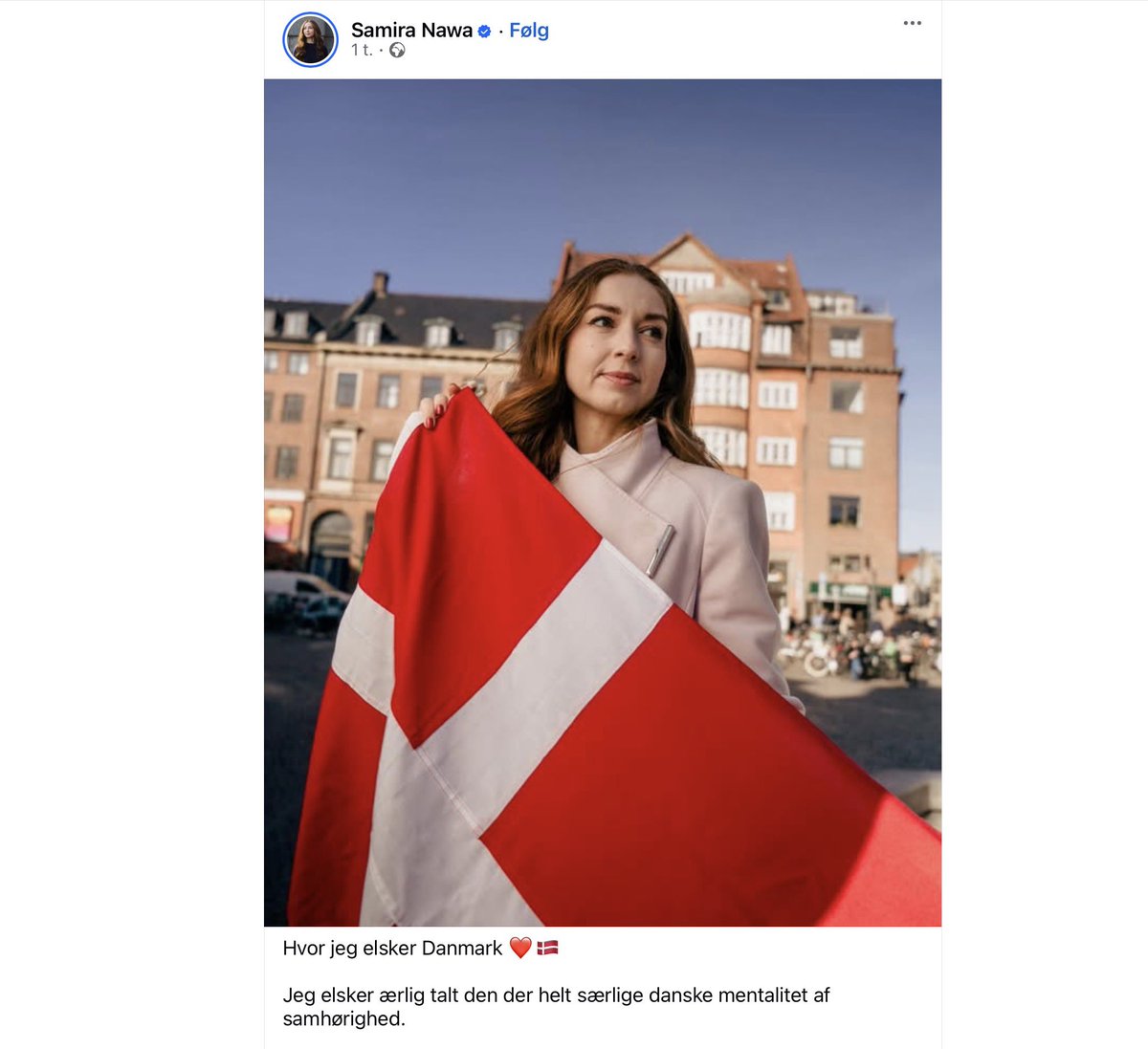
Samira Nawa påstår, at hun elsker Danmark.
Hun siger, hun elsker den danske mentalitet, samhørigheden og sammenhængskraften.
Det gør jeg virkelig også.
Det er præcis det Danmark, jeg hver dag kæmper for at bevare.
Samira Nawa derimod kæmper hver dag for en politik, som - hvis den blev gennemført - ville smadre alt det, hun hævder at elske.
Hun kæmper for fortsat masseindvandring fra islamiske lande, som hun mener grundlæggende har været "en stor succes".
Hun kæmper for at tilbagerulle den stramme udlændingepolitik, herunder afskaffe 24-års-reglen.
Hun kæmper for at give statsborgerskab til den halve million mennesker i Danmark, som endnu ikke har det - uanset om disse måtte dele den mentalitet, som hun lovpriser, og de værdier, som gør Danmark til verdens bedste land.
Hvordan kan man arbejde så aktivt på at ødelægge noget, man hævder at elske?
Det er muligt, Samira Nawa elsker Danmark.
Men hun elsker helt sikkert ikke Danmark på samme måde, som jeg gør. #dkpol #dkmedier
Dansk

Imagine the following scenario: russia attacks the Baltic countries to connect with Kaliningrad — just as it attacked Ukraine to gain access to Crimea. What will the U.S. do?
Here’s my prediction: nothing. Article 5 will be treated like the Budapest Memorandum. Trump, Rubio, and other MAGA propagandists will claim, “This isn’t our war.”
And if russia swiftly invades the Baltic states (which would be far easier than Ukraine), declares them part of russia, and then threatens the West with nuclear weapons should they respond — what will the West do? Exactly what they did for Ukraine.
The cowardice of the U.S. has emboldened russia. Those who now say “russia would never dare invade” said the same about Ukraine — right before russia did exactly that.
The only way to stop russia now is to help Ukraine and punish russia for its imperial ambitions.

English
@PaulQuixotic @DerekPederson3 The only reason you and others on the left are unable to feel any remorse for this suffering is due to the human brain's incapacity to feel any remorse for misdeeds unless strongly criticised by the outside world. Once more criticism is levelled, you will finally understand.
English
@PaulQuixotic @DerekPederson3 Blah. We know your claims, and they originate from a young privileged person who merely copy-pastes opinions from 40-year-old newspapers. It is quite cruel of you to ignore the suffering of the victims and immigrants. I hold you partly responsible for the rapes and stabbings
English

This is correct policy. The majority of Arab immigrants have not integrated very well into European society and immigration has been very culturally and politically destabilizing in Europe.
S 🇦🇲🇱🇧@Shifty_Coffee
German Chancellor, Merz, pushing for Syrians to leave Germany in a joint press conference with Syrian leader Al-Sharaa. Merz has said that he aims for 80% of Syrians to leave Germany in the coming 3 years, with exceptions made for "highly-integrated individuals."
English
@IonaItalia More importantly, why did no journalists report on this obvious fact? Why did they prioritise ingroup loyalty to shared dogmas and their personal virtue signalling over reporting the truth?
English

I find it extraordinary that no one ever asked why most of the refugees were young men—the group most likely to be able to survive at home—or what the impact would be of accepting a million additional young men into the country, independently of their nationality or culture.
Rolf Degen@DegenRolf
Male refugees from Afghanistan and Syria in Germany show a keen interest in forming relationships with local women, but the local women show little interest in forming relationships with them. Germany, in particular, received over 1,4 million refugees between 2014 and 2016, predominantly from Muslim-majority countries such as Syria and Afghanistan. The majority of these arrivals consisted of young, single men within prime marriageable age brackets. This study examines partnership preferences of male refugees from Afghanistan and Syria who arrived in Germany between 2014 and 2016 and female residents of similar age. Overall, our results indicate a high level of openness among male refugees towards partnering with female members of the resident population, but a comparatively low level of openness among the latter towards partnering with recently arrived male refugees. This implies a substantial incongruence in partnership preferences among the two groups. Regarding the educational level of a potential partner, we found that all respondents prefer highly educated partners over those with lower levels of education. This suggests that, for refugees, securing a highly educated partner might serve as a means of upward social mobility and integration into higher-status networks in the host society. Furthermore, it is possible that highly educated women, due to their greater exposure to diverse social environments and potentially less discriminatory attitudes, are perceived as more open to intergroup partnerships, making them a more attractive choice for refugees seeking acceptance and social integration. On the other hand, the reluctance of resident women to accept partnerships with refugees is largely explained by their rejection of the ‘imported’ religious Islam. It is possible that resident women perceive the religious practices of newly arrived refugees as different from their own, reinforcing a social distance that limits intergroup partnerships. Moreover, this reluctance might not only reflect religious differences but also concerns about gender norms or perceived lifestyle incompatibilities.
English
@NerdMatt @KelleyKga @AlecStapp Yes, it eventually became clearer and clearer due to natural experiments like this. But I find it strange that MDs are supposed to focus on the latest research on the super complex kidneys but only read 100-year-old material regarding transmission of pathogens (Chapin especially)
English

@KelleyKga @JonPloug @AlecStapp Ugh - that is unfortunate. It seemed pretty clear even early on that the risks of outdoor transmission were very low, which was also why the protests were not super spreader events.
English

Public health officials destroyed so much social trust during COVID, it’s almost surreal to look back on.
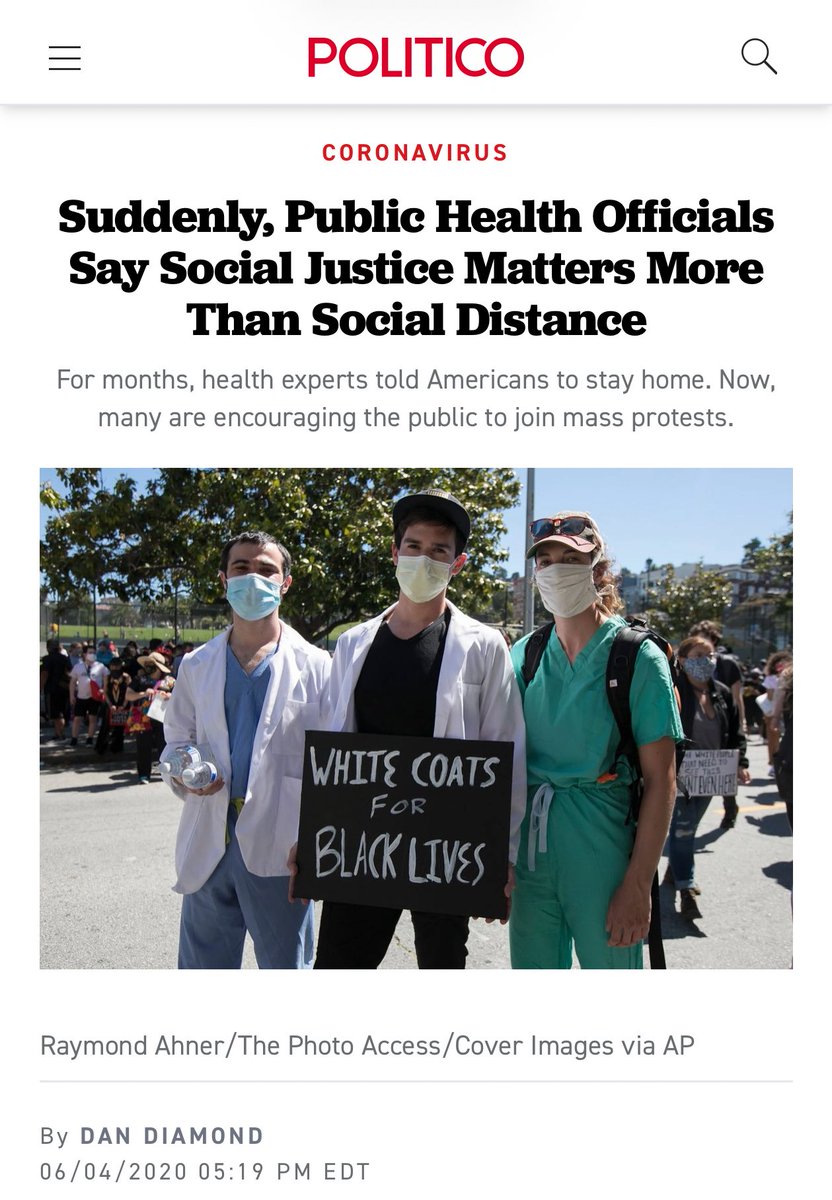
Conor Friedersdorf@conor64
A question for everyone: survey data suggests that by the end of the Covid-19 emergency trust in public health institutions had decreased significantly. If you are among the people who reacted that way, why specifically? I'm hoping for long, diverse, individualized answers.
English