Jonathan Uesato

78 posts

Jonathan Uesato

Jonathan Uesato

@JonathanUesato

Researching robustness, verification, and worst-case performance for ML @ Deepmind. All opinions my own.

Katılım Ekim 2018
75 Takip Edilen534 Takipçiler
Sabitlenmiş Tweet
Jonathan Uesato
Jonathan Uesato@JonathanUesato·
Deploying ML in high-stakes situations will require new evaluation techniques beyond static hold-out sets. It's exciting to share out views and recent progress on this problem from our team at DeepMind and so many others in the community.
Pushmeet Kohli@pushmeet

Over several decades, software engineers have developed a toolkit for debugging - from unit testing to formal verification. Our Robust & Verified AI team works on analogous approaches for ensuring that machine learning systems are robust at deployment: deepmind.com/blog/robust-an…

English

1
1
36
0
Jonathan Uesato retweetledi
Marc G. Bellemare
Marc G. Bellemare@marcgbellemare·
I often hear fellow researchers state that "our world is a (PO)MDP". I vehemently disagree: A (PO)MDP is a convenient model. From Bellman's DP book (1957): "It is important to realize that these are very strong assumptions concerning the nature of the system."
English
5
13
120
0
Jonathan Uesato retweetledi
Chris Olah
Chris Olah@ch402·
When we make assumptions about what features exist in neural networks, they often prove us wrong. It turns out that 4% of CLIPs final neurons (8% on a liberal interpretation) are focused on geography. I certainly wouldn't have guessed that in advance! #region-neurons" target="_blank" rel="nofollow noopener">distill.pub/2021/multimoda…
Chris Olah tweet media
English
7
81
417
0
Jonathan Uesato
Jonathan Uesato@JonathanUesato·
@SamuelMLSmith A lot of your works are in my go-tos for whenever people ask for examples of theory influencing practice in deep learning! Glad to have another for the list :)
English
0
0
1
0
Jonathan Uesato retweetledi
Samuel L Smith
Samuel L Smith@SamuelMLSmith·
My two takeaways: 1) The most important thing when training deep networks without tricks, is to get the initialization scheme right! 2) Theoretical work can have tangible practical benefits, but this is much more likely when theorists and practitioners collaborate closely. 4/4
English
1
6
32
0
Samuel L Smith
Samuel L Smith@SamuelMLSmith·
Proud to be a part of NFNets, a new ImageNet SOTA: - does not use BatchNorm, LayerNorm, GroupNorm, anyNorm! - 86.5% top-1 w/o extra data - 89.2% top-1 w/ pre-training - 8.7x faster than EffNet-B7 to same test accuracy arxiv.org/abs/2102.06171 code: dpmd.ai/nfnets 1/4
Samuel L Smith tweet media
English
2
62
355
0
Jonathan Uesato retweetledi
Soham De
Soham De@sohamde_·
Releasing NFNets: SOTA on ImageNet. Without normalization layers! arxiv.org/abs/2102.06171 Code: dpmd.ai/nfnets This is the third paper in a series that began by studying the benefits of BatchNorm and ended by designing highly performant networks w/o it. A thread: 1/8
Soham De tweet media
English
6
176
762
0
Raza Habib
Raza Habib@RazRazcle·
I continue to be amazed by how little of academic ML research looks how we collect and label data, given that for almost any real application this is the biggest factor in performance.
English
2
5
35
0
Jonathan Uesato retweetledi
Tom Everitt
Tom Everitt@tom4everitt·
We designed REALab, a platform with tampering opportunities integrated into the task dynamics. And developed some cool algorithms to run in it as well!
Google DeepMind@GoogleDeepMind

Building safe AI requires accounting for the possibility of feedback corruption. The REALab platform provides new insights by studying tampering in simulation: bit.ly/32VJp7S More reading on REALab & Decoupled Approval: bit.ly/2KlQ4BR & bit.ly/38XuFZU

English
0
3
11
0
Leo Boytsov
Leo Boytsov@srchvrs·
@JonathanUesato Thank you, and by verification you understand the check if we have adversarial examples in a given ball?
English
1
0
1
0
Google DeepMind
Google DeepMind@GoogleDeepMind·
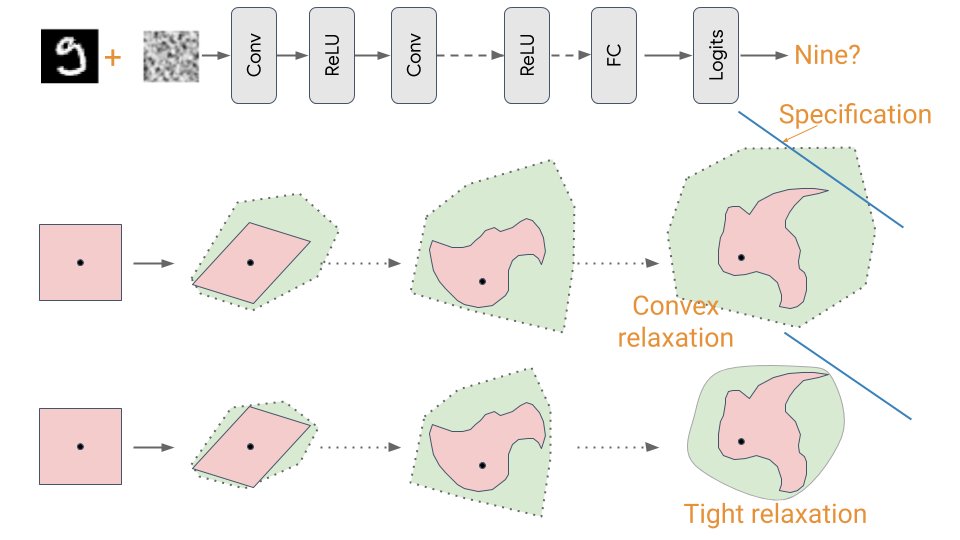
Excited to share #NeurIPS2020 papers on efficient and tight neural network verification, based on efficient solvers for LP and SDP relaxations. Implementations of these in JAX are also available as part of the new jax_verify library, described here: bit.ly/2TE1Qcc
Google DeepMind tweet media
English
3
66
341
0
Jonathan Uesato
Jonathan Uesato@JonathanUesato·
@RichardMCNgo But there's so many things to try. Things rarely work first try in DL - to make them work, you need conviction to keep trying. It would have happened eventually, but it would have taken much longer to discovery + widespread adoption
English
0
0
0
0
Richard Ngo
Richard Ngo@RichardMCNgo·
@JonathanUesato Sure, maybe you individually wouldn't have invented it. But somebody would have tried it, seen that it worked, and spread it around. You don't need maths to imagine a ball rolling down a hill.
English
1
0
0
0
Richard Ngo
Richard Ngo@RichardMCNgo·
I'm usually pretty skeptical about the usefulness of formal proofs in AI and ML. But I'm open to changing my mind. What are the most important proofs in the history of AI? In particular, I'm interested in cases where we couldn't have achieved good empirical results without them.
English
4
0
13
0
Jonathan Uesato
Jonathan Uesato@JonathanUesato·
@RichardMCNgo I agree with the prediction - the goal isn't plug-in bounds on sample complexity, it's to change the way we think about the algorithm. - Theory shows momentum is a great idea - Theory limitations prevent analyzing all scenarios - Still evidence we should still use it in practice
English
0
0
0
0
Richard Ngo
Richard Ngo@RichardMCNgo·
@JonathanUesato My guess (without having investigated) is that such proofs rely on assumptions which aren't very important for empirical success. E.g. concrete prediction: you could get similar performance with learning rate schedules that provably converge, and ones which don't.
English
1
0
0
0
Jonathan Uesato
Jonathan Uesato@JonathanUesato·
@RichardMCNgo I think the clean split between quadratic and linear convergence for momentum provided a lot of the early excitement for it. E.g. I don't think you get as much early exploration into methods like Momentum and Adam if those results don't exist
English
1
0
0
0
Jonathan Uesato
Jonathan Uesato@JonathanUesato·
@RichardMCNgo I don't think it's prima facie obvious momentum is a good idea. E.g. if it hadn't been invented, I don't think I'd have discovered it over the course of NN training. Probably would have to look at simpler models, like optimizing a quadratic.
English
2
0
0
0