Johnny Sonic Bravo $S

3.3K posts

Johnny Sonic Bravo $S banner
Johnny Sonic Bravo $S

Johnny Sonic Bravo $S

@Jonathan_Kettle

Everyone's saying X, but I'm saying Y. Wannabe philosopher, part-time common sense enthusiast. I just say obvious things in a way that makes them sound profound

The Moon Katılım Nisan 2009
442 Takip Edilen807 Takipçiler
Sabitlenmiş Tweet
Johnny Sonic Bravo $S
Johnny Sonic Bravo $S@Jonathan_Kettle·
The New World Order: America Only, American Republicans Only The new world order is not multipolar. It is not America, Europe, Britain, China and Russia all sitting at the same table pretending they are equal players. It is America only. And more specifically, it is common-sense Republican America only. Because the real divide now is not East versus West. It is reality-facing systems versus systems that lost contact with reality. Europe is out because it diluted its own culture, broke its energy model, weakened its borders, confused mass immigration with compassion, and replaced competence with bureaucracy. Britain is out for the same reason, but with more nostalgia. It still talks like a serious country, but no longer has the productivity, confidence, military depth, social cohesion, or political seriousness to act like one. Russia is out because it was never as advanced as it pretended to be. Its war machine has exposed too much corruption, old technology, bad logistics, weak industry, and intimidation dressed up as power. China is out because control is not the same as strength. Its demographics are collapsing, its property and banking system are full of debt, its youth are under pressure, its capital wants escape routes, and its culture punishes the feedback needed to stay adaptive. California is out because it became the perfect example of what happens when wealth, technology and natural advantage are handed to people who then govern through ideology, crime tolerance, regulation, status signalling and denial. New York is out because finance and cultural prestige are not enough when the city becomes too expensive, too badly managed, too ideological, and too hostile to the normal people who actually make a place function. Democrats are out because their model increasingly treats reality as a public relations problem. Crime becomes inequality. Borders become xenophobia. Standards become oppression. Failure becomes victimhood. Energy becomes fantasy. Competence becomes privilege. And working people are told their instincts are backward by institutions that make everything more expensive, less safe, less honest, and less functional. No one else was really at the table in the first place. After World War II, America built the table. It controlled the seas. It protected trade routes. It backed NATO. It built the dollar system. It created the conditions for globalisation. It allowed Europe to rebuild, China to industrialise, Britain to coast, and Russia to pretend. Everyone mistook access to the American system for independent power. They were not co-owners. They were guests. And now America is looking around the room and realising most of the guests forgot who paid for the room, guarded the room, and kept the lights on. The new world order is not America versus the world. It is reality versus everyone who thought they could opt out of it. And right now, the only major force still willing to say reality out loud is common-sense Republican America.
Johnny Sonic Bravo $S tweet media
English
0
0
0
25
Johnny Sonic Bravo $S
Johnny Sonic Bravo $S@Jonathan_Kettle·
The Wrong Side Of The Safe Haven Trade Some investors from the Middle East are selling property in the Gulf and moving money into the UK because they still see Britain as the ultimate safe haven. On the old map, this makes sense. The UK has courts, land registry, private schools, universities, London prestige, and the memory of being somewhere foreign capital could hide, compound, and eventually become respectable. But that may be the old trade. The old trade was simple. The Middle East was volatile. Britain was stable. The Gulf had boom-bust cycles, speculation, political risk, and too much dependency on oil-adjacent liquidity. The UK had legal certainty, public order, social trust, a deep mortgage market, and a native middle class that treated property almost like a second pension system. But what if the inputs have flipped? The UK property premium was never just about bricks. It was the institutional wrapper around the bricks. Courts, safety, growth, public services, schools, healthcare, pensions, social care, social trust, and the belief that the next buyer would still want in. If that wrapper weakens, the asset does not necessarily collapse, but it deserves a different multiple. And this is where UK property becomes more interesting. It is not just property. It is stored pension wealth. For decades, houses have quietly replaced the pension pot, the savings account, the retirement plan, and the inheritance machine. A huge amount of British household wealth is trapped inside bricks, and at some point, that wealth has to be liquidated, downsized, borrowed against, inherited, taxed, or sold to fund retirement, care costs, children, and the next stage of life. That means UK property needs an exit buyer. It needs a younger, solvent, confident buyer base underneath it, willing and able to absorb the retirement wealth of the generation above. If that next buyer is poorer, taxed harder, leaving the country, delaying families, or less emotionally attached to the old British property dream, the asset changes. Now add the square-foot reality. Average London property is still roughly £600 per square foot, around AED 3,000 per square foot. Prime London can be far higher. Average Dubai residential property is closer to AED 1,700–2,000 per square foot. So in many cases, buyers are selling property in a tax-light, high-inflow, infrastructure-expanding market to buy property in a slower-growth, higher-tax, more indebted system at a much higher price per square foot. That gap matters. If London and Dubai slowly equalise in usefulness, safety, lifestyle, tax efficiency, business access, and global desirability, then the cheaper square foot with improving fundamentals may have more upside than the expensive square foot with weakening fundamentals. This is where the trade becomes dangerous. They may be selling the asset that could 2–3x over the next decade to buy the asset that could lose heavily in real terms. Meanwhile, the Gulf is no longer just a speculative boom-bust story. Dubai and the UAE are becoming migration assets. They monetise safety, tax efficiency, infrastructure, business access, lifestyle, and the failure of higher-tax Western systems. They are not just selling apartments. They are selling access to future human flow. That does not mean UK property collapses. It means the “UK equals safe, Middle East equals risky” heuristic may be stale. Britain still has institutional memory. But the Gulf increasingly has mobile capital, younger inflows, and rising usefulness. They are not buying the UK as it is becoming. They are buying the UK as it used to be. So the trade may not be “sell volatility, buy safety.” It may be “sell the future flow of mobile capital, buy yesterday’s institutional prestige.”
Johnny Sonic Bravo $S tweet media
English
0
0
0
7
Johnny Sonic Bravo $S
Johnny Sonic Bravo $S@Jonathan_Kettle·
Why Everything Will Always Be Unaffordable Everything will always feel unaffordable because human beings are not just trying to buy comfort. They are trying to buy position. We pretend markets are only about need, utility and price, but the deeper force underneath them is hierarchy. People do not just want a house, a car, a holiday, a school, a watch, a body or a lifestyle. They want the version of those things that proves they are not slipping down the ladder. This is why affordability never really arrives. When people get more money, they do not simply stop and become comfortable. They stretch upward. They move to the better area, buy the better car, choose the better school, book the better hotel, wear the better brand, chase the better body, and try to live the life of the person slightly above them. Human surplus does not settle into peace. It gets converted into competition. Those with slightly more will always outbid those with slightly less. The upper-middle class outbids the middle class. The rich outbid the upper-middle class. The global rich outbid the local rich. And because the most desirable things are usually scarce, visible and status-loaded, the extra money does not make those things affordable. It simply raises the entry price. This is the affordability trap. Every improvement in living standards becomes the new baseline. Yesterday’s luxury becomes today’s normal. Today’s normal becomes tomorrow’s minimum acceptable standard. A basic house becomes too basic. A normal car becomes embarrassing. A normal holiday becomes underwhelming. A normal income becomes “struggling.” A normal life starts to feel like failure. Technology can make many things cheaper, but hierarchy makes status expensive. TVs get cheaper. Flights get cheaper. Phones get better. Clothes become easier to buy. But the best land, safest areas, best schools, most desirable cities, strongest networks, most attractive partners, highest-status experiences and most insulated lifestyles do not scale in the same way. The problem is not only supply, money printing, bad government, immigration, interest rates or greedy corporations. Those things matter, but they sit on top of something older. Humans are hierarchical animals living inside markets. Markets allocate scarcity, but hierarchy creates infinite demand. As soon as one layer of life becomes accessible, another layer becomes the new signal. That is why people can be richer than their grandparents in absolute terms but feel poorer socially. Their grandparents were competing inside a smaller village. Modern people are competing against the whole world. Instagram globalised comparison. Property markets globalised the bidder pool. Dating apps globalised mate competition. The ladder got taller, the audience got bigger, and the reference group became insane. The poor want comfort. The middle want security. The rich want separation. The very rich want insulation. And everyone is looking at the person just above them, quietly adjusting their idea of what “enough” means. That is why everything will always feel unaffordable. Not because we fail to produce enough, but because every surplus eventually gets eaten by status.
Johnny Sonic Bravo $S tweet media
English
0
0
0
17
Johnny Sonic Bravo $S
Johnny Sonic Bravo $S@Jonathan_Kettle·
There Is No Such Thing As Facts People say “that’s a fact” as if the word ends the conversation. But most of the time, it doesn’t end anything. It only reveals the framework they are speaking from. A fact is rarely raw reality. It is reality after it has passed through language, memory, measurement, culture, science, religion, politics, media, trauma, status and incentive. By the time a human being says “this is a fact,” the world has already been filtered. Even time is a concept. We treat it like an object, but it is a way of measuring change. Gravity is called a fact in ordinary speech, but in science it is described through theories and models. Newton’s gravity worked beautifully until Einstein gave us a deeper model. That does not mean Newton was useless or Einstein was final. It means what we call facts are often models that work well enough until a better model arrives. The same thing happens in human life. One person says, “he was rude.” Another person says, “he was direct.” Another says, “he was nervous.” Another says, “he was protecting himself.” They may all be describing the same moment. Each version can feel factual from inside that person’s nervous system. The event happened once, but the meaning splits depending on memory, biology, ego, fear, loyalty and status. This is why arguments about facts are often fake arguments. People think they are debating what happened, but underneath they are debating which framework has authority. Science says measurement and repeatability decide truth. Religion says revelation, tradition and moral order decide truth. Politics says group loyalty and legitimacy decide truth. Media says attention and narrative coherence decide truth. Status says what can be said without social punishment. So when someone says, “those are the facts,” the better question is, “facts according to whom?” According to what institution? What measurement system? What ideology? What incentive structure? What emotional need? What tribe? What fear? What outcome are they trying to protect? Because people rarely defend facts in isolation. They defend the identity, hierarchy and worldview those facts support. This does not mean every interpretation is equally useful. That is the lazy conclusion. Some models predict better. Some explanations survive contact with reality better. Some systems correct their own errors better than others. Science is powerful not because it gives humans pure access to reality, but because it has a better mechanism for admitting when its current model is wrong. The real problem is not that facts do not exist in some abstract sense. The problem is that humans never meet them naked. We meet them dressed in concepts. We meet them translated through language. We meet them shaped by the person delivering them and the audience receiving them. By the time a fact enters a human conversation, it has already become partly psychological and partly political. So maybe the more honest position is this: reality exists, but “facts” are human containers for reality. They are not the thing itself. They are maps, not terrain. Useful maps, sometimes beautiful maps, sometimes dangerous maps. But still maps. And most conflict comes from people confusing their map with the world, then demanding everyone else call it reality.
Johnny Sonic Bravo $S tweet media
English
1
0
1
21
Johnny Sonic Bravo $S
Johnny Sonic Bravo $S@Jonathan_Kettle·
The Incentive Behind the Belief Most people do not really ask whether something is true. They ask whether they can afford to believe it. Not consciously. Not dishonestly, necessarily. But biologically. Psychologically. Socially. A belief is not just an opinion sitting in someone’s head. It often has a job. It protects status. It protects identity. It protects tribe. It protects someone from shame. It protects the internal model they have spent years using to explain the world. That is why truth is so hard to discuss. When you challenge a belief, you are often not challenging a sentence. You are challenging a person’s nervous system. You are asking them to accept something that might make their side look wrong, their enemy look competent, their media diet look foolish, their political instincts look unreliable, or their entire map of the world feel unstable. So the body reacts before the mind does. The flinch comes first. The argument comes afterwards. This is why people can look at the same event and see completely different realities. One person sees failure. Another sees restraint. One person sees competence. Another sees propaganda. One person sees weakness exposed. Another sees hidden strategy. The evidence may be sitting in front of both of them, but it has to pass through different incentives before it becomes “truth.” You see this clearly with war, politics, media, and power. Someone can watch a regime fire wave after wave of missiles, fail to achieve much strategically, and still say, “They missed on purpose.” That is not really military analysis. That is model protection. If the belief is that the West is always lying, America is weaker than it looks, Trump cannot be broadly right about anything, and the enemy must have hidden strength, then failure cannot simply be failure. Failure has to be rebranded as restraint. This is where people confuse skepticism with inversion. One person says, “The mainstream media said it, so it is probably true.” Another says, “The mainstream media said it, so it is probably false.” But both are outsourcing the work. One outsources to authority. The other outsources to opposition. Neither is doing the harder thing, which is looking at incentives, capability, outcomes, timing, and revealed performance. The better question is not just, “Who said this?” It is, “Why would they say it?” What are they trying to achieve? What does this belief allow them to avoid? What status does it give them? What tribe does it keep them inside? What anxiety does it calm? What admission does it prevent? What would become unstable inside them if the opposite were true? Because a lot of reasoning is just post-rationalisation of a biological flinch. The nervous system feels the threat first. Then the intellect builds the case. That does not mean people are stupid. It means the brain did not evolve to be a perfect truth machine. It evolved to keep the organism alive, socially accepted, emotionally coherent, and protected from humiliation. So when people argue about what is true, it is worth listening less to the conclusion and more to the incentive behind it. What does this person need to be true? What does this belief protect? What would they have to rebuild if they let it go? Because truth is rarely just competing with lies. It is competing with identity, belonging, shame, status, and the human body’s need to feel safe.
Johnny Sonic Bravo $S tweet media
English
0
0
1
13
Johnny Sonic Bravo $S
Johnny Sonic Bravo $S@Jonathan_Kettle·
Energy is the real cost of modern life I think we are missing the most important part of the coming energy crisis. It is not just that oil gets more expensive, or flights get more expensive, or petrol gets more expensive. It is that energy is the hidden cost inside almost every part of modern life. Your supermarket is energy. Growing the food is energy. Fertiliser is energy. Refrigerating it is energy. Moving it by ship, truck, van and scooter is energy. Keeping the lights on is energy. Keeping the room warm is energy. Keeping the room cool is energy. Running hospitals, airports, hotels, data centres, water systems, restaurants and public transport is energy. So when energy becomes expensive, life does not just become slightly more expensive. The whole system starts to feel heavier. Food rises. Transport rises. Flights rise. Imports rise. Construction rises. Services rise. Taxes rise because governments have to subsidise the pain. Businesses lose margin. Wages fail to keep up. A country can still look normal on paper while ordinary life quietly becomes worse every month. That is why Europe is in such a dangerous position. It is not walking into a new energy shock from a position of strength. It is walking into one after already making energy too expensive. It shut down capacity, overtrusted political slogans, underbuilt resilience, and convinced itself that renewable energy would be cheap simply because the sun and wind are free. But modern energy is not priced by the sun or the wind. It is priced by the whole system. Storage. Backup. Grid upgrades. Transmission. Balancing. Intermittency. Permitting. Subsidies. Political delays. Emergency imports. The fantasy was “free energy.” The reality is a complicated, expensive system that still needs fossil fuels underneath it when the weather, grid or demand curve does not cooperate. Asia has a different problem. In many places, energy has been kept cheap enough to support growth, factories and living standards, but cheap does not always mean secure. If supply is disrupted, if diesel and jet fuel tighten, if refineries cannot run properly, or if governments have to spend more to keep prices controlled, the weakness appears very quickly. A country can have cheap energy right up until the moment it has no spare capacity. This is where migration changes. People will not say, “I am moving because of refinery bottlenecks.” They will say, “This place does not work anymore.” They will say food is too expensive, flights are ridiculous, taxes keep going up, bills are too high, infrastructure feels tired, restaurants are unaffordable, and every normal thing feels like effort. Underneath all of that is the same force: the country can no longer convert energy into cheap, smooth, reliable daily life. The winners over the next decade may be the countries that can keep modern life cheap and working. Not perfect. Not utopian. Just functional. Power works. Airports work. Roads work. Cooling works. Food arrives. Government has money. Infrastructure has capacity. The system still has enough surplus energy and competence to make ordinary life feel easy. That may become one of the biggest divides in the world. Not rich country versus poor country, but countries where modern life still works versus countries where modern life becomes a daily negotiation with cost, friction and decline. Because civilisation is not really judged by speeches, values or GDP charts. It is judged by whether the lights stay on, the room stays cool, the food arrives, the airport works, and life still feels affordable enough to live.
Johnny Sonic Bravo $S tweet media
English
0
0
0
25
Johnny Sonic Bravo $S
Johnny Sonic Bravo $S@Jonathan_Kettle·
Weaponized Withholding One of my personal pet hates is watching people let problems happen when they could have prevented them. I hate problems. I like seeing them early, saying something early, and fixing them cheaply before they turn into drama. So when someone can clearly see a problem coming, or has even helped create the conditions for it, then sits back and watches it unfold without intervening, it really frustrates me. The worst version is when they do not step in until they are asked. They wait for the room to realise it needs them. And even then, they sometimes continue to withhold just enough information to make the situation drag on, because each extra question, each delay, and each moment of dependence makes them feel more necessary. At first, it looks like incompetence. You think, how did nobody spot this? How did it get missed? How did this small issue turn into a bigger mess? But often, incompetence is only part of the explanation. Sometimes people did see it. They did know. They simply got more reward from the problem becoming visible than from quietly preventing it. That is weaponized withholding. It is when someone withholds the thing that would resolve the situation because withholding it gives them leverage. They withhold information, context, warnings, clarity, a proper handover, or even a simple reply. Then, when the issue finally breaks, everyone has to move around the gap they created. This happens at work all the time. Someone sees a process failing but says nothing until the deadline collapses. Someone knows a client expectation has been misunderstood but lets it play out. Someone understands a system dependency but keeps it in their own head. Someone notices a recurring mistake but allows it to repeat because eventually everyone will need their knowledge to fix it. But it happens personally too. Someone knows another person is confused, but refuses to give clarity because the confusion keeps them emotionally central. Someone is upset, but instead of saying what happened, they go cold and make the other person guess. The setting changes, but the mechanism is the same. The psychology is simple. Preventing a problem quietly gives very little status. Nobody celebrates the disaster that did not happen. Nobody applauds the conversation that did not turn into tension because someone was clear early. But being the person who “knew all along” once the problem has exploded creates instant importance. This is why some people prefer the fire to the fire alarm. The fire gives them an audience. The alarm just prevents damage. The deeper issue is incentive design. Businesses, friendships, and relationships can all accidentally reward the wrong behaviour. The person who quietly keeps things healthy looks invisible. The person who lets tension build, then forces everyone to deal with it, becomes the centre of attention. Over time, people learn that being useful early gets ignored, but being needed late gets emotional power. And this is why it annoys me so much. Because the cost is paid by everyone else. Other people lose time, energy, money, trust, and momentum, just so one person can feel significant. It is not honest disagreement. It is not high standards. It is not needing space. It is a quiet tax placed on the room by someone who would rather be vindicated than useful. The mature version is clean signalling. If something is going to break, say it early. If a process is unclear, flag it. If you are upset, say that. If you need space, say when you will come back. If a client has misunderstood something, correct it. If a person is confused by your behaviour, give clarity instead of making them decode you. Weaponized withholding is dangerous because it looks passive. But absence can be an action. Silence can be a strategy. And sometimes the most expensive problem in a system is the person who knew exactly what would fix it, but waited to be needed.
Johnny Sonic Bravo $S tweet media
English
0
0
0
15
Johnny Sonic Bravo $S
Johnny Sonic Bravo $S@Jonathan_Kettle·
Reactive people train the room to lie by omission. Not because everyone around them is dishonest. Not because people are conspiring against them. But because, over time, people learn that telling them the truth is too expensive. If someone bites your head off, sulks, gets defensive, goes cold, makes the whole room uncomfortable, or turns every awkward truth into an emotional event, people start doing the calculation quietly. “Is this worth saying?” And usually, the answer becomes no. So people stop correcting them. They stop challenging them. They stop telling them small things. Then bigger things. Then eventually, they stop telling them anything that might disturb the version of reality that keeps the peace. This is how a person becomes surrounded by edited information. Nobody technically lies. They just remove the dangerous parts before the truth reaches them. The reactive person then starts living inside a private reality bubble. They think silence means agreement. They think politeness means loyalty. They think nobody has a problem because nobody says anything. But the room has not become more honest. It has become more careful. And this is the trap. The more emotionally reactive someone becomes, the less accurate their information becomes. Their behaviour creates the very distortion that keeps them blind. People often think being intense, sensitive, explosive, or easily offended gives them power. In the short term, maybe it does. It controls the room. It makes people cautious. But long term, it makes them the last person to know the truth. Because if people are scared of your reaction, you do not get reality. You get a version of reality designed to keep you calm.
Johnny Sonic Bravo $S tweet media
English
0
0
1
24
Johnny Sonic Bravo $S
Johnny Sonic Bravo $S@Jonathan_Kettle·
Why Is It So Hard To Help People? Helping people sounds simple, but psychologically it is one of the most complicated things humans do. The problem is that help is never just help. It changes the invisible structure between two people. One person becomes the giver, the other becomes the receiver, and unless the roles are very clear, that shift can disturb pride, dignity, autonomy, gratitude, obligation, status, and control. Help works best when the role is already understood. A parent helping a child, a teacher helping a student, a doctor helping a patient, a coach helping an athlete. In those relationships, the help has somewhere to sit. It belongs to the structure. The person receiving it does not necessarily feel reduced by it, because the relationship already contains an accepted imbalance. Even then, it can still come with traps, but at least the frame is clear. The difficulty starts when the roles are not clear. When two people are meant to be equals, help can become emotionally ambiguous. Is it kindness, control, pity, superiority, responsibility, love, interference, rescue, or obligation? The same act can be received in completely different ways depending on the hidden meaning attached to it. What was intended as support can be experienced as exposure. That is because needing help can make people feel temporarily smaller. Not always consciously, and not always fairly, but often enough to matter. The practical benefit may be obvious, but the emotional cost can be invisible. To receive help, a person may have to accept that someone else saw the problem, understood the solution, or had the capacity to act before they did. That can create relief and discomfort at the same time. There is also a strange paradox in helping. Too little help can feel cold, but too much help can become suffocating. If every difficulty is removed, the person being helped may lose the reward of solving it themselves. Confidence is not created by having every obstacle cleared. Confidence is created by meeting resistance and discovering capacity. Good help does not replace agency. It protects it. This is why direct help often fails, even when it is correct. Humans are not only trying to solve problems. They are trying to preserve a coherent sense of self while solving them. If help arrives too loudly, it can threaten that self-image. So the most effective help is often subtle. It creates conditions. It opens space. It reduces friction. It allows the other person to move forward without feeling owned by the assistance. The person giving help is not outside the psychology either. Help can create hidden expectations. Gratitude, improvement, loyalty, recognition, changed behaviour, or proof that the help mattered. If those expectations are not met, generosity can quietly turn into frustration. So help tests both sides. The receiver has to accept support without feeling diminished. The giver has to offer support without needing control of the outcome. But none of this should stop people helping each other. It should just make help more intelligent. The best help increases agency rather than dependency, preserves dignity rather than creating debt, and respects the emotional complexity of both people involved. And there is a gift in helping too. It pulls attention away from the self. It stops the mind folding endlessly around its own problems. Sometimes, by helping another person metabolize their thoughts, a person metabolizes their own. In that sense, help is not only something given. It is something that quietly changes the giver as well.
Johnny Sonic Bravo $S tweet media
English
0
0
0
27
Johnny Sonic Bravo $S
Johnny Sonic Bravo $S@Jonathan_Kettle·
Envy Is Often Ambition Before It Has Found Its Manners A lot of my personal growth has not come from peace, contentment, or some perfectly balanced plan. It has come from comparison. Not the clean inspirational kind people like to admit to, but the uncomfortable kind. Through my 20s, 30s, and 40s, I have often seen someone with a life, body, confidence, freedom, money, relationship, social ease, or standard that made something inside me tighten. That feeling is easy to dismiss as envy, but envy is more useful than people think. Envy is often the nervous system detecting value before the conscious mind is ready to admit it. It is the body saying, “There is something over there that matters to you.” It may not feel noble. It may not feel flattering. But it contains information. The uncomfortable truth is that looking up to someone and envying them are much closer than we pretend. Admiration is not always pure. Sometimes it comes with pain. You admire someone because they represent possibility, but that possibility also exposes distance. They show you what can be done, and by doing that, they remove the comfort of believing it was impossible. That is where internal pressure begins. You see someone living with a higher standard, and suddenly your old standard starts to feel smaller. You see someone take a risk, and your own caution starts to feel less noble. You see someone become fitter, wealthier, freer, calmer, more socially confident, and part of you is inspired while another part of you feels accused. But nobody is accusing you. That is the mind turning comparison into threat. The other person is just existing. The pressure is internal. It comes from the gap between what you are currently doing and what part of you already knows you could become. The person you compare yourself to is not always the cause. Often they are just the trigger. This is why envy can either build you or poison you. I think a lot of my own progress has come from learning how to metabolise that feeling properly. Instead of pretending it was not there, or turning it into resentment, I tried to ask, “What exactly does this person have that I want?” Is it discipline? Freedom? Taste? Money? Confidence? Social access? Calmness? Fitness? Courage? Once you name the thing, envy loses some of its darkness. It becomes instruction. But if you refuse to metabolise it, envy becomes resentment. You start attacking the person instead of decoding the signal. You tell yourself they are lucky, fake, arrogant, privileged, insecure, or trying too hard. Sometimes that may even be partly true, but it does not matter. The important thing is that your attention has moved away from your own growth and onto their disqualification. That is the trap. Envy wants to become movement, but ego tries to turn it into judgment. Growth begins when you stop asking, “Why do they have that?” and start asking, “Why does it bother me that they have that?” Because hidden inside that irritation is usually a desire you have not fully admitted yet. Most people who changed me did not do it by giving advice. They changed me by making certain excuses impossible to keep. Their existence raised the standard. Sometimes I admired them. Sometimes I competed with them. Sometimes I envied them. But underneath all of that, they expanded the map of what I thought was available. That might be one of the more honest truths about growth. We like to pretend we evolve through wisdom, discipline, and perfect self-awareness. But often we evolve through pressure. Someone else becomes a mirror. We feel the gap. The gap becomes uncomfortable. And if we are honest enough not to turn that discomfort into resentment, it becomes fuel.
Johnny Sonic Bravo $S tweet media
English
0
0
4
35
Johnny Sonic Bravo $S
Johnny Sonic Bravo $S@Jonathan_Kettle·
The real update since I wrote this is not just that the UAE may have been attacking Iran. It is that if those reports are accurate, the UAE attacked Iran and Iran has not been able to impose any meaningful cost back on the UAE. That is the bit that changes the regional psychology. Because everyone will notice. Saudi Arabia will notice. Qatar will notice. Bahrain will notice. Kuwait will notice. They will all look at the same situation and think: hang on, the UAE just hit Iran directly, and Iran did not really answer. That matters because Iran’s whole regional power was built on fear. The fear of its missiles. The fear of its navy. The fear of its proxies. The fear that if you touched Iran, it would set the Gulf on fire. But that model only works if the military machine behind it still exists. And the hard reality now looks very different. Iran has no serious navy left. No serious air force. No credible way to defend its own skies. Its air defences have been degraded. Its missile capacity has been burned down. Its drones are being intercepted. Its leadership has been hit. Its economy is weak. Its people do not want a long war. Its ability to project fear is collapsing. So the question for Gulf states is no longer, “What happens if we hit Iran?” The question becomes, “What can Iran actually do if we hit Iran?” That is a completely different calculation. Iran spent years damaging other people’s infrastructure, threatening shipping, attacking energy assets, using proxies, and forcing everyone else to live under its deterrence umbrella. But if the UAE has now shown that Iran can be hit directly, and Iran cannot meaningfully respond, then the whole region updates at once. The logic becomes very simple. You damaged our assets. You threatened our ports. You hit our ships. You raised our insurance costs. You attacked our energy security. You tried to intimidate the Gulf for years. And now it turns out you cannot protect your own refineries, ports, military sites, or oil infrastructure. That is the flip. Iran is no longer the country everyone is scared to attack. Iran becomes the country that has to be scared of everyone it has already provoked. And this is why the UAE story matters so much. It is not just one country retaliating. It is the first visible proof that the old fear model may be broken. Once Saudi, Qatar, Bahrain and the rest of the Gulf see that Iran can be hit without serious consequence, Iran’s deterrence collapses. Not slowly. Psychologically, almost instantly. Because deterrence is not just about weapons. It is about belief. And once the region stops believing Iran can punish them, Iran’s biggest weapon disappears.
Johnny Sonic Bravo $S tweet media
English
0
1
1
110
Johnny Sonic Bravo $S
Johnny Sonic Bravo $S@Jonathan_Kettle·
Iran is now a sitting duck Iran has no air force and no air defence. That is the simple reality now. Not weak air defence. Not limited air defence. No air defence. Nothing that can stop America, Israel, or any serious regional military from entering Iranian airspace and destroying whatever they decide needs to be destroyed. That is the part people still haven’t absorbed. Any air force from any serious country in the region can now fly over Iran and bomb it at will with almost no consequences. Iran can complain. Iran can threaten. Iran can fire something back. But it cannot stop the aircraft, it cannot control the sky, and it cannot protect the assets that matter. That is why the whole psychology of the region has changed. Iran survived for decades on fear. The fear of missiles. The fear of oil fields burning. The fear of US bases being hit. The fear of Israel being overwhelmed. The fear of Gulf cities being attacked. The fear of Hormuz being closed. Iran’s real weapon was hesitation. But hesitation only works while people are still afraid of the unknown. Once Iran fires, and everyone sees what actually happens, the unknown disappears. Israel adapts. The Gulf adapts. America hits back. Every country Iran has attacked has improved its air defence, improved its intelligence, improved its targeting, and learned more about how Iran’s system works. That is the disaster for Iran. Every retaliation makes them weaker. If they do nothing, they look helpless. If they fire back, they reveal launch sites, storage sites, drone routes, missile batteries, command centres, radar positions and supply chains. They are not restoring fear anymore. They are lighting up the target map. And the worst part for Iran is that there is no clean way back. How do they rebuild an air force when every delivery is watched? How do they rebuild air defence when every system is tracked? How do they rebuild missile capability when every factory, convoy, warehouse and launch platform becomes a target the moment it becomes useful? Saudi Arabia knows it. Qatar knows it. Bahrain knows it. The UAE knows it. Israel knows it. America knows it. The entire region now knows Iran can be hit from the air, punished for retaliation, and prevented from rebuilding the systems that would make it dangerous again. That is what makes this different. Iran can still make noise. It can still fire missiles. It can still cause disruption. But the fear has gone. And once the fear goes, deterrence goes with it. Iran is now a sitting duck. Not because it can never hurt anyone, but because everyone now knows it cannot stop them coming back.
Johnny Sonic Bravo $S tweet media
English
1
1
1
81
Johnny Sonic Bravo $S
Johnny Sonic Bravo $S@Jonathan_Kettle·
When Does the Next Crypto Cycle Start? Crypto does not usually move because everyone suddenly loves crypto again. It moves when there is more money in the system, people feel less scared, and investors start looking for higher returns again. That is why this phase feels frustrating. Bitcoin can look strong, a few coins can move, and some good projects can keep building, but the whole market still does not feel alive. It feels like the engine is warming up, but the road is not fully open yet. The next proper phase probably starts when liquidity improves. In simple terms, that means interest rates start coming down, the dollar weakens, central banks stop squeezing, and people feel confident enough to take more risk. Crypto sits near the far end of the risk curve, so when confidence returns, money usually finds its way there. The first sign is usually Bitcoin. Bitcoin moves first, then Ethereum and the bigger coins follow. If the cycle keeps building, money then flows into smaller coins, newer narratives, and more speculative ideas. By the time everyone is talking about random coins again, the cycle is usually already well underway. The likely window, to the best of my knowledge, looks like late 2026 into 2027 for the broader cycle. We may already be in the base-building stage now, but the easier phase probably needs clearer signs that liquidity is turning. Crypto pumps when the world has excess money and excess confidence. Liquidity is the tide, and when the tide comes back in, people suddenly remember why they were interested in crypto in the first place. $S #sonic @SonicLabs
Johnny Sonic Bravo $S tweet media
English
0
0
0
24
Johnny Sonic Bravo $S
Johnny Sonic Bravo $S@Jonathan_Kettle·
Logic is state dependent I used to think the boundary between rational thought and irrational thought was much thicker than it is. I think of myself as a logical person. I can normally break things down, spot incentives, read patterns, and separate signal from noise. But then you get into a different biological state, especially when you are tired and trying to sleep, and suddenly the same mind that feels sharp in the day can start building strange little threat models in the dark. That does not mean logic is fake. It means logic is not floating above the body. It is running through the body. Your thoughts are affected by sleep, blood sugar, alcohol, stress, noise, loneliness, conflict, cortisol, light, hormones, and whether your nervous system feels safe. We like to imagine rationality as this pure clean thing, but most of the time it is more like software running on biological hardware. The strange thing is that paranoia can often feel logical while it is happening. It does not arrive wearing a clown costume. It arrives as pattern recognition. It says, look at this detail, now look at that detail, now connect it to this old memory, now ask why that person acted that way. And because the brain is good at finding patterns, especially under threat, it can make the irrational feel extremely well evidenced. This is where intelligent people can be more vulnerable than they realise. A simple anxious thought might pass quickly if you cannot build much around it. But a sharp mind can build a whole courtroom case. It can gather evidence, cross-examine imaginary witnesses, construct motive, assign meaning, and convince itself it is doing analysis when really it is just fear with better vocabulary. The real dividing line is not always logical versus illogical. Sometimes it is regulated versus dysregulated. Calm logic and threat logic are not the same thing. In one state, you are interpreting the world. In another state, you are defending yourself from it. The same facts can look completely different depending on the chemistry underneath them. That says a lot about human beings. We are not rational creatures who occasionally have emotions. We are biological creatures who occasionally get access to rationality when the conditions are right. A lot of what people call opinions, certainty, moral judgment, suspicion, confidence, even hatred, may just be a nervous system trying to explain itself after the fact. The skill is not to never have irrational thoughts. That is impossible. The skill is to know when your thoughts are being produced in a compromised state. Late at night, tired, overstimulated, stressed, lonely, or half-asleep, the rule should be simple: do not make conclusions. Do not solve your life. Do not prosecute people in your head. Do not treat intensity as evidence. Write it down if you must, but let the morning judge it. Because maybe the most rational thing a logical person can admit is that logic itself is state dependent. You are not always thinking from truth. Sometimes you are thinking from chemistry. And the moment you can say, “this feels real, but I may just be a chemical factory right now,” you have not lost your rationality. You have found a deeper version of it.
Johnny Sonic Bravo $S tweet media
English
0
0
2
50
Johnny Sonic Bravo $S
Johnny Sonic Bravo $S@Jonathan_Kettle·
Why Are We Moody? I don’t think moodiness is always a personality trait. I think a lot of the time it is a state. I know this from myself. I am not moody all the time. There are times when I feel calm, generous, motivated, relaxed, and pretty easy to be around. Then there are other periods where everything feels slightly heavier. I become more reactive, more sensitive, less patient, and I can feel my emotional threshold drop. What I’ve noticed is that it is usually not about the actual thing in front of me. It is rarely just the message, the comment, the delay, the person, or the situation. It is normally about how I feel about myself at that moment. If I feel strong, clear, rested, healthy, financially secure, socially connected, and like my life is moving forward, I can absorb a lot. Things bounce off me. I do not need the world to behave perfectly because I already feel grounded. But if I feel stuck, tired, uncertain, under-stimulated, ignored, or like I am not where I should be, then the exact same world can feel different. A small comment can feel loaded. A friend doing well can make me question myself. Someone else being happy can highlight where I feel flat. Someone else being busy, loved, admired, or progressing can quietly turn into a mirror, and once life becomes a mirror, everything starts reflecting something back at you. That is where envy comes in. Envy is the thief of joy because it does not just make you want what someone else has. It changes the emotional meaning of what they have. Their success stops looking like success and starts feeling like evidence. Evidence that you are behind. Evidence that you are missing something. Evidence that they are moving and you are standing still. Nothing has actually been taken from you, but emotionally it can feel like a loss. I have seen this in myself. When I feel good about my own direction, I can be happy for people. It is easy. Their win does not threaten me. But when I feel uncertain about myself, their win can press on something. Not because I want them to fail, but because their movement exposes my stillness. Their clarity exposes my confusion. Their joy exposes my lack of it. And that is often when moodiness appears. Moodiness, for me, is often not anger. It is identity discomfort. It is the gap between who I feel I am and who I think I should be. It is the tension between the life I have, the life I expected, and the lives I see other people performing around me. And because it is uncomfortable to admit that directly, the feeling can come out sideways. Irritation. Withdrawal. Sarcasm. Overthinking. A sense that everything is annoying, when really something deeper feels unsettled. That is why I think moody periods often come in seasons. They arrive when we feel lower in our own internal ranking system. Less attractive. Less successful. Less wanted. Less useful. Less in control. Less certain of where we are going. Then when the body feels better, the work starts moving, the sleep improves, the money feels safer, the social energy comes back, suddenly we are not so moody anymore. The world did not change that much. Our position inside ourselves changed. So when I feel moody now, I try not to only ask, “What annoyed me?” I try to ask, “What did this make me feel about myself?” Because often the answer is not in the event. It is in the comparison. It is in the private ranking system. It is in the gap between how I appear and how I feel. Moodiness is often the emotional weather that appears when your identity feels unstable, and envy is what happens when other people’s lives start becoming the evidence against your own.
Johnny Sonic Bravo $S tweet media
English
0
0
0
25
Johnny Sonic Bravo $S
Johnny Sonic Bravo $S@Jonathan_Kettle·
Be Careful What You Wish For When the Iran war started, a lot of people seemed almost excited by the idea that Dubai might suffer. The usual lines came out quickly. Dubai is finished. The Gulf is exposed. The rich desert city is finally going to get humbled. But this is the problem with laughing at disruption in a connected world. It does not stay where you want it to stay. The thing you think is going to hurt someone else first eventually works its way back through your own airport, your own food bill, your own job market, your own mortgage, your own economy. Dubai will have problems, but Dubai also has money, coordination, infrastructure, aviation strength, domestic energy depth and one of the best-positioned airlines in the world. The people laughing at the UAE may discover very quickly that their own countries are far less resilient than the place they were mocking. This is not going to remain a Dubai story. It is going to become a travel story, then a tourism story, then a jobs story, then an inflation story, then a recession story. A lot of modern economies are not really built on productivity anymore. They are built on movement. Planes arriving, tourists spending, restaurants filling, taxis moving, hotels servicing debt, landlords collecting rent, airports collecting fees, governments collecting tax, workers getting shifts. When aviation fuel gets tight, routes get cut. When routes get cut, tourism falls. When tourism falls, businesses do not slowly adjust. They start breaking. Hotels, restaurants, tour operators, airlines, airports, taxi drivers, cleaners, retail shops, beach clubs, landlords and local councils all find out they were living off the same flow. That is why taking pleasure in someone else’s discomfort is usually stupid. The system is too connected. The pain does not stop at the border. It travels through fuel, insurance, food, flights, logistics, credit, jobs and confidence. Everyone laughing at Dubai may soon be looking at cancelled flights, higher prices, weaker tourism, empty hotels, food shortages, inflation, layoffs and a recession in their own country. Be careful what you wish for. The machinery does not only break for the people you dislike.
Johnny Sonic Bravo $S tweet media
English
0
0
1
187
Johnny Sonic Bravo $S
Johnny Sonic Bravo $S@Jonathan_Kettle·
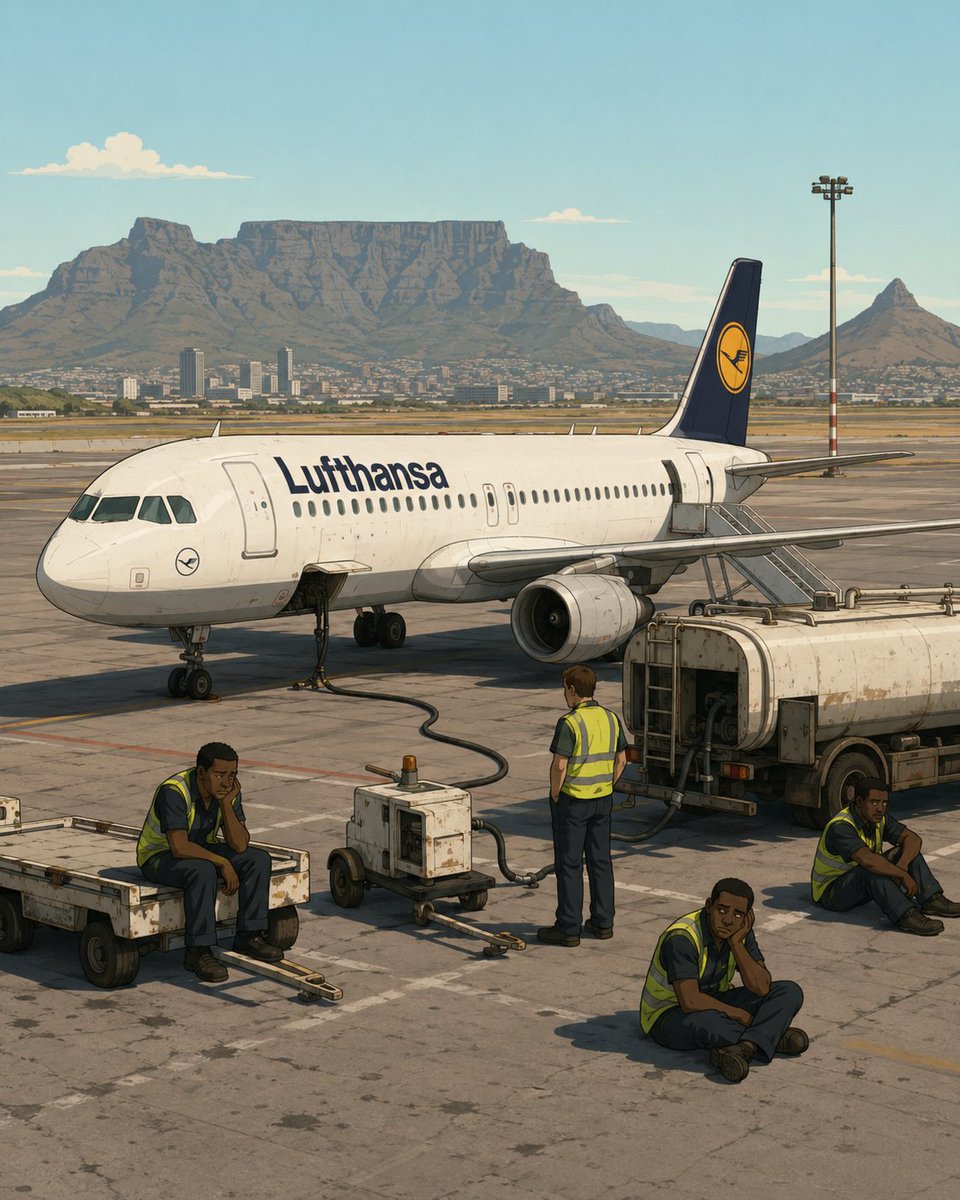
Travel: The Ridiculous Phase Has Already Started A Lufthansa 787 flying from Cape Town to Frankfurt reportedly had to fly 900 miles north to Namibia because it could not refuel properly in Cape Town. That might sound like a strange aviation story, but it is much bigger than that. It is the first stupid-looking signal of a system with no slack starting to break. The real disruption has barely started, and already a major airline flying from a major tourist destination is having to send a long-haul aircraft hundreds of miles in the wrong direction just to fill up. That is not a minor inconvenience. That is what a fragile global system looks like when one basic assumption fails. People think travel collapses when people stop wanting holidays. Wrong. Travel collapses when airlines stop trusting the route. Demand does not matter if the fuel, airport, crew timing, insurance, margins and aircraft utilisation no longer make sense. And airlines will not be sentimental. If a destination becomes unreliable, they will cut flights, reduce frequency, reroute passengers, or stop flying there. Once that happens, the damage is not confined to the airport. It hits the whole economy. Because tourism economies are not really built on tourism. They are built on aircraft arriving. Planes land, passengers spend, hotels fill, restaurants survive, taxis move, cleaners work, landlords get paid, banks get paid, governments collect tax, and everyone pretends the flow is permanent. Remove the flights and the whole stack starts breaking. The hotel only needs occupancy to fall below its debt structure. The restaurant only needs a few bad months. The Airbnb host only needs bookings to dry up. The taxi driver only needs fewer airport arrivals. The worker only needs their employer to lose confidence. That is how this turns into a recession. Not slowly, not neatly, and not only in travel. Fewer flights means less spending, less employment, weaker businesses, lower tax receipts, stressed loans, falling property confidence and governments suddenly discovering their economy was built on movement they did not control. The ridiculous phase has already started. The recession phase comes when people realise their job, business, mortgage, hotel, restaurant, taxi, shop, rental income or local economy was not really built on “tourism”. It was built on airlines being willing and able to land there.
Johnny Sonic Bravo $S tweet media
English
0
0
0
48
Johnny Sonic Bravo $S
Johnny Sonic Bravo $S@Jonathan_Kettle·
Who are the happiest people in society? I don’t think it’s the richest people. I don’t think it’s the people with the most options, the easiest lives, the most comfort, or the most things done for them. I think it’s usually the people whose attention is regularly pointed away from themselves. Because psychologically, the self is a dangerous place to live full time. The more you monitor your own mood, your own status, your own progress, your own pain, your own fairness, your own unmet needs, the more your mind starts eating itself. Biologically, we are not designed to be isolated pleasure machines. We are social animals. Our nervous systems regulate through connection, usefulness, responsibility, laughter, touch, duty, contribution and belonging. We feel better when we are needed, not when we are endlessly indulged. That’s why someone with children, a partner, a team, a craft, a business, a community, or even just people they genuinely care about can be happier than someone who technically has “everything.” Their life has friction, but the friction has meaning. Their stress has somewhere to go. The unhappiest people are often not the people with the hardest lives. They are the people with the most self-focused lives. The ones constantly asking: how do I feel, am I respected, am I fulfilled, am I winning, am I getting enough, why am I not happier? This is why very rich people can become strangely miserable. Once everything is done for them, there is nothing left to think about except themselves. And once the mind has no external duty, no real usefulness, no one to serve, no problem bigger than its own mood, it often starts turning comfort into emptiness. A human being with no responsibility does not become free. They often become trapped. Trapped inside their own preferences, boredom, sensitivity, comparison, and emotional weather. The happiest people are not necessarily the people who have the most. They are the people who still have something meaningful to give.
Johnny Sonic Bravo $S tweet media
English
0
0
2
32
Johnny Sonic Bravo $S
Johnny Sonic Bravo $S@Jonathan_Kettle·
Instagram: Why Fake Followers Are So Obvious! Fake followers are obvious because the lie is not hidden in the number. It is hidden in the psychology behind the number. Most people are not secretly fascinating to strangers. That sounds harsh, but it is true. The average person does not have hundreds or thousands of random people quietly fascinated by their dinners, holidays, gym photos, selfies, and middle-aged life updates. The first giveaway is that nobody knows who these followers are. There is no social overlap. No shared world. No obvious reason. No niche. No content engine. No public profile. Just a suspiciously inflated audience of people who seem to have no relationship to the person’s actual life. The second giveaway is that the number is usually perfectly calibrated. Not celebrity-level. Not influencer-level. Just slightly higher than their friends. If everyone around them has 300 or 400 followers, they somehow have 900, 1,200, or 1,500. That is not fame. That is local status inflation. It is not about being known by the world. It is about being ranked above the people in their immediate social circle. The fake follower count says, “More people are interested in me than I am interested in them.” That is why they often follow far fewer people than follow them. The ratio is part of the costume. The funny part is that everyone who knows them already knows what they are like. They know the person is status-obsessed. They know the person cares deeply about image, ranking, desirability, and being seen as more popular than they actually are. So the fake followers do not create mystery. They confirm the diagnosis. That is why it backfires. The person thinks they are buying social proof, but what they are really buying is a visible receipt for insecurity. The number does not say, “I am interesting.” It says, “I need you to think I am interesting.” Real status leaves evidence in the real world. Invitations. Stories. Overlap. Recognition. People talking about you when you are not there. Fake status leaves a number on a screen, surrounded by people nobody has ever met, from places nobody can connect to your life, silently pretending to care. And that is why fake followers are so obvious. Not because everyone checks the accounts. But because the social claim is implausible. Everyone knows the person. Everyone knows the game. And everyone can feel the gap between the number they bought and the person they actually are.
Johnny Sonic Bravo $S tweet media
English
0
0
0
20