Jordan James Etem

66.3K posts

Jordan James Etem banner
Jordan James Etem

Jordan James Etem

@JordanJamesEtem

UNITED Vision

Katılım Aralık 2011
781 Takip Edilen12.6K Takipçiler
Jordan James Etem retweetledi
Jordan James Etem
Jordan James Etem@JordanJamesEtem·
Deep Belief Networks (DBNs), a class of deep neural networks with multiple layers of interconnected nodes, have emerged as a transformative force in machine learning, driving breakthroughs in action learning, pattern recognition, and computer vision with profound long-term value. By leveraging their hierarchical architecture, DBNs excel at unsupervised feature learning, enabling systems to extract intricate patterns from raw data, such as pixel intensities in images or temporal sequences in videos, without relying on extensive labeled datasets. This capability has revolutionized action recognition, where DBNs model complex human movements for applications like autonomous robotics and real-time surveillance, achieving unprecedented accuracy. In computer vision, DBNs power advancements in object detection and scene understanding, underpinning technologies like self-driving cars and medical imaging diagnostics. Their ability to learn robust, abstract representations ensures adaptability to diverse domains, fostering scalable solutions that evolve with data complexity. As computational power grows and datasets expand, DBNs’ capacity to integrate multimodal data—combining vision, audio, and temporal cues—positions them as a cornerstone for intelligent systems, delivering enduring societal and economic impact through enhanced automation and decision-making.
Jordan James Etem tweet mediaJordan James Etem tweet mediaJordan James Etem tweet media
English
1
1
1
8.8K
Jordan James Etem retweetledi
Jordan James Etem
Jordan James Etem@JordanJamesEtem·
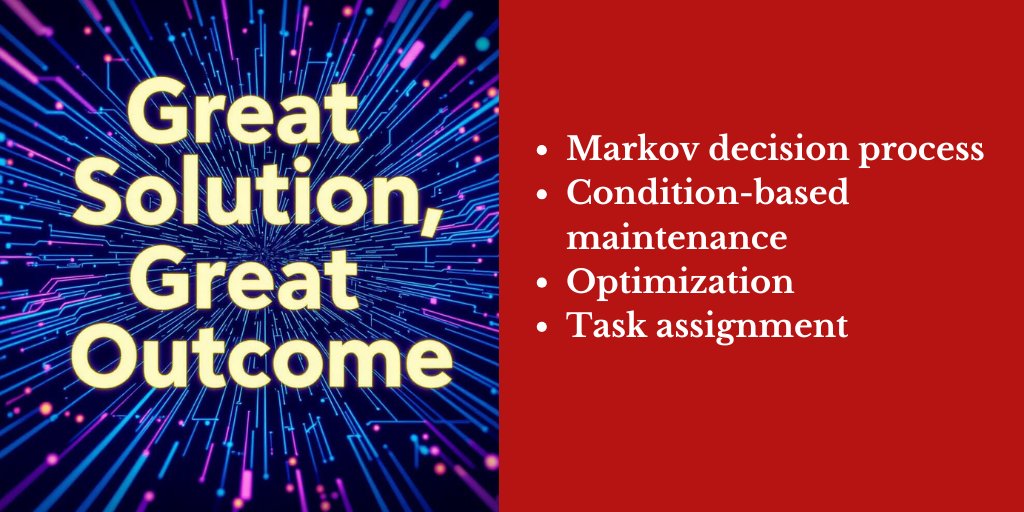
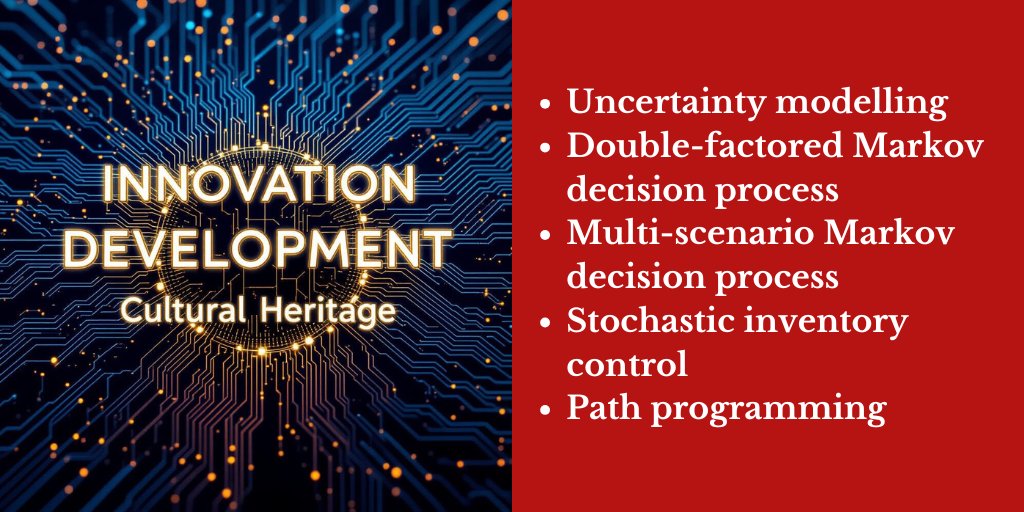
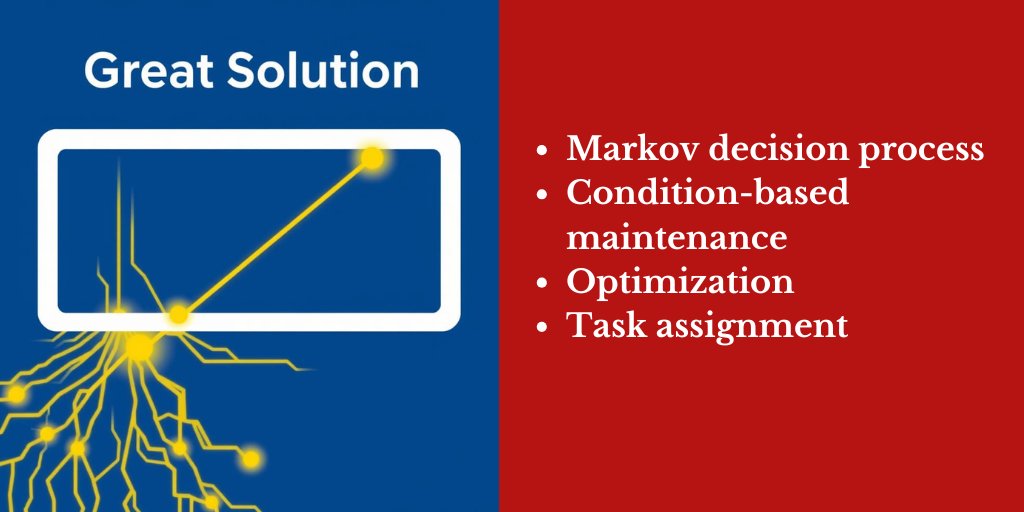
Markov Decision Process A Markov decision process (MDP) is a mathematical framework for sequential decision making under uncertainty. It is defined by the tuple (S, A, P, R, γ), where S is the state space, A the action space, P(s'|s,a) the transition probability, R(s,a) or R(s,a,s') the reward function, and γ ∈ [0,1) the discount factor. The goal is to find a policy π that maximizes the expected discounted (or average) return. In infinite-horizon settings, the optimal policy is stationary and can be found via value iteration, policy iteration, or linear programming. When models are unknown, reinforcement learning methods (Q-learning, SARSA, actor-critic) converge to the optimal policy under mild conditions. MDPs are the foundation for modern reinforcement learning and are widely applied in operations research, robotics, healthcare, and maintenance optimization, where they naturally model the trade-off between immediate costs and long-term consequences of actions. Condition-Based Maintenance Condition-based maintenance (CBM) schedules inspections and repairs based on the actual health state of equipment rather than fixed time intervals. Health is typically monitored through sensors measuring vibration, temperature, wear, pressure, or oil degradation. The core idea is to act only when degradation reaches critical thresholds, minimizing unnecessary interventions while preventing catastrophic failures. CBM is naturally formulated as a partially observable or fully observable MDP where the state represents the true (or estimated) deterioration level. Actions include continue operation, perform minor maintenance, major overhaul, or replacement. Rewards encode operating profit, inspection costs, preventive maintenance costs, and high failure penalties. Optimal CBM policies are monotone thresholds: intervene when degradation exceeds a control limit that itself depends on age or usage, yielding significant cost savings (20–50 %) over time-based strategies in turbines, aircraft engines, and manufacturing lines. Optimization Optimization in the context of MDPs refers to finding the policy that maximizes long-term cumulative reward. Classical exact methods include dynamic programming (value/policy iteration) and linear programming formulations. For large or continuous spaces, approximate methods dominate: approximate dynamic programming, neuro-dynamic programming (deep RL), simulation-based policy gradients, and constrained variants (safe RL, robust MDPs). In industrial maintenance and task assignment, optimization often balances conflicting objectives: minimizing downtime while maximizing machine utilization and task throughput. Recent advances exploit structural properties (monotonicity, convexity, submodularity) to derive near-optimal threshold or index policies analytically, while deep reinforcement learning provides scalable solutions when physics-based models are incomplete or high-dimensional sensor data is available. Task Assignment Task assignment allocates jobs or operations to heterogeneous machines or workers to maximize throughput, minimize makespan, or balance load under constraints. When machines degrade stochastically and tasks have different processing requirements and values, the problem becomes a dynamic stochastic task assignment problem. Formulated as an MDP, the state includes current task queue, machine health levels, and remaining processing times. Actions assign a task to a specific machine (or none). Rewards reflect task value minus degradation-induced delays or failure costs. Classic solutions use index policies (Whittle or Gittins for restless bandits) when machines are independent. When task-machine affinities and shared maintenance crews introduce coupling, restless bandit approximations, Lagrangian relaxation, or deep multi-agent RL achieve strong performance. Applications include flexible manufacturing cells, cloud computing clusters, and robotic fleets. Optimized Task Assignment and Predictive Maintenance for Industrial Machines Using Markov Decision Processes Industrial systems increasingly integrate predictive maintenance and dynamic task assignment into a single decision framework. Each machine is modeled as a deteriorating MDP with discrete or continuous health states monitored by sensors. Tasks arrive stochastically with varying urgency, duration, and machine-specific execution efficiency. The joint problem is a large-scale MDP where the state is the vector of machine health levels and current task buffer, actions simultaneously decide maintenance interventions and task-to-machine assignments, and rewards combine task revenue, operating costs, and failure penalties. Exact solution is intractable, but powerful approximations exploit structure: health evolution is often independent across machines (restless multi-armed bandits), leading to Whittle-index policies that decouple maintenance decisions while a separate assignment layer uses health-dependent indices. Recent deep RL approaches (centralized PPO with graph neural networks or multi-agent actor-critic) learn joint policies end-to-end from high-dimensional sensor and production data, outperforming heuristic rules by 15–40 % in total profit on real semiconductor, steel, and mining datasets. The resulting policies dynamically slow down degraded machines (assigning lighter tasks), schedule opportunistic maintenance during low-demand periods, and reroute critical jobs to healthier units—achieving near-optimal balance between production targets and asset longevity in complex, uncertain environments.
Jordan James Etem tweet mediaJordan James Etem tweet mediaJordan James Etem tweet media
English
0
1
0
395
Jordan James Etem retweetledi
Jordan James Etem
Jordan James Etem@JordanJamesEtem·
Constitutive cycling is the continuous, ligand-independent shuttling of transmembrane proteins—such as receptors, ion channels, and transporters—between the plasma membrane and early endosomes through ongoing endocytosis and rapid recycling. This basal process keeps surface levels dynamically tuned, allowing cells to adjust protein exposure far faster than changes in gene expression or protein synthesis could achieve. It supports essential functions including synaptic plasticity, ion balance, and water transport across diverse cell types. Core lesson: systems gain robustness and swift adaptability not from static stockpiles but from persistent, low-cost turnover—build mechanisms with inherent continuous refresh so they can recalibrate instantly to shifting demands without requiring total reconstruction.
Jordan James Etem tweet mediaJordan James Etem tweet mediaJordan James Etem tweet media
English
0
1
0
288
Jordan James Etem retweetledi
Jordan James Etem
Jordan James Etem@JordanJamesEtem·
Constitutive cycling is the continuous, ligand-independent shuttling of transmembrane proteins—such as receptors, ion channels, and transporters—between the plasma membrane and early endosomes through ongoing endocytosis and rapid recycling. This basal process keeps surface levels dynamically tuned, allowing cells to adjust protein exposure far faster than changes in gene expression or protein synthesis could achieve. It supports essential functions including synaptic plasticity, ion balance, and water transport across diverse cell types. Core lesson: systems gain robustness and swift adaptability not from static stockpiles but from persistent, low-cost turnover—build mechanisms with inherent continuous refresh so they can recalibrate instantly to shifting demands without requiring total reconstruction.
Jordan James Etem tweet mediaJordan James Etem tweet mediaJordan James Etem tweet media
English
0
1
0
205
Jordan James Etem retweetledi
Jordan James Etem
Jordan James Etem@JordanJamesEtem·
Total Internal Reflection Total internal reflection (TIR) occurs when light traveling in a higher-refractive-index medium (n₁) strikes the interface with a lower-index medium (n₂ < n₁) at an incidence angle θᵢ greater than the critical angle θ_c = arcsin(n₂/n₁), causing 100% of the light to reflect back into the first medium with no energy transmitted into the second. This phenomenon is the foundational principle behind optical waveguiding: in optical fibres, TIR confines light within the core (higher n) by repeated reflections at the core-cladding boundary, enabling low-loss propagation over long distances without radiative leakage. TIR is angle-selective and wavelength-independent (except through dispersion in n), making it ideal for broadband guiding but requiring precise control of the refractive-index contrast and launch conditions to stay above θ_c. Transverse Electric Polarization Transverse electric (TE) polarization means the electric field vector E is entirely transverse (perpendicular) to the direction of propagation (k-vector), so E has no longitudinal component along the waveguide axis. In optical fibres, TE modes are those where the electric field lies in the plane perpendicular to the fibre axis (e.g., E_x or E_y dominant, E_z = 0), with the magnetic field having both transverse and longitudinal components. TE modes are common in slab waveguides and step-index fibres (e.g., TE₀ₘ modes), where the lowest-order TE₀₁ mode often carries significant power in multimode fibres; they are widely used because they experience lower bending losses than TM modes in many geometries. Transverse Magnetic Polarization Transverse magnetic (TM) polarization means the magnetic field vector H is entirely transverse to the propagation direction, so H has no longitudinal component, while the electric field has both transverse and longitudinal (E_z) components. In optical fibres, TM modes (e.g., TM₀ₘ) have a non-zero axial electric field that vanishes on-axis and peaks off-axis, leading to higher attenuation for higher-order modes due to increased interaction with the cladding. TM modes are generally more sensitive to bending and imperfections than TE modes, which is why many single-mode fibres are designed to operate close to the cutoff of the TM₀₁ mode while supporting the fundamental HE₁₁ (hybrid) mode. Evanescent Waves Evanescent waves are non-propagating electromagnetic fields that decay exponentially away from the interface in the lower-index medium during total internal reflection, with field amplitude ~ exp(-κz), where κ = (2π/λ) √(n₁² sin²θᵢ − n₂²) is the decay constant. They carry no time-averaged power in the transverse direction (Poynting vector parallel to the interface is zero), yet they store energy and can tunnel into nearby structures (e.g., frustrated TIR in directional couplers or evanescent-field sensing in optical fibres). In optical fibres, the evanescent tail of the guided mode extends several micrometres into the cladding, enabling applications like fibre-optic sensors (detecting refractive-index changes near the core), fibre tapers, and nonlinear effects in cladding-pumped amplifiers. Optical Fibres Optical fibres are long, thin dielectric waveguides (typically silica glass) that guide light via total internal reflection at the core-cladding interface, where the core has a slightly higher refractive index than the cladding (Δn ≈ 0.01–0.03). Single-mode fibres support only the fundamental HE₁₁ mode (effective index close to the core index), delivering low dispersion and low loss (~0.2 dB/km at 1550 nm) for long-haul telecommunications; multimode fibres support hundreds of modes for short-reach, high-bandwidth applications like data centres. The fibre’s performance is governed by the V-number (normalized frequency V = (2πa/λ) √(n₁² − n₂²)), which determines the number of guided modes, cutoff conditions, and modal dispersion; polarization-maintaining fibres add birefringence to preserve TE/TM states for coherent detection and sensors. Optical fibres underpin the global internet backbone, undersea cables, fibre-to-the-home networks, and sensing (distributed temperature, strain, acoustics), with evanescent-field effects enabling advanced applications like fibre Bragg gratings and nonlinear photonics.
Jordan James Etem tweet mediaJordan James Etem tweet mediaJordan James Etem tweet media
English
0
1
0
195
Jordan James Etem
Jordan James Etem@JordanJamesEtem·
Total Internal Reflection Total internal reflection (TIR) occurs when light traveling in a higher-refractive-index medium (n₁) strikes the interface with a lower-index medium (n₂ < n₁) at an incidence angle θᵢ greater than the critical angle θ_c = arcsin(n₂/n₁), causing 100% of the light to reflect back into the first medium with no energy transmitted into the second. This phenomenon is the foundational principle behind optical waveguiding: in optical fibres, TIR confines light within the core (higher n) by repeated reflections at the core-cladding boundary, enabling low-loss propagation over long distances without radiative leakage. TIR is angle-selective and wavelength-independent (except through dispersion in n), making it ideal for broadband guiding but requiring precise control of the refractive-index contrast and launch conditions to stay above θ_c. Transverse Electric Polarization Transverse electric (TE) polarization means the electric field vector E is entirely transverse (perpendicular) to the direction of propagation (k-vector), so E has no longitudinal component along the waveguide axis. In optical fibres, TE modes are those where the electric field lies in the plane perpendicular to the fibre axis (e.g., E_x or E_y dominant, E_z = 0), with the magnetic field having both transverse and longitudinal components. TE modes are common in slab waveguides and step-index fibres (e.g., TE₀ₘ modes), where the lowest-order TE₀₁ mode often carries significant power in multimode fibres; they are widely used because they experience lower bending losses than TM modes in many geometries. Transverse Magnetic Polarization Transverse magnetic (TM) polarization means the magnetic field vector H is entirely transverse to the propagation direction, so H has no longitudinal component, while the electric field has both transverse and longitudinal (E_z) components. In optical fibres, TM modes (e.g., TM₀ₘ) have a non-zero axial electric field that vanishes on-axis and peaks off-axis, leading to higher attenuation for higher-order modes due to increased interaction with the cladding. TM modes are generally more sensitive to bending and imperfections than TE modes, which is why many single-mode fibres are designed to operate close to the cutoff of the TM₀₁ mode while supporting the fundamental HE₁₁ (hybrid) mode. Evanescent Waves Evanescent waves are non-propagating electromagnetic fields that decay exponentially away from the interface in the lower-index medium during total internal reflection, with field amplitude ~ exp(-κz), where κ = (2π/λ) √(n₁² sin²θᵢ − n₂²) is the decay constant. They carry no time-averaged power in the transverse direction (Poynting vector parallel to the interface is zero), yet they store energy and can tunnel into nearby structures (e.g., frustrated TIR in directional couplers or evanescent-field sensing in optical fibres). In optical fibres, the evanescent tail of the guided mode extends several micrometres into the cladding, enabling applications like fibre-optic sensors (detecting refractive-index changes near the core), fibre tapers, and nonlinear effects in cladding-pumped amplifiers. Optical Fibres Optical fibres are long, thin dielectric waveguides (typically silica glass) that guide light via total internal reflection at the core-cladding interface, where the core has a slightly higher refractive index than the cladding (Δn ≈ 0.01–0.03). Single-mode fibres support only the fundamental HE₁₁ mode (effective index close to the core index), delivering low dispersion and low loss (~0.2 dB/km at 1550 nm) for long-haul telecommunications; multimode fibres support hundreds of modes for short-reach, high-bandwidth applications like data centres. The fibre’s performance is governed by the V-number (normalized frequency V = (2πa/λ) √(n₁² − n₂²)), which determines the number of guided modes, cutoff conditions, and modal dispersion; polarization-maintaining fibres add birefringence to preserve TE/TM states for coherent detection and sensors. Optical fibres underpin the global internet backbone, undersea cables, fibre-to-the-home networks, and sensing (distributed temperature, strain, acoustics), with evanescent-field effects enabling advanced applications like fibre Bragg gratings and nonlinear photonics.
Jordan James Etem tweet mediaJordan James Etem tweet mediaJordan James Etem tweet mediaJordan James Etem tweet media
English
0
1
0
450
Jordan James Etem
Jordan James Etem@JordanJamesEtem·
Total Internal Reflection Total internal reflection (TIR) occurs when light traveling in a higher-refractive-index medium (n₁) strikes the interface with a lower-index medium (n₂ < n₁) at an incidence angle θᵢ greater than the critical angle θ_c = arcsin(n₂/n₁), causing 100% of the light to reflect back into the first medium with no energy transmitted into the second. This phenomenon is the foundational principle behind optical waveguiding: in optical fibres, TIR confines light within the core (higher n) by repeated reflections at the core-cladding boundary, enabling low-loss propagation over long distances without radiative leakage. TIR is angle-selective and wavelength-independent (except through dispersion in n), making it ideal for broadband guiding but requiring precise control of the refractive-index contrast and launch conditions to stay above θ_c. Transverse Electric Polarization Transverse electric (TE) polarization means the electric field vector E is entirely transverse (perpendicular) to the direction of propagation (k-vector), so E has no longitudinal component along the waveguide axis. In optical fibres, TE modes are those where the electric field lies in the plane perpendicular to the fibre axis (e.g., E_x or E_y dominant, E_z = 0), with the magnetic field having both transverse and longitudinal components. TE modes are common in slab waveguides and step-index fibres (e.g., TE₀ₘ modes), where the lowest-order TE₀₁ mode often carries significant power in multimode fibres; they are widely used because they experience lower bending losses than TM modes in many geometries. Transverse Magnetic Polarization Transverse magnetic (TM) polarization means the magnetic field vector H is entirely transverse to the propagation direction, so H has no longitudinal component, while the electric field has both transverse and longitudinal (E_z) components. In optical fibres, TM modes (e.g., TM₀ₘ) have a non-zero axial electric field that vanishes on-axis and peaks off-axis, leading to higher attenuation for higher-order modes due to increased interaction with the cladding. TM modes are generally more sensitive to bending and imperfections than TE modes, which is why many single-mode fibres are designed to operate close to the cutoff of the TM₀₁ mode while supporting the fundamental HE₁₁ (hybrid) mode. Evanescent Waves Evanescent waves are non-propagating electromagnetic fields that decay exponentially away from the interface in the lower-index medium during total internal reflection, with field amplitude ~ exp(-κz), where κ = (2π/λ) √(n₁² sin²θᵢ − n₂²) is the decay constant. They carry no time-averaged power in the transverse direction (Poynting vector parallel to the interface is zero), yet they store energy and can tunnel into nearby structures (e.g., frustrated TIR in directional couplers or evanescent-field sensing in optical fibres). In optical fibres, the evanescent tail of the guided mode extends several micrometres into the cladding, enabling applications like fibre-optic sensors (detecting refractive-index changes near the core), fibre tapers, and nonlinear effects in cladding-pumped amplifiers. Optical Fibres Optical fibres are long, thin dielectric waveguides (typically silica glass) that guide light via total internal reflection at the core-cladding interface, where the core has a slightly higher refractive index than the cladding (Δn ≈ 0.01–0.03). Single-mode fibres support only the fundamental HE₁₁ mode (effective index close to the core index), delivering low dispersion and low loss (~0.2 dB/km at 1550 nm) for long-haul telecommunications; multimode fibres support hundreds of modes for short-reach, high-bandwidth applications like data centres. The fibre’s performance is governed by the V-number (normalized frequency V = (2πa/λ) √(n₁² − n₂²)), which determines the number of guided modes, cutoff conditions, and modal dispersion; polarization-maintaining fibres add birefringence to preserve TE/TM states for coherent detection and sensors. Optical fibres underpin the global internet backbone, undersea cables, fibre-to-the-home networks, and sensing (distributed temperature, strain, acoustics), with evanescent-field effects enabling advanced applications like fibre Bragg gratings and nonlinear photonics.
Jordan James Etem tweet mediaJordan James Etem tweet mediaJordan James Etem tweet media
English
0
1
0
286
Jordan James Etem retweetledi
S.E. Robinson, Jr.
S.E. Robinson, Jr.@SERobinsonJr·
SPACEX: Condensed Gwynne Shotwell TIME interview. The full interview is really good. I suggest you read it. But if you do not have time, here you go: - Merger with xAI: Happened quickly; xAI will largely operate as its own entity with integration over time. Shotwell’s role will evolve as it always has, focused on helping Elon Musk and adding value. AI was already growing at SpaceX; merger brings top talent to accelerate rocketry R&D, including factory robots spotting issues. - Merger Details: Decision was Elon's; Shotwell fully supported it due to increasing AI use and need for deeper expertise. SpaceX has had some AI engineers for 1–1.5 years; merger will speed progress significantly. - IPO: Shotwell is excited about it as a new set of methodologies but is not supposed to discuss details. - Moon vs Mars Focus: Not abandoning Mars; more energy on Moon for data centers in space, mass drivers, and producing AI satellites on the Moon using lunar materials (lower gravity makes launches faster/cheaper). Manufacturing on Moon not surprising. - Lunar Timeline: Humans on lunar surface before 2030. HLS (Human Landing System) planned ready by 2028, though much must go right. - HLS Contract: Shotwell called Secretary Sean Duffy’s statement about “opening up” the contract “inartful.” No new competition—SpaceX won Artemis III, Blue Origin won Artemis V; no new money awarded. - Starlink: Surpassed 10 million customers (as of Feb 13). Strong growth expected. In conflict zones (Ukraine, Iran, Gaza), operates as licensed commercial service—customers buy equipment and service; not freelancing. No business without local license. - Starlink Privacy Policy: January update automatically opts users into data for AI training. Shotwell heard zero complaints and addresses all customer issues personally. Company follows all laws; will fix any misuse. - Constellation Size: ~10,000 Starlink satellites launched. Likely cap 15,000–20,000. Requested FCC licensing for up to 1 million AI satellites for distributed space-based data center network (surprised it got little news). - Orbital Operations: AI satellites in multiple shells, possibly around Sun. Safety first; emphasizes communication of maneuvers for space traffic control. Compares 30,000 satellites to 30,000 cars on Earth—sparse if positions are shared. - Launch Record: Over 600 Falcon 9 successful launches (608 noted). 165 launches last year; ~140–145 expected this year, then tapering as Starship ramps up. Over 85% of US launches in 2025 were Falcon 9. - Starship Role: Will carry heavy payloads like AI satellites and eventually humans (up to 300 passengers depending on destination). Internal demand from Starlink/AI satellites drives production consistency, safety, and human transport capability. - Lunar Governance: Unknown final model. Elon not top-down; lets people work independently. Starbase example (from nothing to chartered city) may be precedent. Subject to Outer Space Treaty on Moon. - Political/IPO Concerns: No worry about volatility—broad customer base across commercial, civil, military, and international markets balances cycles. Current administration’s focus on sensible regulation helpful for launch industry (40–60 approvals/licenses per launch). - Working with Elon Musk: Shotwell loves working for him nearly 24 years. Finds him funny, grants her freedom/flexibility. He has become more comfortable with people; remains demanding. Interactions easier over time. Recalled him describing his children as “love bugs.” - Long-term Dreams: Personally wants to meet another sentient species (facilitated by SpaceX/xAI work). Expects lunar infrastructure starting with robots then people; would like to visit Moon. Million people needed for sustainable off-world civilization. - Space Policy: Every administration since joining SpaceX (except possibly last) focused on getting more people into space and expanding human exploration. - Gender in Industry: Never focuses on male-female dynamics. Values communication skills. Hopes to be role model for girls/young women in STEM (“you can’t be it until you see it”—girl from Illinois cow town helping change world). Women drawn to positive-impact fields. Mechanical engineering: her undergrad ~9% women; now much higher, but progress not fast enough.
S.E. Robinson, Jr. tweet mediaS.E. Robinson, Jr. tweet mediaS.E. Robinson, Jr. tweet media
S.E. Robinson, Jr.@SERobinsonJr

SPACEX: Gwynne Shotwell is on the cover of TIME. The profile covers her position serving as president and COO, second only to Elon Musk, SpaceX operations including Starlink, and the merger with xAI. Shotwell oversees 23,000 employees and focuses on ramping up Starship production. There are 18 vehicles in various stages of construction at Starbase, Texas. Theirnprime focus is NASA's Artemis IV lunar landing in 2028. She aims to build a Moon settlement and manufacturing facility within 10 years (hopefully five), including producing AI satellites on the Moon, and envisions Starship enabling humanity as a multi-planet species.

English

59
373
3K
249.4K
Jordan James Etem
Jordan James Etem@JordanJamesEtem·
Step In genetics and molecular biology, “step” refers to a discrete mutational or evolutionary change that produces a new allele or phenotypic variant differing from the parental form by a single, clearly defined alteration. The term is most commonly encountered in the context of “stepwise” processes, such as the origin of new alleles at a locus or the gradual accumulation of mutations. It emphasizes that genetic change often occurs in distinct, incremental units rather than continuously. The concept of a mutational step underpins many models of allele formation, quantitative trait variation, and molecular evolution. In laboratory practice, a “step” can also denote an individual stage in a multi-step experimental protocol (e.g., a purification step or a PCR step). Step thus denotes a single, discrete genetic or procedural increment that contributes to variation or progression. Step Allelomorphism Step allelomorphism (also called stepwise allelism or multiple allelic series with stepwise differences) describes a series of alleles at a single locus that produce a graded series of phenotypes, each differing from the next by a small, incremental change. Classic examples include the white-eye allelic series in Drosophila (white, apricot, eosin, blood, etc.), the ABO blood group alleles in humans, or certain coat-color series in mammals. These alleles are arranged in a dominance hierarchy or quantitative gradient, where each successive allele produces a slightly different level of gene activity or protein function. Step allelomorphism often arises from a series of mutations that progressively alter promoter strength, splicing efficiency, or protein stability. It illustrates how multiple alleles at one locus can generate a continuous range of phenotypes rather than simple dominant/recessive alternatives. Step Allelomorphism thus refers to a ladder-like allelic series at a single genetic locus that produces incremental phenotypic differences. Step Gradient Centrifugation Step gradient centrifugation (also called discontinuous gradient centrifugation) is a density-based separation technique in which the sample is layered on top of a pre-formed gradient consisting of discrete layers (steps) of increasing density (usually sucrose, Percoll, Ficoll, or CsCl). During ultracentrifugation, particles or macromolecules migrate until they reach the interface where the density of the medium matches their own buoyant density, forming sharp bands. This method provides excellent resolution for separating organelles, membrane vesicles, viruses, or macromolecules that differ only modestly in density. It is faster and simpler than continuous gradients and is widely used for purifying mitochondria, lysosomes, nuclei, ribosomes, and plasma membrane fractions. Step Gradient Centrifugation thus enables high-resolution isolation of subcellular components or particles by allowing them to equilibrate at distinct density interfaces in a discontinuous gradient. Stepwise Mutation Model (SMM) The Stepwise Mutation Model (SMM) is a theoretical model in population genetics that describes the mutational process at microsatellite (SSR) loci. According to the SMM, mutations occur by the gain or loss of a single repeat unit (step) at a time, rather than by random changes of any size. Each mutation therefore changes the allele length by ±1 repeat. The model assumes that the mutation rate is constant and that forward and backward mutations are equally likely. The SMM is the foundation for calculating genetic distances (e.g., RST) and for testing population differentiation using microsatellite data. It contrasts with the Infinite Alleles Model (IAM), which assumes every mutation creates a completely new allele. Although real microsatellite mutation occasionally involves multi-step changes, the single-step SMM provides a good approximation for most population genetic analyses. Stepwise Mutation Model (SMM) thus provides the standard mutational framework for interpreting variation and divergence at tandemly repeated microsatellite loci.
Jordan James Etem tweet mediaJordan James Etem tweet mediaJordan James Etem tweet mediaJordan James Etem tweet media
English
0
0
0
33
Jordan James Etem retweetledi
Jordan James Etem
Jordan James Etem@JordanJamesEtem·
Mobilization in molecular genetics refers to the process by which a non-autonomous or defective mobile genetic element (MGE) is induced to transpose or transfer by the action of trans-acting proteins (usually transposase or conjugative machinery) supplied in trans from a helper element or another source in the same cell. Mobilization occurs for plasmids (e.g., non-conjugative plasmids mobilized by conjugative plasmids via relaxase and oriT recognition), transposons (non-autonomous MITEs or defective transposons mobilized by autonomous transposases recognizing shared terminal inverted repeats), and integrative elements (mobilizable genomic islands). The mobilizing element provides the enzymatic machinery (transposase, integrase, relaxase) and sometimes accessory proteins, while the mobilized element supplies only the cis-acting sequences (TIRs, oriT, att sites). Mobilization is a key mechanism for rapid dissemination of antibiotic resistance genes, virulence factors, and metabolic operons in bacterial populations, often via conjugative plasmids or integrative conjugative elements (ICEs). In eukaryotic systems, mobilization of non-autonomous retrotransposons (e.g., Alu elements) by LINE-1 machinery is a major driver of genome plasticity and insertional mutagenesis. Mobilization of plasmids is the process by which a non-conjugative (mobilizable) plasmid is transferred horizontally between bacterial cells with the assistance of a conjugative helper plasmid or integrative conjugative element (ICE) present in the donor cell. Mobilizable plasmids contain a minimal set of cis-acting sequences: an **origin of transfer (oriT)** recognized by the relaxase of the helper, and often a mob region encoding accessory mobilization proteins (Mob proteins) that enhance efficiency. The helper plasmid or ICE provides the full conjugative apparatus: relaxase (nicks at oriT), coupling protein (links relaxase to the type IV secretion system), and the mating pair formation (Mpf) apparatus (T4SS) that forms the conjugation pilus and transfers the single-stranded plasmid DNA. Upon entry into the recipient, the plasmid is recircularized and replicated. Mobilization is a major driver of horizontal gene transfer in bacteria, particularly for antibiotic resistance plasmids (e.g., IncQ, IncP, IncW groups), virulence plasmids, and metabolic plasmids, allowing rapid spread of adaptive traits across diverse bacterial species even when the helper plasmid is transient or unrelated. Mobilization efficiency depends on oriT compatibility, Mob protein function, and host restriction-modification systems. Mobilome is the collective set of all mobile genetic elements (MGEs) within a genome, population, or microbial community, encompassing all DNA sequences capable of moving within or between genomes via transposition, retrotransposition, conjugation, transformation, transduction, or other mechanisms. The mobilome includes transposons (insertion sequences, composite transposons, MITEs), integrative conjugative elements (ICEs), conjugative plasmids, mobilizable plasmids, bacteriophages, genomic islands, integrons, and CRISPR arrays. In prokaryotes, the mobilome constitutes a major fraction of the accessory genome, driving rapid adaptation, antibiotic resistance dissemination, virulence factor acquisition, and metabolic innovation. In eukaryotes, the mobilome includes endogenous retroviruses, DNA transposons, L1/LINEs, SINEs/Alu, and Helitrons, shaping genome architecture, gene regulation, and evolutionary novelty. The mobilome is dynamic, subject to horizontal gene transfer (HGT), copy-number variation, and epigenetic silencing, and its composition varies dramatically between species, strains, and environmental conditions. Metagenomic and single-cell sequencing has revealed the mobilome as a vast reservoir of genetic innovation, with implications for antibiotic resistance epidemiology, microbial ecology, and synthetic biology (e.g., engineering mobilizable circuits). Thus, the mobilome represents the “mobile” component of the genome that drives horizontal and vertical evolutionary change beyond classical mutation and vertical inheritance.
Jordan James Etem tweet mediaJordan James Etem tweet mediaJordan James Etem tweet media
English
0
1
6
21.3K
Jordan James Etem retweetledi
Jordan James Etem
Jordan James Etem@JordanJamesEtem·
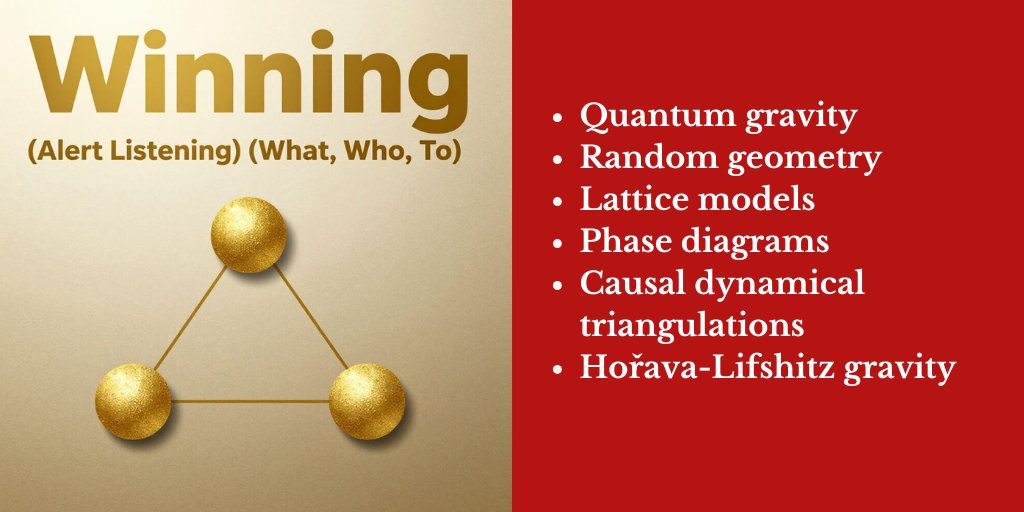
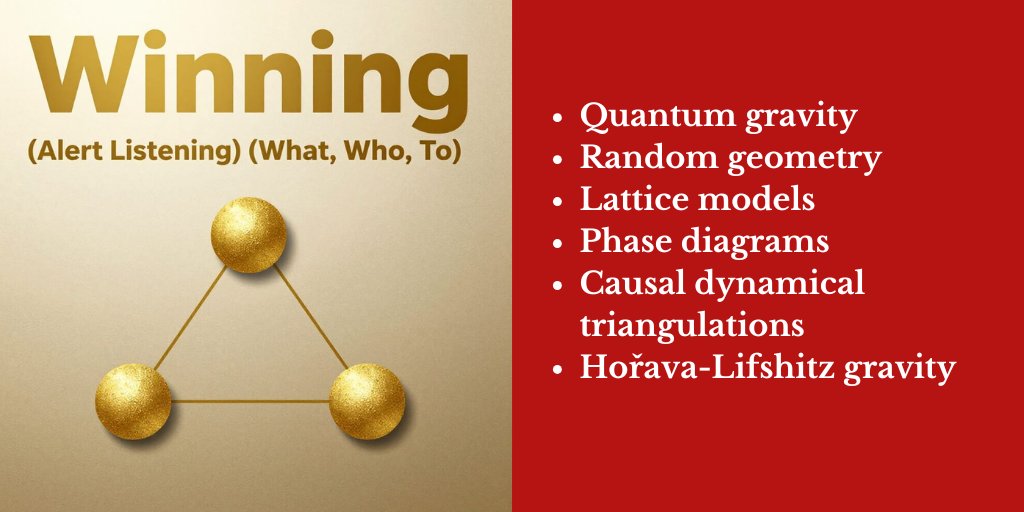
Quantum Gravity Quantum gravity seeks a consistent unification of general relativity and quantum mechanics, addressing the quantization of spacetime itself at the Planck scale (~10^{-35} m), where classical geometry breaks down due to quantum fluctuations. Non-perturbative lattice approaches, such as dynamical triangulations and loop quantum gravity, provide background-independent regularizations that sum over geometries without a fixed background metric, aiming to recover continuum spacetime and resolve singularities like those inside black holes or at the Big Bang. Key challenges include ultraviolet divergences in perturbative gravity, the absence of a unique vacuum, and the need for observables that are diffeomorphism-invariant; promising routes involve asymptotic safety, holography (AdS/CFT), and emergent spacetime from entanglement or discrete structures. Random Geometry Random geometry in quantum gravity refers to ensembles of piecewise-flat or discrete spacetimes (triangulations, spin foams, or graphs) generated probabilistically via path-integral-like sums, where geometry emerges dynamically from statistical averaging rather than being prescribed. In lattice models, random geometry captures quantum fluctuations through Monte Carlo sampling of simplicial manifolds with actions inspired by Regge calculus or Einstein-Hilbert, allowing exploration of phase transitions, fractal dimensions, and effective continuum limits. It underpins approaches like dynamical triangulations, where the "randomness" arises from summing over all possible gluings of simplices weighted by exp(-S), revealing phases with extended four-dimensional de Sitter-like geometry or crumpled, branched-polymer states. Lattice Models Lattice models in quantum gravity discretize spacetime into finite simplicial complexes (triangulations) or graphs, providing a non-perturbative, background-independent regularization of the gravitational path integral suitable for numerical Monte Carlo simulations. Causal dynamical triangulations (CDT) and Euclidean dynamical triangulations (DT) are prominent examples, using Regge action terms proportional to bare couplings (inverse Newton constant κ₀, cosmological constant) and asymmetry parameters to control geometry. These models enable extraction of observables like spectral dimension, Hausdorff dimension, volume profiles, and effective actions, with lattice artifacts suppressed in the large-volume limit to approach continuum physics. Phase Diagrams Phase diagrams in lattice quantum gravity map the space of bare couplings (e.g., κ₀, Δ in CDT) to distinct macroscopic phases of quantum geometry, identified via Monte Carlo simulations measuring order parameters like average curvature, volume scaling, or connectivity. In CDT, the four-dimensional phase diagram typically features: phase A (uncorrelated slices, no extended time), phase B (collapsed, minimal time extension), phase C_dS (de Sitter-like extended four-geometry with semiclassical properties), and phase C_b (bifurcation phase with singular structures). Transitions between phases are often first-order or higher-order, with the physically relevant de Sitter phase C_dS emerging near a second-order critical line after fine-tuning the cosmological constant, offering evidence for a continuum limit with emergent classical spacetime. Causal Dynamical Triangulations Causal dynamical triangulations (CDT), developed by Ambjørn, Jurkiewicz, and Loll, is a Lorentzian lattice approach to quantum gravity that enforces a preferred time foliation and causality by gluing simplices such that light cones remain well-defined and no spacelike edges cross time slices. Monte Carlo simulations reveal a rich phase structure in four dimensions, dominated by a de Sitter-like phase C_dS with effective four-dimensional geometry, semiclassical scaling of volumes, and spectral dimension flowing from ~2 at short distances to 4 at large scales. CDT provides numerical evidence for dynamical emergence of extended spacetime, effective minisuperspace behavior, and robustness across topologies (spherical or toroidal slices), while avoiding the pathological branched-polymer phase prevalent in Euclidean DT. Hořava-Lifshitz Gravity Hořava-Lifshitz gravity is a power-counting renormalizable quantum gravity theory that breaks full diffeomorphism invariance down to foliation-preserving diffeomorphisms in the ultraviolet, introducing anisotropic scaling z > 1 between time and space to improve UV behavior without higher-derivative ghosts in the IR. The action includes higher spatial derivatives (e.g., curvature-squared terms) balanced by lower time derivatives, yielding a Lifshitz fixed point in the UV and flowing to Einstein gravity (z=1) in the infrared under renormalization-group flow. Lattice regularizations via CDT have been explored for Hořava-Lifshitz models, with simulations showing extended phases and phase transitions resembling anisotropic scaling; in two dimensions, CDT exactly reproduces projectable Hořava-Lifshitz gravity with quadratic terms. The theory aims to resolve UV divergences perturbatively while preserving unitarity and causality, though challenges remain in coupling to matter, restoring full diffeomorphisms in the IR, and matching observational cosmology without fine-tuning.
Jordan James Etem tweet mediaJordan James Etem tweet mediaJordan James Etem tweet media
English
0
2
7
45K
Jordan James Etem
Jordan James Etem@JordanJamesEtem·
Systematic Generalization (Compositional Reasoning & Zero-Shot Transfer) The ability to automatically understand and produce novel combinations of familiar elements (e.g., “a purple cube on a red sphere” after seeing cubes, spheres, purple, and red separately). Current deep learning models largely fail at this; they memorize specific combinations rather than truly composing concepts. Causal Inference and Counterfactual Thinking The capacity to understand not just correlations (“what happened”), but genuine cause-effect relationships (“why it happened”) and to reason about what would have happened if something had been different (“what if”). Deep models remain overwhelmingly correlational and struggle with true causal or counterfactual reasoning. Few-Shot Learning from Sparse Data Humans can learn a new concept from just one or a handful of examples. Deep learning systems typically require thousands or millions of labeled examples to reach decent performance, revealing a massive gap in data efficiency and rapid learning. Robustness to Distributional Shift The ability to maintain performance when the test environment differs from training data (e.g., new lighting, new backgrounds, new accents, or adversarial examples). Deep neural networks are notoriously brittle to such shifts, often collapsing in performance where humans barely notice a change. Common-Sense Reasoning and Abstraction The intuitive understanding of everyday physics, social norms, object permanence, intentions, and abstract concepts that humans develop early in life. Large language and vision models still lack reliable common sense and struggle with abstraction, frequently producing plausible-sounding but fundamentally incoherent or unrealistic outputs. These five capabilities represent the core “intelligence gap” between today’s deep learning systems and human-level cognition.
Jordan James Etem tweet mediaJordan James Etem tweet mediaJordan James Etem tweet mediaJordan James Etem tweet media
English

0
0
0
431
Jordan James Etem
Jordan James Etem@JordanJamesEtem·
Spliceosomal Intron is a non-coding intervening sequence within a pre-mRNA transcript that is precisely excised by the spliceosome during RNA splicing. Spliceosomal introns are the most common type of intron in eukaryotic nuclear genes and are characterized by conserved consensus sequences at their boundaries: the 5′ splice site (usually GU), the 3′ splice site (usually AG), and a branch-point sequence (typically containing an adenosine) located 20–50 nucleotides upstream of the 3′ splice site. These sequences are recognized by spliceosomal snRNPs and associated proteins. Spliceosomal introns vary enormously in length (from ~50 nt to >100 kb) and often contain regulatory elements such as enhancers or silencers. Their removal is essential for generating mature mRNA; failure to splice correctly leads to aberrant transcripts and diseases (e.g., spinal muscular atrophy, β-thalassemia). Spliceosomal intron thus denotes the intervening RNA segment removed by the major spliceosome to produce functional messenger RNA. Spliceosome is a large, dynamic ribonucleoprotein machine responsible for removing spliceosomal introns from pre-mRNA in the nucleus of eukaryotic cells. It is composed of five small nuclear ribonucleoproteins (U1, U2, U4, U5, and U6 snRNPs) plus numerous additional proteins (>200 in humans), forming complexes that assemble stepwise on each intron. Assembly proceeds through discrete stages: E complex (early recognition), A complex (U2 binding), B complex (tri-snRNP addition), Bact (activation), B*, C, and post-catalytic complexes. The spliceosome catalyzes two transesterification reactions: first, the 2′ OH of the branch-point adenosine attacks the 5′ splice site, forming a lariat intermediate; second, the 3′ OH of the upstream exon attacks the 3′ splice site, ligating the exons and releasing the lariat intron. The spliceosome is highly dynamic, undergoing extensive conformational rearrangements and snRNP recycling. Spliceosome thus represents the macromolecular machine that performs accurate intron removal and exon ligation, enabling proper gene expression in eukaryotes. Splicing is the process by which introns are removed from precursor RNA transcripts (primarily pre-mRNA) and the flanking exons are joined together to produce mature, functional RNA. In eukaryotic nuclear genes, this is carried out by the spliceosome through two sequential transesterification reactions. Alternative splicing allows a single pre-mRNA to generate multiple mRNA isoforms by selectively including or excluding exons, greatly expanding the proteome. Splicing also occurs in some tRNAs and rRNAs, but by different mechanisms (self-splicing or protein-assisted). The process is tightly regulated by cis-acting sequences (splice sites, branch point, enhancers, silencers) and trans-acting factors (SR proteins, hnRNPs). Errors in splicing cause numerous human diseases, including many cancers and genetic disorders. Splicing thus refers to the essential post-transcriptional RNA processing step that removes non-coding sequences and assembles coding exons into continuous mature transcripts. Splicing Enhancer, Exonic (ESE) is a short cis-acting sequence motif located within an exon that promotes the recognition and inclusion of that exon during pre-mRNA splicing. ESEs are typically purine-rich sequences (e.g., GA-rich or AC-rich) that are bound by SR (serine/arginine-rich) proteins such as SF2/ASF, SC35, or SRp40. These proteins recruit or stabilize U1 snRNP at the upstream 5′ splice site and U2AF at the downstream 3′ splice site, facilitating spliceosome assembly across the exon. ESEs counteract the effects of weak splice sites and are critical for correct exon definition, especially in large or alternatively spliced exons. Mutations that disrupt ESEs can cause exon skipping and disease (e.g., in spinal muscular atrophy or cystic fibrosis). Splicing Enhancer, Exonic (ESE) thus functions as a positive regulatory element within exons that enhances splice site recognition and promotes proper exon inclusion by recruiting splicing activator proteins. Splicing Inhibition refers to mechanisms that prevent or reduce the recognition of specific splice sites or exons, leading to exon skipping, intron retention, or use of cryptic splice sites. Inhibition is mediated by exonic or intronic splicing silencers (ESS or ISS) that recruit repressive proteins such as hnRNP A1, hnRNP H, or PTB. These factors can block U1 or U2 snRNP binding, interfere with SR protein function, or promote competing secondary structures in the pre-mRNA. Splicing inhibition is a key aspect of alternative splicing regulation and can be modulated by cell type, developmental stage, or external signals. Pathogenic mutations often create new silencers or strengthen existing ones, causing inappropriate exon skipping (e.g., in Duchenne muscular dystrophy or SMA). Splicing Inhibition thus encompasses the negative regulatory processes that repress splice site usage to control isoform production or respond to cellular conditions. Splicing Juncture (splice junction) is the precise point in the mature mRNA where two exons have been ligated together after intron removal. At the DNA/RNA level it corresponds to the junction between the 3′ end of one exon and the 5′ end of the next exon. Splice junctions are defined by the consensus sequences at the exon-intron boundaries (5′ GU…AG 3′) and are accurately joined by the spliceosome so that the reading frame is preserved in most cases. Sequencing of cDNA versus genomic DNA readily reveals splice junctions. Mutations at or near splice junctions frequently cause exon skipping, cryptic splice site activation, or intron retention, leading to frameshifts or nonsense-mediated decay. Splicing Juncture (splice junction) thus denotes the seamless exon-exon connection created by splicing that defines the continuous coding sequence of mature mRNA. Splicing of Proteins (protein splicing) is a post-translational process in which an internal protein segment called an intein is autocatalytically excised from a precursor polypeptide, with the flanking N- and C-terminal exteins being ligated together by a peptide bond. Unlike RNA splicing, protein splicing is a self-contained reaction requiring no external machinery; it proceeds through a series of nucleophilic attacks involving conserved residues (usually Cys, Ser, or Thr) at the intein-extein junctions. Inteins are found in all three domains of life, though they are rare in eukaryotes. Some inteins contain a homing endonuclease domain that promotes their spread. Engineered split inteins are widely used in biotechnology for protein ligation, purification, and conditional protein activation. Protein splicing thus represents a precise, autocatalytic rearrangement of the polypeptide chain that removes an intervening intein sequence and joins the exteins into a functional mature protein.
Jordan James Etem tweet mediaJordan James Etem tweet mediaJordan James Etem tweet media
English
0
0
0
296
Jordan James Etem
Jordan James Etem@JordanJamesEtem·
Microtubule motors are ATP-hydrolyzing motor proteins that walk processively along microtubule tracks to transport cargo, generate force, and organize the cytoskeleton. They fall into two major superfamilies: kinesins and dyneins. Both convert the energy of ATP hydrolysis into mechanical work through conformational changes in a conserved motor domain, but they differ in directionality, structure, and cellular roles. Kinesins comprise a large family (45 genes in humans) characterized by a motor domain that usually moves toward the plus (fast-growing) end of microtubules, enabling anterograde transport from the cell center to the periphery. The classic example is kinesin-1 (conventional kinesin), a heterotetramer with two heavy chains (motor heads) and two light chains; it transports vesicles, mitochondria, and mRNA along axons at speeds up to 1 μm/s. Other kinesins specialize in mitosis: kinesin-5 (Eg5) slides antiparallel microtubules apart to establish bipolar spindles, while kinesin-13 depolymerizes microtubules at kinetochores. Kinesins typically have a coiled-coil stalk and cargo-binding tail, with regulation by autoinhibition, phosphorylation, and adaptor proteins that link them to specific cargoes. Dyneins are larger, more complex motors that move toward the minus (slow-growing) end, powering retrograde transport and minus-end-directed force generation. Cytoplasmic dynein-1 is the main minus-end motor for intracellular transport; it forms a massive multi-subunit complex (heavy chain motor domains, intermediate and light chains) and is activated by dynactin and various adaptors (e.g., BICD2, Hook3) to move vesicles, organelles, and mRNA toward the microtubule organizing center. Cytoplasmic dynein-2 powers intraflagellar transport in cilia. Axonemal dyneins, arranged in outer and inner arms on ciliary microtubules, generate the sliding forces that produce ciliary/flagellar bending and beating. Dynein motility is slower (≈0.5 μm/s) and more processive when teamed with dynactin. Together, kinesins and dyneins create bidirectional transport systems essential for axonal transport, organelle positioning, mitosis, and cell migration. In neurons, they maintain the polarized distribution of synaptic vesicles and mitochondria; defects cause axonal transport blockades leading to neuropathies (e.g., Charcot-Marie-Tooth disease from kinesin mutations, spinal muscular atrophy from dynein/dynactin defects). In mitosis, balanced motor activity ensures proper spindle assembly and chromosome segregation; inhibitors of kinesin-5 are in clinical trials as anticancer agents. Mutations in motor or adaptor genes also underlie ciliopathies and neurodegenerative diseases. Microtubule motors are therefore the molecular engines that convert chemical energy into directed movement and force along the microtubule cytoskeleton, orchestrating intracellular logistics, cell division, and specialized motile structures across eukaryotes. Their directionality, processivity, and regulation by adaptors make them indispensable for cellular organization and function.
Jordan James Etem tweet mediaJordan James Etem tweet mediaJordan James Etem tweet media
English
0
0
0
267
Jordan James Etem
Jordan James Etem@JordanJamesEtem·
Microtubule motors are ATP-hydrolyzing motor proteins that walk processively along microtubule tracks to transport cargo, generate force, and organize the cytoskeleton. They fall into two major superfamilies: kinesins and dyneins. Both convert the energy of ATP hydrolysis into mechanical work through conformational changes in a conserved motor domain, but they differ in directionality, structure, and cellular roles. Kinesins comprise a large family (45 genes in humans) characterized by a motor domain that usually moves toward the plus (fast-growing) end of microtubules, enabling anterograde transport from the cell center to the periphery. The classic example is kinesin-1 (conventional kinesin), a heterotetramer with two heavy chains (motor heads) and two light chains; it transports vesicles, mitochondria, and mRNA along axons at speeds up to 1 μm/s. Other kinesins specialize in mitosis: kinesin-5 (Eg5) slides antiparallel microtubules apart to establish bipolar spindles, while kinesin-13 depolymerizes microtubules at kinetochores. Kinesins typically have a coiled-coil stalk and cargo-binding tail, with regulation by autoinhibition, phosphorylation, and adaptor proteins that link them to specific cargoes. Dyneins are larger, more complex motors that move toward the minus (slow-growing) end, powering retrograde transport and minus-end-directed force generation. Cytoplasmic dynein-1 is the main minus-end motor for intracellular transport; it forms a massive multi-subunit complex (heavy chain motor domains, intermediate and light chains) and is activated by dynactin and various adaptors (e.g., BICD2, Hook3) to move vesicles, organelles, and mRNA toward the microtubule organizing center. Cytoplasmic dynein-2 powers intraflagellar transport in cilia. Axonemal dyneins, arranged in outer and inner arms on ciliary microtubules, generate the sliding forces that produce ciliary/flagellar bending and beating. Dynein motility is slower (≈0.5 μm/s) and more processive when teamed with dynactin. Together, kinesins and dyneins create bidirectional transport systems essential for axonal transport, organelle positioning, mitosis, and cell migration. In neurons, they maintain the polarized distribution of synaptic vesicles and mitochondria; defects cause axonal transport blockades leading to neuropathies (e.g., Charcot-Marie-Tooth disease from kinesin mutations, spinal muscular atrophy from dynein/dynactin defects). In mitosis, balanced motor activity ensures proper spindle assembly and chromosome segregation; inhibitors of kinesin-5 are in clinical trials as anticancer agents. Mutations in motor or adaptor genes also underlie ciliopathies and neurodegenerative diseases. Microtubule motors are therefore the molecular engines that convert chemical energy into directed movement and force along the microtubule cytoskeleton, orchestrating intracellular logistics, cell division, and specialized motile structures across eukaryotes. Their directionality, processivity, and regulation by adaptors make them indispensable for cellular organization and function.
Jordan James Etem tweet mediaJordan James Etem tweet mediaJordan James Etem tweet mediaJordan James Etem tweet media
English
0
0
0
421
Jordan James Etem
Jordan James Etem@JordanJamesEtem·
Microtubule motors are ATP-hydrolyzing motor proteins that walk processively along microtubule tracks to transport cargo, generate force, and organize the cytoskeleton. They fall into two major superfamilies: kinesins and dyneins. Both convert the energy of ATP hydrolysis into mechanical work through conformational changes in a conserved motor domain, but they differ in directionality, structure, and cellular roles. Kinesins comprise a large family (45 genes in humans) characterized by a motor domain that usually moves toward the plus (fast-growing) end of microtubules, enabling anterograde transport from the cell center to the periphery. The classic example is kinesin-1 (conventional kinesin), a heterotetramer with two heavy chains (motor heads) and two light chains; it transports vesicles, mitochondria, and mRNA along axons at speeds up to 1 μm/s. Other kinesins specialize in mitosis: kinesin-5 (Eg5) slides antiparallel microtubules apart to establish bipolar spindles, while kinesin-13 depolymerizes microtubules at kinetochores. Kinesins typically have a coiled-coil stalk and cargo-binding tail, with regulation by autoinhibition, phosphorylation, and adaptor proteins that link them to specific cargoes. Dyneins are larger, more complex motors that move toward the minus (slow-growing) end, powering retrograde transport and minus-end-directed force generation. Cytoplasmic dynein-1 is the main minus-end motor for intracellular transport; it forms a massive multi-subunit complex (heavy chain motor domains, intermediate and light chains) and is activated by dynactin and various adaptors (e.g., BICD2, Hook3) to move vesicles, organelles, and mRNA toward the microtubule organizing center. Cytoplasmic dynein-2 powers intraflagellar transport in cilia. Axonemal dyneins, arranged in outer and inner arms on ciliary microtubules, generate the sliding forces that produce ciliary/flagellar bending and beating. Dynein motility is slower (≈0.5 μm/s) and more processive when teamed with dynactin. Together, kinesins and dyneins create bidirectional transport systems essential for axonal transport, organelle positioning, mitosis, and cell migration. In neurons, they maintain the polarized distribution of synaptic vesicles and mitochondria; defects cause axonal transport blockades leading to neuropathies (e.g., Charcot-Marie-Tooth disease from kinesin mutations, spinal muscular atrophy from dynein/dynactin defects). In mitosis, balanced motor activity ensures proper spindle assembly and chromosome segregation; inhibitors of kinesin-5 are in clinical trials as anticancer agents. Mutations in motor or adaptor genes also underlie ciliopathies and neurodegenerative diseases. Microtubule motors are therefore the molecular engines that convert chemical energy into directed movement and force along the microtubule cytoskeleton, orchestrating intracellular logistics, cell division, and specialized motile structures across eukaryotes. Their directionality, processivity, and regulation by adaptors make them indispensable for cellular organization and function.
Jordan James Etem tweet mediaJordan James Etem tweet mediaJordan James Etem tweet mediaJordan James Etem tweet media
English
0
0
0
417
Jordan James Etem retweetledi
Jordan James Etem
Jordan James Etem@JordanJamesEtem·
Fractional cointegration provides a powerful framework for analyzing the convergence of private credit and public debt, explicitly capturing their long-term interdependence through persistence in their dynamics. By modeling the fractional cointegration relationship, it reveals how shocks to private credit persistently influence public debt levels, and vice versa, due to shared economic drivers like fiscal policy or market conditions. The persistence in these debt series, characterized by long-memory processes, is precisely quantified using non-integer integration orders, ensuring a robust representation of their co-movement. This approach enhances policy design by clearly connecting private credit and public debt dynamics, enabling more accurate forecasts and coordinated strategies to mitigate systemic financial risks.
Jordan James Etem tweet media
Jordan James Etem@JordanJamesEtem

Measurement History: The history of price index measurement began with early 18th-century attempts to quantify living costs and evolved into the modern indices used today, like the Consumer Price Index (CPI). Historical developments, such as the introduction of chained indices, addressed issues like substitution bias over time. Parallel applications include the historical tracking of economic indicators such as GDP deflators or trade indices, which adjust for price changes. Understanding measurement history helps refine current practices by learning from past limitations, such as outdated basket weights. It also informs the adaptation of indices to modern economies with rapid technological changes.

English
0
1
1
88