Jose Antonio Lopez

3.5K posts

Jose Antonio Lopez banner
Jose Antonio Lopez

Jose Antonio Lopez

@JoseALopezDN

Sport Performance Nutricionist in @BcnMana and @Movistar_Team Interested in exersice metabolism.

Lugo, Galicia Katılım Ekim 2010
797 Takip Edilen1.4K Takipçiler
Jose Antonio Lopez retweetledi
Gordo Byrn
Gordo Byrn@feelthebyrn1·
Simplifying Training Intensity Zones Understanding Our Body's Signals I asked @JohnHellemans to review my recent articles with an eye to making it even more simple for you. While John knows the science inside-out, he’s always encouraged me to dial into how my body is feeling, rather than letting my gizmos make that decision for me. One time, before an Olympic Distance Triathlon, he advised me to “leave my brain at home & ride the bike absolutely as fast as you can.” Unusually, I led off the bike and won my first Olympic Triathlon. Training, and racing, by feel works. In Picture 1, you’ll find a table prepared by John that lays out a Green-Yellow-Red approach. What I like most about John’s table is the column “Overall Subjective Feeling” adjusts for athlete level, ability and fitness. Specifically, 🟢Green - it feels comfortable and you can keep it up for a long time. 🟠Amber - somewhat uncomfortable and you can keep it up for 60-90 minutes. 🔴Red - uncomfortable, depending on fitness you can keep it up for 6-60 minutes. The implications: 1⃣For New & Developing Athletes… if doesn’t feel comfortable and you can’t keep it up for a long time… then it isn’t Green Zone. 2⃣For Competitive & Elite Athletes… if it feels comfortable and you can keep it up for a long time… then it is Green Zone. 3⃣For ALL athletes, if your approach to endurance is breaking you down then it isn’t Green Zone training. See John’s Anabolic & Catabolic references below. John’s advice on implementation works VERY well in practice. When assessing your training ask yourself: ❓Am I enjoying my training? ❓Am I consistent? ❓Am I improving? Keep these front of mind. ➡️If we strip the fun out of our programs then consistency will falter. ➡️If consistency falters then performance will plateau, or decline. ++ John’s Voice Continues… I have been following the discussions on training intensity zones on the Endurance Essentials platform. At times it goes deep and scientific. It is interesting for athletes who are keen to measure stuff and want to know the what and why behind the zone classification. This article is for the many athletes who just want to go out and train and enjoy it. For those athletes who want to bring some structure to their training without making it too scientific. It is for the athletes whose eyes glaze over when the words lactate, threshold, heart rate reserve, percentage heart rate, watts, aerobic and anaerobic are mentioned.  This article simplifies the training zones by focusing on the signals your body gives you when in the different zones. But it is also for the athletes who like the science and the numbers, so they can make sure that they are still in tune with their bodies. The general consensus is that there are five zones, identified as Easy, Steady, Moderately Hard, Hard and Very Hard. This terminology is important as it immediately says something about how we perceive the five zones subjectively. We can simply score it from 1 (Easy) to 5 (Very Hard). Our default system is always to return to that terminology when training and racing, well before we look at the scientific numbers, rather than vice versa.    To help us with this we focus on the feedback our body gives us through our breathing (rate and depth), muscle (dis)comfort and an overall interpretation of ‘ease of movement’. For breathing you will be somewhere on the spectrum between conversation pace (Easy, Zone 1) and panting (Very Hard, Zone 5) while the degree of muscle discomfort will add to the feedback and help you decide which zone you are in. (Picture 1) Zone 1 and 2 are also called the green zones, Zone 3 the amber zone and Zone 4 and 5 the red zones. 🟢Green - So called because the pace in Zone 1 and 2 can be kept up for a long time without any recovery required. These are the safe zones, the anabolic zones, or health zones, as they strengthen the bodily systems immediately. 🔴Red - Zone 4 and 5 are the ‘catabolic’ zones, as the bodily systems are stressed and broken down before they recover and adapt during the recovery time. If not enough recovery (rest and nutrition) is allowed between sessions which contain a Zone 4 and/or 5 component, the body will gradually weaken and not get stronger. This is why, for even competitive athletes, not more than 10-20% of all training time should be spent in Zone 4 and 5, preferably spread through the week. 🟠Amber - Zone 3 is interesting as it can work positively (anabolic) when fresh and fully recovered but negatively (catabolic) if you are already tired. It is safest not to spend too much time in Zone 3. When doing Steady Zone (2) training over undulating terrain, it is easy to drift into Zone 3 at the uphill sections, so watch that. I always like to bring Zone 3 into a session which contains a Zone 4 and 5 component, to keep the athlete from overdoing Zone 4 and 5. Usually, this concerns up-tempo repetitions. An example is doing 1 km run repetitions: reps 1 and 4 are done at Z3, reps 2 and 5 at Z4 and reps 3 and 5 at Z4+. This principle can be applied to any endurance sport. When you practice listening to your body, rather than relying on the numbers provided by heart rate, lactate or power readings, you will find that your confidence and enjoyment will increase. By all means, use the gadgets if you like for feedback, but ensure you are in charge and not them. During training, assess the zone first by feedback from your body, then check with heart rate, lactate, and/or power. You will find that the numbers will match your subjective perception. If not, most likely, the numbers are wrong…
Gordo Byrn tweet media
English
8
37
200
50.4K
Jose Antonio Lopez retweetledi
James DiNicolantonio
James DiNicolantonio@drjamesdinic·
If you want to lose FAT, eat more PROTEIN. Protein keeps you fuller longer & it prevents you from bingeing on junk food throughout the day. Eat less…lose MUSCLE. Eat less (but eat more protein)… lose FAT.
English
3
19
197
14K
Jose Antonio Lopez retweetledi
Dr. Robert Allan
Dr. Robert Allan@robertallan87·
We've been suggesting for some time that recovery should be individualised and periodized on an athlete by athlete basis. Context is key here! Ask the right questions to help you decide when recovery might be required. Take a look at this for an individualised approach to CWI
Dr. Robert Allan tweet media
Southport, England 🇬🇧 English
0
7
20
5K
Jose Antonio Lopez retweetledi
David Morales-Álamo
David Morales-Álamo@D_Morales_Alamo·
Effects of exercise training on inflammatory, neurotrophic and immunological markers and neurotransmitters in people with depression: A systematic review and meta-analysis | #nice #review published in J Affect Disord. | pubmed.ncbi.nlm.nih.gov/36709828/
English
0
2
3
495
Jose Antonio Lopez retweetledi
Javier Gonzalez
Javier Gonzalez@Gonzalez_JT·
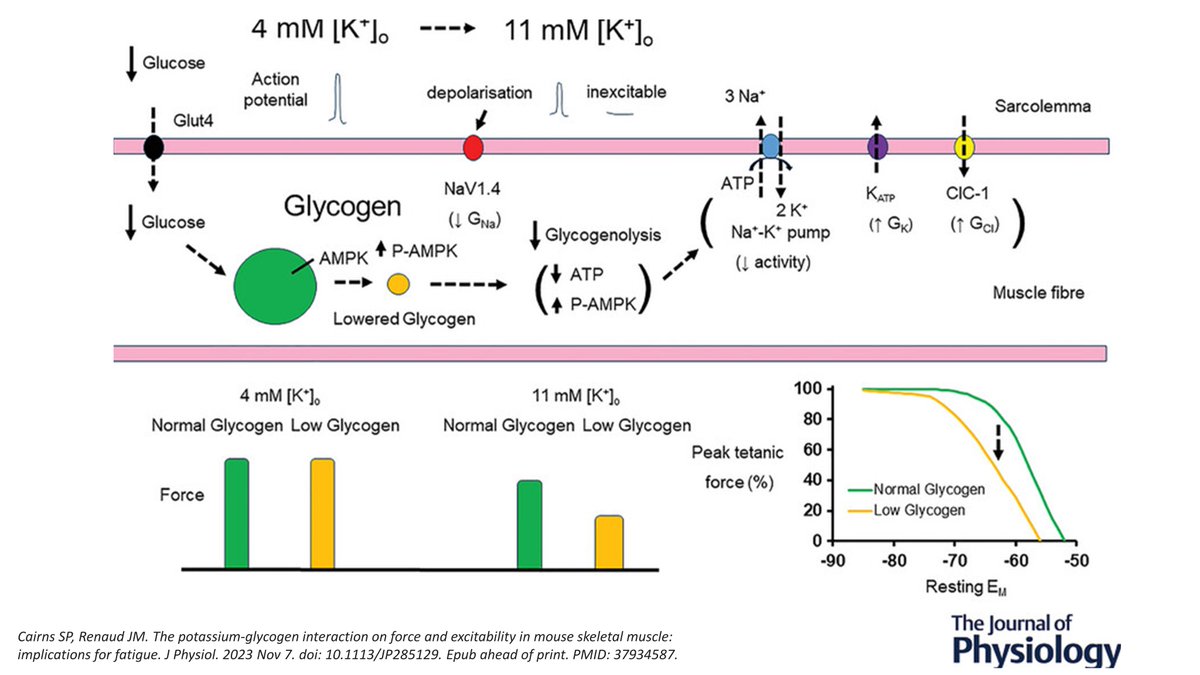
How can carbohydrate metabolism be measured during exercise? 🍏🍌🍞🍝🍚🚴‍♀️🚴‍♂️⛹️⛹️‍♂️ New #openaccess review by @AndyJKing & I in @IJSNEMJournal Hopefully a useful resource for people researching & reading about exercise metabolism 👩‍🔬📖 A summary🧵1/12 doi.org/10.1123/ijsnem…
Javier Gonzalez tweet media
English
11
37
196
0
Jose Antonio Lopez retweetledi
Javier Gonzalez
Javier Gonzalez@Gonzalez_JT·
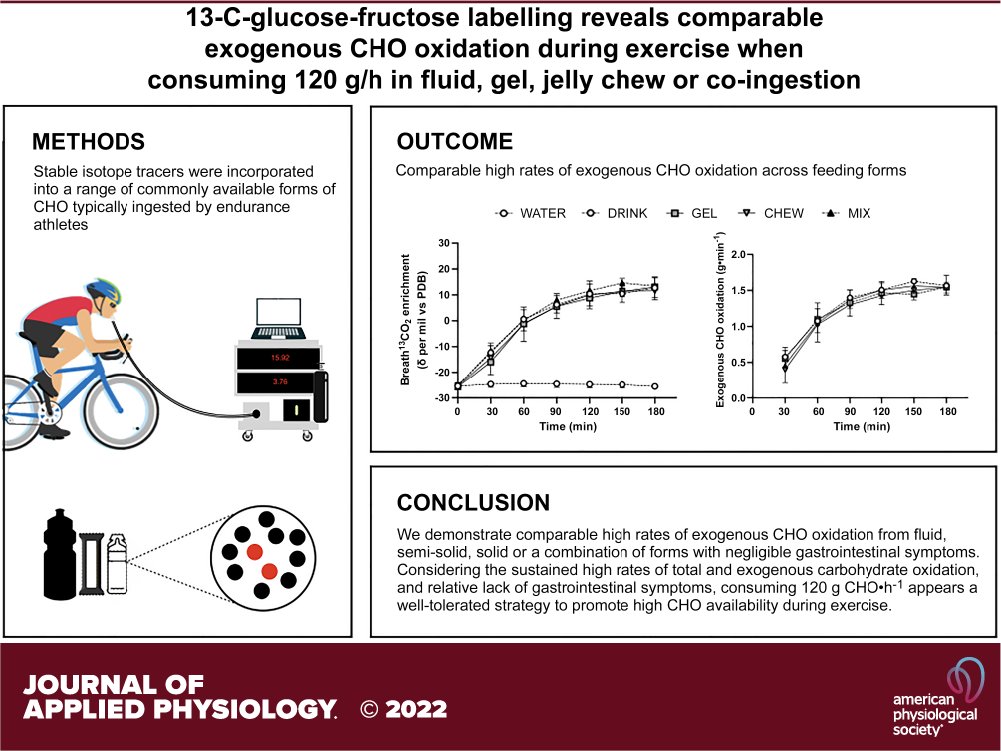
This has been used in many studies during exercise to assess how much of sports drinks/gels are used as fuel during the exercise doi.org/10.1152/japplp… 9/12
Javier Gonzalez tweet media
English
2
1
4
0
Jose Antonio Lopez retweetledi
Ingortze
Ingortze@Ingortze·
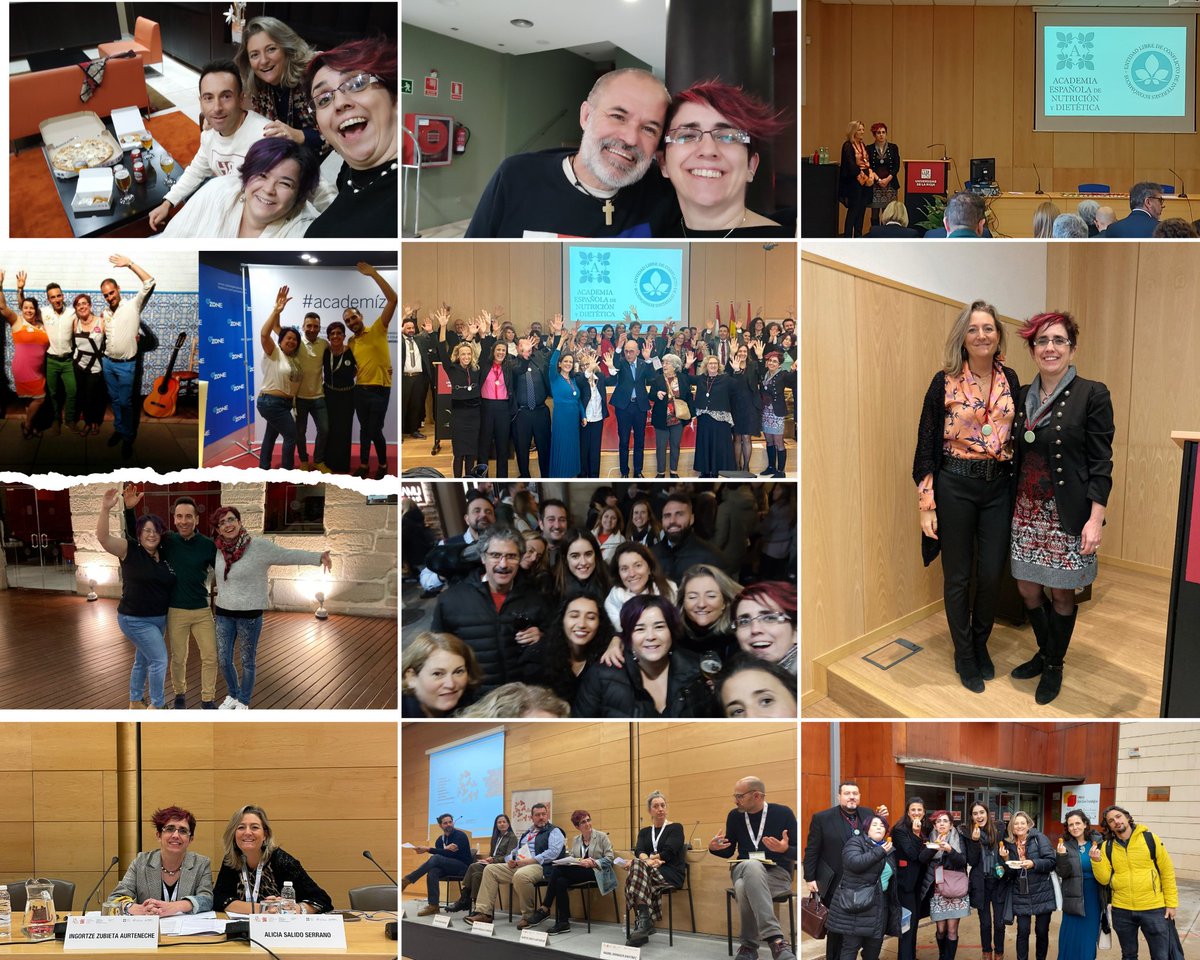
💥Otro Congreso más de trabajo, experiencias nuevas y buenisimos ratos...pero muy especial por volver a vernos... ✅Gracias a @aedninforma por contar conmigo y a @CGCODN_Oficial por vuestro trabajo. 🙌 ¡Seguimos!
Ingortze tweet media
Español
1
4
12
0