
José Ramón Orta Rotger retweetledi
José Ramón Orta Rotger
9.8K posts

José Ramón Orta Rotger
@JoseRamonOrta
Abogado. Padre de familia numerosa, católico, monárquico y madridista. Nacido en Palma de Mallorca, (España) en 1964. La familia es lo mejor
Palma de Mallorca. España Katılım Şubat 2012
2K Takip Edilen919 Takipçiler
José Ramón Orta Rotger retweetledi

Sílvia Orriols habla sobre el islam:
“Es una religión que atenta contra los derechos y libertades occidentales, y que, por tanto, su avance en territorio europeo supone una amenaza para nuestra civilización”.
Los va a barrer, a todos.
Español
José Ramón Orta Rotger retweetledi

Bukele aplicó la receta completa en El Salvador 🇸🇻:
Pandilleros: Bajo tierra o al CECOT sin lujos.
Jóvenes: Educación pública gratuita, tecnología y oportunidades.
Ancianos: Dueños de las calles y los parques.
Seguridad: Ejército armado, equipado y respetado.
Economía: Capitalismo, ahorro y trabajo duro.
Bienestar: Derechos animales y ciudades sin cables.
Ya no parece LATAM. 🐺
Español
José Ramón Orta Rotger retweetledi

Cuadra por cuadra... tardará un poco, pero quedará hermoso.
Español
José Ramón Orta Rotger retweetledi
La ultraizquierda caviar es antinuclear en España y pronuclear en Irán. Hilarante.
Español
José Ramón Orta Rotger retweetledi

Juan Soto Ivars: “El gobierno de Sánchez en estos seis años no ha parado de subir los impuestos y en estos años no hay un puto servicio público que funcione mejor, ¿dónde está la pasta?”.
Alguien tenía que decirlo.
Español
José Ramón Orta Rotger retweetledi

🚌🚆@ajuntpalma i @goib amplien fins 31 de maig el període de transició de la Targeta Ciutadana a la nova Targeta Única
Durant dos mesos encara es pot utilitzar la Targeta Ciutadana en els busos de l'EMT
Ja s’han emès prop de 118.000 targetes úniques
➡️tn.caib.es/NovaTargetaUni…


Català
José Ramón Orta Rotger retweetledi

🚨👇Suspensión del uso del DNI digital para las elecciones andaluzas.
Esto es una gran noticia y una decisión acertada de la Junta Electoral Central 👇👇
“ante las dudas y la alarma social que se ha generado tras conocerse que no es necesario verificar la identidad a través de un código QR actualizado, que es lo que serviría como garantía y mecanismo de autenticidad del documento».
Nuestro sistema electoral es fiable y garantista, pero siempre se puede mejorar en los supuestos en que haya la más mínima duda de manipulación o falta de autenticidad del voto.
THE OBJECTIVE@TheObjective_es
La Junta Electoral suspende el uso del DNI digital en las elecciones andaluzas del 17-M. theobjective.com/espana/politic…
Español
José Ramón Orta Rotger retweetledi

Como son unos ignorantes, no saben que el positivismo jurídico ("era legal") fue el argumento que esgrimieron los jerarcas nazis en los juicios de Nuremberg para justificar el exterminio de seis millones de seres humanos.
EL MUNDO@elmundoes
El PSOE sobre la eutanasia de Noelia: "Es legal" shorturl.at/HcqzA
Español
José Ramón Orta Rotger retweetledi

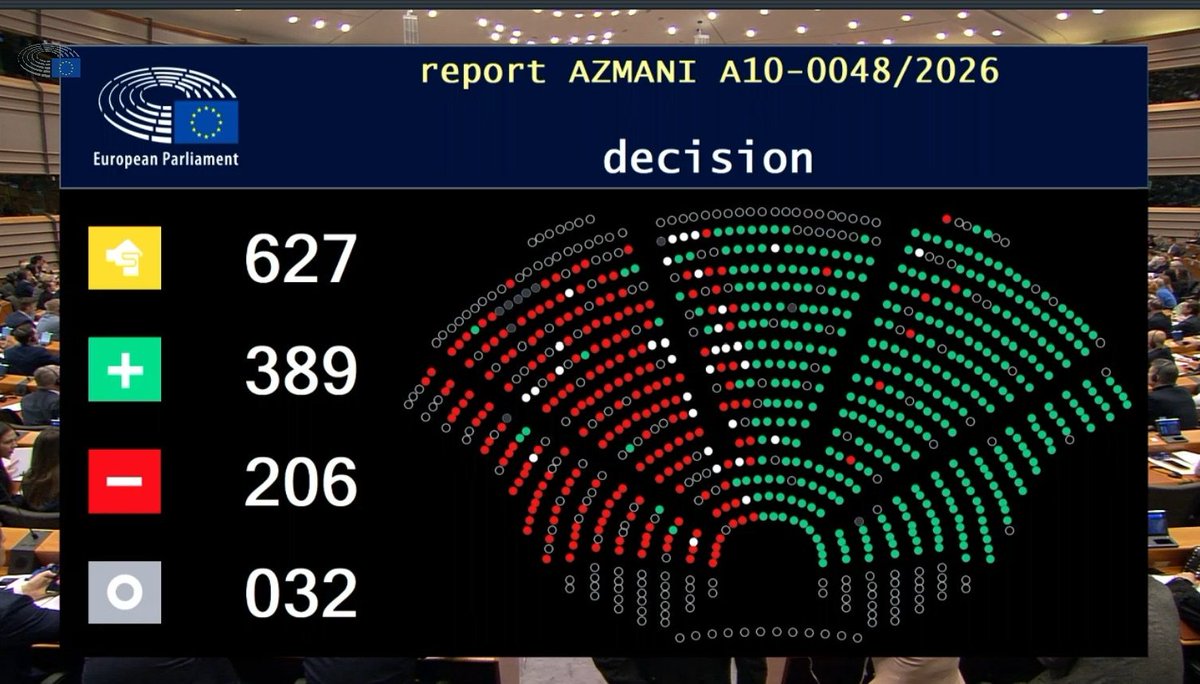
Hoy la UE recupera el control de sus fronteras.
Acabamos de aprobar el Reglamento de Retorno de inmigrantes irregulares. Liderado por el PPE.
No se podrá entrar de manera ilegal.
Se acabó la impunidad.
Los socialistas votan en contra.
Sánchez, con el efecto llamada.
Español
José Ramón Orta Rotger retweetledi

Nunca la había escuchado, pero al ver el video se me han saltado las lágrimas. Malditos seáis los que habéis destrozado la vida de Noelia. Y malditos seáis los políticos hijos de la gran puta que tuteláis más a los agresores que a las víctimas. Que el karma os lo devuelva.
Josema Vallejo@JosemaVallejo
Noelia, un ángel de 25 años, abandona este mundo. Maldito mundo que considera que matar a una chica apartada de sus padres por el Estado y violada por un grupo de criminales es un acto de compasión. Maldito mundo que considera que matar a los violadores es un acto de crueldad.
Español
José Ramón Orta Rotger retweetledi
Este es el fin último de las organizaciones de “derechos humanos”.
Vean todo el caso, desde el inicio hasta el final que pretenden; cada uno de los pasos es parte de la “tutela de derechos humanos” conseguida con sus “luchas y conquistas”.
Jamás los escucharemos, no importa cuánto nos ataquen.
No tienen nada que venir a decirnos; más bien, nosotros deberíamos estar denunciándolos a ustedes por lo que le hacen a mujeres como Noelia.
El mundo necesita urgentemente liberarse de estas organizaciones, que no son más que los bufetes de abogados de los delincuentes, que prefieren LITERALMENTE matar a las víctimas en lugar de protegerlas.
Muy.Mona/🇪🇸💚@Capitana_espana
He leído su historia y me parece una barbaridad que esto esté pasando en España. En 2022 sufrió una violación múltiple en un centro tutelado. Tras intentar quitarse la vida, quedó parapléjica. Ahora, el sistema le da luz verde para morir en vez de garantizarle apoyo, tratamiento y dignidad para vivir. En 24 horas, Noelia será la primera persona en recibir la eutanasia por depresión en España. Esto también es un fracaso colectivo.
Español
José Ramón Orta Rotger retweetledi

Noelia con su padre, años atrás. El contraste con la situación actual es brutal.
Español
José Ramón Orta Rotger retweetledi
José Ramón Orta Rotger retweetledi

José Ramón Orta Rotger retweetledi

Lávate la boca antes de hablar de mi, Paco. Matón es quien traiciona a sus compañeros para pactar con sus ejecutores. Acosadores de mujeres son todos los de tu grupo, denunciados por subirse la bragueta delante de sus subordinadas. No estás para dar lecciones de nada.
La Razón@larazon_es
⚖️ Patxi López vuelve a atacar a Vito Quiles y le llama “matón y acosador de mujeres” larazon.es/espana/patxi-l…
Español
José Ramón Orta Rotger retweetledi

Ustedes dicen: «No a la guerra».
Pero piensan: «Sí a la guerra. Cuanta más, mejor».
Es una tradición socialista:
Utilizaron la guerra para llegar al Gobierno y ahora la utilizan para no perderlo.
@GPPopular
Español
José Ramón Orta Rotger retweetledi

#Palma tindrà una nova línia de #Metro que connectarà l'estació #Intermodal amb l'hospital @SonEspases en 10 minuts.
📆 Finalització de les obres: 2033
🪙 Pressupost: 300 M €
🧑🤝🧑 Demanda prevista: 3 milions d’usuaris/any
🛤️ 4 km de nous de vies
Noves estacions a:
👉 Son Hugo / Son Pardo
👉 Son Rossinyol / Son Pacs
👉 Hospital Son Espases
👉 Secar de la Real / Son Serra Perera
Més informació ➡️ tn.caib.es/NovaM2


Català
José Ramón Orta Rotger retweetledi

“Si quieres entender cómo se produce la islamización de un país, existen dos excelentes ejemplos modernos.
Líbano e Irán.
Líbano e Irán no “colapsaron" repentinamente de un día para otro. Fueron transformados metódicamente.
Líbano se fundó como un país cristiano. Su sistema se basaba en un momento histórico congelado. En 1932, los cristianos representaban poco más de la mitad de la población, por lo que cada aspecto del Estado se diseñó en torno a esa realidad.
Presidente, parlamento, ejército; todo estaba determinado por esa imagen. ¿El problema? Esa imagen nunca cambió, a pesar de que el país sí lo hizo. Durante las décadas siguientes, los cristianos que construyeron el Líbano se fueron marchando poco a poco. Eran los más instruidos y también los que tenían mayor movilidad.
Al mismo tiempo, las comunidades rurales islámicas crecieron demográficamente con mayor rapidez y se volvieron más activas políticamente. Luego llegaron oleadas de musulmanes palestinos expulsados de Jordania, que sumieron al país en una guerra civil. Para cuando terminó la guerra, el equilibrio del que dependía el país ya se había roto.
Tras la guerra, todas las milicias se desarmaron, excepto una. Hezbolá no necesitaba "tomar el control" del Líbano de forma drástica; simplemente llenó el vacío de poder. Creó su propio sistema de bienestar social, conservó sus armas y se vinculó directamente con Irán. A partir de ese momento, el verdadero poder no residía en el Estado, sino en la fuerza mejor organizada dentro de él: los islamistas.
Irán siguió un camino diferente. Este camino fue más rápido, pero se basó en el mismo principio. El Shah intentó modernizar Irán rápidamente, pero al hacerlo, aplastó a todos los grupos de oposición organizados mediante su aparato de seguridad.
Todas excepto una. Las mezquitas.
Así pues, cuando estallaron los disturbios a finales de la década de 1970, solo quedaba una red capaz de movilizar a la gente a gran escala. Jomeini utilizó esa red para unir a una coalición que no se ponía de acuerdo en nada salvo en derrocar al Shah.
Y una vez que el Shah desapareció, esa coalición dejó de tener importancia. En dos años, los mismos grupos, incluidos los izquierdistas, que ayudaron a derrocar al régimen, fueron encarcelados o ejecutados. Lo que lo reemplazó fue una teocracia construida por la única estructura organizada que quedaba en pie: el islamismo.
Ese es el patrón en ambos casos. Líbano cambió porque su composición demográfica se modificó y un grupo se organizó mejor que el resto.
Irán cambió porque todas las alternativas fueron aplastadas, dejando a una sola red para que lo controlara todo.
Ambos países sirven hoy de advertencia a los países occidentales que se enfrentan a su mayor desafío civilizatorio.”
👇🏻👇🏻
The Cyberpunk Dingo@cyberpunkdingo
If you want to understand how Islamization of a country happens, there are actually two great, modern examples. Lebanon and Iran. Lebanon and Iran didn’t suddenly “collapse" one day. They were methodically reshaped. Lebanon was founded as a Christian country. It had a system that was built on a frozen moment in time. In 1932, Christians were just over half the population, so every part of the state was designed around that reality. President, parliament, military; all allocated by that snapshot. The problem? The snapshot never changed, even as the country did. Over the next few decades, the Christians who built Lebanon slowly left. They were the most educated, and also the most mobile. At the same time, the Islamic rural communities grew faster demographically and became more politically active. Then came waves of Palestinian muslims expelled from Jordan, who plunged the country into civil war. By the time the war ended, the balance the country depended on was already broken. Every militia disarmed after the war, except one. Hezbollah didn’t need to “take over” Lebanon in a dramatic sense. It just filled the vacuum. It built its own welfare system, kept its weapons, and tied itself directly to Iran. From that point on, real power didn’t sit with the state. It sat with the most organised force inside it. And that was the Islamists. Iran shows a different path. This path was faster, but built on the same principle. The Shah tried to modernise Iran rapidly, but in doing so, he crushed every organised opposition group through his security apparatus. All except one. The mosques. So when unrest hit in the late 1970s, there was only one network left that could actually mobilise people at scale. Khomeini used that network to unite a coalition that didn’t agree on anything except removing the Shah. And once the Shah was gone, that coalition stopped mattering. Within two years, the same groups including leftists that helped bring down the regime were either imprisoned, or executed. What replaced it was a theocracy built by the only organised structure left standing. Islamism. That’s the pattern in both cases. Lebanon changed because its demographics shifted and one group out-organised the rest. Iran changed because every alternative was crushed, leaving one network to take everything. Both countries today serve as a warning to Western countries facing its biggest civilizational challenge.
Español
José Ramón Orta Rotger retweetledi

Carlos Herrera: "Montero ha expoliado a la clase media trabajadora. No se libra de sus casos de corrupción y es responsable de la más salvaje subida de impuestos. Pagamos 2.600€ más de impuestos para tener los peores servicios públicos que se recuerdan".
Español