
Journal of Environmental Exposure Assessment

994 posts

Journal of Environmental Exposure Assessment banner
Journal of Environmental Exposure Assessment

Journal of Environmental Exposure Assessment

@JournalExposure

Journal of Environmental Exposure Assessment welcomes quality work on human exposure; indexed in ESCI & Scopus (CiteScore 2.6) #exposure #chemical #contaminants

Xi'an 710077, Shaanxi, China. Katılım Temmuz 2021
1.1K Takip Edilen370 Takipçiler
Journal of Environmental Exposure Assessment retweetledi
Science girl
Science girl@sciencegirl·
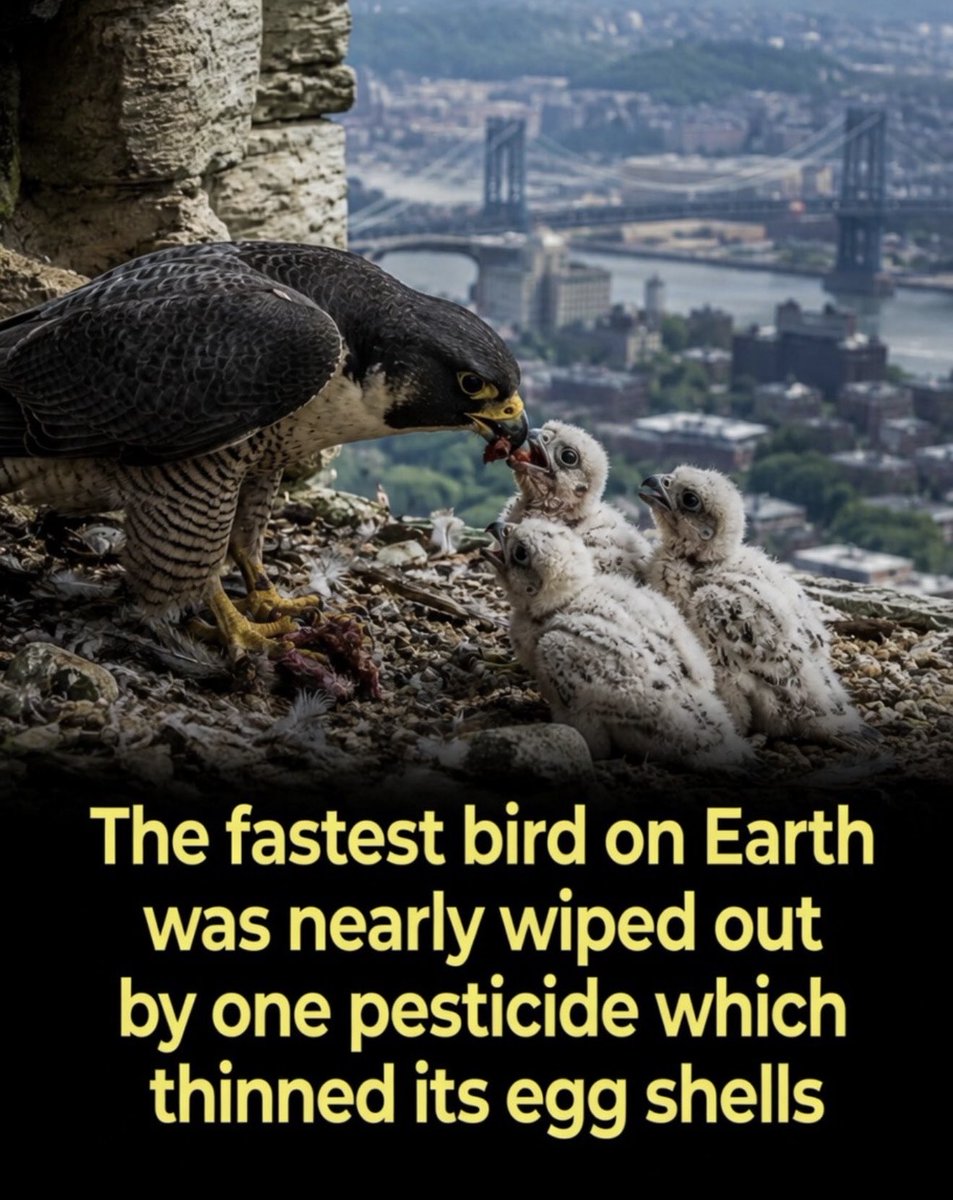
A single pesticide nearly wiped out the fastest animal on Earth. By the 1970s, the Peregrine Falcon had almost disappeared from the eastern United States. Despite reaching diving speeds of over 240 mph (386 km/h), the species was being devastated by a chemical called DDT. Widely used after the 1940s for crop pests, DDT spread through entire food chains. Small organisms absorbed it, fish consumed those organisms, and predators higher up accumulated even greater concentrations, a process known as biomagnification. For Peregrine Falcons, the effects were catastrophic. Chemicals produced from DDT disrupted calcium production, causing eggshells to become so thin they often cracked during incubation. As nesting repeatedly failed, populations collapsed across North America and Europe. The crisis became a turning point for environmental awareness after marine biologist Rachel Carson published Silent Spring in 1962, exposing the hidden ecological damage caused by pesticides. The United States banned most agricultural uses of DDT in 1972. After the ban, conservationists launched large captive breeding and release programs, helping Peregrine Falcons slowly recover. Today, they once again nest on cliffs, coastlines, skyscrapers, and bridges across the United States.
Science girl tweet media
English
64
571
1.5K
96.7K