Alexander Junge

286 posts

Alexander Junge banner
Alexander Junge

Alexander Junge

@JungeAlexander

CTO & Co-founder at https://t.co/CCp0Em6STR | PhD bioinformatics | Applies machine learning to understand what humans write and say. @[email protected]

Copenhagen, Denmark Katılım Nisan 2012
717 Takip Edilen589 Takipçiler
Alexander Junge
Alexander Junge@JungeAlexander·
His reaction got me thinking about what rising expectations for new and current generations could mean for software, whether there will still be a need for "professional software," and what AI-assisted engineering means for individuals and teams.
English
1
0
0
15
Alexander Junge
Alexander Junge@JungeAlexander·
This weekend, our five-year-old wanted to make a racing game: only stingrays and they should say "oh my days" when they crash. We zero-shot it with a vibe coding tool. Amazing! But he was disappointed it didn't look like Mario Kart World.
Alexander Junge tweet media
English
2
0
0
57
Alexander Junge
Alexander Junge@JungeAlexander·
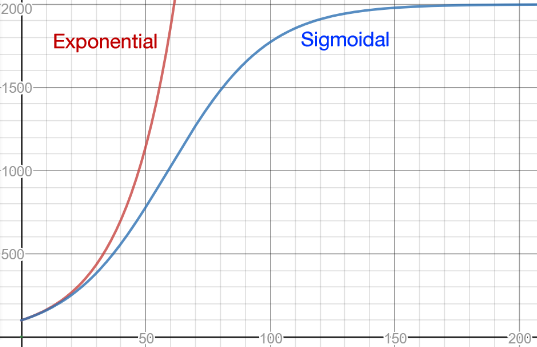
So why not just say that? I'd love to see more precision in how leaders talk about it. The shape of the curve matters. And "sigmoid" and "exponential" paint very different futures. Can someone explain what I'm missing? Images from: matcmath.org dwarkesh.com
English
0
0
0
58
Alexander Junge
Alexander Junge@JungeAlexander·
But one thing keeps really confusing me. He talks about an exponential "ending.". A lot. An exponential doesn't end. That's literally the definition of the exponential function. What he seems to be describing is a sigmoid. Growth that eventually flattens into a ceiling.
English
1
0
0
57
Alexander Junge
Alexander Junge@JungeAlexander·
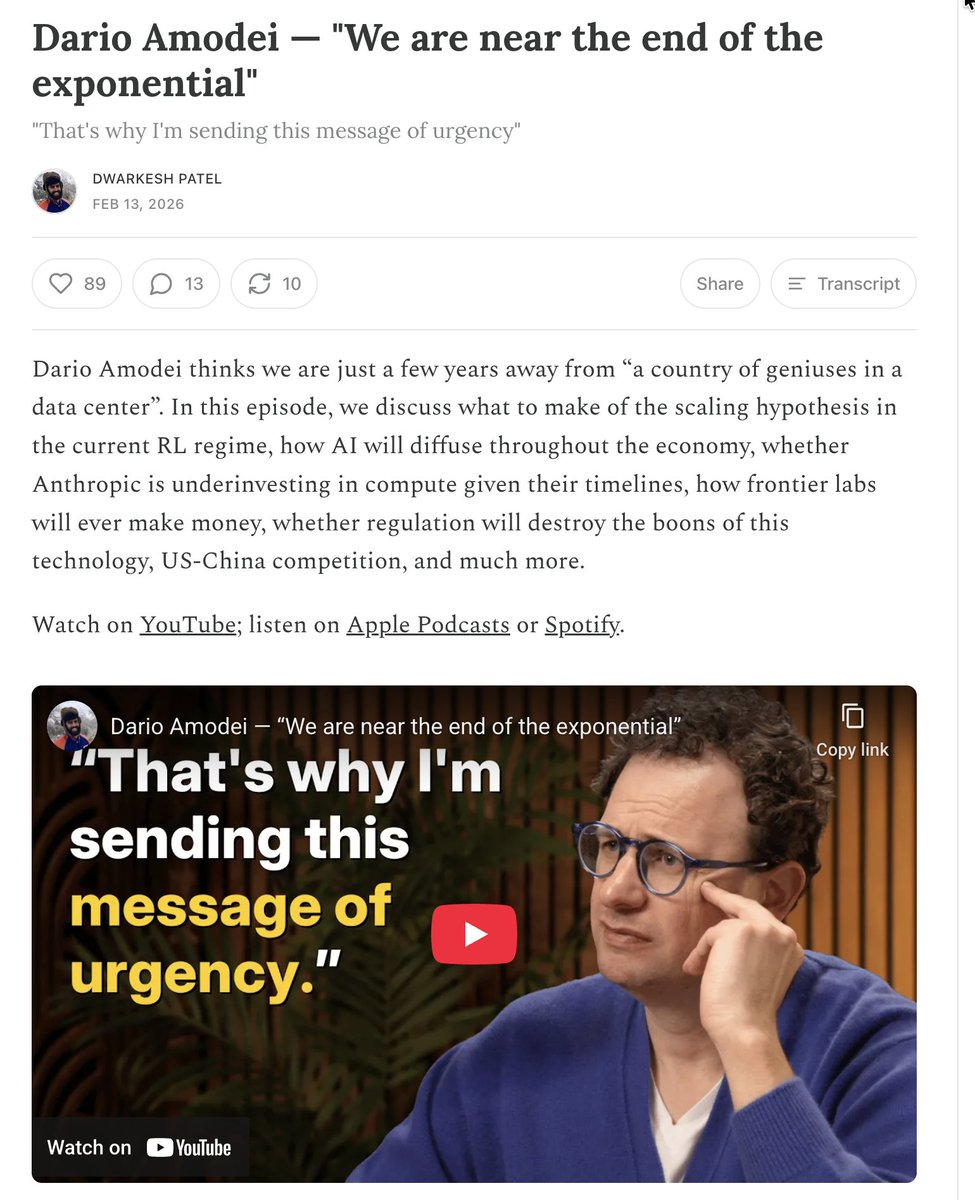
𝗧𝗵𝗲 "𝗲𝗻𝗱 𝗼𝗳 𝘁𝗵𝗲 𝗲𝘅𝗽𝗼𝗻𝗲𝗻𝘁𝗶𝗮𝗹" - 𝘄𝗵𝗮𝘁 𝗱𝗼𝗲𝘀 𝘁𝗵𝗮𝘁 𝗲𝘃𝗲𝗻 𝗺𝗲𝗮𝗻? Is this a sigmoid? I am confused. Been listening to Dario Amodei (CEO Anthropic) on the Dwarkesh Podcast. The future he paints for AI is certainly relevant to consider.
Alexander Junge tweet mediaAlexander Junge tweet media
English
3
0
3
728
Alexander Junge
Alexander Junge@JungeAlexander·
Reranking in early 2026: still a largely unsolved issue in production RAG and agentic workflows. Reranking across heterogeneous sources remains a challenge. The community seems less focused on this step. What are key techniques you’re using with success? #rag #retrieval #llmops
English
0
0
0
30
Alexander Junge
Alexander Junge@JungeAlexander·
What not to do: 1. Skip the docs 2a. get frustrated with yourself 2b. get frustrated with an LLM (Probably won't remember this next week though; but am hopeful)
English
0
0
0
22
Alexander Junge
Alexander Junge@JungeAlexander·
New week, same lesson: Read the docs first, even in the era of AI-assisted engineering. Spent 3 hours yesterday with LLM fixing a bug that the documentation solved in paragraph two. What to do: 1. Read the docs 2. Use AI to spar/implement 3. Verify solutions against docs
English
1
0
0
25
Alexander Junge
Alexander Junge@JungeAlexander·
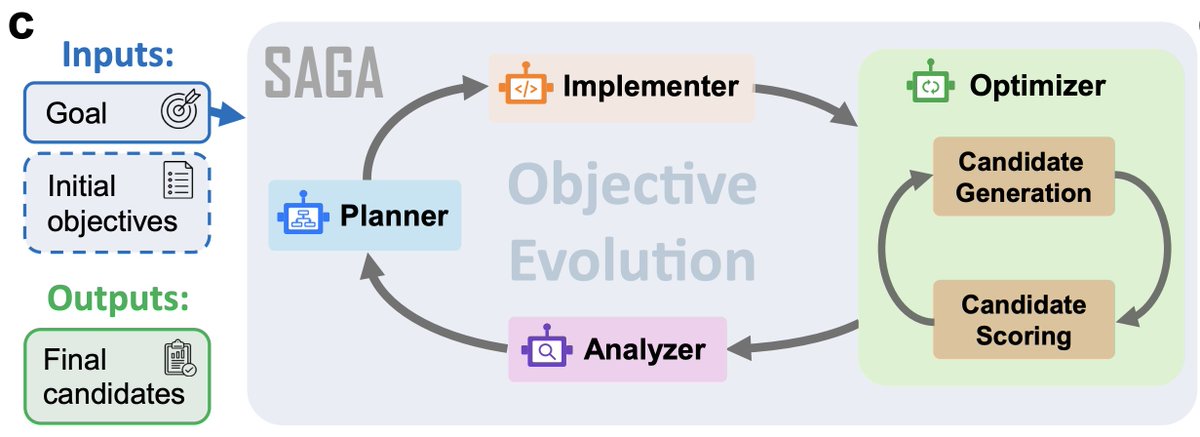
Still: AI that evolves objectives + intelligence that grounds them in scientific and commercial reality = possible transformative potential. Exciting to see what kind of science we'll be supporting in the future. Image: Figure 1C in the paper; arxiv.org/abs/2512.21782
English
0
0
0
12
Alexander Junge
Alexander Junge@JungeAlexander·
This what our team at amass loves: helping troubleshoot your experiments, tracking your competitive landscapes to guide objective selection, bridging discovery to commercialization with real-world context.
English
1
0
0
12
Alexander Junge
Alexander Junge@JungeAlexander·
New paper introducing Scientific Autonomous Goal-evolving Agent (SAGA) - an agent that doesn't just optimize predefined goals, but adds an outer loop that *evolves its own objectives* for scientific discovery. 🔬
Alexander Junge tweet media
English
1
0
0
26
Alexander Junge
Alexander Junge@JungeAlexander·
@sir4K_zen Yes. Definitely a change in both technology and user expectations
English
0
0
0
12
Mykhailo Sorochuk
Mykhailo Sorochuk@sir4K_zen·
@JungeAlexander Interesting shift towards AI-native search. It definitely feels necessary for today’s complex queries
English
1
0
0
7
Alexander Junge
Alexander Junge@JungeAlexander·
What is AI-native search and why do we need it? 🔎 Keyword search systems were built for fast exact lookups, not the semantic, multi-signal, personalized queries users expect today. AI-native search requires unified infrastructure with embeddings, flexible scoring, and...
English
2
0
1
20
Alexander Junge
Alexander Junge@JungeAlexander·
But for everything we do at Amass we're convinced the right approach is: give users control, instead of taking it away assuming the machine will take care of it.
English
0
0
0
11
Alexander Junge
Alexander Junge@JungeAlexander·
When you're building AI-native tools, you're not just building for human queries anymore. AI agents need to compose complex workflows. Without consistent filtering, these workflows break down. We're still learning how scientists and AI agents will use this together.
English
1
0
0
9
Alexander Junge
Alexander Junge@JungeAlexander·
Why granular PubMed filtering matters more than you'd think 🔬 We recently added fine-grained PubMed filtering across every touchpoint in Amass—from single questions to complex agentic retrieval. Users can now filter by publication date, journal quality, citations, and soon more.
Alexander Junge tweet media
English
1
0
1
53