
Lisa Kirazian retweetledi
Lisa Kirazian
9.8K posts


Lisa Kirazian
@kirazian
Writer. Director. Encourager. ✝️ Wife & Mom. @TheMusicWeMade @ReflectionDay1 @Stanford alum #RRBC Lifetime Member! #RWISA Go @Padres
Katılım Mart 2009
4.6K Takip Edilen3.4K Takipçiler
Lisa Kirazian retweetledi
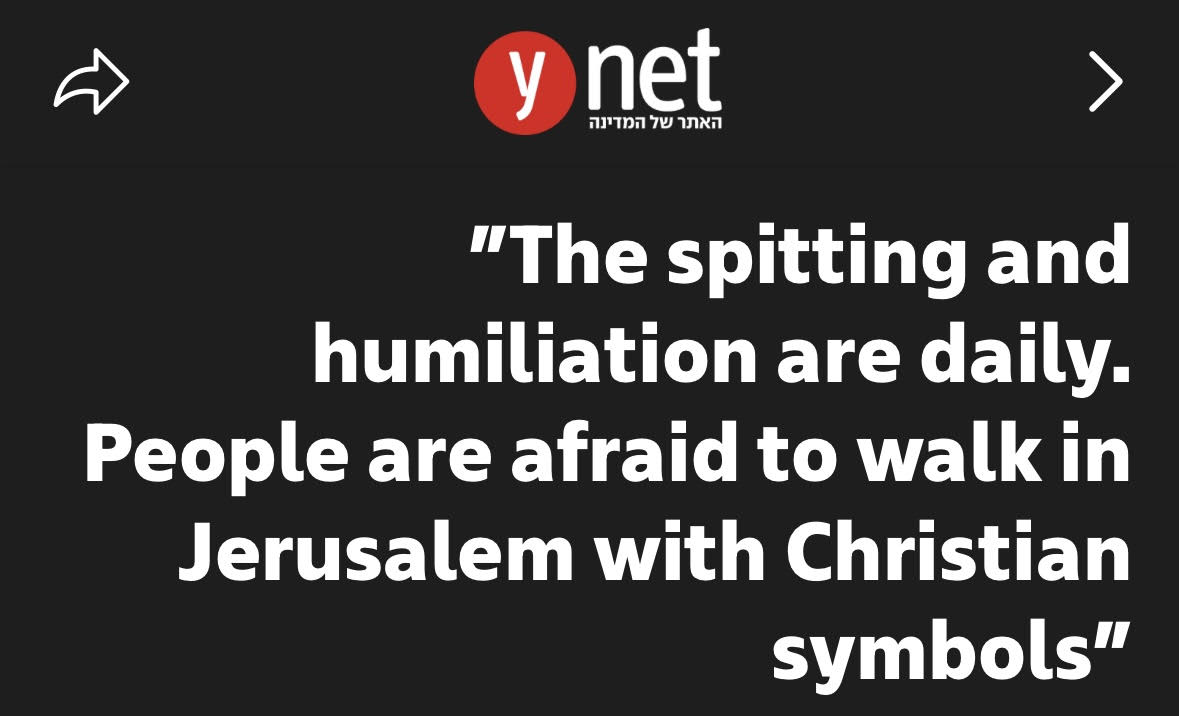
BREAKING: Ynet, one of Israel’s largest media outlets, has published a bombshell report on Christian persecution in Israel.
Full article translated to English:
"Spitting and humiliation are daily. People are afraid to walk in Jerusalem with Christian symbols."
By Oded Shalom
The smashing of a statue of Jesus in Lebanon by an IDF soldier was a direct continuation of the reality in the Old City and the West Bank. Attacks on priests and monks, the desecration of Christian symbols, and graffiti sprayed on churches take place in broad daylight and are causing echoes around the world. “It has worsened under the current government, and they are not trying to stop it,” says Hagop Djernazian from the Armenian Quarter. Tour guide Paniot Penioto sums it up: “We Christians have been here for 2,000 years. What is your problem?”
Garo Sandrouni says he sees a lot of hatred on the street in front of him, a street with heavy traffic throughout the day of religious Jews on their way to the Western Wall or to yeshivas on Mount Zion and in the Jewish Quarter. Sandrouni observes what is happening from inside a small ceramic shop in the Armenian Quarter of the Old City of Jerusalem, not far from the seminary for priests that trains young Armenians from around the world to serve as clergy in their communities.
He sits there every day, all day, from around 9:00–10:00 in the morning until 6:00 in the evening, except on Sundays; a shop whose shelves are filled with many hundreds of Armenian ceramic items, characterized by a richness of shapes and colors, all handmade, piece by piece.
And what he sees from his seat behind the small table at the back of the shop is an ugly and offensive reality toward everything he grew up with, against everything that is Christian. “Spitting at Christian clergy, at Christian symbols, spitting toward the Armenian monastery not far from here. Spitting and curses,” he says in a weak and hurt voice.
This reality is so routine here that it has taken over the name of the place. The permanent signs on the walls of the old houses say “Armenian Patriarchate Street,” but some call it “Spitting Street” because of the criminal practice. Where else in the world is there a street called that because people spit on Christian religious symbols?
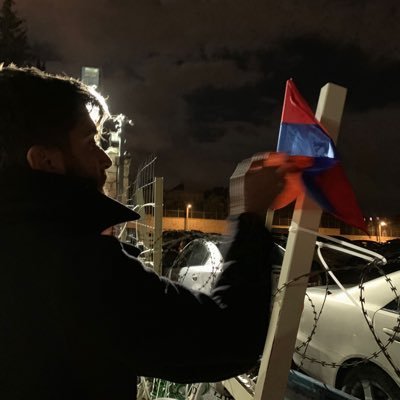
Ahead of Easter, chains and small flags were hung on the street near the Armenian Orthodox Church, and a religious Jew passed by and tore them down. Djernazian: “What an uproar there would have been if this had been a Jewish symbol.”
We asked Sandrouni how it feels to see this hatred, and he answered with only theee words: “Think for yourselves.” Later, we understood for ourselves, when we heard from community member Hagop Djernazian about an incident that happened about three weeks ago, and is not really unusual here.
Several young people from the Quarter worked on decorating the main street ahead of Easter and hung chains with colorful balls, as well as paper flags of the Armenian Orthodox Church with a cross in the center. “A religious guy with a knitted kippah passed near the Armenian monastery and simply tore one of the flags to pieces,” Djernazian recalls. “We were excited ahead of the holiday, which is very meaningful and important for us, a holiday with many traditions and holiness, and suddenly a person passes by, tears up a church flag bearing a cross right in front of our eyes, and continues on as if nothing happened.
“It is a spit in the face. Real humiliation. I have no words to describe what you feel at that moment. Think what the reaction would have been if something like that happened to a Jewish symbol. What an uproar there would have been. And here, for us, it is almost a daily matter. It crossed every boundary a long time ago. This happened before this government too, but since it came to power, it has become more extreme and more frequent, and we do not see any attempt to stop it. Not even to condemn it or speak out against it. It is so humiliating and intimidating that some people think twice before walking with a visible Christian symbol, such as a pendant, for example, in order to avoid an unpleasant situation. Yes, to that extent.”
The Chief of Staff is Shocked
The video documented last week of an IDF soldier smashing a statue of Jesus in the village of Debel in southern Lebanon was posted by Djernazian on his Facebook page. Prime Minister Benjamin Netanyahu quickly condemned the act in English, called the soldier a criminal, and wrote on his X account that “Israel is the only place in the Middle East that respects freedom of worship for all.”
Djernazian answered him in a post of his own. “I wrote that Netanyahu says this is an exceptional incident by a lone individual, and that this is interesting, because at the same time that he claims he protects freedom of worship and Christians in Israel and the Middle East, things like this are happening that prove the exact opposite, including what happens here with us in Jerusalem,” he explains.
The smashing of the statue of Jesus in southern Lebanon sparked angry reactions around the world. The soldier who carried out the act was identified, tried, and sent to 30 days in military detention, together with the soldier who filmed him. After Netanyahu, Chief of Staff Eyal Zamir also condemned it. In a speech before the IDF’s senior command staff this week, he mentioned the incident and asked reproachfully: “Where does smashing the statue of Jesus meet the spirit of the IDF?”
Perhaps this incident does not meet the spirit of the IDF, but it teaches a great deal about the general mood toward Christianity in Israeli society. The phenomenon of smashing symbols connected to Christianity, vandalism at holy places of the Church, spitting and curses directed at priests and monks, happens in broad daylight, before the eyes of passersby in the Old City of Jerusalem, sometimes even in front of police officers. Clergy serving in churches in the Mount Zion area and the Armenian Quarter report that in 2025 there has been an increase in cases of desecration, humiliation, verbal attacks, and spitting at them and at houses of worship.
A 2025 report by the Rossing Center details: 61 attacks on clergy or people with a Christian symbol; 52 incidents of damage to church property; 28 cases of harassment of religious processions; and 14 cases of vandalism of church signs.
The Rossing Center for Education and Dialogue, an institution that promotes an inclusive society for members of all religions, publishes an annual report on attacks against Christians in Israel and East Jerusalem. The data on the incidents are collected together with the Religious Freedom Data Center and show a continuous rise in the number of events. The report, published about three months ago, shows that 2025 was very unpleasant for Christians living here. It recorded 61 physical attacks on clergy or people who had a prominent Christian religious symbol on them. These included spitting, pepper spray, and even beatings.
There were 52 reported and documented cases of damage to church property, including graffiti, trespassing for the purpose of vandalism, and smashing statues. In addition, 14 cases of vandalism of church signs were documented, as well as 28 cases of harassment, including verbal attacks and physical disruption of religious processions. The latest case occurred on Tuesday, when a nun was attacked in the Old City. Truly, freedom of worship.
Voluntary Christian Emigration
In July last year, a field of thorns was set on fire near the remains of St. George’s Church in the Palestinian Christian village of Taybeh, northeast of Ramallah. It is a village surrounded by shepherd farms and illegal outposts, whose residents suffer from harassment by settlers, and suspicion arose that they were responsible for the arson. News of the fire, which almost reached the walls of the ancient site, was published online and alarmed the church leaders based in Jerusalem, who quickly updated the whole world.
European ambassadors came for a solidarity visit to the village. Even the United States ambassador to Israel, Mike Huckabee, an Evangelical Christian and an enthusiastic supporter of the settlement enterprise in Judea and Samaria, came to strengthen the residents of the place.
This is only one example of attacks on Christian houses of worship. About two and a half years ago, when curses and spitting at Christian clergy in Jerusalem increased, the Chief Rabbis published strong condemnations of the phenomenon. But outpost and farm activist Elisha Yered, former aide to MK Limor Son Har-Melech of Otzma Yehudit, did not understand what the fuss was about. On X, he wrote: “A good time to remind people that the custom of spitting near priests or churches is an ancient Jewish custom, and in halacha there is even a special blessing when one sees a church… a blessing that comes to praise the Holy One, blessed be He, who tolerates the evil deeds of idol worshippers.”
In February this year, American media personality Tucker Carlson came to Israel to examine the situation of Christians in Israel and the territories. Carlson is a popular and controversial conservative right-wing figure, who in recent years has promoted, among other things, conspiracy theories, some of them antisemitic. For months he has claimed that Israel and the West Bank have become dangerous places for Christians. The result of his visit is a film about an hour and a half long with the forceful title: “The shocking reality of Israel’s U.S.-funded treatment of Christians in the Holy Land.” As of Monday this week, it had accumulated 1,971,586 views. In it, he speaks with priests and Christian residents who tell the same story of attacks and humiliation.
Carlson also addressed last week’s incident of the smashing of the statue of Jesus by an IDF soldier. He interviewed Alice Kisiya, a Palestinian Christian resident of Beit Jala who fought with other activists for the evacuation of a settler outpost established on private land belonging to Palestinian Christians from the Bethlehem area. “Smashing a statue of Jesus or of the Virgin Mary is not an act of defense against terrorism,” Carlson begins, wondering aloud, “Why would a settler or a soldier break statues like these?”
To hear the answer, we called Kisiya ourselves. “As part of our struggle, we set up a makeshift church on the land,” she answered. “We hung icons of the Holy Mary and crosses in it and prayed there. The settlers told us that they would also take over Bethlehem and expel all the Christians from there. When we told them that Bethlehem is historically connected to Christianity, they answered, ‘It is ours, you will have to leave.’
“In one of their attacks on us, they broke an icon of the Holy Mary. I showed the broken icon in my conversation with Carlson to show that the case in Lebanon is not a one-off or unusual. Apart from him, I gave many interviews to foreign media and emphasized the religious context. It was important for me that the world see what Christians go through here in the land, to tell the world that the settlers and the State of Israel want to cause Christians to emigrate from Palestine so that they can take over our lands. Do not forget that besides the lands Israel holds in the West Bank, the churches and Palestinian Christians are the largest landowners in the territories.”
Evangelicals in Retreat
Hana Bendcowsky, director of educational programs at the Rossing Center, says this is the result of the nationalist radicalization taking place in Israeli politics and society. “The climate is one of Jewish supremacy, of rejecting anyone who is not Jewish, and it is getting worse,” she says.
“There is a feeling that the whole world is against us and that anyone who criticizes Israel is antisemitic. Into this enters the legitimization of harming Christians and humiliating them. We in this country do not understand what this does to affection for and support of Israel among Evangelical communities in the United States. Part of their deep religious worldview for decades was devoted support for Israel, and that is now in retreat, partly because of our treatment of Christians. You see a significant decline in their support for us, especially among young people and among people with an awareness of the value of life and human rights. They see Israel’s conduct and say, ‘These are not values we identify with.’”
And what is Israel doing in this context?
“Other than statements — not much. We at the center, together with activists who collect testimonies and documentation, file complaints with the police, and nothing happens with them. Investigations are barely opened. You see that the police have no interest in dealing with this. So young people who once hesitated over whether to spit at priests say to themselves today, ‘Why not, actually?’ There are the ultra-Orthodox, for whom Christianity is idolatry; most of them ignore it, but there are also those among them who spit and curse. And there are the religious-nationalists, mainly hilltop youth with large kippahs, young people with the attitude of ‘we are the owners here and you have nothing to do in this land.’ They allow themselves to burn, smash, curse, and spit.”
Rabbi Michael Henkin, one of the leaders of “the religious left,” whose members are in contact with Christian clergy in Jerusalem and the West Bank, says that a new ethos has developed in Israeli society, according to which anything perceived as different is a threat. “And every threat is perceived as deserving destruction,” he adds. “This is directed not only at Christian symbols, and is expressed not only in spitting at priests in the Old City, but also against Muslims. After all, we destroyed mosques in Gaza, and in the territories mosques are sometimes burned by hilltop youth. It is also directed against Jews. Look at what the police did to a kippah embroidered with a Palestinian flag alongside an Israeli flag. They cut it.”
Bendcowsky says the big story is the impact on Christian communities: “There are about 197,000 Christians in Israel, including East Jerusalem, and most of them are not spat at and most are not attacked. But their sense of security is shaken when they see graffiti on their church. Even the video of the smashing of the statue of Jesus in Lebanon shakes them and makes them feel unwanted here. Even if it did not happen to them, or in their community, it is an Israeli soldier, and their feeling is that the attack was directed at them as well.
“They feel vulnerable and threatened. I do not know a Christian family in which there is no talk of leaving — at least by the son or daughter. I do not know a family in which at least one child has not already left. It is not only the fear of attack or humiliation. Israel also makes it difficult for Christian communities to hold their religious ceremonies. Look at what happened here during the last Easter.”
Enough , Accept Us
At the end of March, the police prevented the Latin Patriarch of Jerusalem, Cardinal Pierbattista Pizzaballa, from entering the Church of the Holy Sepulchre to hold the Palm Sunday ceremony there, which opens the events of Catholic Holy Week. The war with Iran was still ongoing, and Home Front Command instructions prohibited gatherings of more than 50 people. This was the reason the festive procession usually held every year did not take place.
Only the Patriarch, the Custos of the Holy Land on behalf of the Vatican, Father Francesco Ielpo, and two companions arrived at the church. According to the Church, the arrival had been coordinated in advance with the police. Nevertheless, the police prevented the Patriarch from entering, and for the first time in 100 years the religious ceremony was not held inside the Church of the Holy Sepulchre. The entire Catholic world rose to its feet. The Prime Minister of Italy, the President of France — everyone issued condemnations, and Netanyahu was once again forced to apologize.
Ten days passed, and it was the Orthodox Church’s turn to mark the beginning of Easter with Holy Saturday. What happened at the Church of the Holy Sepulchre is described to us by tour guide Paniot Penioto, a Christian of Greek origin who was born, raised, and still lives in the Christian Quarter of Jerusalem’s Old City:
“Holy Saturday is a very sacred holiday for us. It is a day that symbolizes the miracle of Jesus’ resurrection, when he rose from his tomb and returned to life. Without the Messiah rising from death, we have no religion. That is what makes him our God, and that is why this day is so sacred to us.
“I am very well known in the Christian community in the Quarter, especially among the Greek Orthodox community. For 25 years, I have been the one coordinating the procession with the police, the church, the youth, and the scouts, and every year the situation deteriorates. With every passing year, we feel that we are less and less allowed to mark the holiday properly according to our traditions and rituals. These are rituals and traditions of a thousand years and more.”
What is the reason?
“I don’t know. We reach understandings and agreements, we close one thing in the evening, and the next day there is chaos. The police backtrack on everything we agreed. They put barriers at every corner, they do not let people enter the Church of the Holy Sepulchre, they even stop people at Jaffa Gate. There is documentation of Holy Saturday when tens of thousands would come. Thousands entered the Church of the Holy Sepulchre. Today, the police approve only 2,700 people to enter the church, but out of that number they themselves bring in a thousand police officers. Under the Jordanians, there were two police officers inside the church who organized the whole day without theatrics. And not only under the Jordanians. It was like that in the past under Israeli rule as well. There are pictures of ten thousand people inside the church, standing in the courtyard, on the roof, in the alleyways. A real celebration.
“Cases like this make us feel suffocated. This year, for the first time, I stood at the entrance to the Church of the Holy Sepulchre and felt that I was choking, that I could not bear this humiliation — mine, and my community’s. Enough, accept us. We Christians have lived here for 2,000 years. This is our place too. Here our Messiah was born, here he was crucified, and here he was buried. Accept our religion and our faith. What is your problem?”
English
Lisa Kirazian retweetledi

Azerbaijan continues with mass cultural destruction in Artsakh with the demolition of the Stepanakert Cathedral.
It was here that the last remaining citizens gathered before the mass exodus which sealed the Genocide of Christians in the region.
Azerbaijan continues to destroy Armenia’s cultural heritage without a word of complaint from the West.
Nadine Maenza@nadinemaenza
Azerbaijan has now confirmed it destroyed the Stepanakert Cathedral in Artsakh. By labeling Armenian Christians—who have lived there for generations—as “occupiers,” it claims the demolition “cannot be distorted in any way as the destruction of religious or cultural heritage.” Cultural genocide after the ethnic cleansing of 120,000. asbarez.com/baku-confirms-…
English
Lisa Kirazian retweetledi
Open Letter by over 30 Armenian Organizations:
"Dear Ms. @vonderleyen
Dear Mr. @eucopresident
Armenia will soon host the 8th Summit of the European Political Community and the Armenia–European Union Summit. In this context, we warmly welcome your upcoming visit to our country. We are confident that these events will further strengthen Armenia–European Union relations and make a meaningful contribution to advancing peace, security, and prosperity in Armenia and the wider region.
Through this letter, we, the undersigned human rights and civil society organizations, wish to draw your attention to a pressing humanitarian issue: the release of Armenian detainees still held in Baku. Despite calls from various international bodies for their immediate and unconditional release, including the demand set out in the resolution adopted by the European Parliament on March 12, 2025, Azerbaijan continues to unlawfully detain 19 Armenian prisoners, prolonging the suffering of their families.
Today, you lead institutions for which the protection of human rights and humanitarian principles is of fundamental importance. It is precisely the safeguarding of these core values and respect for rights that form the foundation for achieving lasting peace.
We appreciate the European Union’s efforts to advance the peace process between Armenia and Azerbaijan and look to your active support in facilitating the return of Armenian detainees without delay. The release and repatriation of all Armenians deprived of liberty in the context of the armed conflict is essential to the peace process and constitutes a vital confidence-building measure.
Such support is all the more urgent in light of deeply concerning statements by Azerbaijani officials indicating no intention to return former officials of Nagorno-Karabakh. In the context of serious violations of fair trial standards, verdicts have been issued without being provided to the detainees and independent lawyers effectively obstructing their right to appeal to international bodies. Furthermore, the suspension of the activities of the International Committee of the Red Cross in the country has deprived Armenian detainees of access to any international humanitarian mechanism.
We, the undersigned human rights organizations, are convinced that the European Union can play a pivotal role in securing the release of Armenian detainees held in Baku. It is evident that for the Armenian public, Azerbaijan’s promises of peace cannot be perceived as credible while it continues to hold Armenians captive and subject them to suffering.
We therefore respectfully appeal to you and to the leaders of all European countries to take steps to ensure that the Armenian prisoners are released and reunited with their families as soon as possible. We firmly believe that the European Union can truly help resolve this pressing humanitarian issue and put an end to the suffering of many Armenian families."
#FreeArmenianHostages #Armenia #Europe #Artsakh #NagornoKarabakh #Azerbaijan
English
Lisa Kirazian retweetledi

Artak Beglaryan | #StopArtsakhGenocide@Artak_Beglaryan
Open Letter by over 30 Armenian Organizations: "Dear Ms. @vonderleyen Dear Mr. @eucopresident Armenia will soon host the 8th Summit of the European Political Community and the Armenia–European Union Summit. In this context, we warmly welcome your upcoming visit to our country. We are confident that these events will further strengthen Armenia–European Union relations and make a meaningful contribution to advancing peace, security, and prosperity in Armenia and the wider region. Through this letter, we, the undersigned human rights and civil society organizations, wish to draw your attention to a pressing humanitarian issue: the release of Armenian detainees still held in Baku. Despite calls from various international bodies for their immediate and unconditional release, including the demand set out in the resolution adopted by the European Parliament on March 12, 2025, Azerbaijan continues to unlawfully detain 19 Armenian prisoners, prolonging the suffering of their families. Today, you lead institutions for which the protection of human rights and humanitarian principles is of fundamental importance. It is precisely the safeguarding of these core values and respect for rights that form the foundation for achieving lasting peace. We appreciate the European Union’s efforts to advance the peace process between Armenia and Azerbaijan and look to your active support in facilitating the return of Armenian detainees without delay. The release and repatriation of all Armenians deprived of liberty in the context of the armed conflict is essential to the peace process and constitutes a vital confidence-building measure. Such support is all the more urgent in light of deeply concerning statements by Azerbaijani officials indicating no intention to return former officials of Nagorno-Karabakh. In the context of serious violations of fair trial standards, verdicts have been issued without being provided to the detainees and independent lawyers effectively obstructing their right to appeal to international bodies. Furthermore, the suspension of the activities of the International Committee of the Red Cross in the country has deprived Armenian detainees of access to any international humanitarian mechanism. We, the undersigned human rights organizations, are convinced that the European Union can play a pivotal role in securing the release of Armenian detainees held in Baku. It is evident that for the Armenian public, Azerbaijan’s promises of peace cannot be perceived as credible while it continues to hold Armenians captive and subject them to suffering. We therefore respectfully appeal to you and to the leaders of all European countries to take steps to ensure that the Armenian prisoners are released and reunited with their families as soon as possible. We firmly believe that the European Union can truly help resolve this pressing humanitarian issue and put an end to the suffering of many Armenian families." #FreeArmenianHostages #Armenia #Europe #Artsakh #NagornoKarabakh #Azerbaijan
QHT
Lisa Kirazian retweetledi

Azerbaijan has now confirmed it destroyed the Stepanakert Cathedral in Artsakh.
By labeling Armenian Christians—who have lived there for generations—as “occupiers,” it claims the demolition “cannot be distorted in any way as the destruction of religious or cultural heritage.”
Cultural genocide after the ethnic cleansing of 120,000.
asbarez.com/baku-confirms-…
Asbarez News@Asbarez
Baku Confirms it Demolished Stepanakert Cathedral
English
Lisa Kirazian retweetledi

How awesome to meet the one and only @SammyLev before the @Padres pregame show on @973TheFanSD!!! Go Pads!!

English
Lisa Kirazian retweetledi

111 years of denial . We will never forget.

English
Lisa Kirazian retweetledi
Diyarbekir 1915
On the banks of the Tigris River, 635 Armenians were put on keleks, told that they would be deported and exiled. This group, who thought they would go to Mosul with guards, were executed after their belongings were taken near the village of Şikeftan (suçeken) near Batman.

English
Lisa Kirazian retweetledi
Lisa Kirazian retweetledi

✝️🇦🇲 Never forget the #Armenian Genocide – the mass slaughter of 1.5 million blessed #Christians.
In April 1920, they set fire to the #American orphanage in Harouniye, trying to burn alive 2,000 terrified #Armenian #Christian children.
But William Morris Gilbert Jr., a brave American from Yonkers with Near East Relief, rushed into the flames while under fire.
He saved innocent children in a heroic midnight rescue.
Gilbert, who had sailed overseas in 1919 to aid survivors in the region, was stationed in the Adana area when Ottoman forces attacked and torched the Harouniye orphanage on April 7, 1920.
He helped orchestrate the dramatic nighttime evacuation and transfer of the 2,000 orphans to safety in Adana amid the chaos and ongoing violence.
Contemporary accounts described it as a desperate race against the spreading fire and hostile attacks, with Gilbert and his colleagues risking their lives to pull the children from the burning buildings.
This was no isolated incident.
During and after the Armenian Genocide, Ottoman forces continued campaigns of destruction against Armenian communities, including massacres, deportations, and arson targeting Christian populations and their institutions.
Gilbert's bravery was one shining example among many.
Thousands of Armenian, Greek, and Assyrian Christian survivors were sheltered in American-run institutions, taught trades, and given a chance to rebuild their lives despite the systematic attempt to erase their people.
Individuals like Gilbert, and countless others, stood as witnesses and rescuers while the world grappled with one of the first modern genocides.
Their efforts helped preserve future generations amid the ashes.
The Armenian Genocide must never be forgotten.
English
Lisa Kirazian retweetledi

Lisa Kirazian retweetledi
✝️ This is what Cultural Genocide of the #Christian Heritage looks like.
Over 2,000 #Armenian🇦🇲 churches wiped out since the 1915 Armenian Genocide.
In #Artsakh🇦🇲, churches are still being razed today-deliberate erasure of the #Christian identity.
And the world scrolls past.


English
Lisa Kirazian retweetledi

The church Azerbaijan destroyed today was right across my apartment in Stepanakert. Woke up to the sound of church bells and children playing every weekend. Now the cathedral is gone and so are the people. We are witness to genocide in real time.

English
Lisa Kirazian retweetledi
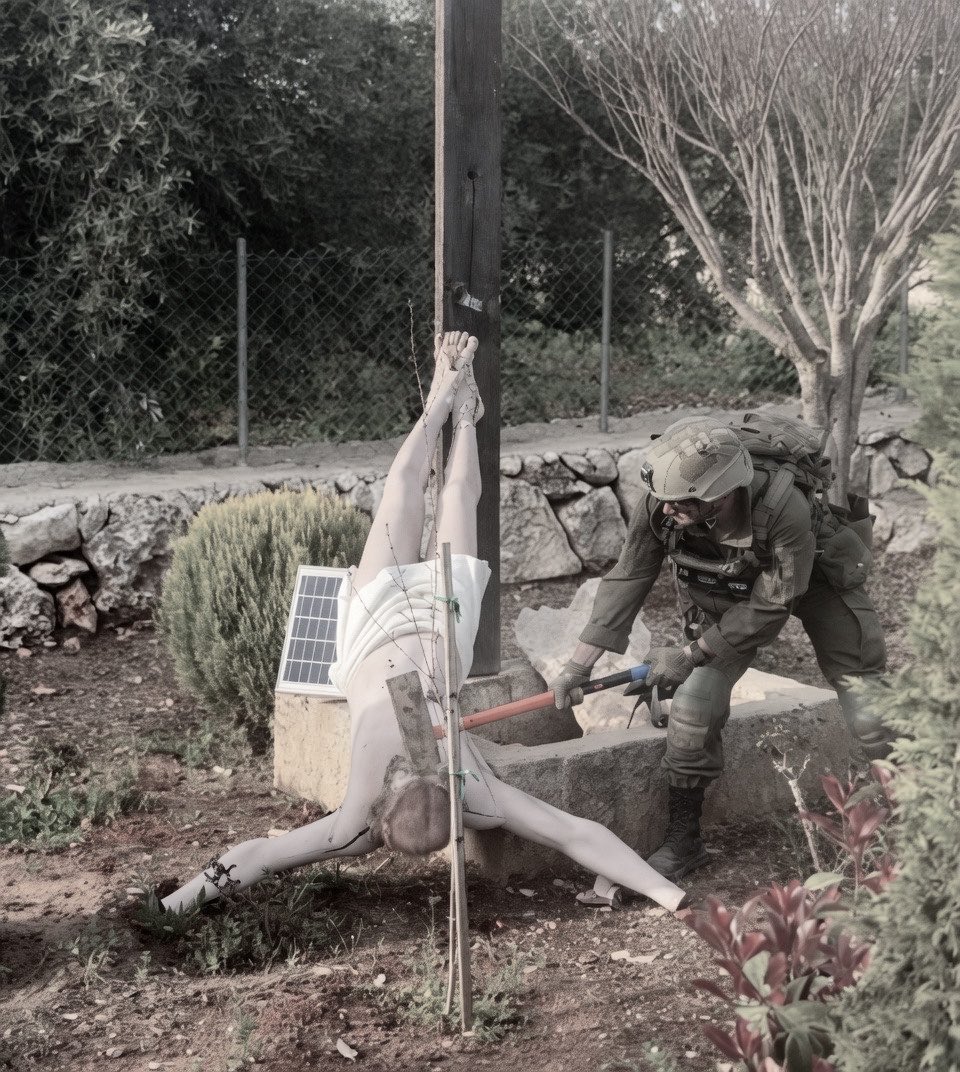
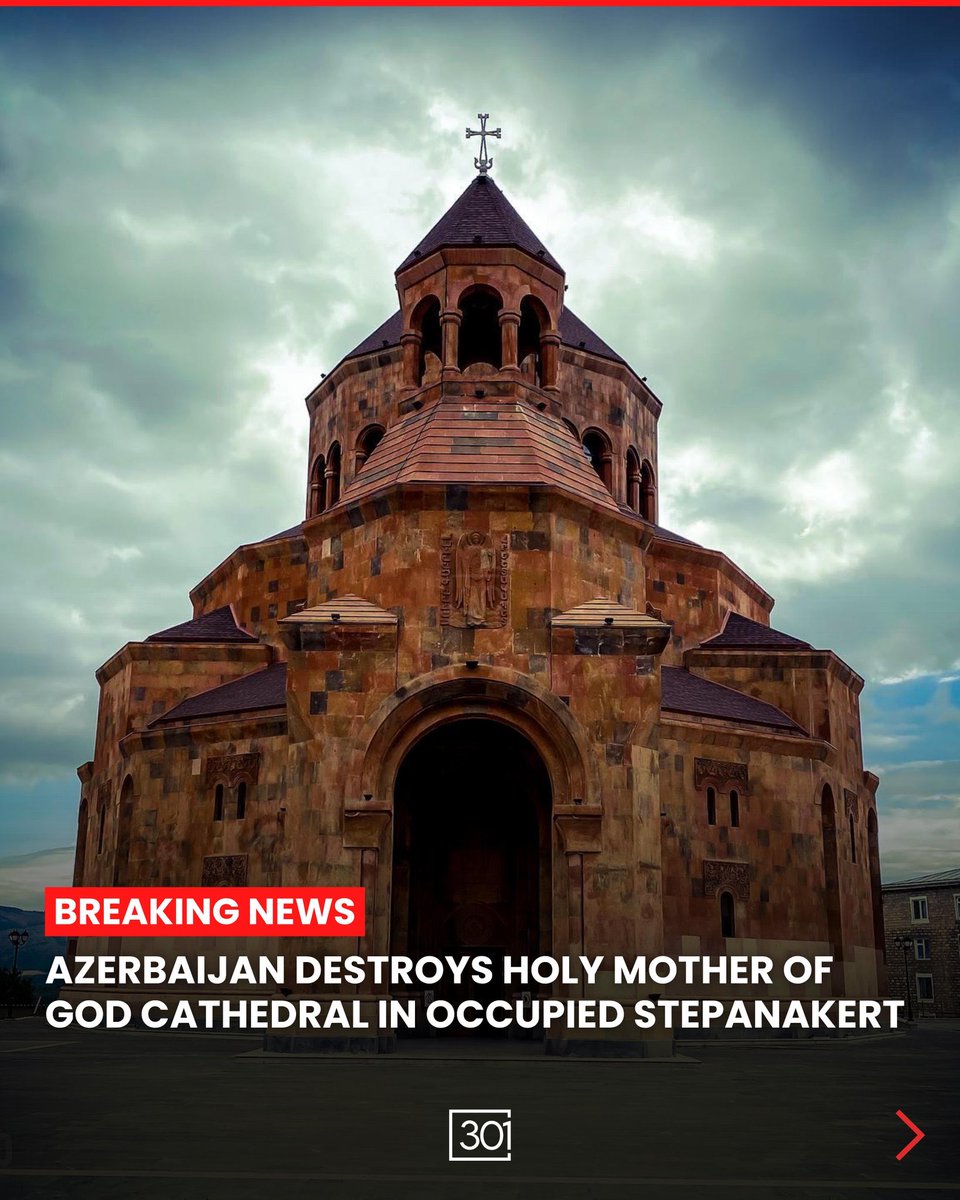
A day after an Israeli soldier smashed Jesus' face with a sledgehammer in southern Lebanon, Azerbaijan destroyed The Holy Mother of God Cathedral in Artsakh (Nagorno-Karabakh).
Israel calls Azerbaijan a brotherly nation.
English
Lisa Kirazian retweetledi

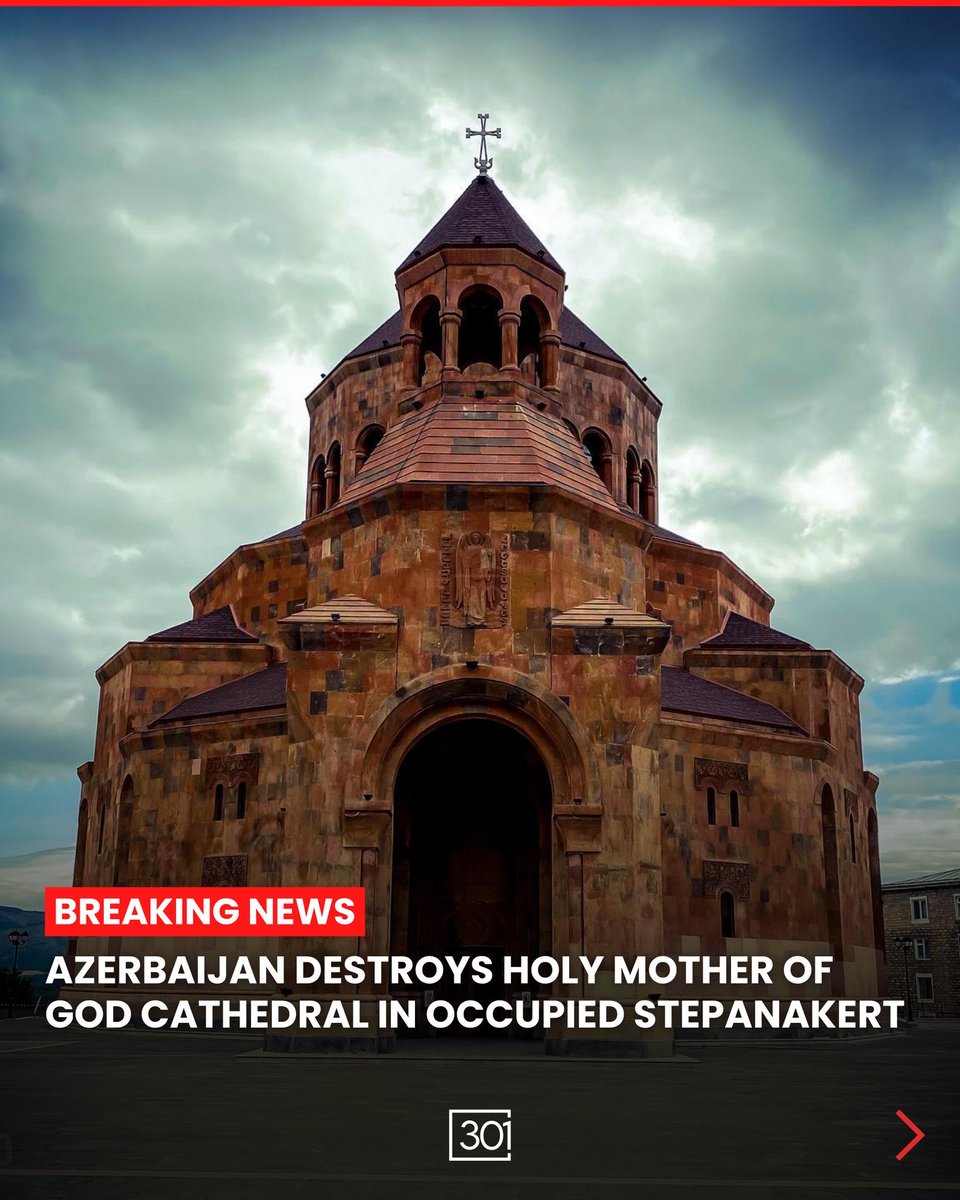
HORRIFIC: Azerbaijan destroyed The Holy Mother of God Cathedral in Artsakh (Nagorno-Karabakh).
according to Artsakh Cultural Heritage Ombudsman Hovik Avanesov, more than 1,000 cases of vandalism have been recorded in Artsakh (Nagorno Karabakh).
Don’t look away.
English
Lisa Kirazian retweetledi

Footage circulating on TikTok shows an Azerbaijani dance teacher instructing children to mock and desecrate the Armenian flag.
Although the video was filmed in November, it remains a troubling example of how hostility toward Armenians can be cultivated from an early age in Azerbaijani society. When such behavior comes from an educator, it is difficult to view it as an isolated incident.
Beyond public displays, multiple studies and reports have pointed to issues within the education system itself. Research on Azerbaijani school curricula has found that Armenians are often portrayed as a primary “enemy” in history education, with textbooks using strongly negative and at times dehumanizing language.
Following the 2020 war, new educational materials, such as the “History of Victory” course introduced in schools, have continued to frame Armenians as adversaries, reinforcing this narrative for younger generations.
Taken together, these examples raise broader concerns about how hostility can be normalized and transmitted across generations.
English
Lisa Kirazian retweetledi

There are, clearly, two words missing from this:
Dawn Staley
UConn Women’s Basketball@UConnWBB
Statement from Head Coach Geno Auriemma
English
Lisa Kirazian retweetledi

Congratulations to @dawnstaley and the @GamecockWBB team on an outstanding game plan executed to perfection! It’s a real shame that #Geno took the low road! We have all had to lose with class! Geno of the @UConnWBB needs to start with an apology!!! #GenoApologize
English