kalpesh dave retweetledi
kalpesh dave
4.6K posts

kalpesh dave retweetledi

Gold import duty 6% to 15%. At 1AM. While you slept. Someone knew. They bought yesterday. You found out this morning. That is the system.
#GoldImportDuty #Bitcoin #CryptoWala #Gold #GoldPrice #Goldtrading
CryptoWala@cryptowalax
11 Trillion gone. ₹95.6/dollar. Oil up. LPG up. Groceries up. Modi says don’t buy gold. Gulf shipping is broken anyway. World debt: 353 trillion. Global GDP: 120 trillion. We earn 1, we owe 3. FD at 6% while rupee bleeds 12%. Every “safe” asset is failing you right now. Bitcoin was built for this.
English
kalpesh dave retweetledi

Once believed to have disappeared from Assam’s river systems, the critically endangered gharial has now been spotted at @kaziranga_ — a truly remarkable moment for wildlife conservation.
Under the visionary leadership of HCM Dr @himantabiswa, Assam’s forests, wetlands, and river ecosystems have witnessed sustained conservation efforts. This rare sighting is a powerful reminder of the state’s rich biodiversity and conservation success.
#AwesomeAssam
English
kalpesh dave retweetledi

જ્યાં ૪૦ સિંહનો વસવાટ ત્યાં કાગળ પર કહી દીધું કે કરો માઈનિંગ અહીં કોઈ કોરિડોર નથી!
.
#SaveLions #GirForest #WildlifeProtection #StopMining #EnvironmentMatters #JamawatNews
GU
kalpesh dave retweetledi

Thirst knows no boundaries. This bear in Koppal (Karnataka) was caught on camera searching for water in a plastic tub as the forests dry up. A clear sign of the devastating impact of the rising temperatures on our wildlife.
Our forests are parched and our wildlife is suffering. Are we even bothered about climate change yet? Time is running out for these animals.
#Koppal #ClimateChange #Wildlife #ThirstyBear #SaveIndianAnimals
@aranya_kfd @moefcc @ntca_india @WBG_ClimateEnv @LiveLawIndia @PMOIndia @dilthi_gujarati @eshwar_khandre @siddaramaiah
English
kalpesh dave retweetledi

The lion isn't turning into a cow. There is deep biological logic behind this.
Lions consume everything--fur, feathers, and bones-- much of which their digestive system cannot process. So they eat grass deliberately, as a natural emetic (vomit inducer).
A lion's gut does not produce cellulase, the enzyme herbivores use to break down cellulose in grass. So when grass enters the stomach, it irritates the lining and triggers vomiting, purging the indigestible material.
Grass also provides something meat simply doesn't: folic acid. Folic acid plays an important role in DNA synthesis and healthy cell function, supporting healthy blood production and circulation.
Some scientists also propose what is called the natural mesh theory. Grass forms a fibrous mesh inside the stomach that physically traps fur, feathers, and bone fragments, helping the animal either pass them out or vomit them up more effectively.
Arojinle@arojinle1
What would make a lion eat grass?
English
kalpesh dave retweetledi

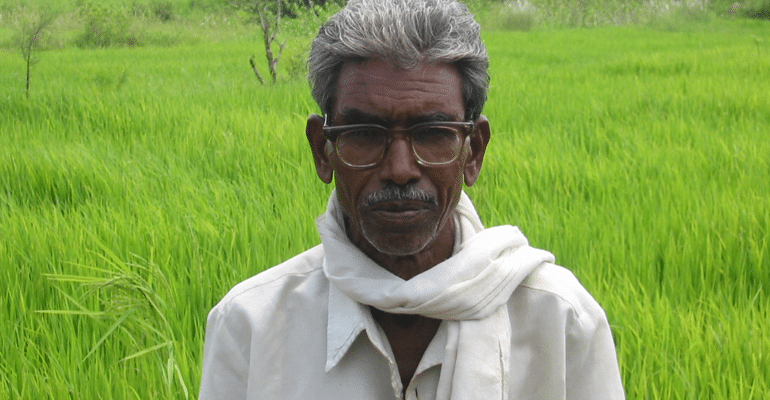
1 man found 3 yellow grains in the mud & spent 5 yrs protecting them from wild pigs. A trader named the result after his favorite watch brand to prove its quality, while a university stole the seeds to claim the credit. He fed millions, but worked as a daily wage laborer on his own soil. Discover the Ghost Farmer behind India's favorite thin rice.
While the world was looking at high-tech labs for the next green revolution, a school dropout named Dadaji Ramaji Khobragade was standing in his small 1.5 acre plot in Nanded, Maharashtra. While harvesting his usual Patel 3 rice, Dadaji noticed 3 yellow-seeded spikes (lomb) that looked different. Most farmers would have ignored them as impurities.
Dadaji picked those 3 spikes & stored them in a simple plastic bag. For the next 5 yrs, he painstakingly bred them in a tiny patch, protecting them from wild pigs with a fence of thorny bushes. He created a variety that was thinner, smelled better, & yielded 80% more than the conventional seeds.
Dadaji did not have a marketing team/a brand name. In 1990, a large landowner bought 150 kg of these seeds & sold the harvest to a local trader. At that time, HMT Watches were the ultimate symbol of Gold Standard & Reliability in India. The trader, who had recently bought a new HMT watch & was obsessed with it, decided to call the rice HMT Rice simply to signal that this rice was as High Quality as the watch.
The name stuck so hard that people today think HMT Rice was developed by the govt corporation (Hindustan Machine Tools), but the company had absolutely nothing to do with it!
In 1994, the Punjabrao Krishi Vidyapeeth (PKV), an agricultural university, approached Dadaji. They took 5 kg of his seeds under the pretext of experimenting. A few yrs later, the university released a new"variety called PKV-HMT. They claimed Dadaji’s original seeds were impure & that they had purified them.
They took the credit, the patents, & the glory. For yrs, the man who actually did the 5 yrs of backbreaking research was left working as a daily wage laborer on other people’s farms just to feed his family.
Dadaji Khobragade lived in poverty for decades while HMT Rice became a multi-crore industry across Maharashtra, Andhra Pradesh, & Chhattisgarh. It was only much later that the National Innovation Foundation (NIF) stepped in. They proved that the university’s new rice was genetically identical to Dadaji’s.
In 2010, Forbes magazine named him 1 of the most powerful Rural Entrepreneurs, & he finally received a National Award. But by then, he had already sold his own land to pay for his son’s medical treatment. Next time you eat a bowl of thin, aromatic HMT rice, remember it is not the product of a sanitized government lab. It is the result of a man who looked at three tiny yellow grains in the mud & saw a future that the PhDs missed.
The HMT in the rice does not stand for Hindustan Machine Tools; it stands for the Honesty of a Marginalized Toiler. Dadaji Khobragade proved that you do not need a degree to be a scientist; you just need an eye that can see the extraordinary in the ordinary.
A trader's love for a wristwatch gave the rice its name, but a farmer’s love for his land gave the rice its soul. 1 became a brand; the other remained a Ghost in his own fields.

English
kalpesh dave retweetledi

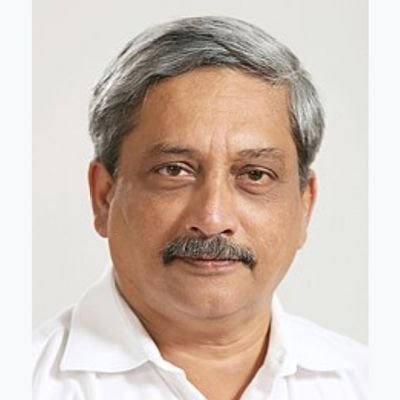
Late Shri Manohar Parrikar Ji once narrated his ordeal.
"I'm from Parra, a village in Goa, so we're called 'Parrikars.' My village is famous for its watermelons. When I was a child, the farmers there held a 'Watermelon Eating Contest' in May, after the harvest. All the children were invited and asked to eat as many watermelons as they wanted.
Many years later, I went to IIT Mumbai to study engineering. Then I returned to my village after 6.5 years. I went to the market to look for watermelons. But they were gone. The ones I found were very small.
I went to meet the farmer who used to hold the 'Watermelon Eating Contest.' Now his son had taken his place. He still held the contest, but there was a difference. When the old farmer offered us watermelons to eat, he would ask us to spit the seeds into a bowl. We were forbidden to chew the seeds. He was collecting seeds for the next crop.
We were, in effect, unpaid child laborers.
He would keep his best watermelons for the competition, using them as the best. He obtained good seeds, which produced even bigger watermelons the next year. When his son arrived, he thought the larger ones would fetch a higher price in the market, so he started selling the larger ones and keeping the smaller ones for competition. The next year, the watermelons grew smaller, and the next even smaller. A watermelon generation lasts one year.
In seven years, Parra's best watermelons were wiped out. In humans, a generation changes every 25 years. In 200 years, we will realize the mistakes we were making in educating our children.
Selecting good seeds, that is, talent, is a huge task in itself. Due to irrelevant ideas and useless things, our good watermelons will go to market, leaving us with useless, inferior seeds.
We must think about this in today's context.

English
kalpesh dave retweetledi

🚨Grain washed away in rain without proper storage in Raisen, MP😭
In India, a cricket pitch is covered in minutes, but not food grains.
@fssaiindia
English
kalpesh dave retweetledi

Across forests, mountains, and deserts, leopards quietly hold ecosystems together.
As adaptable predators, they regulate prey and maintain natural balance across vast landscapes.
Where leopards survive, ecosystems endure.
On #InternationalLeopardDay, the focus is on strengthening conservation efforts and protecting the habitats of the elusive Panthera pardus.
Discover more about Big Cats at the IBCA Summit 2026.
#IBCASummit2026
#BigCatAlliance
#WildlifeConservation
#SaveBigCats

English