Karl T. Muth 🌐✈️📊

2.6K posts

Karl T. Muth 🌐✈️📊 banner
Karl T. Muth 🌐✈️📊

Karl T. Muth 🌐✈️📊

@KarlMuth

Invented tech you've used. Likes and replies autodelete. Views mine and not views of others/clients/employers/etc.

I go where I need to be. Katılım Nisan 2014
25 Takip Edilen15.5K Takipçiler
Sabitlenmiş Tweet
Karl T. Muth 🌐✈️📊
🚨 Summer RA 🚨 Join me @NorthwesternLaw to analyze three brand new policing datasets! You'll help me in applying modern methods to explore the enforcement of a 100-year-old law. Requirements: 💻 Data Science Skills ⚖️ CrimPro Curiosity Apply: karl.muth@law.northwestern.edu
Evanston, IL 🇺🇸 English
0
0
1
565
Karl T. Muth 🌐✈️📊
People have asked me: You're a pro-crypto, pro-markets @UChicago guy but also a regulated markets expert cited two dozen times in SEC rules; what's your take on prediction markets? My answer is I'm not a fan. But maybe not for the reasons you'd think. mozillafoundation.org/en/nothing-per…
Dubai, United Arab Emirates 🇦🇪 English
1
1
4
233
Karl T. Muth 🌐✈️📊
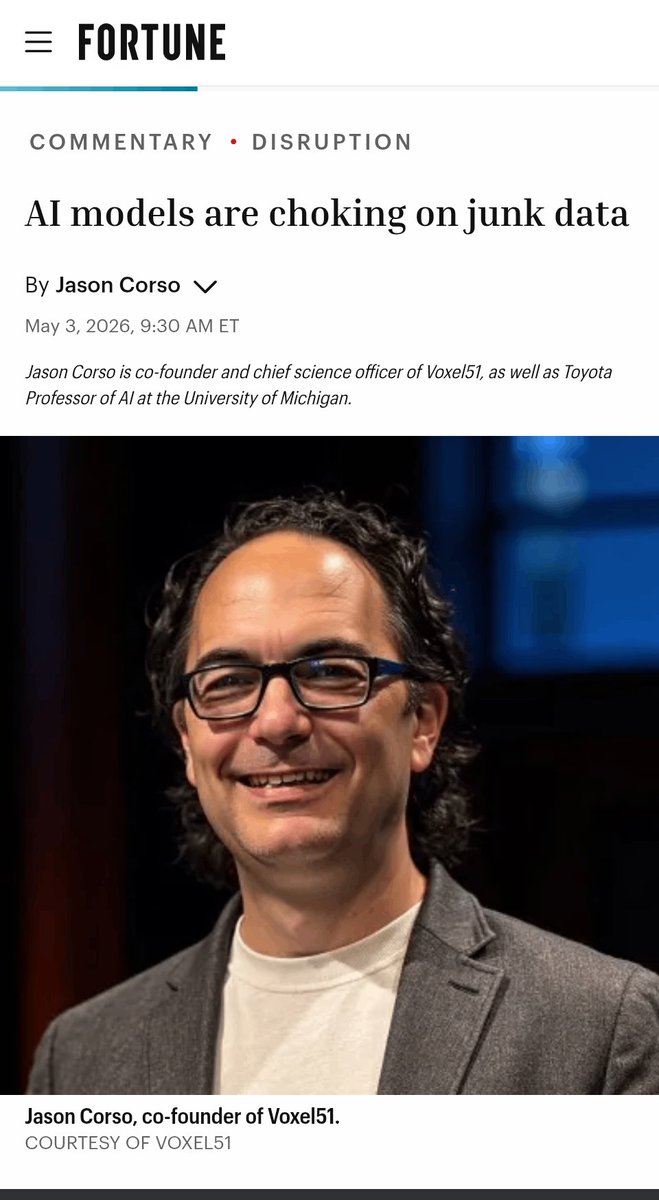
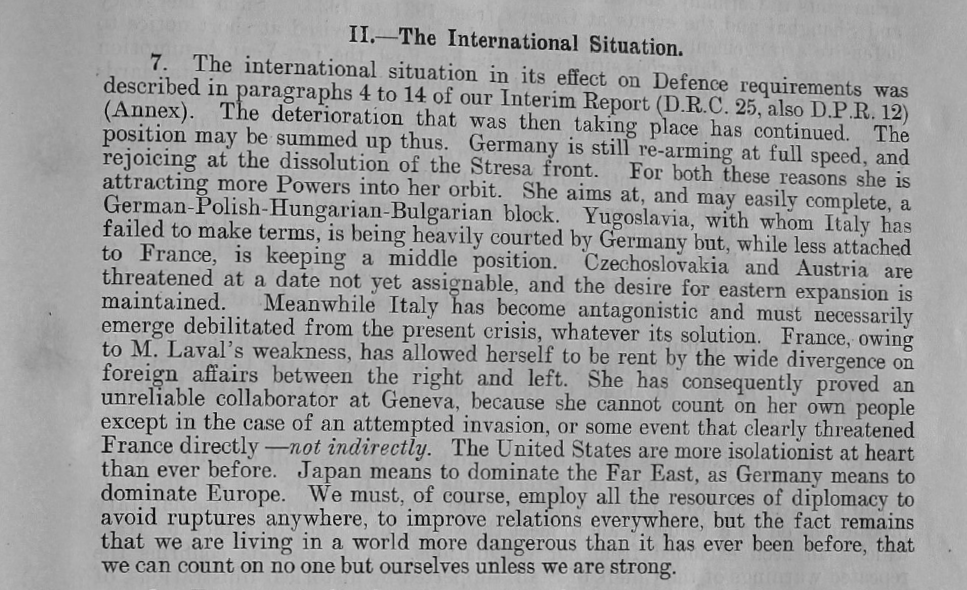
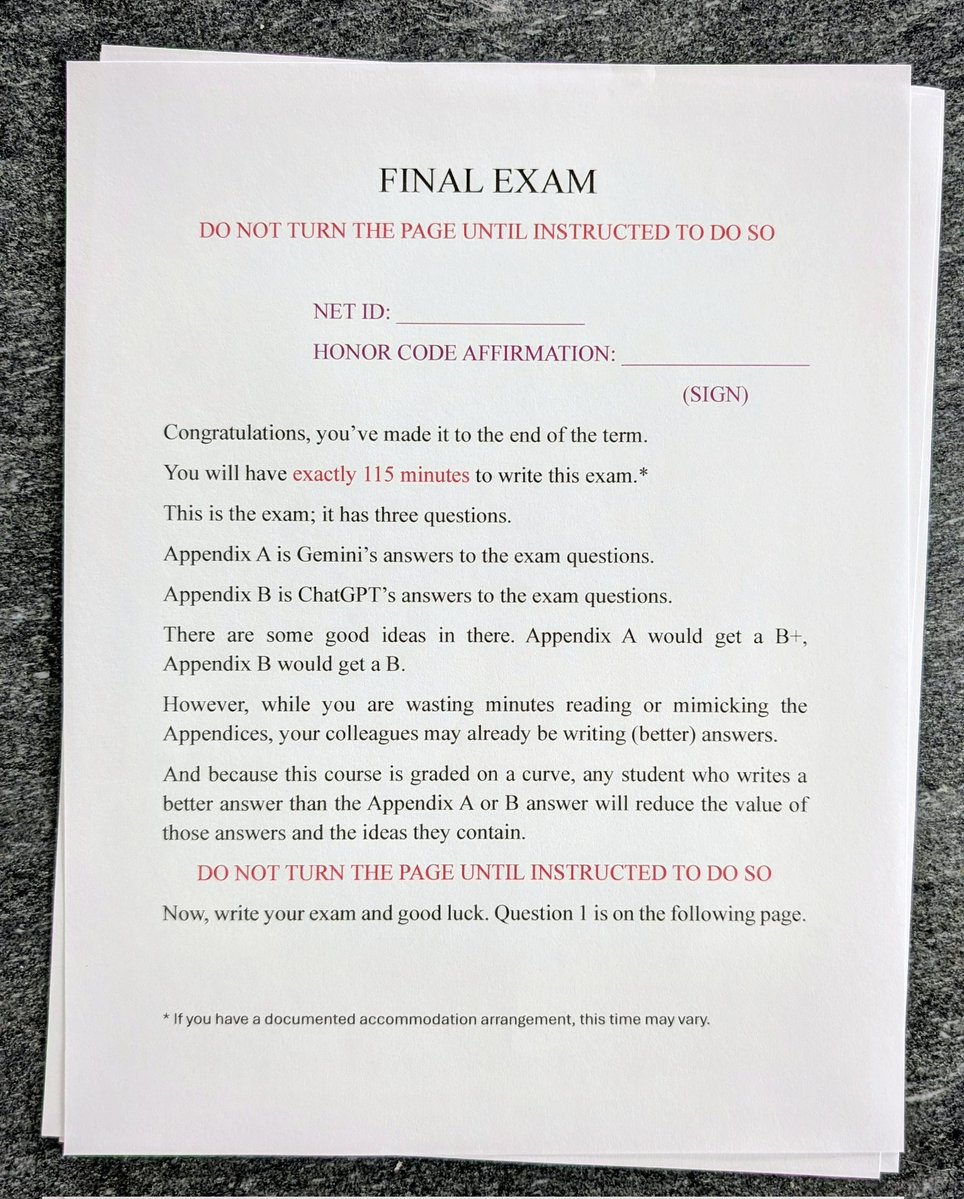
In 2025, I proposed the Scrabble Challenge, which no AI model has been able to solve. However, people have, I think, misinterpreted the purpose of the challenge. I want to point out the serious national security implications of this seemingly-benign generative AI exercise. 🤔👇 In my upcoming talk at @UCBerkeley, a major focus will be the Scrabble Challenge. The fact that current generative AI models cannot correctly render a finished game state of a familiar board game is not just an oddity—it is a glaring indicator of key vulnerabilities that demand urgent attention from researchers. Current generative models are fundamentally statistical pattern matchers, not reasoning engines. But the true implication of the Scrabble Challenge, whether applied to classified data in a warfighting scenario, OSINT data examined for targeting, or chemical combinations explored in drug discovery, is not how hard it is to "solve the puzzle" or "win the game," as it were. Instead, it is how computationally expensive (punishingly so, even with a well-equipped lab with power to spare and access to the hottest on-prem blades) it is to automate the auditing of the output. Observers often focus on whether a given model and seed led to a single, correctly rendered image of a finished Scrabble game. But that isn't what happens when a cyber commander or intelligence analyst receives information; instead, that professional must make rapid, high-stakes calls as to whether the intelligence is credible and actionable. What the Scrabble Challenge illustrates is a harsh reality in the national security context: confirming a candidate solution takes orders of magnitude more compute than generating the data (in this case, probabilistic raster guessing to generate an image). In plain English: it's a lot harder for AI models to tell us whether an image of a Scrabble board was constructed correctly than it is for an AI model to try to create a picture of a Scrabble board. Some of you are familiar with my open-source intelligence (OSINT) work on Iran and North Korea utilizing sensor fusion logic on publicly-available imagery to confirm the unusual near-perpendicular tunnel structure near Qom (later unmasked by, and thankfully obliterated by, strikes). I was hesitant to back that theory (which I did in my 2024 research, published in 2025, and you can read it at Karl T. Muth, Open Source Nukes: Still the Right Idea, 35 Transnational L. & Contemp. Probs. 240 (2025)) until I spent hours confirming the model's edge-finding inferences and nIR conclusions (which took far more time than producing the model of what might be underground) and was satisfied these tunnels existed. This asymmetry is the hardest part of the framework of using AI models in high-stakes military and intelligence work today, and it poses a massive problem for the future of AI safety, particularly in martial and intelligence contexts as we fight to protect our Homeland and our critical systems in both kinetic and cyber spaces. Whether you are at a military installation or at Langley or on Wall Street, you are increasingly-dependent on insights that were created by models that cannot be easily audited. My newest research (Muth’s Law: Anticipating AI Model Collapse, forthcoming in 11 IP & Comp. L.J. (2026)) gives a chilling illustration of how dangerous near-peer adversaries can be if they are in a position to poison the trusted libraries on which we train AI models. My research shows the injected quantities of token-cheap, glance-credible data needed to contaminate the underlying library and cause cascade effects (and, eventually, a catastrophic value collapse) in AI models dependent upon those libraries. We live in a world that recently ground to a halt, destroying trillions of dollars of global productivity over a four-year period, due to a relatively minor respiratory ailment with a low-single-digit mortality rate. Yet we fail to take adequately seriously the threat of contamination in very large libraries (VLLs); these libraries are too large to audit with current tools, but they are simultaneously the only datasets of sufficient size to feed our most sophisticated models. I'm looking forward to unpacking these limitations, discussing model collapse, and exploring these architectural puzzles together in my talk at Berkeley in a few weeks and in several other upcoming seminars. For those interested in the Scrabble Challenge—or developers who think they might have a solution (there are zero known models capable of passing it today)—you can read about it (and the rules) here: 🔗 x.com/KarlMuth/statu… A few of the slides are attached here as a teaser. See you soon.
Karl T. Muth 🌐✈️📊 tweet mediaKarl T. Muth 🌐✈️📊 tweet mediaKarl T. Muth 🌐✈️📊 tweet mediaKarl T. Muth 🌐✈️📊 tweet media
Suzuka-shi, Mie 🇯🇵 English
0
0
1
411
Karl T. Muth 🌐✈️📊
I bought my first Aston Martin 23 years ago this month. I've been part of a great community of car owners and, now, a smaller community of voting shareholders also. The season hasn't started smoothly for our team or our new alliances. Nor did it in '59... 進歩には痛みが伴う。
Karl T. Muth 🌐✈️📊 tweet mediaKarl T. Muth 🌐✈️📊 tweet mediaKarl T. Muth 🌐✈️📊 tweet mediaKarl T. Muth 🌐✈️📊 tweet media
Suzuka-shi, Mie 🇯🇵 日本語
0
0
3
321
Karl T. Muth 🌐✈️📊
I truly believe in the SEC's role as a source of clarity for market actors, yet I struggle with the decision on Section 16 insiders. 🧵 I preface this by stating I'm not just a guy who comments on SEC rules, my research is cited in the SEC's 2023 Final Rule on insider trading. Further, the SEC's concept release on foreign private issuers in 2019 also cites me by name twice and I have written extensively on those definitions. In short, I'm not a stranger to the SEC's regulation of either insider trading or the many prohibited activities and onerous reporting obligations surrounding foreign private issuers. Regardless of world events, financial crises, political turmoil, sector-level news, or natural disasters, the SEC generally has hesitated to issue blanket no-actions. To be clear, securing a no-action letter (which establishes the SEC does not plan to bring an enforcement action as to a given scenario or fact pattern) is normally a cautiously-choreographed and narrowly-scoped exercise. In fact, the SEC has issued formal guidance (and its attorneys have given plenty of off-the-record advice, including when I've been in the room) that it prefers to give narrowly-tailored no-actions for many of the same reasons pardons and non-prosecution agreements are narrow. That's why it's so remarkable. It is the broadest blanket no-action I have ever seen in two decades of watching this space. Let me explain what it does. If you are an FPI Section 16 insider, you should have already filed a Form 3 and your Section 16(a) reporting package on or before March 18. 🗓️ Many general counsels, including one who called me for advice on this, held that reporting package until the last possible moment not because of unpreparedness or procrastination or an intent to deceive, but because of legitimate concerns the package's contents would almost immediately become inaccurate with the next missile landing in the Middle East and could, ex post, be misinterpreted as an affirmative misstatement. In a much-watched action, the SEC took up the matter of Tower Semiconductor Ltd. and decided on March 13 that it could have until April 20 to file all of the Section 16(a) documents. The SEC also extended these protections and modified deadlines to similarly-situated companies affected by the conflict in the region, at first citing logistics as the rationale (intermittent online access, power outages, etc.). That aspect is a compliance deadline tolling mechanism and has been utilized (though rarely) by the SEC in other situations where additional time might benefit filing entities. What is extraordinary and, I believe, unprecedented here is that the scope of the no-action does not (as almost all "analogous" no-actions have in the post-Reagan era) hinge on the similarity of a firm to the firm (Tower Semiconductor) as to which the decision was made. Instead, it broadly extends to every firm that, as I understand the decision (and, importantly in a post-Chevron world, this decision has not been reviewed, critiqued, or tested by any court): 1⃣ The insider (typically a director or officer of an affected FPI) must have been ready to file at least the Form 3 and probably some of the required appurtenant documents on March 18 (this is not a wholesale forgiveness of unpreparedness to file); 2⃣ the insider must also be able to show he was materially affected by the conflict with/in/near Iran or was affected by the effects of that conflict (this second-order aspect is where the floodgates potentially open); 3⃣ while similarity to the inconveniences Tower Semiconductor complained of (shelter-in-place orders, disruptions to online access, etc.) may be helpful or illustrative, the similarity to Tower is not dispositive; rather, the insider should focus on explaining links to the conflict and its martial terroir rather than a similarity to Tower; 4⃣ the circumstances complained of must be manifestly and credibly beyond the control of the insider; this does not mean the situation is inevitable or inescapable, but likely means it's impracticable to escape under some definition similar to the "impracticability" elsewhere in financial and securities law (e.g., it is impracticable for a fund administrator to know the location of all beneficiaries to whom it is a trustee at all times, see Mullane v. Central Hanover Bank & Trust Co., 339 U.S. 306, 317 (1950)). Should you rely upon this no-action, then? Well, as the nuclear physicist so compellingly and credibly portrayed by Denise Richards in The World Is Not Enough comments, "It's complicated!" Many of my acquaintances operate investment vehicles within the ambit of the HFIAA or similar regulation and a substantial portion of these people either have ties to Israel or are headquartered or organized in Israel (often Tel Aviv). I am glad this no-action policy works to their benefit and I'm sure their general counsels and compliance folks are perhaps slightly calmer than they were 48 hours ago. But I worry this may be mistaken for "clarity" when, in fact, it may be a prolonging of its opposite, especially if it creates an expectation that extraordinary events will lead to other blanket no-actions, which would be a severe and unprecedented change in the SEC's posture and potentially an ex ante softening of its enforcement punches, which, in the modern era, are most powerful when they do not telegraph their intentions. In short, I worry the SEC may have, in its efforts to provide clarity 💡 to the market (and, consequentially, clarity to investors by providing an ecosystems of disclosures drafted calmly in April rather than thrown together amidst falling missiles in March), actually created ambiguity 🤔 in the vague, elastic tether that now links Section 16(a) reporting requirements (and their normally-rigd calendar) to on-the-ground case-by-case news from a conflict zone. Be careful out there. It's not worth risking your life to get a slightly later SEC filing deadline. 🗓️ See Securities and Exchange Release Nos. 33-11138; 34-96492; File No. S7-20-21 (2023) (citing Muth's research at p. 123, n. 368); see also Securities and Exchange Concept Release Nos. 33-10649; 34-86129; IA-5256; IC-33512; File No. S7-08-19 (2019) (citing Muth's remarks at p. 45, n. 118 & p. 52, n. 157). Importantly, this is neither legal nor compliance advice and if you are a FPI Section 16 insider, I have absolutely no advice for you other than to seek the advice of qualified, experienced counsel in both the United States and your entity's domiciled jurisdiction so that you can make informed decisions about both the content and timing of any filings you send to the SEC or other market regulators.
English
0
0
2
285
Karl T. Muth 🌐✈️📊
I've noticed a relatively-new trend in state-level legislation: interstate alignment being explicitly rather than implicitly considered. This is a fascinating phenomenon and something not widely considered part of the "fifty laboratories" model of how state legislation works. 🤔 Consider, for instance, Senate Bill 2157, currently being debated in the Massachusetts legislature. This bill considers whether Massachusetts should adopt permanent Atlantic Standard Time rather than switching between Eastern Standard Time and Eastern Daylight Time. I'm not posting this to have a debate about daylight savings time or its merits or perils. Instead, I'm focused entirely on a mechanism within Senate Bill 2157 (S.2157) that most people (perhaps even legislators) may not have noticed: it has an interstate mechanism. Rather than giving absolute deference to another state (by, for instance, simply saying "at any give time, it will be whatever time in Massachusetts that Rhode Island decides it is in Rhode Island"), this bill only takes effect if two other states near Massachusetts adopt the same Atlantic Standard Time provision. For over ten years, I've been fascinated by the question of whether states should adopt laws in concert or, in some cases, whether there are gains to be had by adopting complementary regulatory schemes. For instance, Washington and Oregon in many ways have complementary tax regimes. This is an understudied area, both historically and contemporarily. In 2013-14, my colleague Katie DeVelvis and I set out to figure out ways to examine quantitatively (rather than in terms of political lore or regional grudges) whether, and to what extent, states respect each other's decision-making, institutions, and administrative processes. We eventually determined that concealed carry pistol permits were the right mechanism. There is no federal law requiring any state to recognize concealed carry privileges from another state. Carrying a concealed weapon is a serious and great responsibility (I say this as a CCW permitholder in multiple states); states do not honor each other's licensing decisions in this area lightly. By observing which pairs of states have reciprocity with one another in recognizing concealed carry permits, which states unidirectionally offer permit recognition, and which pairs of states refuse to honor each other's licenses, we built a novel set of pairs to study in this context. Katie and I also examine income tax, sales tax, and other regimes to look at complementariness and to illustrate other vectors for future research in this area, which I hope younger scholars will take notice of. This is a fertile area for research and regional blocs of states could potentially do interesting things. For those interested in reading more, this research was published at: Karl T. Muth & Katheryn R. DeVelvis, Testing Policy Alignment: A Quantitative Methodology, 1 J.L. Tech. & Pub. Pol’y. 18 (2015). This is the Massachusetts Senate legislation I mention above: malegislature.gov/Bills/194/S2157.
GIF
Boston, MA 🇺🇸 English
0
0
1
252
Karl T. Muth 🌐✈️📊
Law is an important, high-risk use for agentic AI. Many have theorized how AI would behave as judges and advocates; my newest research discusses how competing agent models as a heterogeneous "jury" can solve problems. OK, but what are the nearer-term issues? Find out April 2!
Karl T. Muth 🌐✈️📊 tweet media
Chicago, IL 🇺🇸 English
0
2
4
321
Karl T. Muth 🌐✈️📊
People are posting this video where a @Waymo drives through a police standoff where the police have a suspect on the ground. The sentiment around this post is "I bet researchers never thought about these situations!" Well, we did. Three years ago. And published that research. In my 2023 research (co-authored with Assistant Attorney General Jack and published in 2024), we envision similar scenarios (note to researchers: this hypothetical appears on pages 860 through 863 of the pertinent article). Consider the following scenarios, which we explore in that lineage of research: - An autonomous vehicle understands there is a traffic slowdown and wants to honor its passenger's request for the fastest route rather than the most direct route, so it chooses this alternate route. What it does not contextually understand is the "slowdown" is caused by a police roadblock ahead; should police stop the vehicle for "avoiding" the police roadblock? Should the police be required to account for the routing mechanism? - An autonomous vehicle with no human driver (SAE Lvl 5, no steering wheel, no pedals) but an early-adopter passenger aboard travels through a rural area where such vehicles are still very uncommon. It fails, for whatever reason, to stop after the county sheriff follows it and activates his patrol car's lights. Interpreting this as flight, the sheriff fires at the vehicle, killing the lone passenger asleep in the back seat. - An autonomous vehicle obeying recommendations of a "best route" from a shared service drawing from a very large library (VLL), such as Google Maps, decides to make a legal U-turn but one that human drivers would not likely choose to make. Does this create a suspicion (as in People v. Timmsen) that justifies an observing officer stopping the vehicle? If not, why? If so, is the suspicion also adequate to then search the vehicle? The public misperception that "the world is happening to AI researchers" is a narrative of chaos, unpreparedness, and surprise. Nothing could be further from the truth. Instead, AI research is "happening to the world" and "happening in the world" and surprises are relatively rare and being studied by people who have been thinking about these problems for many years. It may be fun for onlookers to posit that all things in AI and machine learning and automation of robotics/automobiles/drones/etc. are novel and new, but this is not the case. Some things work differently in practice than we had predicted they would in theory (as was true in earlier eras when traveling deep under the ocean or building rockets). This is expected. For those interested in our research in this area, I suggest starting in Section V of this article on page 860 (available here for download without login or paywall): lawecommons.luc.edu/luclj/vol55/is… Thanks for your interest in this general area of research but I would suggest people should look at what researchers think today and thought (and thought about) several years ago before declaring every interaction between people and sophisticated systems an unexpected and surprising outcome.
United States 🇺🇸 English
0
0
8
903
Karl T. Muth 🌐✈️📊
I strongly agree with SEC Chairman Paul Atkins: it was "overdue" to re-examine and revise the SEC's enforcement manual. Those interested in the priorities and stated enforcement procedures of the SEC should review the manual, which is now on their site: sec.gov/divisions/enfo…
English
0
0
0
283
Karl T. Muth 🌐✈️📊
Karl T. Muth 🌐✈️📊@KarlMuth·
I've been seeing a fair number of xeets from people who make pretty broad statements about Somalis or, alternatively, the subset of Somalis who have ended up in the upper Midwest. Many of these frame Somali people or the Somali diaspora as homogeneous, which is a misperception. One of the approaches rhetorically has been to link the 2010-12 piracy crisis to the conclusion that “all Somalis are criminals” or that Somali=pirate. Despite what some may believe from watching too much streaming content, piracy was an isolated activity even within Somalia and existed at large scale for a short time, enriching only a small number of people in what are fundamentally two small areas. I was in Somalia during the height of the Aden piracy crisis (and if you’re interested in reading about this fascinating crisis and the period leading up to it, several of the intelligence reports to which I was a contributor in whatever small way are now either declassified or available in publicly-available document troves). This report is a good summary driven by some of the work with which I and many others were involved, publications.parliament.uk/pa/cm201012/cm…, while this report discusses the challenges of global maritime cooperation in greater detail assets.publishing.service.gov.uk/media/5a78a739… while still anchoring its findings in then-new intelligence findings. I spent a substantial amount of time in East Africa and spent time both on the Horn (in Somalia) and in surrounding areas (Djibouti, Yemen, Oman, and elsewhere). In total, I’ve visited Somalia twelve times, including extended time in Banaadir/Mogadishu, and have written about various aspects of this. Since then, I have worked with intelligence and government officials who wanted to understand the crisis. To understand anything about who lives in Somalia or claims a Somali identity abroad, you first have to understand how people ended up in the region. This isn’t a newly-settled area or a militarized outpost; this is one of the longest-settled areas and where the wise men went gift shopping for baby Jesus. Somalia was a natural crossroads of the ancient world and is one today: over fifty ships of meaningful size transit along the Somali coast headed to (or having come from) the Suez. The Suez Canal was built in the mid-1800s, but earlier canals linked the Nile to the Red Sea; some of these canals predated Jesus’ birth by centuries. And yes, on the approaches to those canals, pirates were also an issue. The people who live in Somalia today are not homogeneous and their beliefs are not monolithic; in fact, it is one of the most fragmented places I’ve ever seen (and I’ve been to over 50 countries, including being in two on the days they became countries). Somalia is so fragmented that I’ve written extensively (including in this book for Oxford University Press: academic.oup.com/edited-volume/…) on why it probably is not a single, definable sovereign state. Four major clan families define Somali’s politics, which is historically defined by weak, temporary, opportunistic issue-centric coalitions between the Darod, Hawiye, Dir (I’m including groups like the Isaaq in the north as Dir here, though I am well aware this is a politically-sensitive taxonomical topic among many in Somaliland), and Digil-Mirifle. The diasporic power of these groups in the region is significant (my guide/guard when I traveled to Juba half a dozen times was Darod and had a deep network of connections in the area). The tension between clans in Somalia goes back at least two thousand years and even major incursions by foreign belligerents were unable, historically, to unite anything that could be called a monolithic national Somalia. The Cushitic pastoral groups of the ancient Horn were unable to unite, famously, and the Dir and Hawiye have roots going back well over 1,000 years with little history of successful co-governance of any significant area. The incompatibility of the boom-bust rainfall characteristics of the region (requiring nomadic life) and Western-style property rights over land has always been present; while some Digil-Mirifle groups practiced settled farming, the need for cattle and other animals to roam in order to find food and water has always led to an erosion of property rights, in part because synchronized scarcity prevents the establishment of a durable commons. But alongside these long-lineage clans were groups from Arabia, Asia, Persia, proto-Ottoman areas, and India that played a major role in culture, goods, technology, and language long before the English and Italian attempts at colonization. If you visit Zeila (Awdal) or Marka, you will see things for sale and types of architecture that will remind you more of other parts of the world than East Africa. Regional administration within Somalia breaks uncleanly into three geographical areas (Somalia, Somaliland, and Punt), but this misportrays lineal and clan lines as being fundamentally geographically coterminous with borders, something sensible in the abstract but somewhat silly to believe when one watches how fluidly people, resources, and funds move across the region’s supposed borders. Foreign intelligence efforts during this period quickly realized, through intercepted communications and captured adversaries, that existing business and smuggling networks near Bosaso were being used to organize piracy. Money invested here would be funneled to Eyl, Garacad, and Hafun, which served as operations centers for pirate gangs. During this period, a few powerful pirate bosses operated in the area, guarded by a mixture of mercenary muscle and Majeerteen protector groups. This led a rival piracy hub to evolve at Hobyo (and, the next year, Harardhere), an area I spent time in during this period. Hobyo was administratively sophisticated, with elders holding “courts” sitting in equity to determine the fairness of bargains and division of spoils. Because pirates were economic actors but not political rulers (and, with only two exceptions, pirate bosses did not publicly aspire to political relevance), they were able to offer their services on land when not at sea. This included making financing introductions, working as negotiators/translators, and offering guards to politicians or merchants. Today, most of the key pirate figures I was following in the 2010-11 period have retired or moved to other businesses like smuggling of arms or drugs or illegal fishing protection rackets (especially for the Chinese). Those who were captured, interrogated, or killed during this period offer little knowledge about 2026-relevant networks on the Horn. Of ones I’ve tried to keep track of, more are in China than Minnesota. By far. But in Minnesota, we see a wide diversity of people with Somali roots. Of the more than 80,000 Somalis living in Minneapolis, we see (as with other conflict-driven immigrant populations) an overrepresentation (versus Somalia overall) of the Hawiye, in part because of the intense fighting in their key heartland areas; chain migration into Cedar-Riverside is well-documented as being a primarily-Hawiye phenomenon. It is worth noting that almost all criminal activity I’ve ever observed, studied, or been asked to analyze from an intelligence perspective involves economic networks where well-recorded, agreed-upon social or economic debts drive behavior. Hawiye/chain-migration networks are the specific sociological structures that seem to have allowed for both legitimate mutual aid (there are strong Hawiye remittance networks, for instance) and the exploitation seen in these fraud cases. The Darod people I’ve encountered who live in Minneapolis are sometimes from Somalia but more often from Ethiopia’s Somali region (Ogaden Somalis), and many were not fleeing conflict but instead fleeing famine. The Digil-Mirifle people in Minnesota mostly came from Bay or Bakool during the civil war, not during the piracy crisis or the famines. Because Somalis arrived in Minnesota in at least four waves from three different causes (food insecurity, piracy-era instability, civil-war-era instability), it is unsurprising the group is heterogeneous on at least three axes: origin point on the Horn, reason for departure, and access to wealth/networks upon arrival. It is also unsurprising that smaller minority groups that had weaker networks in Somalia also had weaker networks upon arrival. The people I’ve encountered who are Benadiri (or Bantu, Tunni, Ashraf, etc.) in the U.S. tend to be less well-connected, less confident in the durability of their international links, and less able to describe international networks. In general, the Somali diaspora is one of the most unusual, confusing, and diverse in the world. In the past generation or so, there have been three major reasons to leave Somalia, leading to four (or five, depending on if you count both famine events, though one drove primarily Ethiopian Oagaden Somalis overseas) major cycles of departure. Yes, some of the people who move internationally are criminals. Some were criminals or part of criminal groups/enterprises/networks before departure and some are newly criminal upon arrival. Some have networks that transfer or transform or translate in ways that make them more useful criminally than in the cultivation of legitimate businesses (see W.F. Whyte: en.wikipedia.org/wiki/Street_Co…). But, overall, and even having interacted with some of the more dubious characters in the region at the time, I don’t know of any reason to think Somali immigration is enormously or categorically distinct from immigration from other reasons or more likely to contain well-organized or internationally-transportable criminal networks than other immigration. In fact, the lack of coalition-building among Somalis at home and their inability to band together to defend against the seafaring early Omanis and Southern Arabian kingdoms (مملكة سبأ / مملكة معين / مملكة قتبان) at what was arguably the height of early tribal alignment suggests Somali culture is not monolithic and instead deeply, inherently riddled with collective action problems. The clans would have rejected or destroyed the power quickly held by Arab merchants in Barawa (and, later, Mogadishu) if they could have. So what’s the point? Well, next time you meet a Somali person it’s probably not fair or accurate to think they’re automatically part of some global daycare fraud conspiracy. That person is probably just your local pizza delivery guy or handyman or whatever. About 2 million of the world’s 11 million Somalis live outside Somalia with about as many living in the UK as in the US. If you want an analogous population, there are about 11 million Haitians and about 2 million of them live outside Haiti (driven by political instability, economic hardship, and natural disasters, though in Haiti’s case hurricane/flood rather than Somalia’s famine/draught) and, like Somalis, Haitians are extremely concentrated in their migration patterns (over half of Haitians in the U.S. live in Florida). I was in Somalia during one of the country’s hardest times in recent memory and met some really good and really bad people there. But my instinct isn’t to treat new Somali people I meet like either the best or the worst person I met in Somalia and I’d encourage you to do the same. The Somali diaspora isn't a monolith; it’s a 2,000-year-old map of clashing clans, ancient trade routes, and both physical and political survival strategies. Treating a Minneapolis Uber driver as a proxy for a 2011 pirate boss (or a 2020-23 daycare fraudster) isn't just a lazy shortcut of stereotyping and blaming, it's a fundamental failure to understand the diversity, geography, and history of the Horn and the people who leave it to find something better.
English
0
1
5
442
Karl T. Muth 🌐✈️📊
Karl T. Muth 🌐✈️📊@KarlMuth·
The hacker, maker, and open source communities should be deeply worried over the Third Circuit's opinion that, at least in this case, source code is not protected speech. 📜 This runs counter to existing doctrine and, I hope, will remain an odd minority circuit position. 👎😐🧑‍⚖️
GIF
English
0
0
2
232
Karl T. Muth 🌐✈️📊
Trump administration suggests body cams might solve recent dissatisfaction with ICE operations. So, what do we know about body cams? Asst. Atty. Gen. Jack and I published one of the first pieces of research in this area ten years ago. With no paywall: nlg.org/nlg-review/art…
English
0
0
0
184