

Kenny Alami
2.8K posts

Kenny Alami
@KennyAlami
Find out if you’re ready to scale your operations with automation | Take the 3-min assessment 👇
Take the assessment here → Katılım Mart 2010
906 Takip Edilen927 Takipçiler

I just filed my taxes with OpenClaw. Here's how it went.
I sold my 90% stake in a business last year for $1.8M cash (installment sale: half in 2025, half in 2026). I also had a single-member LLC, brokerage income from dividends and stocks, HSA distributions, ACA marketplace insurance, 3 real estate properties, prior estimated tax payments, foreign income tax credits, and three kids. Not a simple return.
I usually pay a CPA. Last year it cost me $8,000 for personal and business returns, and every question took weeks to get answered (so I didn't ask much). This year I decided to see how far I could get with OpenClaw instead.
Here's what actually happened:
Phase 1: Research (Monday)
I had a pile of documents: the purchase agreement, all LLC operating agreement amendments, old K-1s, prior tax returns going back to 2012, bank statements, balance sheets. I fed everything to OpenClaw and said "read everything in chronological order and figure out my 2025 tax situation."
It reconstructed the full entity history: my LLC started in 2019, converted to an S-corp in 2020, became a multi-member LLC (partnership) in 2023, then I sold a small share to an acquirer in 2024, and eventually sold my remaining 90% last year.
Having all the prior returns was huge. OpenClaw traced my cost basis through every transition: original capital contributions, income allocations, distributions, entity conversions. It cross-referenced numbers across years, verified how my previous CPA had handled things, and flagged details I never fully understood, like why my ending capital account was negative and what my recourse liabilities represented.
It even caught an error. My previous accountant flipped the month with the day for when I sold a small share of my business (5/4 instead of 4/5) which meant I got attributed some income for one month that should have gone to another partner. Didn’t change tax due much, but OpenClaw FTW!
By the end of the day, it had prepared a comprehensive summary.md document with all the numbers, forms needed, and open questions.
Phase 2: Actually filing (Tuesday)
OpenClaw researched TurboTax's current plans and saved me $500 by unburying the $129 TurboTax DIY plan I actually needed. Intuit was trying to sell me a $639 package via a recommendation quiz that said there's no other option for my situation. There was!
This was a 4+ hour session where I went screen by screen through TurboTax with OpenClaw guiding every field:
- Brokerage 1099: Imported automatically. OpenClaw verified the numbers matched my records.
- Schedule C (my solo LLC): I had no bookkeeping done for this, so OpenClaw analyzed all bank transactions and prepared the P&L. I only had to recategorize one transaction because it was a reimbursement for something I had paid for personally.
- K-1 partnership income: No actual K-1 yet (the acquirer hasn't filed the entity return), so we estimated my share of the partnership based on bank statements and revenue data.
- The installment sale: This was the hardest part. TurboTax kept double counting the gain, reporting it through both the K-1 disposition AND Form 6252. We had to zero out the K-1 sale fields and let the installment sale section handle all the gain reporting. Took several attempts to get right.
- Itemized deductions: Mortgage interest, property taxes, local sales taxes, and so on. Uneventful, and OpenClaw correctly predicted the SALT cap limits I'd run into it. TurboTax confirmed those calculations.
- Annualized income method: Since the $900K installment came in Q2, using the annualized method on Form 2210 saved ~$3,700 in underpayment penalties. This was quite tedious, and I'm not sure an accountant would have done this for me. I've been told "just pay the penalty" before.
- HSA: ~$12K distribution, all qualified medical expenses, $0 taxable.
- ACA Premium Tax Credit: 1095-A entered month by month for 11 months of marketplace coverage. I quit the ACA plan in November, in favor of CrowdHealth. No deductions from them unfortunately.
At the end, OpenClaw reviewed the final 137 page tax return draft return line by line. Total federal due: $125K, excluding the ~$40K in estimated taxes already paid throughout 2025. — Have you said thank you once, Donald?!
What worked well:
1. Document analysis. I threw PDFs and CSVs at it: purchase agreements, K-1s, old returns going back years, bank statements, and it extracted exactly what was needed. Being able to say "look at my 2022 return and tell me what basis my CPA used" and get an answer in seconds was invaluable. Way faster than explaining things to a human.
2. Answering questions in real time. Instead of emailing a CPA and waiting days, I asked "what are recourse vs nonrecourse liabilities?" and got a clear answer in 5 seconds while staring at the TurboTax field. This back-and-forth is what made the whole thing work. Every question I had, answered immediately.
3. Catching optimizations. The annualized income method, investment interest expense from brokerage margin, etc. Small things that add up.
4. Cross-referencing prior years. Having OpenClaw dig through my old returns to verify how things were previously handled gave me real confidence. I could see that the numbers were consistent with what my CPA had done before.
What didn't work well:
1. Driving TurboTax directly. I had OpenClaw try to fill in the forms via browser automation. Too slow! TurboTax's multi-step wizards with radio buttons and dynamic forms don't lend themselves well to AI control yet. We switched to me clicking while it dictated what to enter. I'm optimistic this will be improved soon.
2. TurboTax's installment sale handling. This was genuinely tricky. The double counting issue required a creative workaround. A CPA familiar with TurboTax would know the right workflow. OpenClaw had to experiment.
3. No K-1 yet. We estimated the partnership income. When the real K-1 arrives, I'll probably need to amend. This is the same problem I'd have with a CPA though. But if the K-1 preparer was using OpenClaw, maybe I would already have it!
What to watch out for:
- You need to know your own situation. I'm not completely ignorant about tax prep. I had a reasonable expectation of what the numbers should look like, roughly how much I owed, what the major items were, and so on. I wasn't relying on blind faith. The ability to ask questions and verify things quickly is what built confidence.
- Complex form interactions are tricky. The TurboTax installment sale / K-1 double-counting issue could have resulted in extra taxable income if we didn't catch it. Having a sense of what the final number should be matters.
- You still need to understand your own finances.
The bottom line:
Total cost: $129 (TurboTax Premium) vs $8,000 I paid my CPA last year. Also $23.90 in OpenAI GPT 5.4 tokens, including drafting of this post :)
Time spent: ~6 hours total across research, prep, and filing. Still faster than dealing with a CPA, and I got much better answers.
The biggest difference wasn't the money. It was the speed of answers. Every question I had during filing got answered in seconds. That real-time loop of "what does this field mean?" → clear explanation → enter the number → move on is something no CPA engagement can match.
Next year, I'll know the drill. And OpenClaw has memory. That one should be much simpler.
Long live the claw! 🦞
English
@ryancarson That last one has been a life saver more than once lol
English

@Shpigford I know. Also:
Shift + left/right arrow: highlight one letter at a time
Shift + top/bottom arrow: highlight top or bottom line
English

GUYS HOW DID I NOT KNOW ABOUT THE ⎇ + ← SHORTCUT FOR TRAVERSING TEXT ONE WORD AT A TIME?!?!?!?!
English
@nickgraynews Damn! So you can build UIs, host them, run background workflows, store files?
English

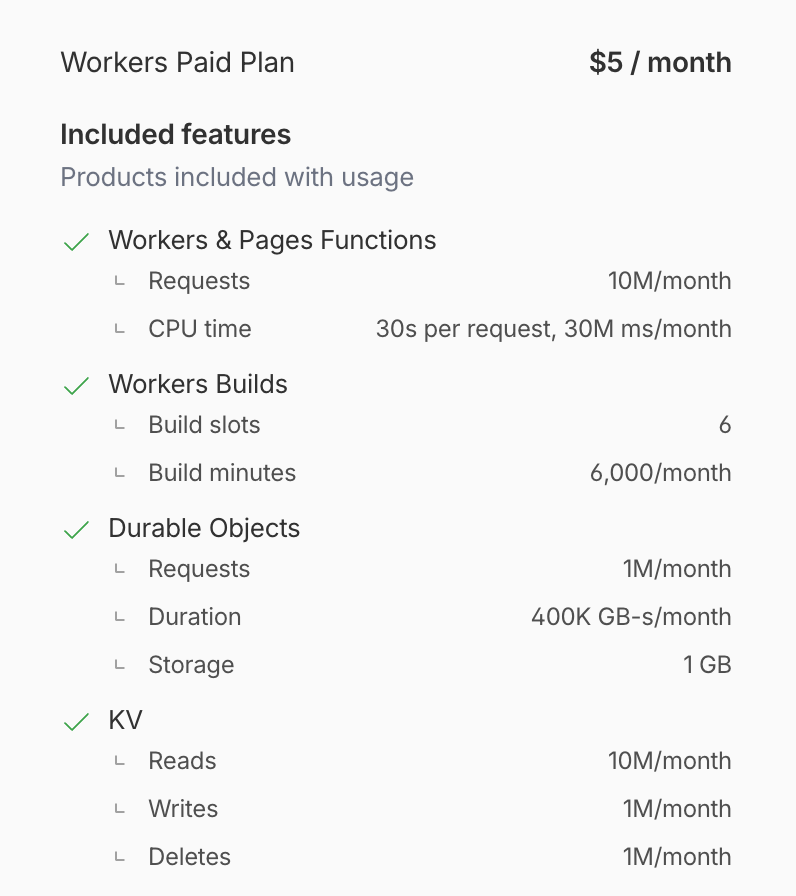
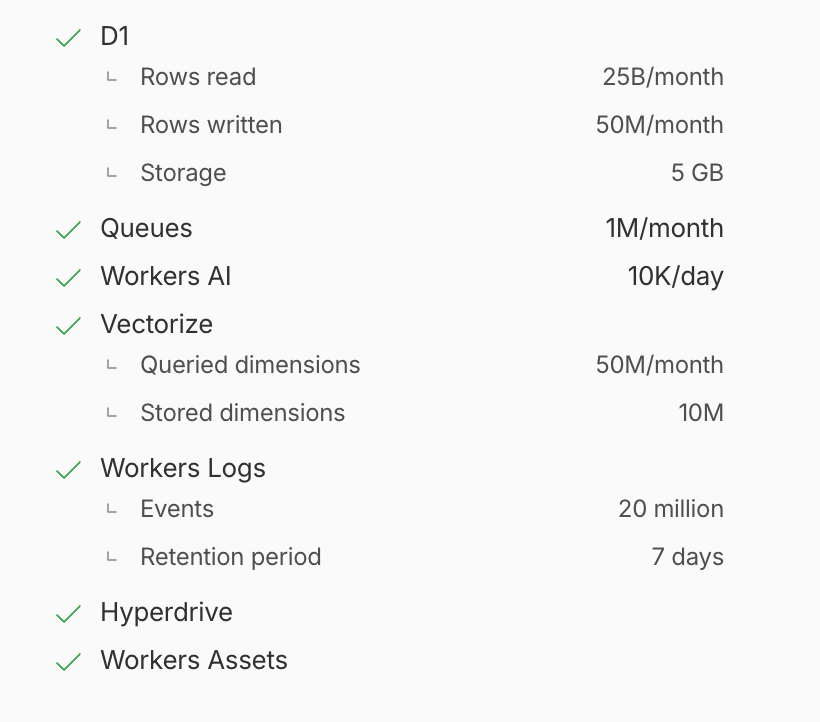
@chasing_next How'd you replace Loom? I need to cancel my n8n too lol
English
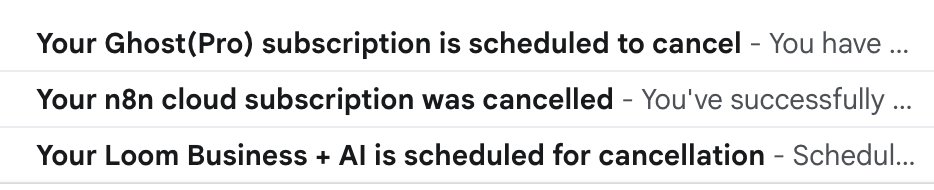
@ferrants When you'll do it, you'll probably think, "I should have done that months ago."
English

thinking of firing a customer
rude, annoying, lots of asks. and when I help him, not appreciative
other customers aren't like that
have you fired a customer?
English
@jonnym1ller @AtlasForgeAI How long did it take for scoreapp? I’ve been thinking about doing it too. Just curious the features you rebuilt.
English

Just had @AtlasForgeAI rebuild all of my webflow websites himself + redo our Scoreapp assessment, will probably save $1k/yr with just those two. I wonder how many SaaS tools (if any) will remain in 6 months.
English
@Evanish I feel like markdown and Google Drive is enough nowadays
English

I don’t understand the love for Notion. Every time I use it, it feels clunky and brittle.
Functionality always gets in the way of getting things done in it.
English
@HamelHusain Yeah I started using n8n for a client and now I hate it. We’ve been transitioning to code. But it’s so frustrating to have to change anything. A tiny change will break down so many workflows downstream and it takes forever to hook it back up.
English

Ya'll worried about AI Coding slop, when there as an entire army of n8n experts who are installing unmaintainable visual workflow spaghetti in small/medium sized businesses at scale
Literal merchants of complexity. Its so much worse than using claude code. It's an artifact of being stuck 6 months in the past and n8n is all you know.
English
@ferrants Yeah it’s true. I was thinking about that recently. People don’t care about learning where they need to click or type. If they can talk to something to get the thing done, they would do it. It’s so much easier.
English
@KennyAlami Yeah, but some of those complex UIs, while powerful, are confusing and require a lot of setup to get it great. Agentic workflows are more flexible and require less learning
English
Talked to three businesses in the last two days that were in the process of replacing a SaaS that they felt was gouging them with a vibe-coded solution.
Annual contract comes up, SaaS tries to jack up prices, the business just says “nah, we only use a fraction of your features and we are always fighting against it”
Expensive contracts, percent of the business, number of users - all these traditional business models of large SaaS are getting rejected
Big SaaS is effed
English
@ferrants Yeah often the UX patterns are pretty straightforward in top of that.
The people that spent a lot of time solving more complex UX have more of a moat though.
English
@KennyAlami 100% , literally “we just need basic project tracking, I shouldn’t need to spend $30k/year for that”
English
@amirmxt This looks way better than mermaid diagrams for sure lol
English

claude illustrations is so magical
needed 3d print a webcam mount for my osmo pocket
it asked for the constraints then drew this elegant diagram on what it'll look like
this feels so good to use
Claude@claudeai
Claude can now build interactive charts and diagrams, directly in the chat. Available today in beta on all plans, including free. Try it out: claude.ai
English
@chasing_next I know n8n was so annoying in that way. Spend hours manually connecting nodes to automate stuff. Really ironic when you think about it.
And no I stopped using Framer last year. I migrated to code and hosting on Vercel.
English

@KennyAlami i dont miss manual set up or figuring out those connections! are you still using framer?
English
i'm paying $120/month in saas that i could replace with my own stack.
- ghost? move to a self-hosted site on vercel with turso. full control over layouts, membership tiers, site ui.
- kit? switch to resend, which has a generous free tier, and wire up branded trigger emails without the setup headache.
- n8n and make? switch to custom built payment triggers, access provisioning, and progress tracking.
the only moat these platforms have is that it takes time to transition. once i do, that $120 goes toward a higher ai tier that builds their replacements.
English
@chasing_next I've also gone full custom in some instances (for the website and automations). Framer and n8n were annoying to connect to Cursor or any other AI layer.
But glad things are running smoothly for you. I do find things are x10 easier to debug than n8n lol
English
most of the stuff i mentioned above were a total pain to set up... but anything new i build im not putting in those old systems.
rn limited debugging since everything is left running (so much easier to set up & debug the new systems). just not worth it to keep old stuff up long term as i evolve my offering since they're limiting.
English
@chasing_next How’s the maintenance and tweaking to get to what you want without errors and bugs? Do you find yourself spending a lot of time on that?
English
@KennyAlami totally - integration within my larger system is the actual win. less time +more customization, connection & actionability.
English
@ayushtweetshere If you receive them everyday you can test a few different approaches and see what works best.
Sometimes people ask just to see if it would work but would pay full price anyway.
English


the best ai users i know have zero loyalty to any tool.
they're building systems where the tool is a replaceable part.
ex: a year ago we were all using n8n to build workflows, now we can do most of that with claude code while putting in less effort. in 3 months we'll be doing something else.
build strategy and processes, then let the tools rotate through it.
English