Abdulrahman Kerim, PhD
132 posts

Abdulrahman Kerim, PhD
@Kerim_AI_
Research Fellow at the University of Surrey | Computer Vision and XML
England, United Kingdom Katılım Mayıs 2015
100 Takip Edilen41 Takipçiler
Abdulrahman Kerim, PhD retweetledi
The AI Adoption Dilemma in UK Businesses for 2024-2025 imperial-academic.com/ai-%26-life-bl…
#AIinBusiness #UKBusiness #ArtificialIntelligence #Innovation #FutureReady
English
Abdulrahman Kerim, PhD retweetledi

Surrey Space Centre’s new electro-thermal rocket awarded £250,000 by @spacegovuk's Enabling Technologies programme. This technology could be used in “space-tugs” to service and reposition satellites after launch ow.ly/iAKr50OUMPS @SpaceAtSurrey #ProudtobeSurrey

English
Abdulrahman Kerim, PhD retweetledi

Can generative image models be good world models?
This work from @Meta FAIR shows that there is a tradeoff between realism and diversity.
The more realistic a generative model becomes, the less diverse it becomes.
Realism comes at the cost of coverage.
In other words, the most realistic systems are mode-collapsed.
My hunch, supported by a growing amount of empirical evidence, is that world models should *not* be generative.
They should make predictions in representation space.
In representation space, unpredictable or otherwise irrelevant information is absent.
This is the main argument in favor of JEPA (Joint Embedding Predictive Architectures).
Pietro Astolfi@Piovrasca
Are sota image generative models effective world models? Consistency-diversity-realism Pareto fronts show they're not (yet): - No model dominates others as a world model - Improvements in quality and consistency have come at the expense of diversity 🔗 arxiv.org/abs/2406.10429

English
Abdulrahman Kerim, PhD retweetledi

BMVA Symposium: Robotics Foundation World Models
One day BMVA Symposium in London, 30 October 2024
bmva.org/meetings/24-10…
***
The deadline for submitting a presentation is 15th September, 2024.
Submit interest through docs.google.com/forms/d/1cU4F-…
English
Abdulrahman Kerim, PhD retweetledi

Your premise is false.
Intelligent systems require the ability to reason and plan.
Reasoning and planning involve a search for solutions (actions) that minimize objectives.
Those objectives measure not only whether the imagined actions fulfill a goal but also whether a number of guardrails are satisfied.
By construction, such a system can not produce any action that will violate the guardrails, according to the predictions of its internal world model.
I call this objective-driven AI.
The question becomes one of designing appropriate guardrails.
We are familiar with that.
It's like making laws.
Except that objective-driven systems will be completely unable to violate these laws (unlike humans).
English
Abdulrahman Kerim, PhD retweetledi

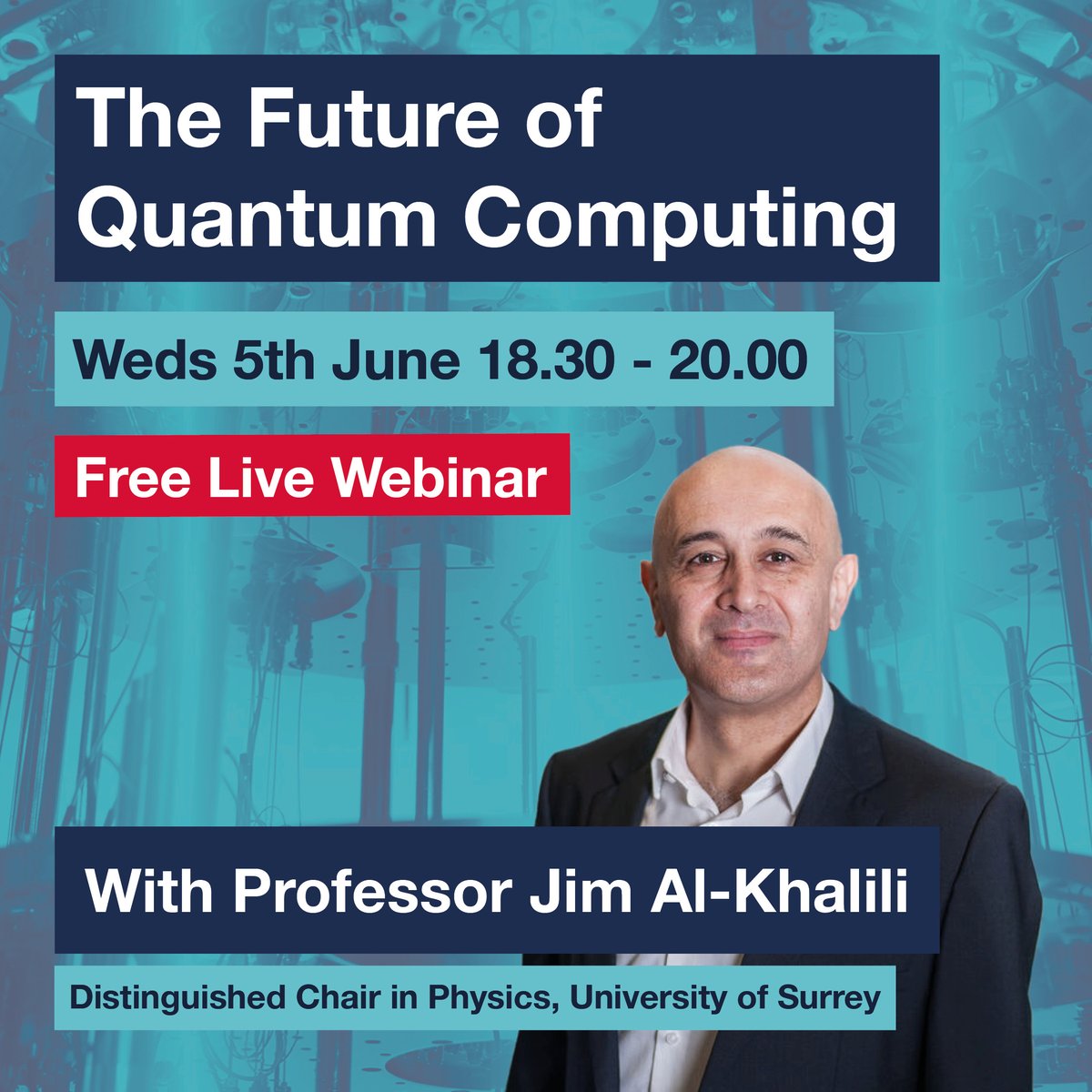
What happens when AI meets quantum computing? This is just one of the questions our panel of world-leading experts will be discussing in a free online webinar on Wednesday 5th June 2024.
Register for your free ticket now bit.ly/futureofQC

English

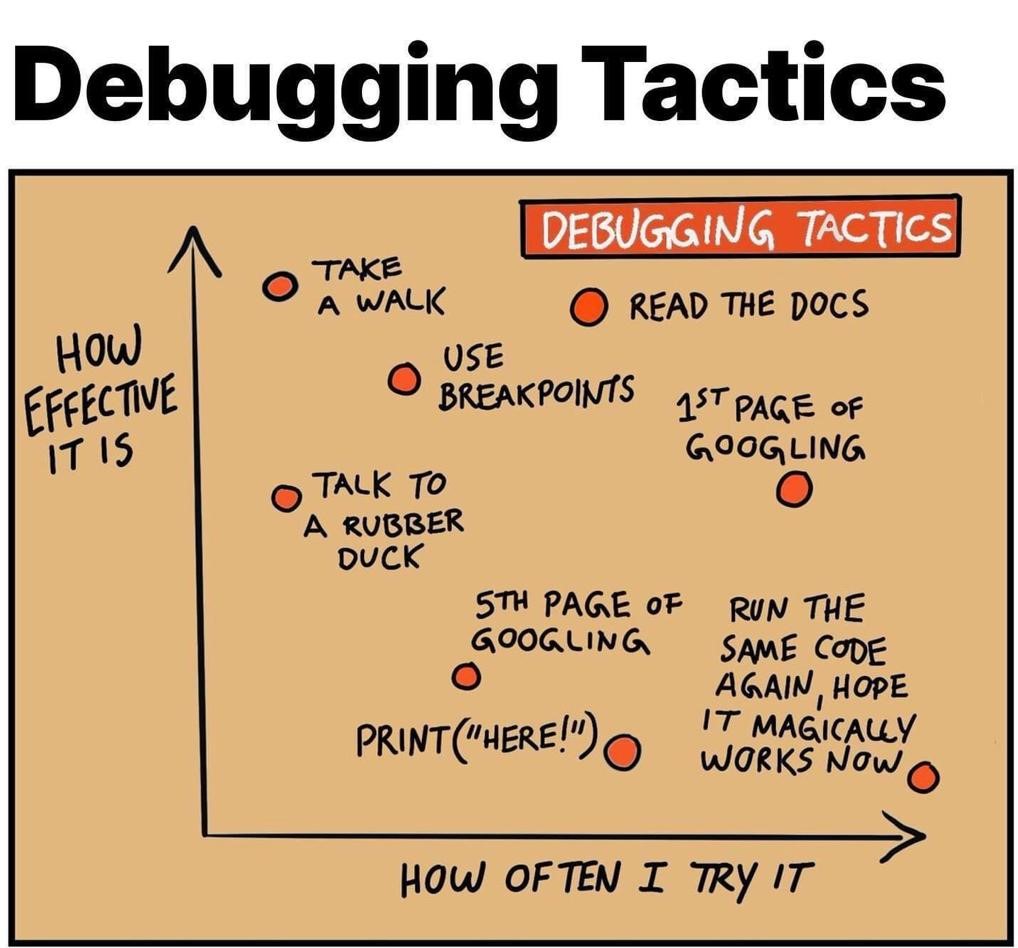
@2sush Try to explain the code to someone or pretend to do that with myself!
English
Abdulrahman Kerim, PhD retweetledi

Here's my conversation with Sam Altman (@sama), his 2nd time on the podcast. We talk about the board saga, Elon lawsuit, Ilya, Sora, GPT-5, $7 trillion in compute, open source, and AGI. This was a truly fascinating conversation.
It's here on X in full, and is up on YouTube, Spotify, and everywhere else. Links in comment.
Timestamps:
0:00 - Introduction
1:05 - OpenAI board saga
18:31 - Ilya Sutskever
24:40 - Elon Musk lawsuit
34:32 - Sora
44:23 - GPT-4
55:32 - Memory & privacy
1:02:36 - Q*
1:06:12 - GPT-5
1:09:27 - $7 trillion of compute
1:17:35 - Google and Gemini
1:28:40 - Leap to GPT-5
1:32:24 - AGI
1:50:57 - Aliens
English
Abdulrahman Kerim, PhD retweetledi

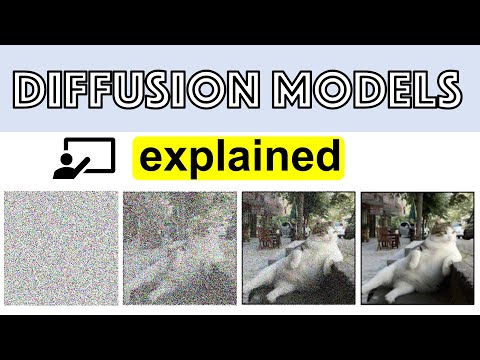
Per several requests, here are the PowerPoint slides for the diffusion model tutorial.
1⃣Training: bit.ly/3WudEPH
2⃣Guidance: bit.ly/3wedCky
3⃣Resolution: bit.ly/4bqxHmo
4⃣Speed: bit.ly/4bpJzoJ
Explainer video: youtu.be/i2qSxMVeVLI

YouTube
Jia-Bin Huang@jbhuang0604
New YouTube video! Diffusion models are awesome! But how do they actually work? 🤔 Check out the video and learn with me! youtube.com/watch?v=i2qSxM…
English
Abdulrahman Kerim, PhD retweetledi

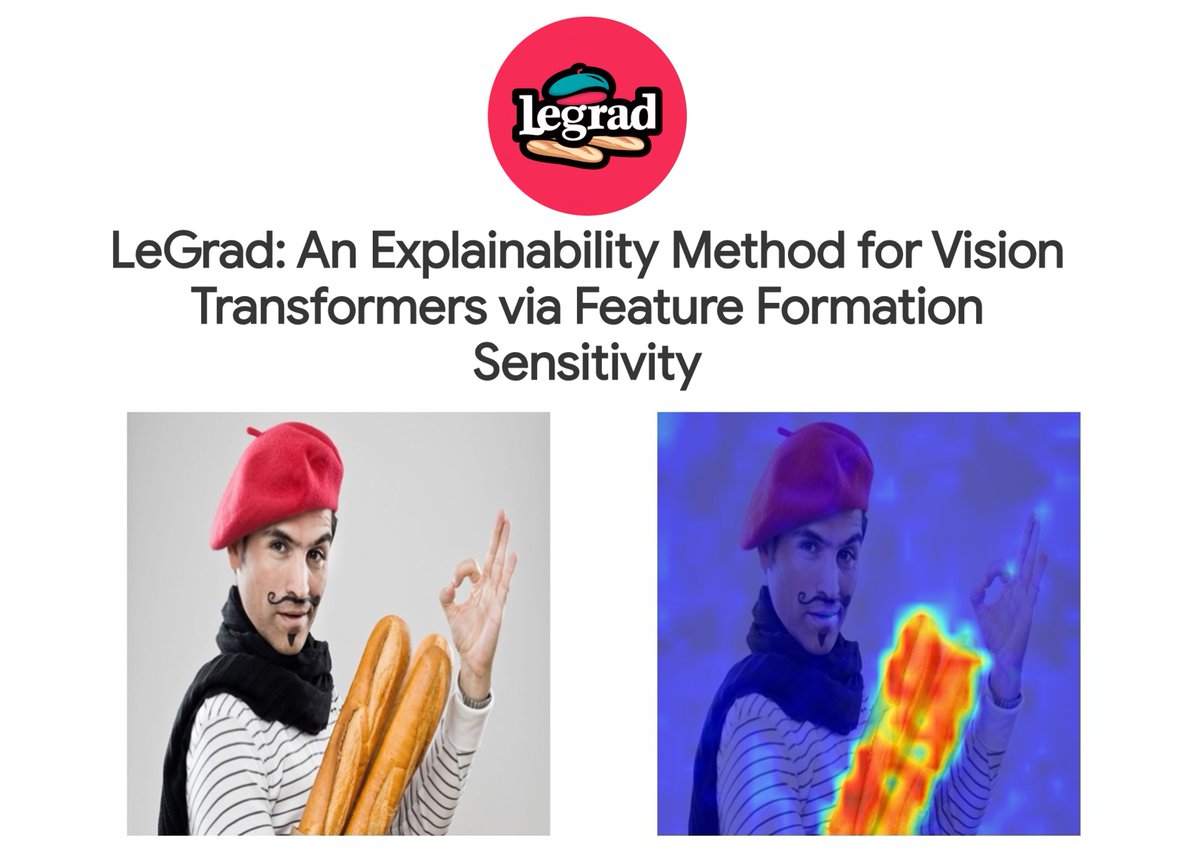
Ever asked yourself what's the best explainability method for ViT Transformer at the moment?
🚨 We present you LeGrad, a Layerwise Explainability GRADient method for large ViT transformer architectures. 🚨
So, grab your ☕️ and 🥐, release your inner 🇫🇷, and join us on our journey through the layers of different ViT models.
Authors: @BousselhamWalid did all the programming, but we would have been lost without the wisdom of @angie_boggust and @hen_str ! Thanks so much for being so great collaborators!
@MIT_CSAIL @MITIBMLab

English
Abdulrahman Kerim, PhD retweetledi